Catégorie : Des arts en général

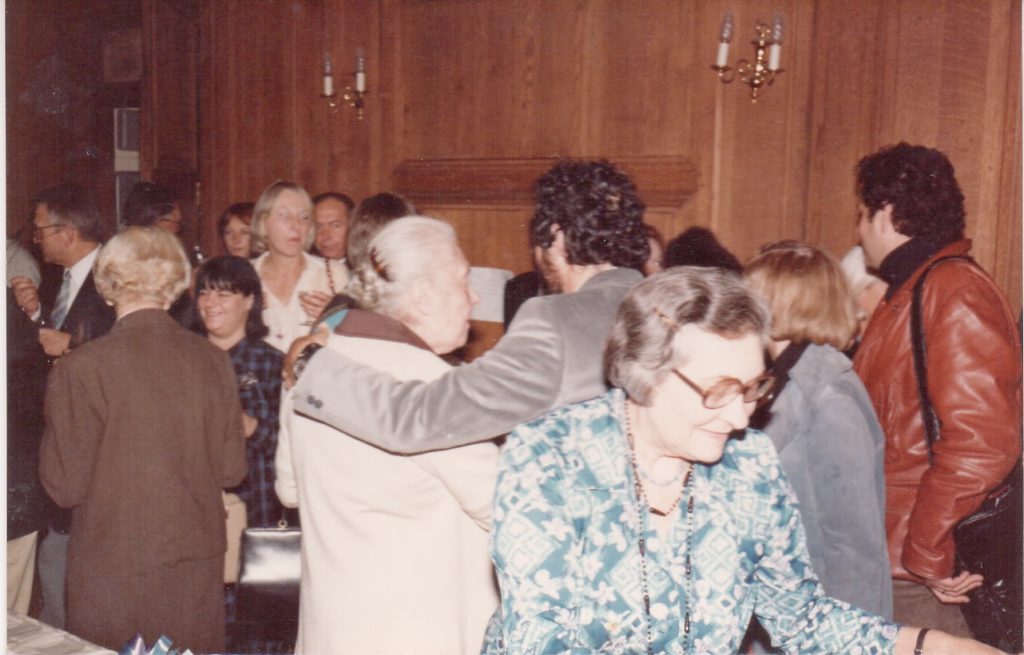
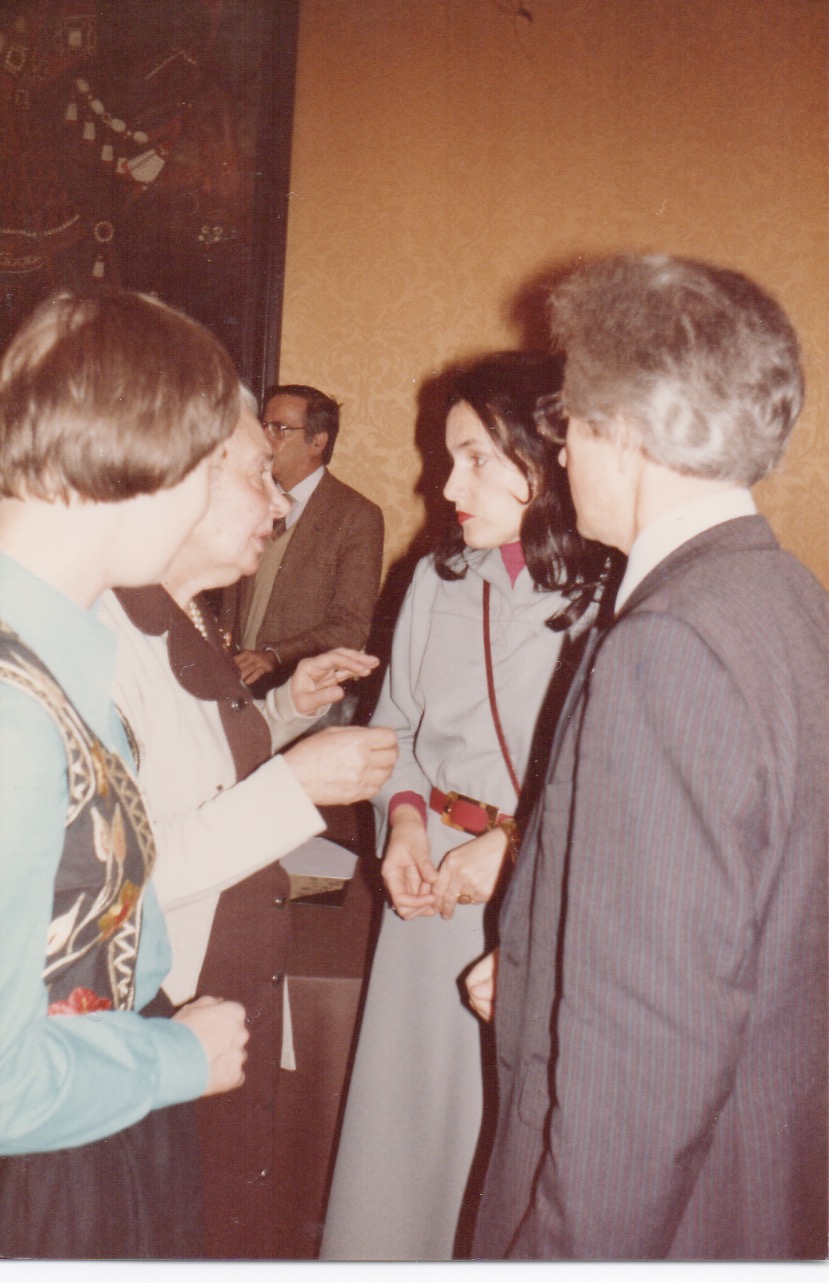
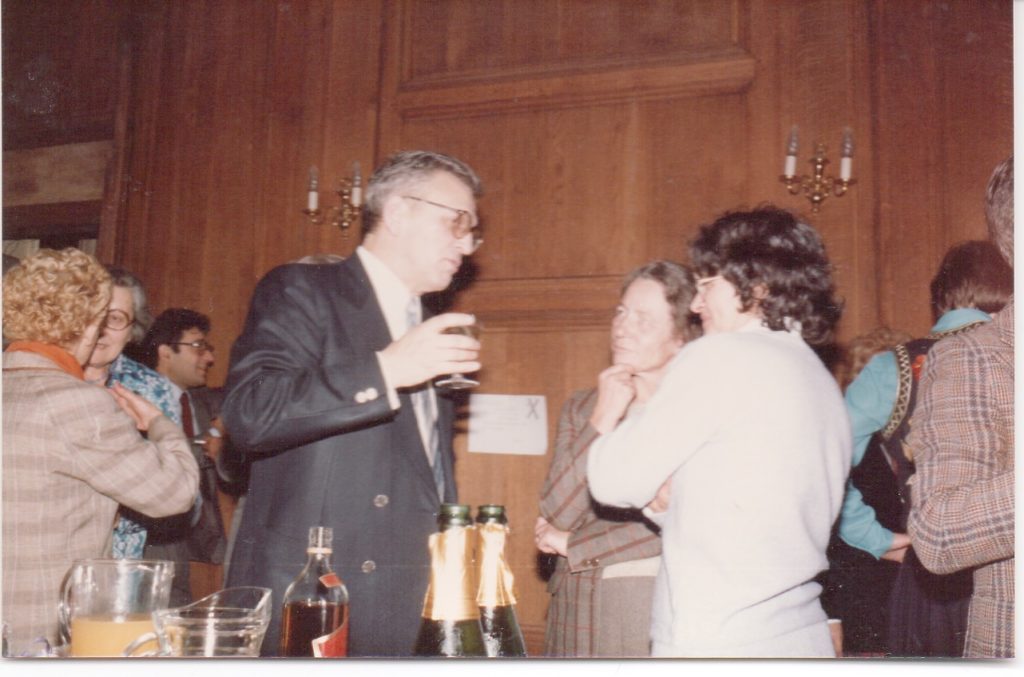
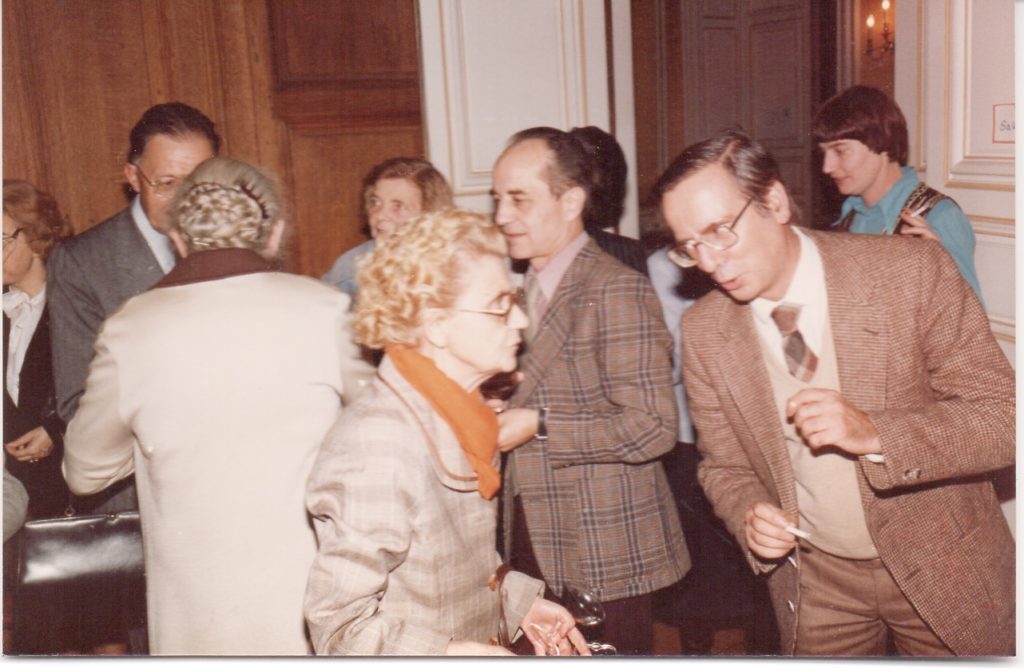
  • Amis de Valentine et Jean-Claude Marcadé (1990) (suite)

    Amis de Valentine et Jean-Claude Marcadé (1990) (suite)

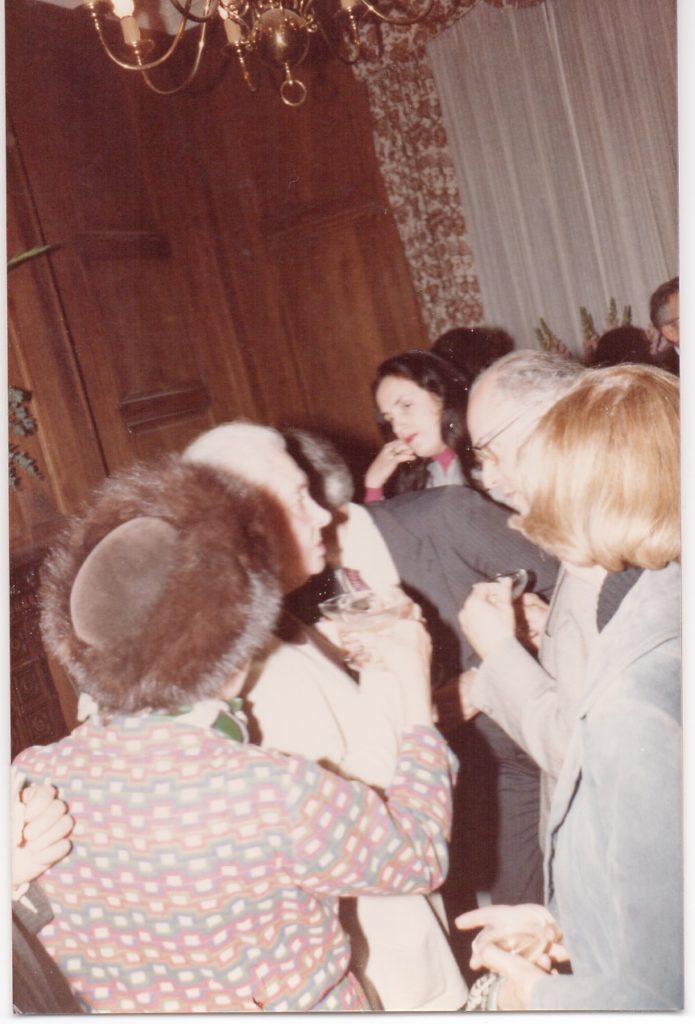
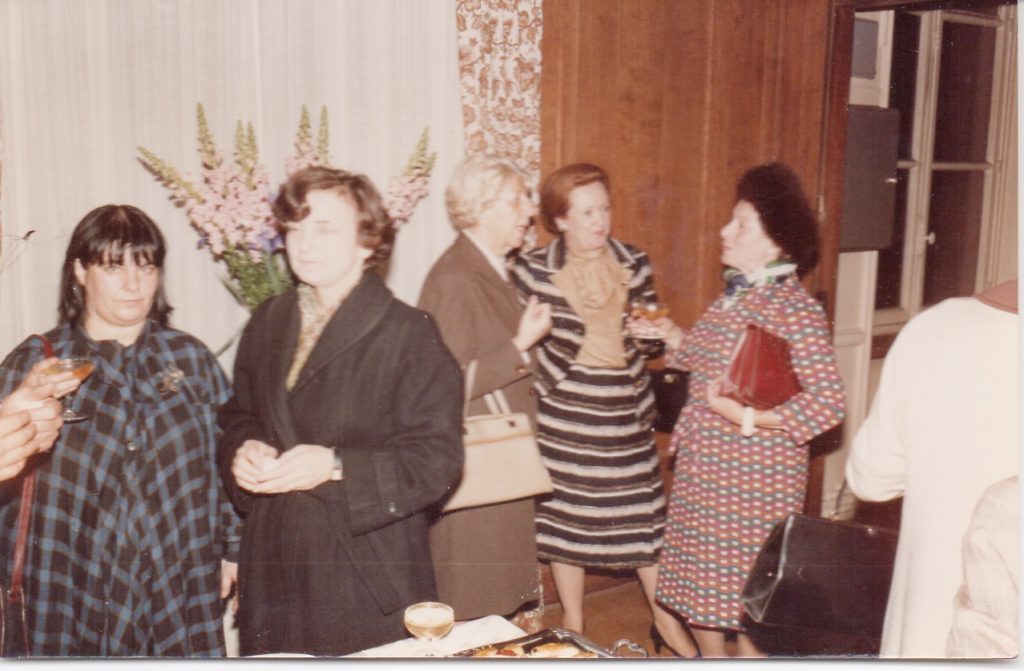
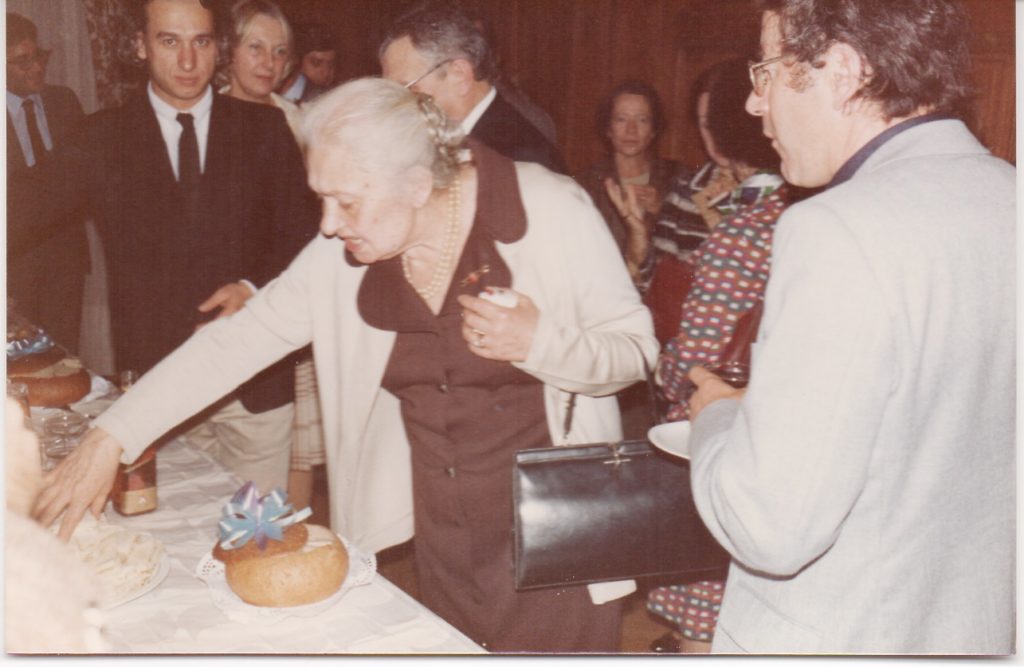
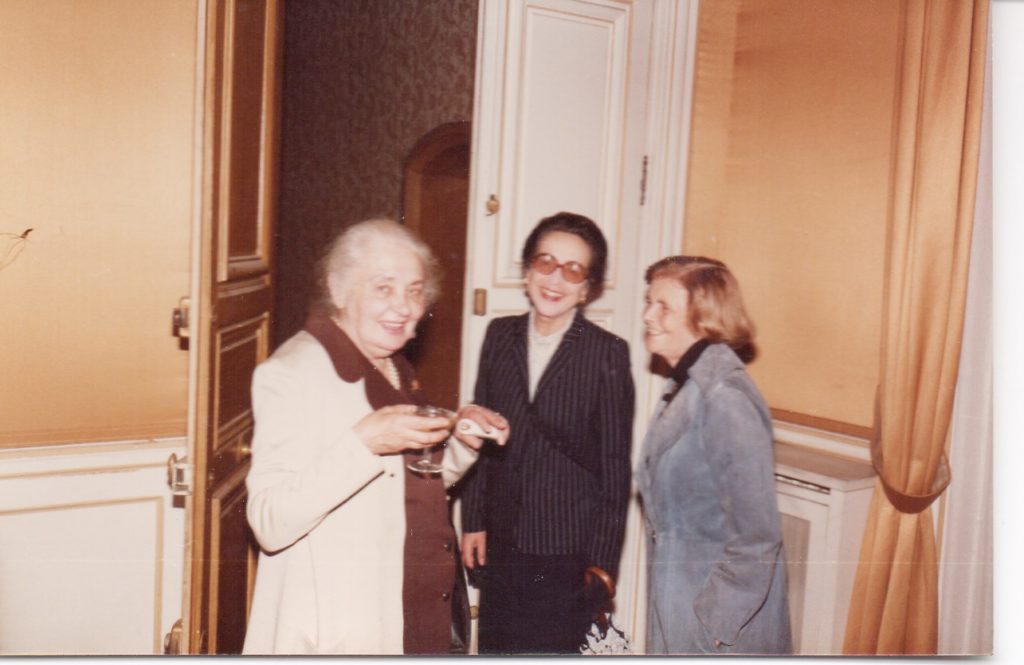
    Extraits des archives de Valentine Marcadé

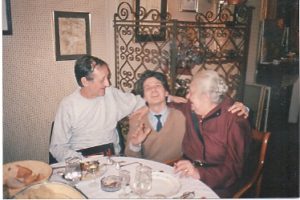
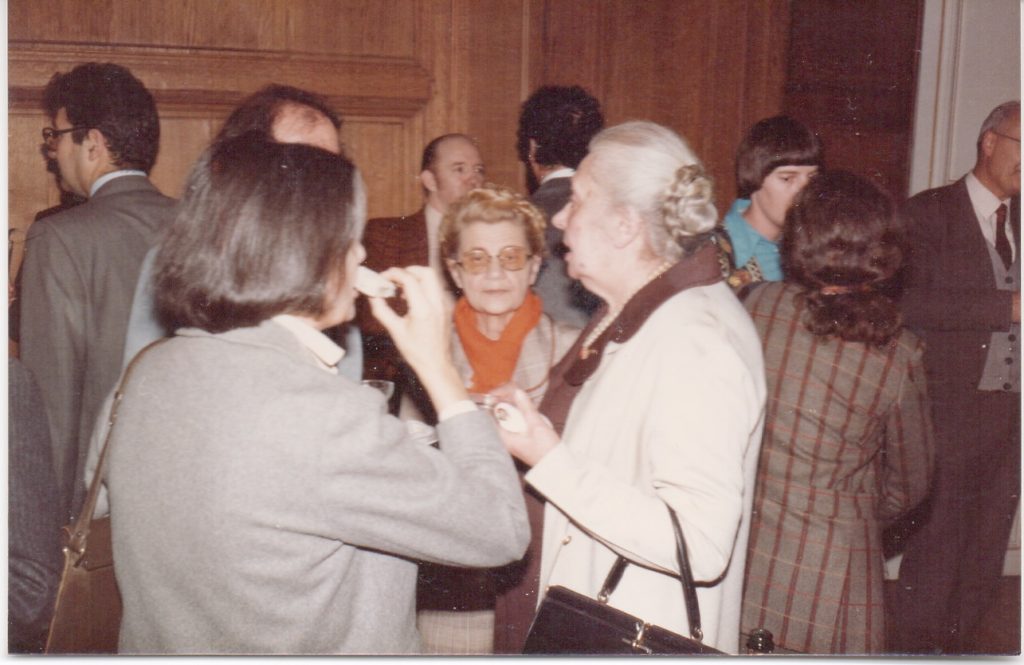
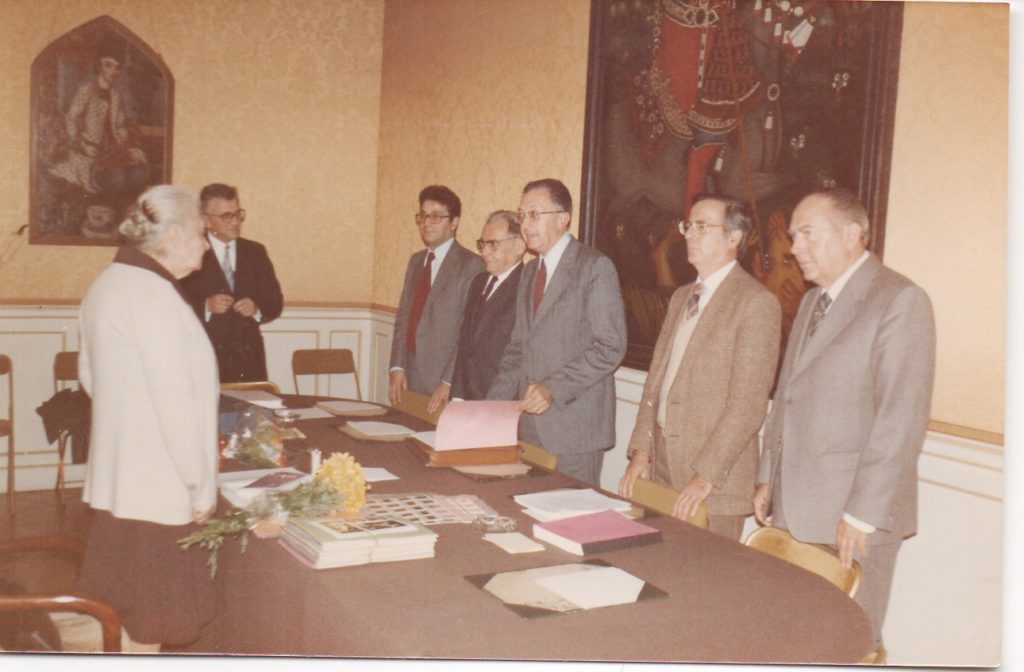
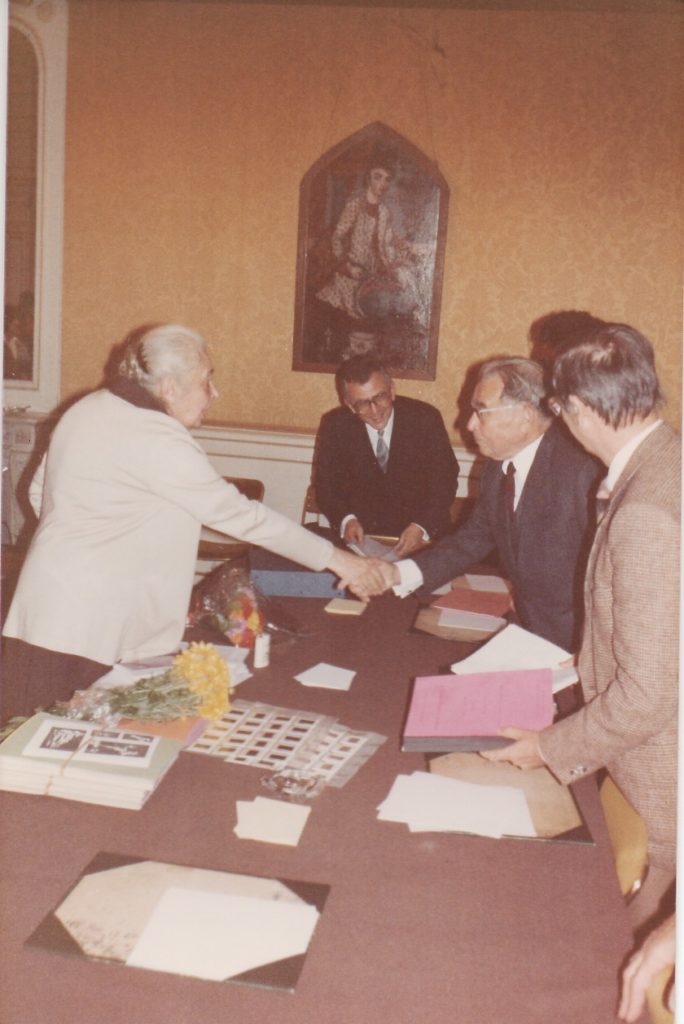
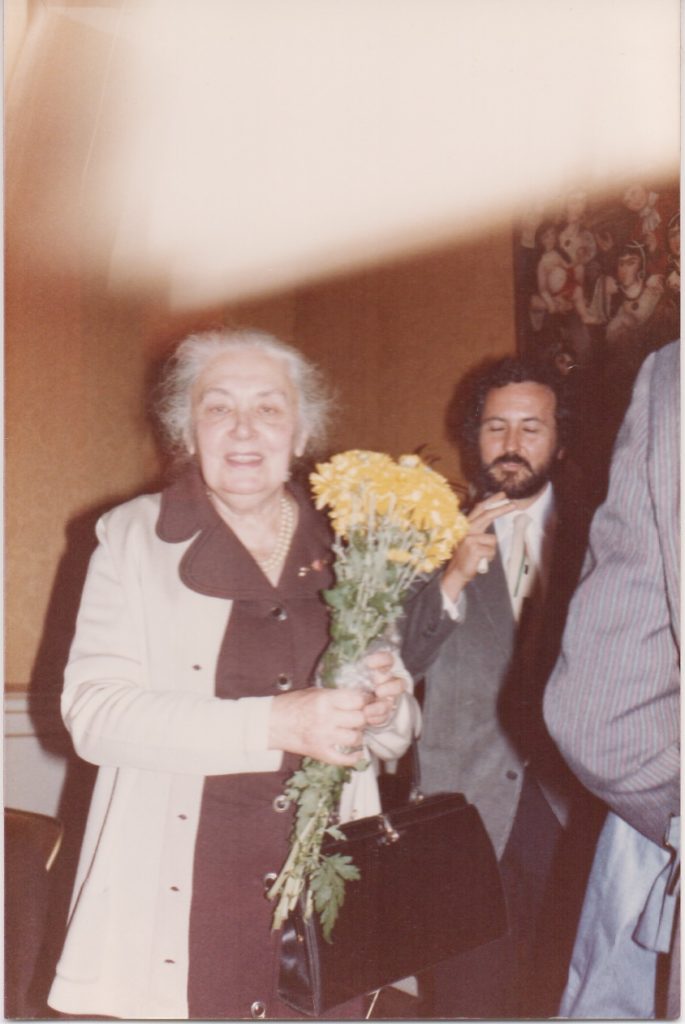
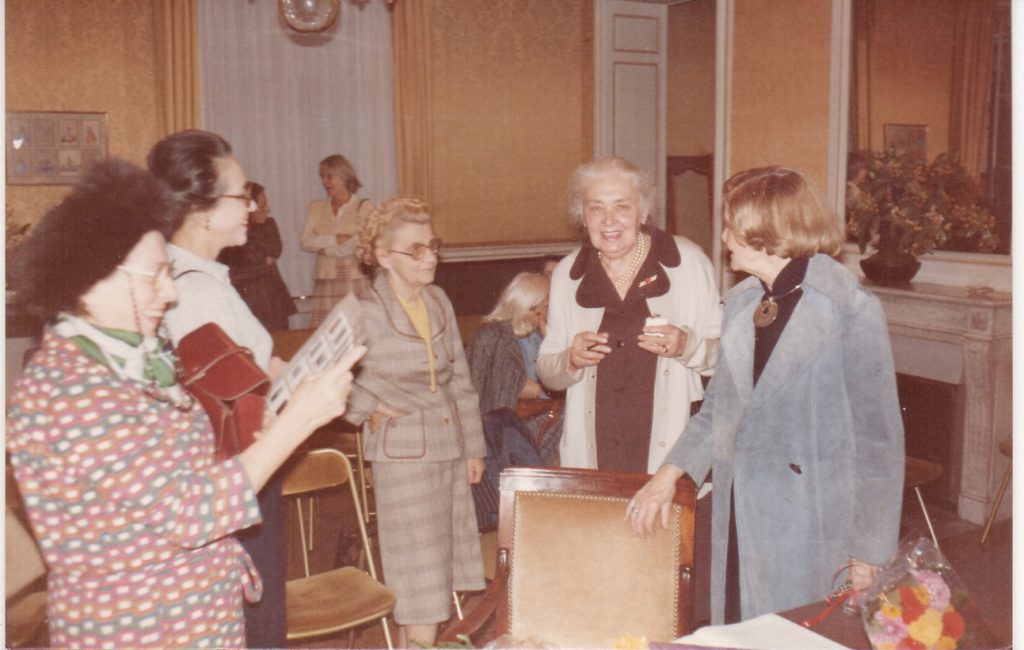
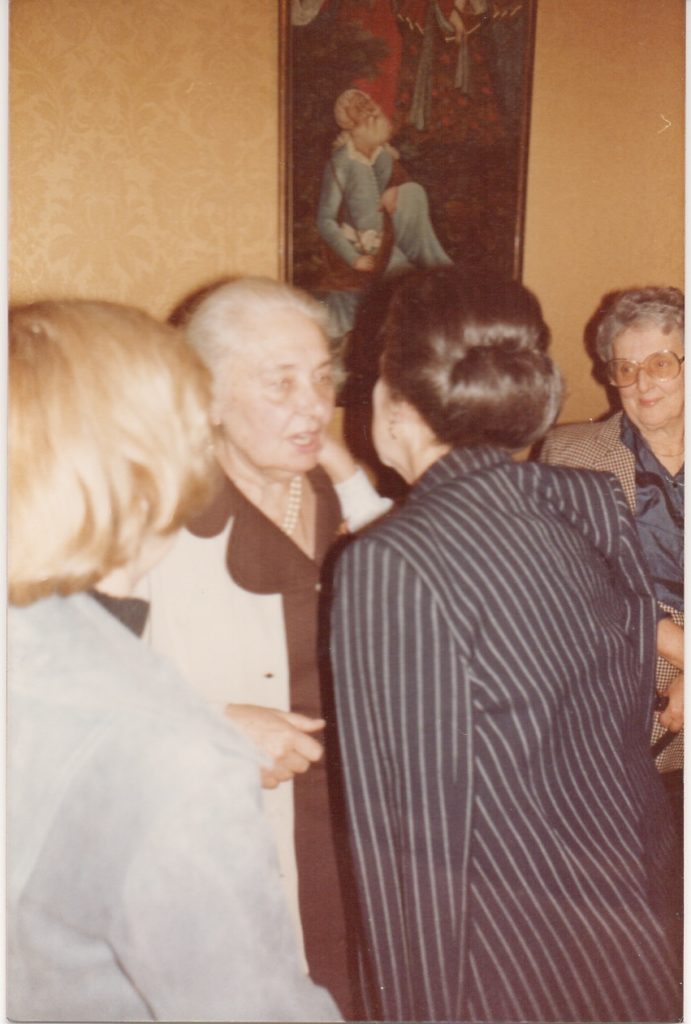
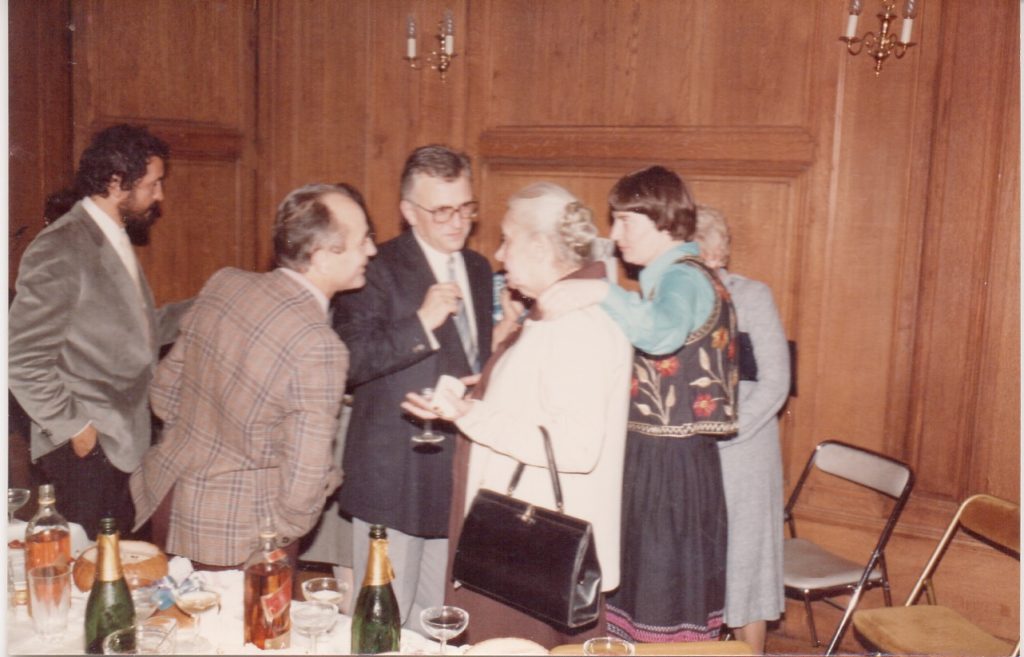
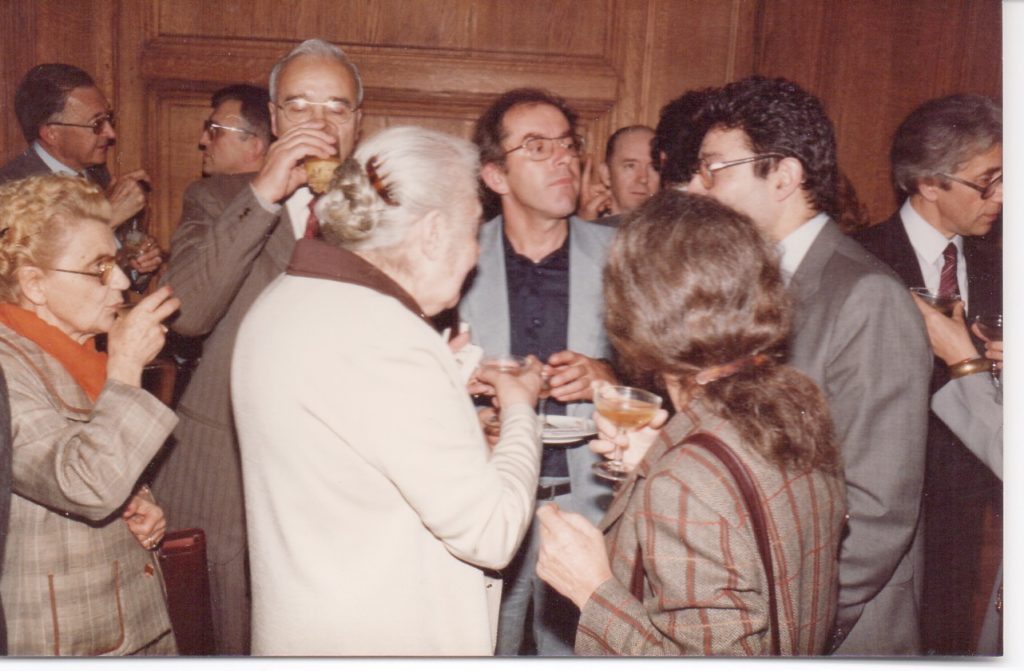
    Evguénia Pétrova, Evguéni Kovtoune, Valentine Marcadé, Sergueï Dédiouline (avril 1990)
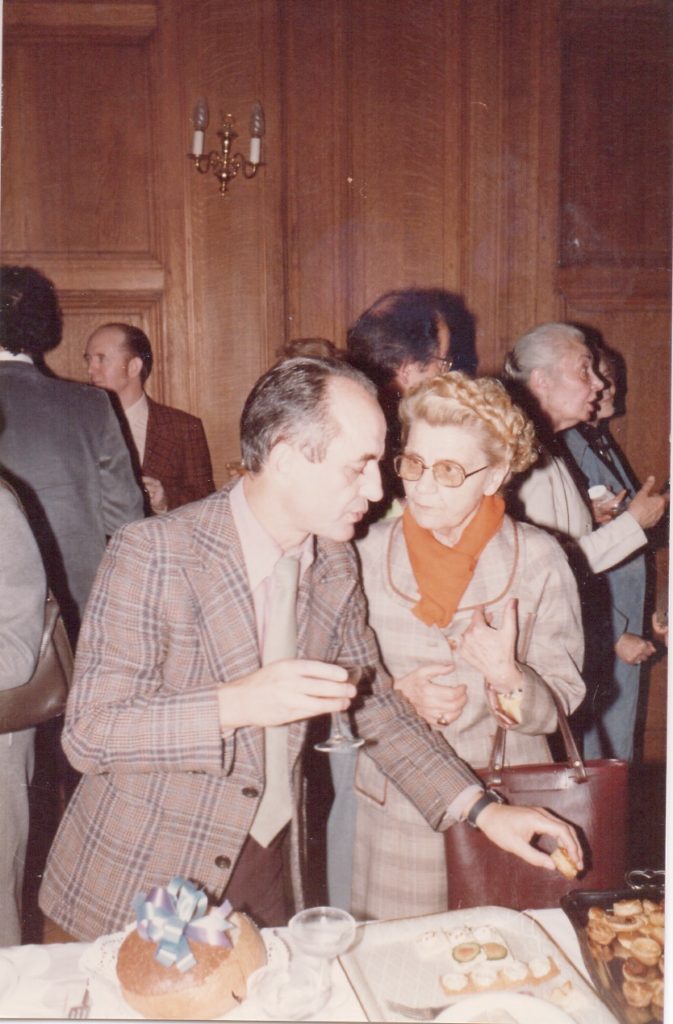
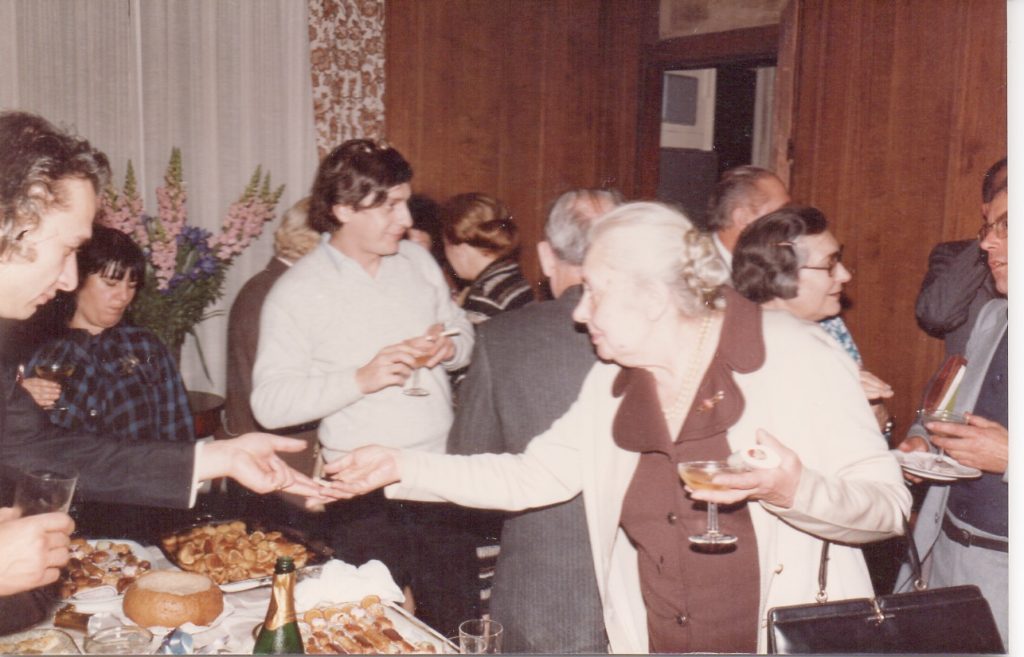
    Evguéni Kovtoune, Valentine Marcadé
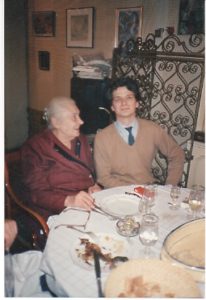
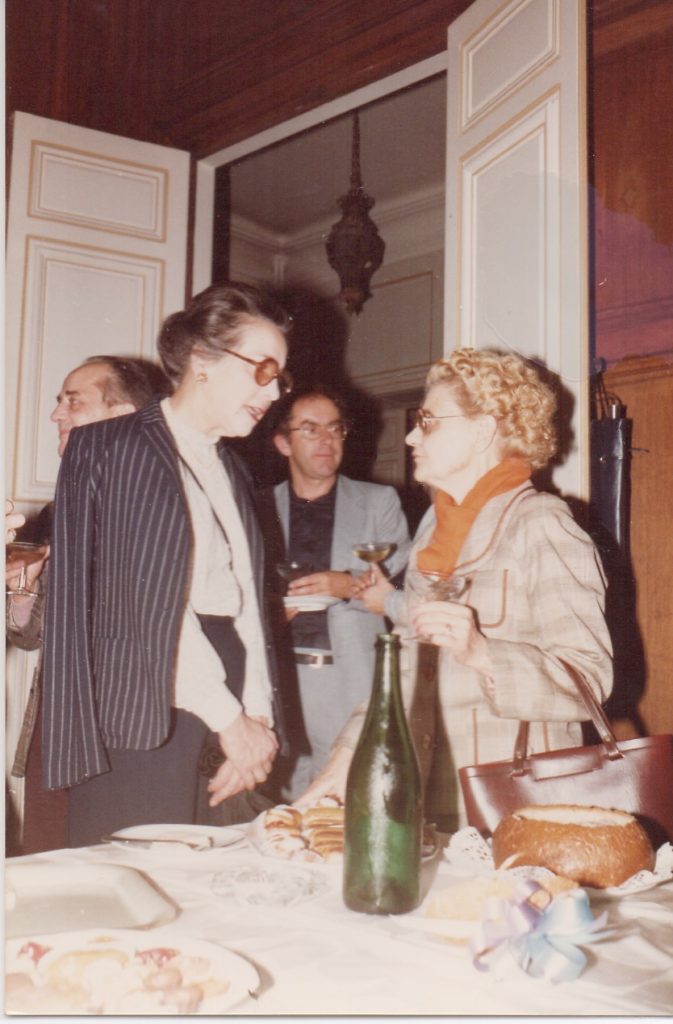
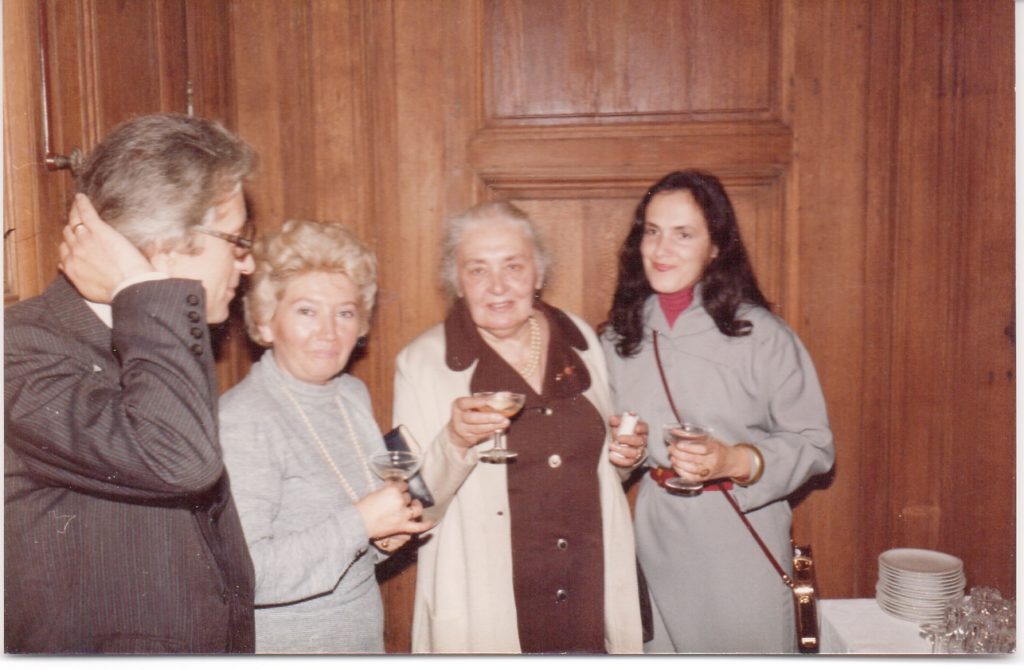
    Evguéni Kovtoune, Alexis von Tiesenhausen, Valentine Marcadé
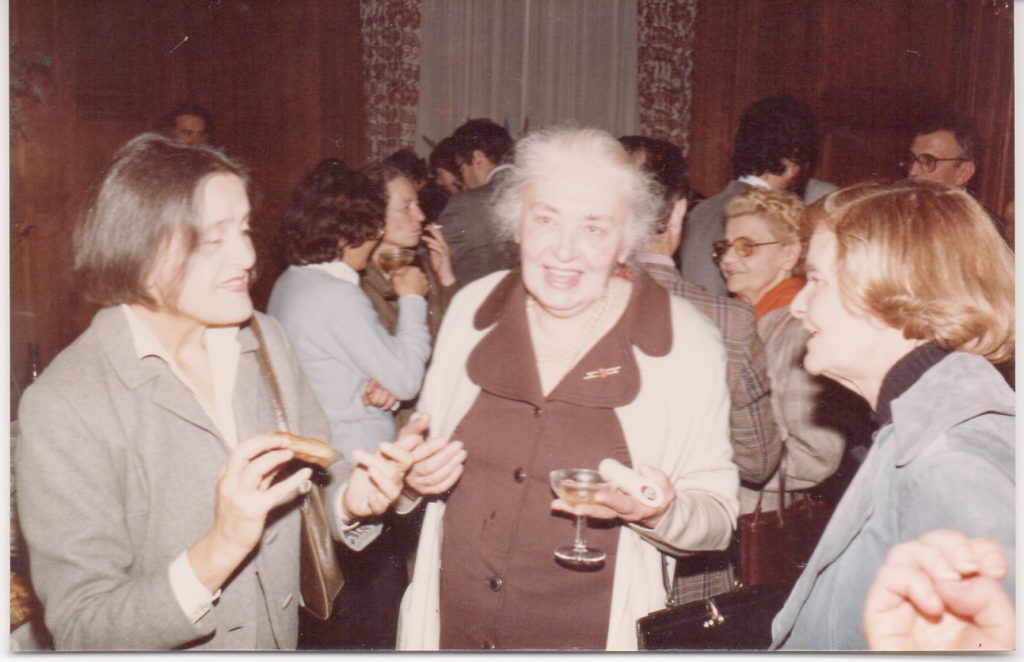
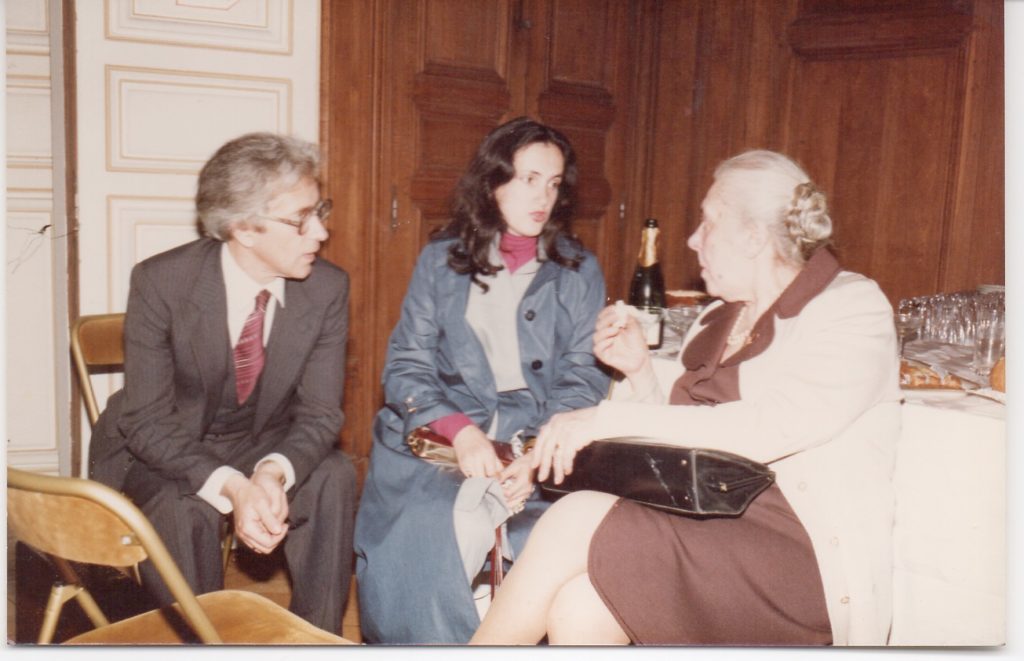
    Valentine Marcadé, Alexis von Tiesehause
  • Kyiv, the Capital of “Modernity” in the Turn of the Twentieth Century

    HARVARD UKRAINIAN STUDIES

    VOL. 36, NUMBER 3-4  2019

    UKRAINIAN MODERNISM

    Kyiv, the Capital of “Modernity” in the Turn of the Twentieth Century
    Jean-Claude Marcadé

    Throughout its long history Kyiv experienced many ups and downs, from the early tenth century, when it was the capital of the Kyivan Principality, to our own times, when it became the capital of an independent Ukrainian state.
    It was not until the very end of the nineteenth century that the “gubernatorial center” of Kyiv once again once again began to play a role more prominent than that of a provincial capital. Between 1884 and 1889 Mikhail Vrubel´ worked in Kyiv; it was there that he completed his visionary frescoes in St. Cyril’s Church, prepared designs for painting the interiors of St. Volodymyr’s Cathedral that were never executed, and created drawings and studies for still lifes that proved to be influential for Russian and Ukrainian art.
    Under the influence of Byzantine art, coupled with Venetian painting, Vrubel´ transformed the heritage of Aleksandr Ivanov’s “Biblical Sketches” into a completely new synthesis which contained the seeds of the future achievements of “left art,” the so-called “avant-garde.” At the same time, he shattered the traditional canons of Orthodox icon painting.
    ***
    During his Kyiv period Vrubel´ taught at the Kyiv Drawing School, which was founded amidst great difficulties by the Ukrainian realist painter Mykola Murashko. The school was financed by the entrepreneur and patron of the arts Ivan Tereshchenko. When Tereshchenko died in 1901, the Drawing School closed down, and was soon replaced by the Kyiv Art School in the capital. The genre painter Mykola Pymonenko (1862–1912), creator of idyllic paintings of Ukrainian peasant life, taught there until 1905. Among his pupils were Aristarkh Lentulov, Oleksandr Bohomazov, Aleksandra Ekster, Abram Manevich, and Volodymyr Burliuk, that is, the leading representatives of the future avant-garde. In one of his autobiographies Kazimir Malevich writes that he became acquainted with Pymonenko at the beginning of his career:
    « His paintings made a great impression on me. He showed me the painting Hopak. I was overwhelmed by everything I saw in his studio. There were a great many easels with paintings depicting the life of Ukraine.
    I show him my own works, nature studies. I’m in the Kyiv Art School. [очень двусмысленное ( а ля Малевич) утверждение, так как художник никогда не поступил в Киевскую художественную школу, значит надо понять глагол « попадал » как « наткулся »] »

    We see no evidence that Malevich had any connection with the art works produced in the Kyiv Art School, but the influence of Pymonenko, even if not attested in Malevich’s output before 1905 (for which period there is no reliable information), is nevertheless obvious. To my mind, for instance, Malevich’s gouache Floor Polishers (1911) exhibits the rythme of the Hopak dance. Dmytro Horbachov has pointed out his influence on Malevich’s postsuprematist works—for example, in The Reapers (1928-1929) or Flower Girl (1930) from the Russian Museum.
    Here is what Malevich recounts about his impressions of the Ukrainian capital:
    « Every year a great fair was held in the city of Kyiv, which was attended by merchants from all over the world.…
    I felt a great attraction for the city of Kyiv. I always had the sense that Kyiv was remarkable. Houses built out of colored bricks, the steep hills, the Dnieper, the distant horizon, steamboats. Everything about its life affected me more and more. Peasant women crossed the Dnieper in skiffs, bringing butter, milk, sour cream, filling the banks and streets of Kyiv, infusing it with special color. »

    After the first Russian revolution of 1905 and Tsar Nicholas II’s manifesto of October 17 that same year, which permitted street demonstrations, Kyiv became the site of clashes between extreme-right monarchists and socialists.
    « Pogroms began: peasants bringing food to sell in the city robbed and beat Jews. The school [Art School—J-C. M] was outraged by the inaction of the authorities, and the students joined a street demonstration.…The school administration decided to get rid of the dissidents and expelled 45 students under the pretext of nonpayment of tuition fees.”

    Among these dissidents were two artists, Alexander Archipenko and Oleksandr Bohomazov, who “lost their deferment from military service.” They were rescued from this unhappy fate (what a stint in the Russian army meant was well known) thanks to the painter and follower of the Barbizon school Serhii Svitoslavs´kyi (1857–1931). Many painters passed through Svitoslavs´kyi’s studio, including Vadim Falileev, Bohomazov, Manevіch, Sofiia Levyts´ka, and Ekster.
    An exhibition of paintings by the pupils of Svitoslavs´kyi’s studio took place in April 1906. Archipenko displayed five of his sculptures, which elicited the following commentary in a Kyiv newspaper: “Archipenko’s sculptures demonstrate that there is a ‘divine spark’ in the young sculptor.” Archipenko was nineteen at the time. He spent five years at the Kyiv Art School, and in 1908 left Ukraine permanently and settled in France. There is no doubt that those five years in Kyiv served as an indispensable foundation for the future development of Archipenko’s innovative sculptural techniques between 1912 and 1920. His teacher in Kyiv was the Italian-born sculptor Elia (Emilio) Sala, whose 1902 Chimaera sculptures decorated a famous Kyiv home (House with Chimaeras) designed in the art nouveau style by the architect Władysław Horodecki, which, to a certain degree and making due allowances, was the equivalent of Antoni Gaudí’s plant-like phantasmagoria in Barcelona. At the same time, Archipenko’s work was deeply saturated with all the forms and colors of folk art and the geography of his native land—as is also true of the work of Sonia Delaunay (née Sof´ia Il´inichna Shtern). The Ukrainian critic Dmytro Horbachov emphasizes this point: “Archipenko frequently reminds us of Ukrainian craftsmen with their impeccable taste in the decoration of toys and ceramic dishes, and in the carving of small chests.”
    The founding of the Kyiv Museum of Art, Industry, and Science dedicated to Emperor Nicholas II in 1904 had a paramount influence on the development of folk handicraft art, the repository of unprecedented richness since time immemorial: pottery, ceramics, articles fashioned from bone, horn, and metal, embroidery, women’s costumes, beadwork, and the like. On 19 February 1909 the museum held an exhibition in which Aleksandra Ekster and her friend Nataliia Davydova (1875–1933) took an active part. Both of these artists’ homes were gathering places for Kyiv’s intellectual and artistic elite. One of the frequenters of Davydova’s house was the famous Polish composer and pianist Karol Szymanowski, who brought along such celebrities as the pianists Arthur Rubinstein (whose memoirs feature a description of the Davydov home), Heinrich Neuhaus, and Felix Blumenfeld, as well as conductors such as Grzegorz Fitelberg. It was said that if there was a domain in which Kyiv had never been provincial, it was the field of music. In addition to Szymanowski’s circle, there was a circle associated with the Kyiv Music Society, under whose auspices performed such distinguished musicians as Pablo Casals, Jascha Heifetz, Aleksandr Glazunov, and Sergei Rachmaninoff.
    The handicrafts exhibition enjoyed great success and spurred the founding of the Kyiv Handicraft Society under the chairmanship of Nataliia Davydova. Davydova played an indispensable role in helping innovative painters become aware of new forms and colors that could replace realistic and naturalistic banality or mediocre imitations of the French impressionists. Thus, after 1916 the peasant women of the Ukrainian villages of Verbivka, near Kharkiv, and Skoptsi, not far from Poltava, began to use suprematist motifs for their pillows, handbags, and other items. This was the result of the tireless efforts of Ekster, Davydova, and Ievheniia Prybyl´s´ka under the aegis of the Kyiv Handicraft Society. Art critic Evgenii Kuz´min, wrote in 1912 that thanks to the handicraft society, “there emerged…many centers producing folk arts and crafts that find a ready market not only locally but also in Moscow, Petersburg, Paris, London, and even far-off Chicago—for example, the carpet-weaving ateliers established by V. N. Khanenko, Princess N. G. Iashvil´, and A. V. Semyhradova. In the homes of the latter two and also on the estate of Mrs. Davydova the production of embroideries based on designs both ancient and modern (but still in the same ancient style) has become very widespread.”
    In 1906–1908 cultural life in Kyiv, although provincial, was enhanced by guest appearances of the celebrated Russian bass Fedor Shaliapin (Feodor Chaliapin), the actress Vera Komissarzhevskaia and her theater, and the actor and director Vsevolod Meierhold and his Society of New Drama. Aleksandr Blok’s Balaganchik (The Fairground Booth) was staged. In 1908 the great Sarah Bernhardt also performed in Kyiv. Literary evenings were organized featuring such Russian writers as Ivan Bunin, Aleksei Remizov, Blok, Andrei Belyi, Dmitrii Merezhkovskii, and others. The literary-artistic journal V mire iskusstva, financed by the Davydov family, Ekster, and Princess Iashvil´, appeared in 1907. Its editor and publisher in 1908 was the Ukrainian composer and music theoretician Borys Ianovs´kyi (1876–1933). The goal of the journal was to carry forward, in the Ukrainian capital, the principles of Diaghilev’s St. Petersburg-based journal Mir iskusstva, which had stopped publishing in 1904. V mire iskusstva published articles about art, reproductions of art works, literary prose, and poetry.
    This brief survey of Kyiv’s intellectual and artistic life cannot overlook the Religious-Philosophical Society, which was something of a counterpart to the St. Petersburg and Moscow societies of the same name. This was the setting for the philosophical work of the great thinkers of the twentieth century, the Kyivites Nikolai Berdiaev and Lev Shestov. At the beginning of his philosophical memoirs Samopoznanie (opyt filosofskoi avtobiografii) (Self-Knowledge: An Essay in Philosophical Autobiography), Berdiaev describes Kyiv at the very end of the nineteenth century, offering a characterization that also remained true of Kyiv at the beginning of the twentieth century up to the First World War:
    « Kyiv is one of the most beautiful cities not only in Russia but indeed in all of Europe. It is sits up on the hills, on the banks of the Dnieper, with an extraordinarily broad vista, with a marvelous Tsar’s garden and the St. Sophia Cathedral, one of the finest churches in Russia. Adjacent to Pechersk are Lypky, also in the upper part of Kyiv. This is the part of the city where the nobility and high officials live; it consists of large private homes with gardens.…Throughout my entire life I have had a special love of gardens. But I felt myself to have been born in the forest, and I loved the forest most of all. My whole childhood and adolescence are connected to Lypky. This was a world somewhat different from that of Pechersk, a world of the nobility and officials, more influenced by contemporary civilization, a world more inclined to gaiety, which Pechersk did not permit. On the other side of Khreshchatyk, the main thoroughfare with shops that was situated between two hills, lived the bourgeoisie. At the very bottom, by the Dnieper, lay Podil, inhabited mainly by Jews, but the Kyiv Theological Academy was also there.…In Kyiv one always sensed a link with Western Europe. »

    ***

    The distinguished twentieth-century artist Antoine Pevsner (Natan Abramovich Pevzner), who was born in the Belarusian town of Klimavichy, spent five years at the Kyiv Art School. Before becoming a master of Russian constructivism after 1920, he was a painter and sketch artist influenced by Vrubel´. Of course, Kyiv was still a somewhat provincial city, but, as Dmytro Horbachov writes, “There was much to take comfort in: the Tereshchenko collection (which rivaled that of Tret´iakov and Alexander III), the collection of Western European paintings belonging to Varvara and Bohdan Khanenko (a descendant of a hetman of Ukraine)…; a European standard of book printing—Vasyl´ Kul´zhenko’s journals Iskusstvo and V mire iskusstva; the intellectualism of the Kyivan school of philosophy—Berdiaev, Shestov, Aleksandr Zakrzhevskii; and, most important for Pevsner, the ‘avant-garde’ exhibitions Zveno (The Link) and the Izdebski Salon.”
    Zveno was one of the important exhibitions of the “pre–avant-garde,” which in Ukraine and Russia was called “left art” or “Russian futurism,” that is, the innovative art that would overturn, between 1907 and 1927, all the centuries-old artistic and aesthetic foundations that had held since the Renaissance. In 1907 the Russian symbolist exhibitions Golubaia Roza (Blue Rose) and Στέφανος (Stephanos, the Wreath) took place in Moscow, where the first signs of primitivism appeared in the works of the brothers Volodymyr and David Burliuk, Mikhail Larionov, and Natalia Goncharova. In 1908, however, Kyiv became a city of “modernity” with the mounting of the Zveno exhibition. The main organizer, David Burliuk, describes this event that shook up the artistic scene of the Ukrainian capital in the following way: “In early January [of 1908] A. Ekster and Davydova stopped by the Stephanos. At the time Ekster ‘apparently’ took a liking to me. She was young and beautiful. That is how the Kyiv exhibition was born. First, I traveled to Moscow and through Larionov brought the Muscovites’ paintings from there.…The exhibition opened in Jindrich Jindřišek’s shop [a Czech-owned musical instruments store on Khreshchatyk—J-C. M] in Kyiv and was named ‘Zveno.’ Aleksandra Aleksandrovna [Ekster] displayed her Switzerland. There was a green chill in her canvases.” Burliuk adds, “The works of my brother Volodymyr were blows of an ax hacking at the old. The puzzled Kyiv critics heaped abuse [on them].” The magazine Iskusstvo i pechatnoe delo wrote, “‘Zveno’ gave us unsuccessful imitations of foreign models.” And for his part the elderly professor Mykola Murashko expressed his opinion in these words: “To be fair, I will say that in the work of the main organizer of ‘Zveno,’ Mrs. Ekster, in her paintings Ocean and The Breton Shore there is much that is fine—there is depth, there are forms and style. However, she did not raise those around her to her level of understanding, but rather made concessions; like them, she abandoned conveying her subject matter, so that if there is a rock, then it should resemble a rock, because otherwise we look and become confused, not understanding what it is. In Polenov’s [painting] Sea of Galilee the rocks are beautiful and alive. But these—Larionov, Goncharova, and others—are hooligans! This is not art but the vexation of our simple-hearted society.”
    To mark the occasion, David Burliuk issued a manifesto entitled “Golos impressionista v zashchitu zhivopisi” (The Voice of an Impressionist in Defense of Painting). The leaflet was published in V mire iskusstva and the newspaper Kievlianin. This was a pioneering “gesture” heralding the rise of a multitude of proclamations issued by European futurists, including Ukrainians and Russians, which proliferated with increasing frequency after 1909. The impressionism of artists from the Russian Empire that was practiced, for example, by Larionov, derived from French impressionism, but it transformed it by imbuing it with pantheistic and primitivist ideas.
    Kyiv became the center of the European avant-garde yet again when an exhibition from Odesa arrived in 1910—the famous first Izdebski Salon. It showcased 776 works of art, including paintings, watercolors, graphic art, sculpture, and children’s drawings. Participating in the exhibition were members of Les Nabis (Maurice Denis, Édouard Vuillard), impressionists (Paul Signac, Pierre Bonnard, Larionov, Nikolai Tarkhov), symbolists (Odilon Redon), early cubists (Georges Braque, Henri le Fauconnier, Jean Metzinger), and the Fauves (the Parisians Kees van Dongen, Henri Matisse, Maurice de Vlaminck, Georges Roualt, Albert Marquet; the Russians Aristarkh Lentulov, Il´ia Mashkov; the Kyivite Ekster; and the Munich-based Russians Wassily Kandinsky, Marianne von Werefkin, Vladimir Bekhteev, Alexej von Jawlensky). In the manifesto published in the exhibition’s catalog and entitled “Novaia zhivopis´” (New Painting), the organizer of the Salon, the sculptor and painter Vladimir Izdebskii (Włodzimierz Izdebski), asserted that the art was but a small part of an immense psychological wave and that it corresponded to the general trend in innovative arts in the period around 1910 in Europe and also among artists who came from the Russian Empire—not to depict the world but to reveal it. The Kyivite Benedikt Livshits, a poet, erudite theoretician, and brilliant memoirist, declared: “Izdebsky’s exhibition was a turning-point in the development of my artistic tastes and views.…“This was a new vision of the world in all its sensual splendour and outstanding diversity…; it was also a new philosophy of art, a heroic aesthetics which overthrew all the established canons of art and revealed distances which took my breath away.” Livshits was a close friend of Ekster’s, who, incidentally, illustrated his collection of poetry Volch´e solntse (Wolf’s Sun) in 1914.
    Ekster is one of the pillars of twentieth-century art. Without a doubt, she belongs to the Kyivan, if not Ukrainian, school of art, which left such a strong imprint on that century’s quests for innovation. In everything she did in her creative life, in her outstanding theater sets and costumes, and, above all, in her paintings, one can sense all that she drew upon in the Ukrainian city whose dominant aesthetic was the baroque, but with an addition of more archaic visual elements. Ekster’s entire body of work, with the exception, perhaps, of her short-lived constructivist period (1921–1922) and her turn to cubistic neoclassicism in France in the 1930s, bears the mark of the baroque: the profusion and generosity of forms and colors and the swirling motion of spirals. Here I would like to cite a few lines from her biographer, Georgii Kovalenko: “The majority of Aleksandra Ekster’s life is bound up with Kyiv, with Ukraine. She traveled a lot, she lived for long periods in Paris and Moscow, in Rome and St. Petersburg, but she would always return: her house, her atelier, her celebrated studio were all in Kyiv. And when she would have to leave Kyiv forever, she would set up her Paris house just like the one in Kyiv. It would have many bright Ukrainian rugs, embroideries, Ukrainian ceramics, and Ukrainian icons.”
    At the same time, Ekster was an exceptional “conduit” of innovative artistic ideas. She moved between Kyiv, Moscow, Paris, and Italy. There is a passage in Livshits’s “Polutoraglazyi strelets” (The One and a Half-Eyed Archer), where David Burliuk turns to his brother Volodymyr with these words:
    “My child, look, […] what Alexandra Alexandrovna gave me…”
    It’s a photograph of Picasso’s latest painting. Exter had just brought it from Paris.
    The last word in French painting. Pronounced over there, in the avant-garde, it will be passed on like a slogan. It is already being passed on—along the entire left front. It will occasion a thousand responses and imitations and will lay the foundation of a new movement.
    Like conspirators huddled over the captured plan of an enemy fortress, the brothers bend over the valuable photograph—the first experiment in disintegrating the body into planes.
    They raise their hands up to their eyes. While examining the composition they mentally break up the picture into parts.
    A woman’s skull split open, the back of her head transparent, reveals dazzling perspectives…
    “Jolly good…,” mutters Vladimir, “curtains for Larionov and Goncharova!”

    This took place in the winter of 1909–1910 at the Burliuks’ Ukrainian estate in Taurida gubernia. Kyiv had reassembled there, and there arose the so-called “Russian futurism,” whose source must be sought in Kyiv and in Ukraine.
    ***
    But Kyiv, in a most unfortunate way, also became the site of a most odious form of “modernity.” The city had its own “Dreyfus affair,” the Beilis trial, which had international repercussions. Benedikt Livshits, who himself was of Jewish background, recounted in his reminiscences the various aspects of anti-Semitism in the Russian Empire and the atmosphere that reigned in Kyiv in 1912. It was no surprise that in these conditions the charge against the Jew Beilis of the ritual murder of a young Christian would have a far-reaching scope. But the most extravagant and tragicomic aspect of this tense atmosphere was the fact that futurism was invoked in order to introduce arguments for and against. According to Livshits,
    « [The lawyer] Shulgin claimed that [the detective] Krasovsky’s testimony…was related to the data contained in the indictment in the same way that a work by a skillful artist is related to a piece of Futurist daubing; in Petersburg the police carefully studied Khlebnikov’s Bobeobi before the evening in the Tenishev Hall because they suspected an anagram for Beiliss in it; and finally they forbad us to appear at Chukovsky’s lecture for fear that we would organize a pro-Jewish demonstration. »

    ***
    Fortunately, Kyiv’s notorious reputation did not last long, and artistic life soon reappeared with its customary brilliance. In February–March 1914 the Kol´tso (Kil´tse, The Ring) exhibition was organized by Oleksandr Bohomazov, one of the most important representatives of Ukrainian cubo-futurism not only in painting but also in theoretical writing. Bohomazov was a friend of Ekster, and like her, he was deeply attached to Kyiv. He describes the Ukrainian capital thus: “Kyiv,…across its entire three-dimensional space is filled with a beautiful, varied, and profound dynamism. Here the streets reach to the sky, forms are full of tension, lines are energetic and powerful, they fall, shatter, sing, and play. The general pace of life emphasizes this dynamism even more; it endows it, so to speak, with legitimate foundation, and spills out broadly all around, until it calms down on the quiet shores of the Dnieper’s left bank.”
    The Kol´tso exhibition featured 21 artists and 306 works of art, 88 of which were Bohomazov’s (paintings, watercolors, graphics, and drawings). The principles espoused by the Kol´tso group were formulated in the introduction to the catalog. They supplanted an architectural perspective with one of rhythmical vibrations of lines that was more closely related to sensibility and expressed more aesthetic emotions. The connection between Bohomazov’s aesthetic and that of Izdebski and, above all, Kandinsky, is evident. In his treatise entitled “Zhivopis´ i elementy” (Painting and Elements), written in Russian in 1914, Bohomazov maintains that a painting is a living organism, not a frozen illustration. Painting is connected to nature in the dialectical (as in Plato!) movement between the two. Bohomazov’s text is extraordinarily rich. It is one of the most profound essays in the literature on Ukrainian and Russian avant-garde art of the 1910s and 1920s, on par with the essays of Kandinsky, von Werefkin, Vladimir Markov, Ol´ga Rozanova, Larionov, Malevich, Georgii Iakulov, or Mikhail Matiushin.
    In parallel with these trends, which functioned within the dominant Russian culture and language there developed a movement of Ukrainian identity and language. This was Ukrainian futurism, whose brilliant spokesman was the poet Mykhail´ Semenko (1892–1937), the future editor of the Kharkiv avant-garde journal Nova Generatsiia (1928–1930]). In late 1913 Semenko, his brother Vasyl´ (d. 1915), and the painter Pavlo Kovzhun (1896–1939) founded Ukraine’s first futurist group in Kyiv called Kvero, from the Latin word quaero, meaning “I seek.” In February 1914 the Kvero group published the first futurist publication in the Ukrainian language, an eight-page brochure entitled Derzannia (Daring), which mocked the official celebration of the centenary of the birth of Ukraine’s national poet Taras Shevchenko. At the same time and in the same way Russian cubo-futurist poets were jettisoning Pushkin and the nineteenth-century classics from the “steamboat of modernity.” The Kvero group invoked Italian futurism, not Russian, and in April 1914 it published a collection of Semenko’s poems entitled Kvero-futuryzm. However, owing to the outbreak of the First World War, this first effort was never continued. Despite the relatively isolated nature of this movement, Ukrainian futurism, as it emerged briefly in 1914, did not die. Opportunities opened up not only for creating experimental Ukrainian poetry, but also for publishing in Kyiv in 1919, under Semenko’s editorship, four issues of the magazine Mystetstvo, the first journal of its kind to appear in the Ukrainian language.
    ***
    The event of the utmost importance occurred in March 1917, when the Central Rada, the central Ukrainian council, was formed, which would proclaim Ukraine’s independence. However, the October Revolution in Russia was followed by a savage civil war in Kyiv and Ukraine as a whole among the Whites, Reds, and Greens, which lasted until 1923. Before the situation worsened, it was still possible, in October 1917, to found the State Ukrainian Academy of Fine Arts (Ukrainian Academy of Art), which became the national center of art education. One of its professors was Mykhailo Boichuk (1882–1937), whose “neo-Byzantinism” was noted by Guillaume Apollinaire in Paris as early as 1910–1911. Boichuk was the leader of a movement known as Boichukism, which aimed to portray contemporary subjects in the Byzantine-Ukrainian style. Among the other professors of the Academy were Mykola Burachek (1876–1942), a master of the lyrical landscape, Vasyl´ Krychevs´kyi (1872–1952), who derived his subject matter from ancient Ukrainian art ornament, and his brother Fedir Krychevs´kyi (1879–1947), who created paintings in the spirit of Far Eastern art. There was also Abram Manevich, who gained renown in Paris as a fauvist and expressionist. Heorhii Narbut (1886–1920) achieved a fusion of the Ukrainian graphic tradition with the mastery of illustration that he acquired through his contact with the St. Petersburg-based magazine Mir iskusstva (his teachers were Ivan Bilibin and Mstislav Dobuzhinskii). Finally, high-quality Munich realism was representated by Oleksandr Murashko (1875–1919). There was obviously no single direction in the in the academy’s teaching program, but its very existence was a major milestone on the way to Kyiv’s cultural autonomy. The academy was short-lived, closed down during the 1922–1923 academic year, and the Institute of Visual Art was founded in its place, becoming the Kyiv Art Institute in 1927 after its merger with the Institute of Architecture. Vladimir Tatlin and Malevich came to teach there in the second half of the 1920s, when repressions against avant-garde artists, which began with the closure of the State Institute of Artistic Culture (GINKhUK) in 1927 in Leningrad, intensified in Russia.
    In 1918, during the chaotic revolutionary period, Aleksandra Ekster was able to open a studio which took in a number of painters who later would gain fame, such as her assistant Isaak Rabynovych (Rabinovich), Oleksandr (Aleksandr) Tyshler, Nison Shyfryn (Nisson Shifrin), Pavel Chelishchev (Tchelitchew), Vadym Meller, Klyment (Kliment) Red´ko, Solomon Nikritin, André Lanskoy, and others. Ekster brought with her the entirety of cubo-suprematist-futurist knowledge, which she employed in painting, the theater, and applied art.
    Performing arts enjoyed great favor in Kyiv, where Les´ Kurbas founded his Young Theater (Molodyi teatr) in 1916, which subsequently became the celebrated Berezil´ Theater in Kharkiv, and where some of the boldest art quests of the twentieth century were realized.
    Kyiv was also the city where the great Bronislava Nijinska established her ballet studio; it was here that her career as a choreographer began in 1919–1921 and where she developed her theory of movement.
    ***
    One cannot speak about Kyiv as one of the centers of “modernity” in the first quarter of the twentieth century without mentioning the Kultur-Lige, which was founded in late 1917 by members of the Jewish intelligentsia who devoted their efforts to Yiddish culture: Nakhman Maisel (Nachman Meisel), David Bergelson (Davyd Bergel´son), and Moshe Litvakov. The Kultur-Lige championed three principal causes: the education of the Jewish people, the production of literature in the Yiddish language, and the creation of Jewish art.
    In Kyiv, as in Odesa, a quarter of the population was Jewish. Before the 1917 revolution the Jewish community was exposed to a variety of movements and their spokesmen: assimilationists, acculturationists, socialists, Zionists, “Yiddishists,” and orthodox traditionalists. The goal of the Kultur-Lige was to secure the Jewish population’s access to knowledge and art by creating public universities, gymnasia, libraries, drama circles, choirs, and the like. The Kultur-Lige issued its own Yiddish-language publications, which it disseminated throughout Ukraine and Russia.
    With respect to art, there were artists in the Kultur-Lige who had started out as primitivists and cubo-futurists, such as the painters Issachar Rybak (1897–1935) and Oleksandr Tyshler (1898–1980), the sculptor Iosyf (Iosif) Chaikov (1888–1980), and the artist El Lissitzky (1890–1941).
    Jewish artists like Rybak and Boris Aronson (1898–1980) wanted “to create a modern Jewish plastic art which seeks its own organic national form, color and rhythm.” In their 1919 manifesto in the publication Oyfgang (Sunrise) Rybak and Aronson repudiated the realism and naturalism of Jewish artists like Iurii (Yehuda) Pen and genre scenes “in the Jewish style.” They accepted the primitivism of folk forms and futurism, but rejected pure abstraction because, as they claimed, “the modern Jewish artist…in such an art painting cannot reveal living emotions.” Rybak and Aronson adopted a position identical to one we observe in the Jewish school in Paris in the twentieth century, where the expressionist element predominated.
    On the other hand, El Lissitzky, whose marvelous primitivist-style illustrations to the traditional Passover song “Khad gadye” (One Kid) were issued by the Kultur-Lige publishing house in 1919, turned to a cubo-futurism that verged on total abstraction while still in Kyiv. In 1920 he moved to Vitebsk, where he ultimately sided with Malevich (not with Chagall), and where he created his celebrated series of drawings and lithographs Prouns (Project for the Affirmation of the New, 1919–1923).
    Other artists of Jewish background, such as Antoine Pevsner and Naum Gabo, neither of whom was steeped in the Kultur-Lige aesthetic, created their own distinctive art that was part of the international modernist movement.
    In April 1920 the Kultur-Lige organized the first and only exhibition of Jewish art in Kyiv. Among the eleven participating artists were El Lissitzky, Chaikov, Tyshler, and Shyfryn. But by 1921 the Kultur-Lige’s prospects in Kyiv came to an end. In 1927 the Ukrainian Academy of Sciences in Kyiv opened a department of Jewish culture.
    ***
    I will dwell briefly here on the magazine Semafor u maibutnie: Aparat panfuturystiv (Semaphore to the Future: The Panfuturists’ Apparatus), which Mykhail´ Semenko issued in Kyiv in 1922 (only one issue ever appeared). It contains a random mixture of European futurist and Dadaist influences: the most important thing was to establish a distance from Moscow. The cover of the magazine presents a composition featuring a mix of Cyrillic and Latin letters. By suggesting that the Ukrainian language could be written in the Latin alphabet, the Ukrainian Futurists also declared their desire to separate themselves from Russian influence. Semenko looked to Berlin and Paris, the German and French Dadaists (Richard Hülsenbeck, Tristan Tzara, Marcel Duchamp, Jean Arp, and others). Nonetheless, Semenko’s “poetry-painting” would not have been possible without, for example, Vasilii Kamenskii’s “ferro-concrete poems” or El Lissitzky’s typographical experiments and the arrangement of letters in his book designs.
    All these attempts were short-lived. Tatlin and Malevich’s teaching stints in Kyiv (1925 and 1929–1930, respectively) were the last “flash” of innovation in the Ukrainian capital, as was Malevich’s retrospective exhibition in 1930, which was the Polish/Ukrainian/Russian artist’s last before the retrospective that took place in 1978 at the Centre Georges Pompidou in Paris.
    In conclusion, I would like to provide a brief analysis of Malevich’s exemplary painting The Carpenter, which was exhibited in Kyiv in the spring of 1930. This painting is part of a series of postsuprematist works that were a return to the painter’s pre-1914 cubo-futurist village motifs. We see the same aesthetic of the icon, the popular print (lubok), and signboard with their hieratism of poses and almond-shaped “strabismus.” In The Carpenter, as in this entire late series, the distinctive feature is a Ukrainian polychromy. What remains of cubo-futurism is the geometrization and “metallic” colors. The artist builds the background of the painting with horizontal bands that delineate broad, monochromatic surfaces. The intersecting paths recall works exploring suprematist space created by the UNOVIS (Champions of New Art) movement at the VitebskVitebsk Art School. The wood element is accentuated. The color yellow is used for the pile of girders ready to be used in construction, the fence, the house (a church?), and the handle of the hatchet and the cutter-bit held by the carpenter. Both the hatchet and the cutter-bit are painted blue and yellow; they comprise the main color element of the whole surface. These “Ukrainian” colors coexist alongside the “Russian” colors of white, blue, and red, as often occurs the works of Ekster, who loved to play with the colors of various national flags (French, Italian, Russian, and Ukrainian). The green-and-red color combination was present in Malevich’s cubo-futurist period. In particular, it is seen in the Perfected Portrait of Ivan Vasil´evich Kliunkov, a representation of a painter-constructor, the artist Kliunkov (Kliun). Thus, The Carpenter constitutes a new image of a peasant/Orthodox believer/builder/painter—as well as of a martyr condemned to silence. Christ was a carpenter, and here in camouflaged form one can see an allegory of the crucified artist under the horrific conditions of the Stalinist terror. In addition to the tragic nature of the image, an aesthetic polemic with two important Ukrainian trends of the 1920s is detectable in this painting: Bohomazov’s spectralism (for example, his triptich Sawyers) and the neo-Byzantinism of the Boichukists. Postsuprematist polychromy reveals, despite the symbolic aspects, the non-objective nature of the world, and it is not associated with variations of light and color as seen through the retina. This is internal vision, like in an icon. At the same time, Malevich does not clothe contemporary reality in the garments of an icon; he creates his own “icons” and a reality that did not at all exist until then.
    In the early 1930s Stalinist terror once again reduced Kyiv to the role of satellite, and this status continued until the rebirth of an independent Ukraine in the 1990s.

    Translated from the Russian by Marta D. Olynyk with the assistance of Mary Ann Szporluk and Yevgeniy Runkevich.

    Notes

     Не исключено, что Малевич мог видеть « Гопака » Пымоненко около 1909 года, когда картина нашумела из-за золотой медали в Парижском  салоне французских художников. Возможно, что мужской танцор на этой картине повлиял на примитивитсксие и кубофутуристические  вещи Малевича(преувеличение, »разбухание » фигур).

    See N. M. Tarabukin, Mikhail Aleksandrovich Vrubel´ (Moscow: Iskusstvo, 1974).

    N. I. Khardzhiev, “K. Malevich: Glavy iz avtobiografii khudozhnika,” in Stat´i ob avangarde: V dvukh tomakh (Moscow: RA, 1997), 1:118.

    Ibid., 114.

    Dmytro Horbatchov, “La vie à Kiev au temps de Pevsner (1902–1909),” in Pevsner (1884 –1962): Colloque international Antoine Pevsner tenu au musée Rodin en décembre 1992 sous la direction de Jean-Claude Marcadé ([Villeurbanne]: Art édition, Association « Les Amis d’Antoine Pevsner », 1995), 9–10.

    Ibid, 10.

    On Svitoslavs´kyi’s Saturday “open houses,” see Georgii Kovalenko, “Aleksandra Ekster: Pervyie kievskie gody,” Iskusstvoznanie, 2005, no. 1, 557 and subsequent pages.

    “Скульптура д. Архипенка досить ясно свідчить, що в молодого скульптора є “искра божа.” “Vystavka kartyn khudozhnyka Svitoslavs´koho ta ioho uchniv,” Hromads´ka dumka, no 96, 28 April 1906, 3. Cited in Horbatchov, “La vie à Kiev,” 10.

    Dmytro Gorbatchev, “Avant-propos,” trans. Jean-Claude Marcadé, in L’Art en Ukraine (Toulouse: Musée des Augustins de Toulouse, 1993), 23; see also Dimitri Horbachov, “Ein Überblick über die ukrainische Avantgarde,” in Avantgarde & Ukraine, ed. Jo-Anne Birnie Danzker (Munich: Klinkhardt & Biermann, 1993), 55–72, published in conjunction with the exhibition “Avantgarde & Ukraine” held at the Villa Stuck in Munich, Germany.

    For а more detailed study of this artistic, philosophical, and musical Kyiv circle, see Kovalenko’s outstanding article, “Aleksandra Ekster: Pervyie kievskie gody,” 547 and subsequent pages.

    Evgenii Kuz´min, “Pis´mo iz Kishineva,” Russkaia Khudozhestvennaia Letopis´, 1912, no. 8–9, 132. Cited in Kovalenko, “Aleksandra Ekster: Pervyie kievskie gody,” 556.

    For discussion of this magazine, see Kovalenko, “Aleksandra Ekster: Pervyie kievskie gody,” 559–62.

    On the Religious-Philosophical Society in Kyiv, see Jutta Scherrer, Die Petersburger Religiös-Philosophischen Vereinigungen: Die Entwicklung des religiösen Selbstverständnisses ihrer Intelligencija-Mitglieder (1901–1917),, Forschungen zur osteuropäischen Geschichte 19 (Wiesbaden: Otto Harrassowitz, 1973), 226–34.

    Nikolai Berdiaev, “Samopoznanie (opyt filosofskoi avtobiografii),” in Sobranie sochinenii, 2nd rev. ed. (Paris: YMCA Press, 1983), 1:14.

    See biography of Pevsner by Pierre Brullé, in Antoine Pevsner: Catalogue raisonné de l’oeuvre sculpté, by Elisabeth Lebon and Pierre Brullé (Paris: Association “Les amis d´Antoine Pevsner,” Galerie-éditions Pierre Brullé , 2002), 222–64.

    Horbatchov, “La vie à Kiev,” 11.

    David Burliuk, “Fragmenty iz vospominanii futurista,” cited in G. F. Kovalenko, Aleksandra Ekster (Moscow: Galart, 1993), 181.

    Burliuk, “Fragmenty iz vospominanii futurista.” Cited in Horbatchov, “La vie à Kiev,” 11.

    “Khudozhestvennaia Khronika,” Iskusstvo i pechatnoe delo (Kyiv), 1909, no. 1–2, 18. Cited in Kovalenko, Aleksandra Ekster, 181.

    Mykola Murashko, Public lecture in the Kyiv Society of Antiquities and Arts (November, 1908). Archive of the National Art Museum of Ukraine, Kyiv, fond 17, no. 25, pp. 15¬–16. Cited in Horbatchov, “La vie à Kiev,” 11. See also Kovalenko, Aleksandra Ekster, 181; Kovalenko, “Aleksandra Ekster: Po napravleniiu k kubizmu,” Iskusstvoznanie, 2005, no. 2, 499, 518nn20–21.

    Benedikt Livshits, The One and a Half-Eyed Archer, trans. and ed. John E. Bowlt (Newtonville, MA: Oriental Research Partners, 1977), 36.

    Kovalenko, “Aleksandra Ekster: Pervyie kievskie gody,” 537.

    Livshits, The One and a Half-Eyed Archer, 43–44.

    Ibid., 69–72.

    Ibid., 154.

    See the catalog of the exhibition organized in Toulouse with the assistance of Dmytro Horbachov and Mikhail Kolesnikov, Alexandre Bogomazov, Jampol, 1880–Kiev, 1930: Musée d´Art Moderne, Réfectoire des Jacobins, Toulouse; Exposition du 21 juin au 28 août 1991 (Toulouse: éditions ARPAP, 1991).

    Aleksandr Bogomazov, “Doklad na Vseukrainskom s″ezde khudozhnikov, Kiev, 1918: Osnovnye zadachi razvitiia iskusstva zhivopisi na Ukraine,” in Ukraïns´ki avanhardysty iak teoretyky i publitsysty, ed. Dmytro Horbachov, Olena Papeta, and Serhii Papeta (Kyiv: Triumf, 2005), 81.

    On the Kvero movement, see Myroslava M. Mudrak, The New Generation and Artistic Modernism in the Ukraine (Ann Arbor: UMI, 1986), 9–13; Mudrak, Nova generatsia i mystets’yi modernizm v Ukraïni (Kyïv : Rodovid, 20128);  Oleh Ilnytzkyj, Ukrainian Futurism, 1914–1930: A Historical and Critical Study (Cambridge, MA: Ukrainian Research Institute, Harvard University. 1997), 3–10.

    Cf. Guillaume Apollinaire, Chroniques d’art (1902–1918) (Paris: Gallimard, 1960), 79, 167.

    See Vadym Pavlovs´kyi, Vasyl´ Hryhorovych Krychevs´kyi: Zhyttia i tvorchist´ (New York: Ukrainian Academy of Arts and Sciences in the U.S., 1974).

    For new documents on this period, seeTetiana Filevs’ka, ed, Kazymyr Malevych: Kyivs’kyi period, 1928-1930 (Kyïv : Rodovid, 2016); for the English Language edition, see Tetyana Filevska, ed., Kazimir Malevich: Kyïv Period, 1928-1930; Articles, Documents and Letters, trans. Marta Skorupsky and Wendy Salmond (Kyïv : Rodovid, 2017

    Kultur-Lige Zamlung (Kyiv: Central Committee of the Kultur-Lige, November 1919), 38. Translation quoted in Seth L. Wolitz, “The Jewish National Art Renaissance in Russia,” in Tradition and Revolution: The Jewish Renaissance in Russian Avant-Garde Art, 1912–1928, ed. Ruth Apter-Gabriel (Jerusalem: The Israel Museum, 1987), 35.

    Issachar Rybak and Boris Aronson, “Di Vegn Fun der Yidisher Moleray,” in Oyfgang, bk. 1 (Kyiv: Kultur-Lige, 1919), 124. Trans. Reuben Szklowin and quoted in Wolitz, “The Jewish National Art Renaissance in Russia,” 35.

    See El Lissitzky’s 1919 canvas entitled Composition, housed in the National Art Museum of Ukraine in Kyiv, in the catalog Die grosse Utopie: Die russische Avantgarde 1915–1932 (Frankfurt am Main: Schirn Kunsthalle, 1992), no. 197.

    See “Introduction from the Catalog of the ‘Jewish Exhibition of Sculpture, Graphics, and Drawings,’ February–March, 1920,” trans. from the Yiddish by Seth L. Wolitz, in Apter-Gabriel, Tradition and Revolution, 230.

    For detailed discussion, see Marina Dmitrieva-Einkhorn, “La revue Signal vers l’avenir dans le réseau des avant-gardes: L’axe Milan–Paris–Berlin–Kiev, ” in Russie, France, Allemagne, Italie : Transferts quadrangulaires du néoclacissisme aux avant-gardes, ed. Michel Espagne (Tusson: Du Lérot, 3005), 214-31
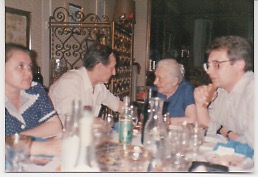
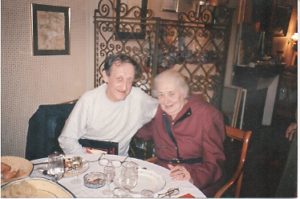
  • SOUTENANCE DE THÈSE POUR LE DOCTORAT D’ÉTAT DE VALENTINE MARCADÉ (SUITE)

    SOUTENANCE DE THÈSE POUR LE DOCTORAT D’ÉTAT DE VALENTINE MARCADÉ (SUITE)

    EXTRAITS DE SES ARCHIVES

    BORIS LOSSKY, MICHEL HOOG, EMMANUEL MARTINEAU
    JEAN-CLAUDE MARCADÉ, VIKROR KOPTILOV ET SON ÉPOUSE, JULIETTTE LAFOND, GENEVIÈVE NOUAILLE-ROUAULT

    KYRA SAPGUIR, NON IDENTIFIÉ, VALENTINE NILOUS, PAULE BARANOFF-ROSSINÉ, YVETTE MOCH
    VALENTINE MARCADÉ, ÉMILE KRUBA (DE DOS EN PROFIL)
    VALENTINE MARCADÉ, JULIETTE LAFOND, GENEVIÈVE NOUAILLE-ROUAULT
    AU CENTRE – MARIE SCHERRER-DOLGOROUKY
    LE LINGUISTE MARCEL FERRAND, MARIE SCHERRER-DOLGOROUKY
    JULIETTE LAFOND, ÉMILE KRUBA, MARIE SCHERRER-DOLGOROUKY
    DORA VALLIER, VALENTINE MARCADÉ, GENEVIÈVE NOUAILLE-ROUAULT
  • Soutenance de thèse pour le doctorat d’État de Valentine Marcadé sur l’art en Ukraine, le 17 octobre 1981

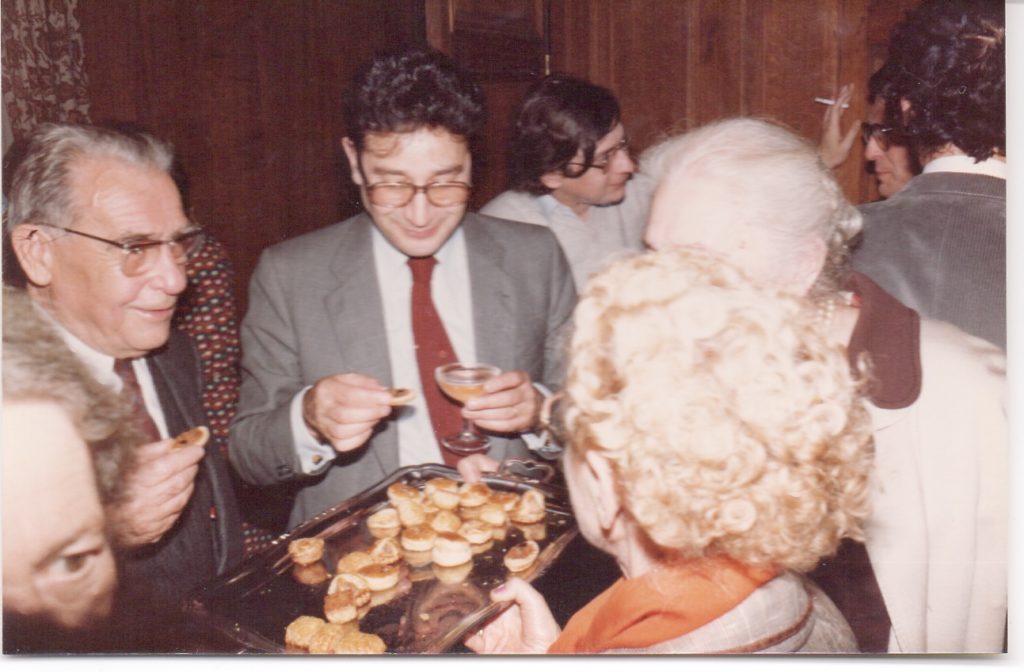
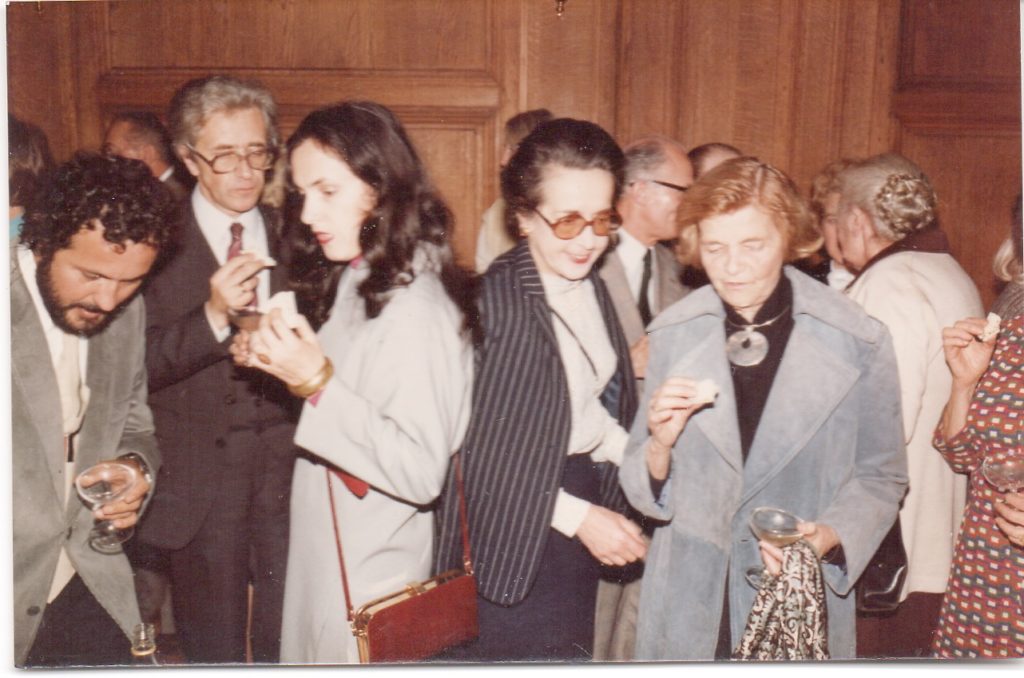
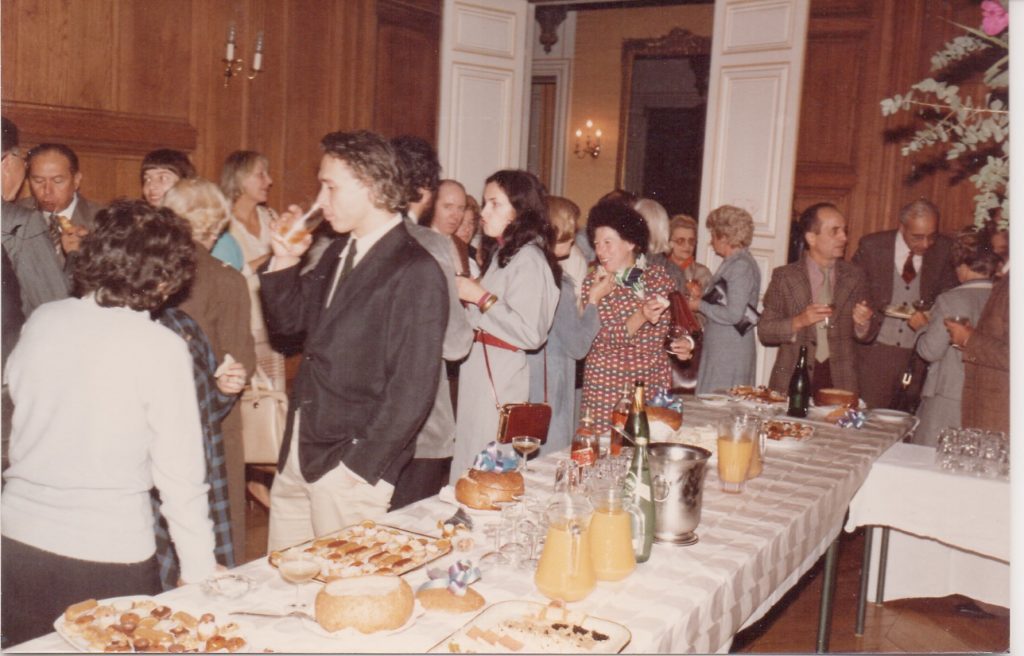
    Soutenance de thèse pour le doctorat d’État de Valentine Marcadé sur l’art en Ukraine, le 17 octobre 1981 aux Langues’O et réception dans les salons de l’Université


    FRANÇOIS DE LABRIOLLE, MICHEL HOOG, BORIS LOSSKY, MICHEL CADOT, LOUIS BAZIN, DÉCLARERNT VALENTINE MARCADÉ DOCTEUR ÈS LETTRES AVEC LA PLUS HAUTE MENTION
    VALENTINE MARCADÉ REMERCIE LES MEMBRES DU JURY


    VALENTINE MARCADÉ


    AU FOND : GENEVIÈVE NOUAILLE-ROUAUT PRENANT UNE PHOTO, VALENTINE MARCDADÉ, MARIE SCHERRER-DOLGOROUKY, VALENTINE NILOUS, Mme KOPTILOVA
    DE GAUCHE À DROITE :YVETTE MOCH, VALENTINE DE DOS, MME KOPTILOVA, SON MARI VIKTOR KOPTILOV, JEAN-CLAUDE MARC&DÉ, DERRIÈRE LUI – MICHEL HOOG, JULIETTE LAFOND PARLANT AVEC FRANÇOIS DE LA BRIOLLE; EN BAS À DROITE – SYVIANE SIGER
    VALENTINE MARCADÉ, Jean-Claude Marcadé
    YVETTE MOCH, JULIETTE LAFOND, MARIE SCHERRER-DOLGOROUKY, VALENTINE MARCADÉ, GENEVIÈVE NOUAILLE-ROUAULT
    VALENTIONE MARCADÉ, JULIETTE LAFOND (DE DOS), MARIE SCHERRER-DOLGOROUKY
    JEAN-CLAUDE MARCADÉ, MARCEL FERRAND, FRANÇOIS DE LABRIOLLE, VALENTINE MARCADÉ, SYLVIANE SIGER
    KYRA SAPGUIR, VALENTINE ET JEAN-CLAUDE MARCADÉ DE DOS
    SYLVIANE SIGER, VALENTINE MARCADÉ, MME KOPTILOVA ET SON MARI VIKTOR KOPTILOV
    AU FOND – MICHEL HOOG, FRANÇOIS DE LABRIOLLE PARLANT AVEC JOSETTE GRIVEAU ET UNE AUTRE PERSONNE
    AU PREMIER PLAN – MARIE SCHERRER-DOLGOROUKY, MARCEL FERRAND, MICHEL CADOT, AU FOND À DROITE – SYLVIANE SIGER
    MARIE SCHERRER-DOLGOROUKY, ARKADY JOUKOVSKY, VALENTINE MARCADÉ, ÉMILE KRUBA, MICHEL HOOG
    EMMANUEL MARTINEAU, VALENTINE MARCADÉ
    VIKTOR KOPTILOV, UNE PERSONNE NON IDENTIFIÉE, VALENTINE MARCADÉ, MME KOPTILOVA
    VIKTOR KOPTILOV ET SA FEMME, VALENTINE MARCADÉ
    WILLIAM BRUI BUVANT


  • Archives Lialia

    Ces deux reproductions sont tirées des 200 illustrations présentées par Valentine Marcadé au Jury de la soutenance de sa thèse de doctorat d’État en octobre 1981


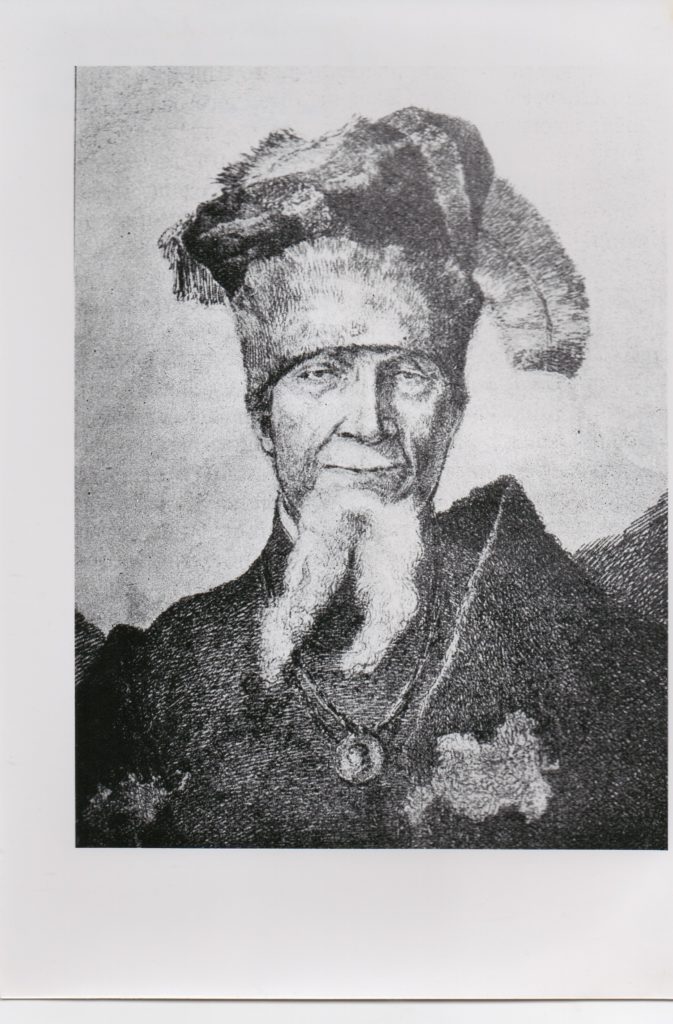
    IVAN MAZÉPA
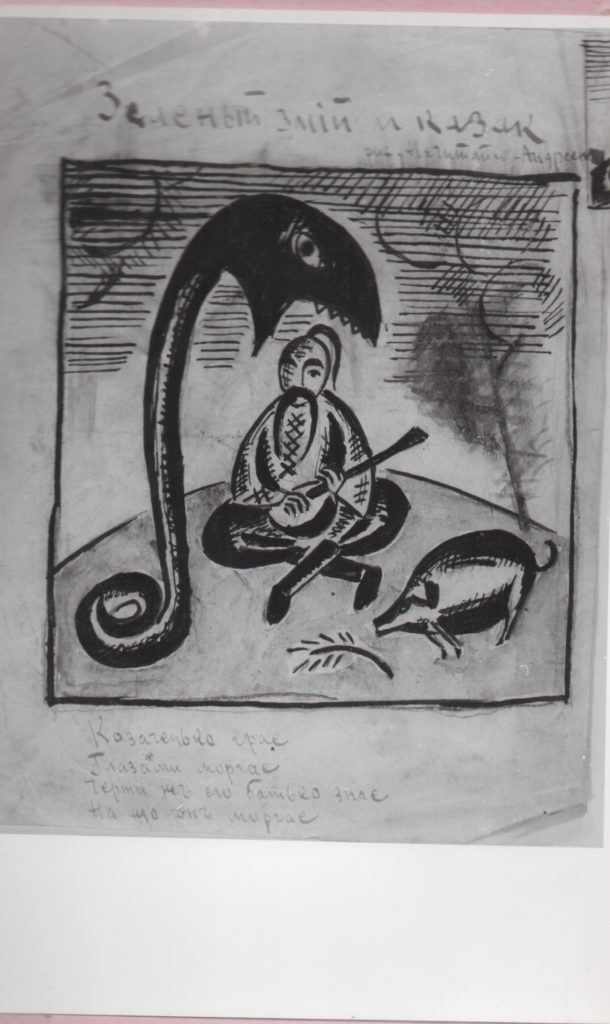
    ANDREENKO, LA BÊTE VERTE ET LE COSAQUE, DESSIN QUI A ILLUSTRÉ LA REVUE UKRAINIENNE DE KHERSON « KARAVELLA », N0 2, 1918. Le quatrain écrit par Andreenko en ukrainien a disparu dans l’état actuel de l’oeuvre. Удивительно, но в буреломные годы гражданской войны, в 1918 году в Херсоне издавался журнал сатиры и юмора «Каравелла». Его редактором был М.С. Либерман (Михаил Мирский), а  художественным и литературным отделом журнала заведовал Владимир Винкерт. И весьма успешно. Отзывы об издании были самые положительные: «…совершенно необычный для Херсона и вообще для провинции журнал смело мог бы по своей внешности рассчитывать на успех даже в столице, избалованной «стрекозами», «сатириконами» и т.п. журналами…


    CONTRIBUTION À L’ÉTUDE DE L’ART PICTURAL UKRAINIEN*

    par Valentine M ARCADÉ

    Dès le début, je tiens à préciser le but et les limites de mes recherches ; je ne prétends pas donner une analyse exhaustive ou une étude complète de l’art plastique en Ukraine. Mon travail se borne uniquement à donner un aperçu exact des faits qui ont déterminé l’évolution esthétique, à travers le temps, afin de reconstituer les phases essentielles, depuis ses origines et jusqu’à la rupture finale qui, en 1934, a jugulé la liberté d’expression dans tous les domaines.

    Les XIe, XVIIe, XVIIIe et la première moitié du XXe siècle furent les grandes époques de création artistique en Ukraine. Pour ces quatre étapes la documentation a exigé des investigations complexes dans les archives et les musées aussi bien de l’Est que de l’Ouest ; dans les bibliothèques de Paris, New York, Kiev, Moscou et Leningrad.

    Les sources relatives aux XIe, XVIIe, XVIIIe siècles ont été puisées dans les ouvrages spécialisés, publiés en Ukraine et en Russie, mais peu utilisés et jamais présentés en français.

    En ce qui concerne le XXe siècle, il a fallu un acharnement sans relâche pour découvrir les documents dans les bibliothèques occidentales et, souvent, dans les archives familiales des émigrés, qui ont bien voulu les mettre à ma disposition.

    Afin de prouver la spécificité de l’art ukrainien, depuis ses débuts, il a été indispensable de doter mon travail d’une solide iconographie. Plus de deux cents reproductions dont une centaine en couleurs viennent à l’appui du texte. Elles proviennent aussi bien d’Europe que des États-Unis et même de Tel Aviv.

    Pour retracer le cheminement de cette évolution, il a été nécessaire de remonter aux époques reculées car les traces laissées par les différents peuples et leur culture sur les espaces traversés, qui s’étendent de l’Oural aux Carpates, marquèrent profondément l’inspiration populaire des Slaves implantés sur ces territoires.

    Aussi, dès le XIe siècle, l’originalité de la création artistique en territoire ukrainien rejaillit- elle avec vigueur à chaque tournant de son histoire et s’affirma-t-elle dans ses formes, dans sa gamme de couleurs et dans son rythme plastique.

    Les contacts permanents avec les diverses civilisations enrichissent l’éventail des sujets, les éléments figuratifs et la symbolique d’ornementation animalière, florale, géométrique et gestuelle reconnaissable d’emblée par son style propre.

    * Thèse de doctorat d’État soutenue le 17 octobre 1981 à l’Université de la Sorbonně nouvelle. 534 p. dactyl., plus de 200 Ш.

    Rev. Étud. slaves, Paris, LIV/3, 1982, p. 497-504.

  • Lettres d’artistes aux Marcadé

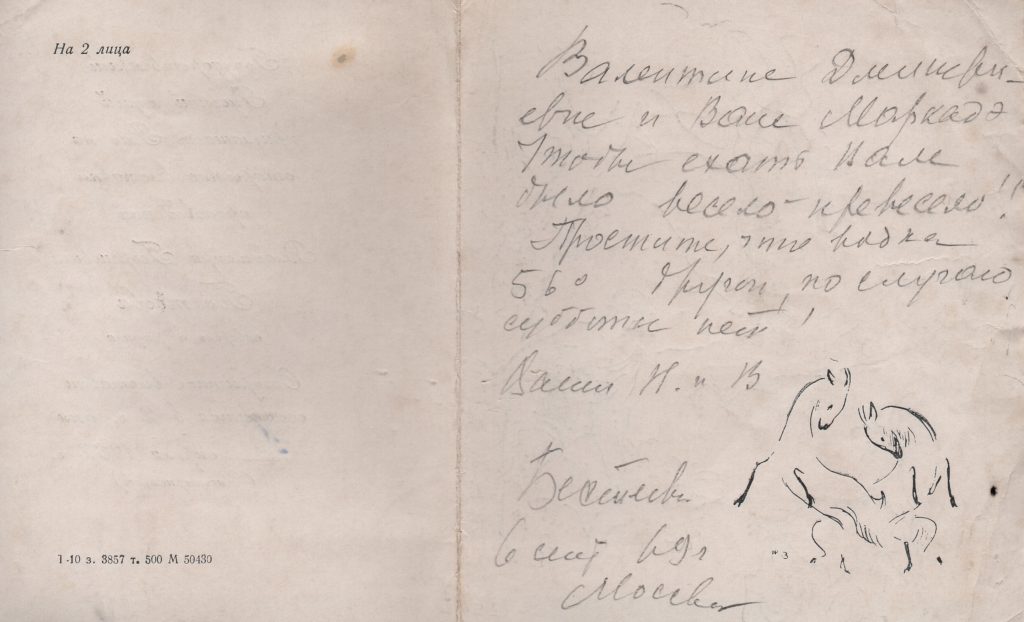
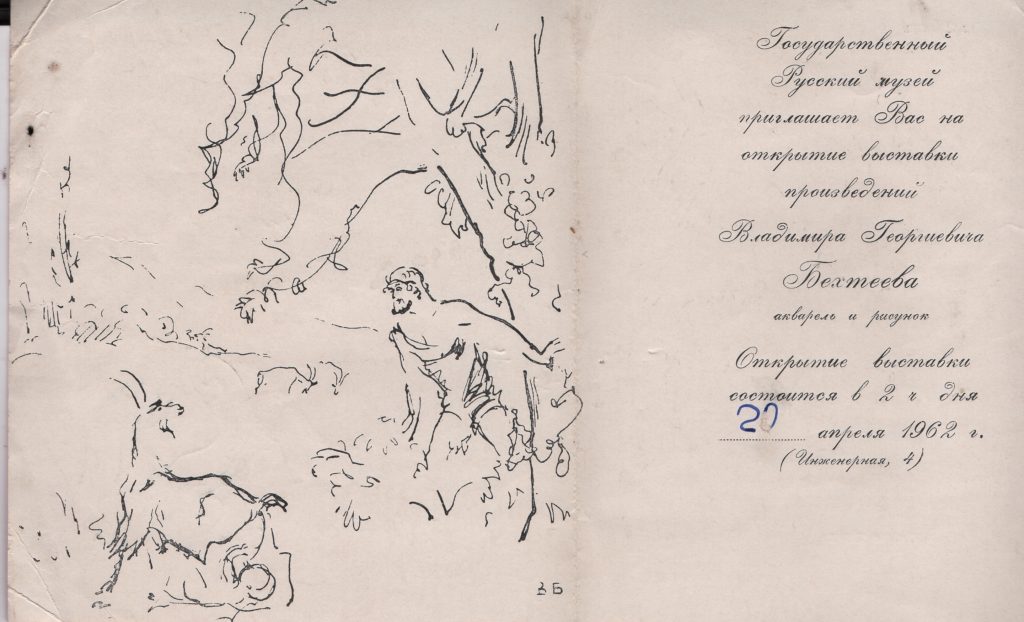
    Vladimir Bekhtéïev (Bechtejeff) et sa femme Natalia à Valentina Dmitrievna et Vania Marcadé

    6 septembre 1969


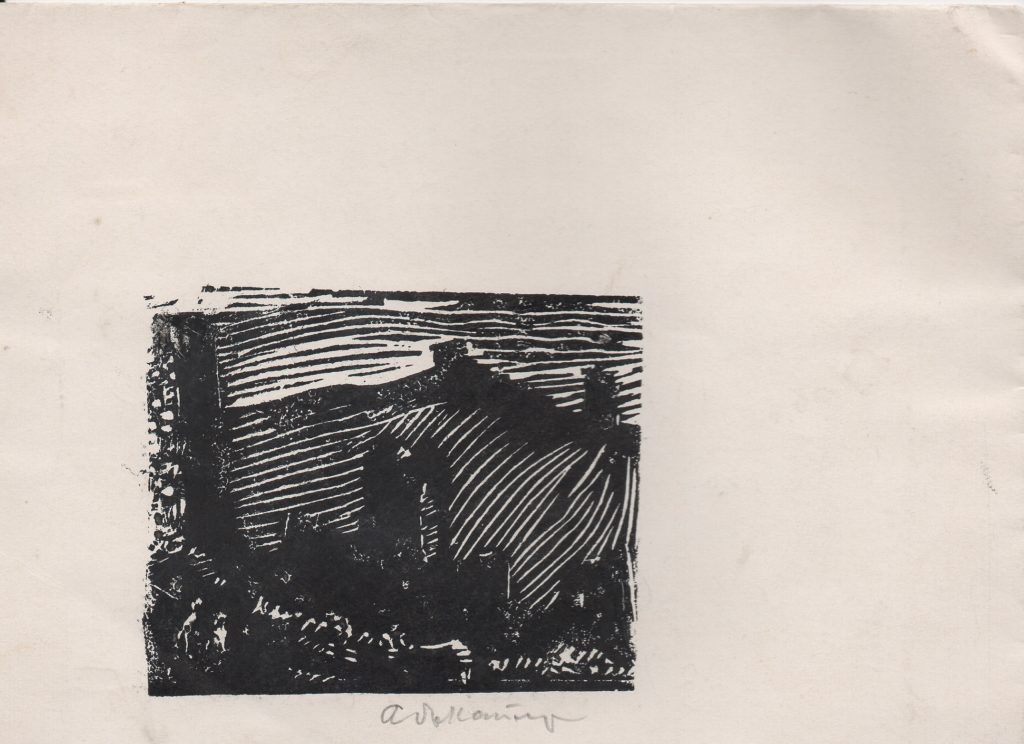
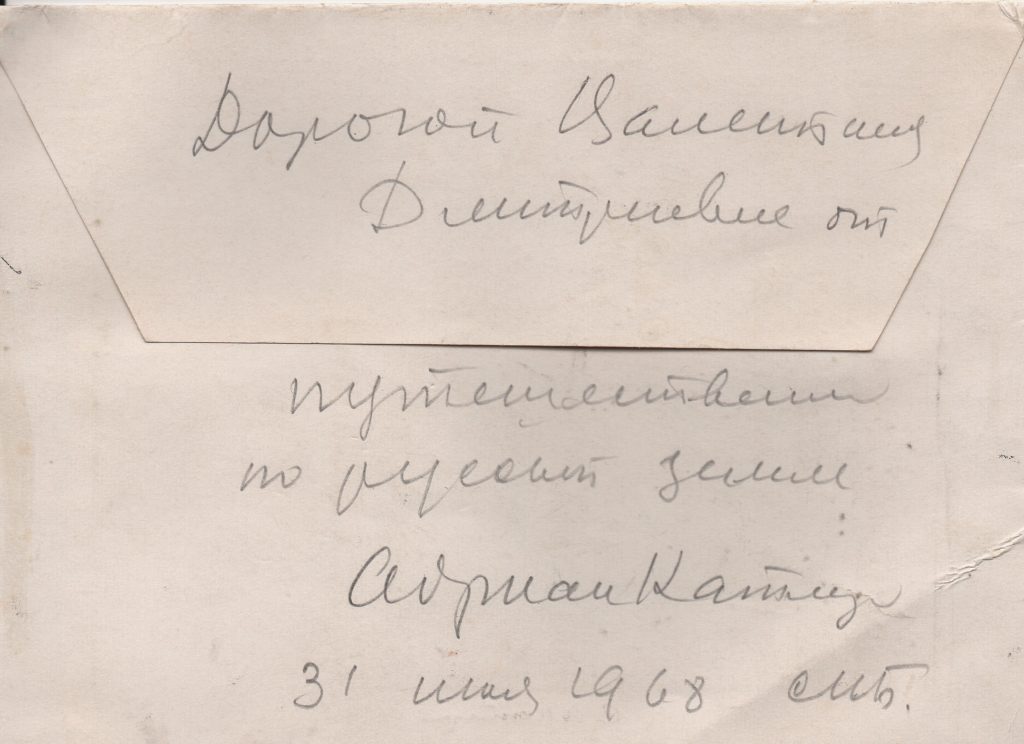
    Le graveur Adrian Kaploune à Valentina Dmitrievna

    Gravure d’Adrian Kaploune
    Saint-Pétersbourg (sic!), 31 juin 1968
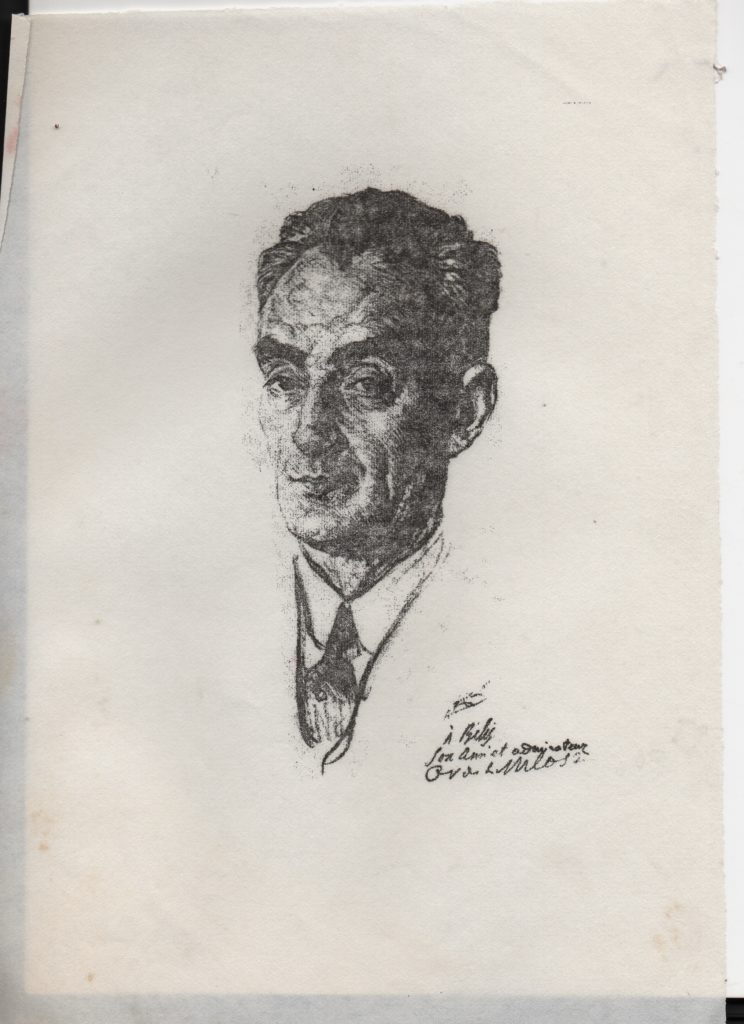


    Czeslaw Milosz envoie à Valentine Marcadé le portrait de son cousin Oscar Milosz qu’il lui avait promis à Berkeley en 1977

    Oscar Milosz
    Czeslaw Milosz


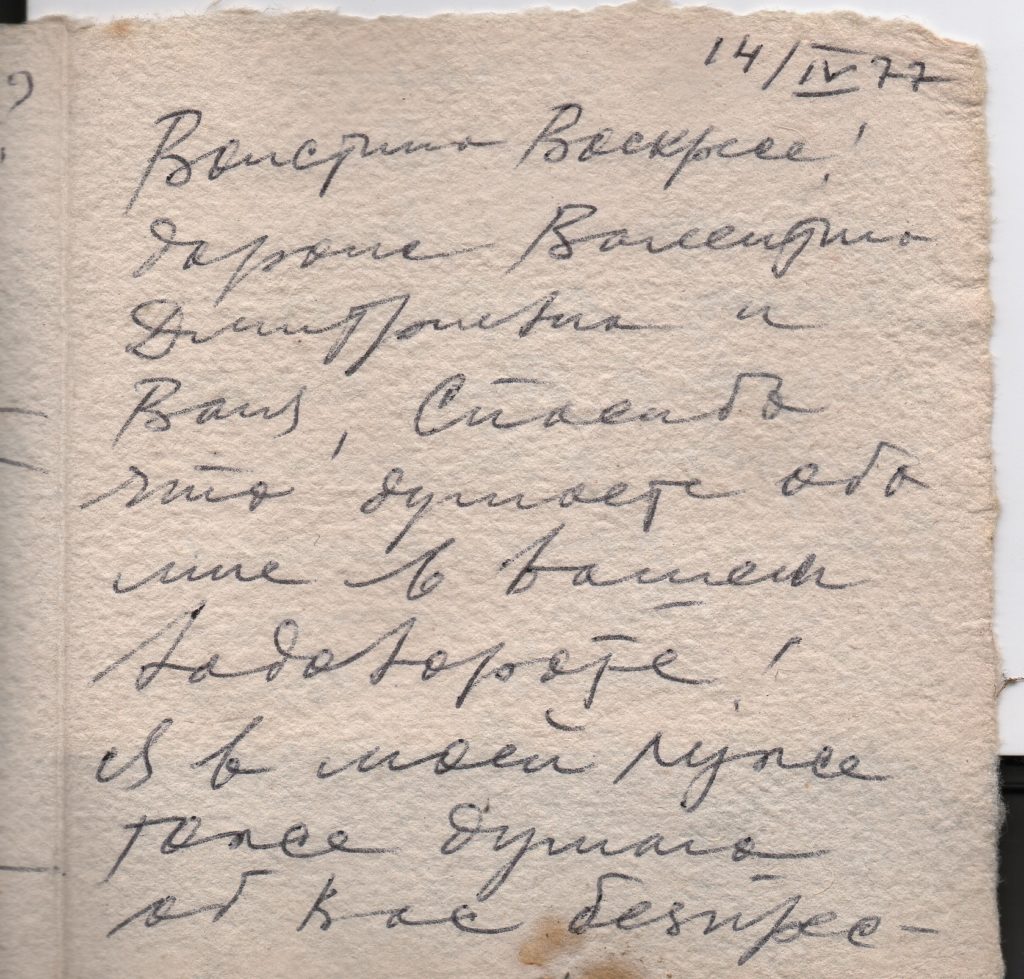
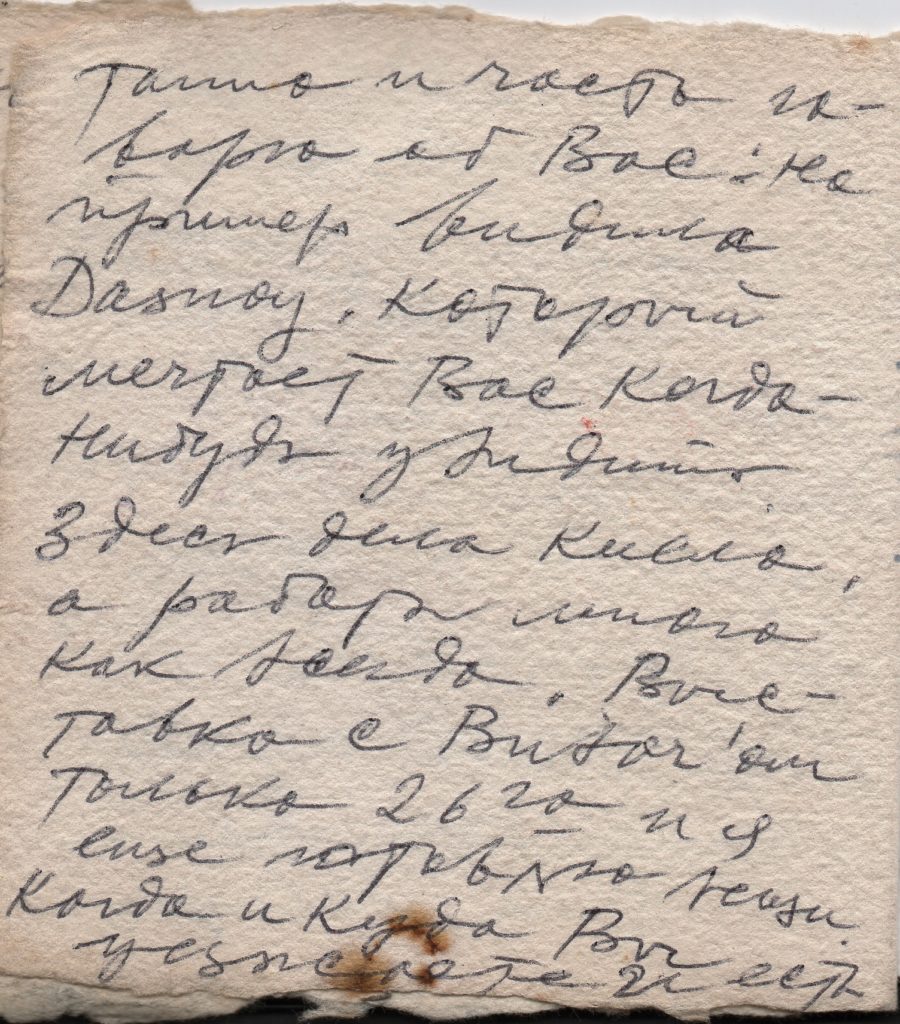
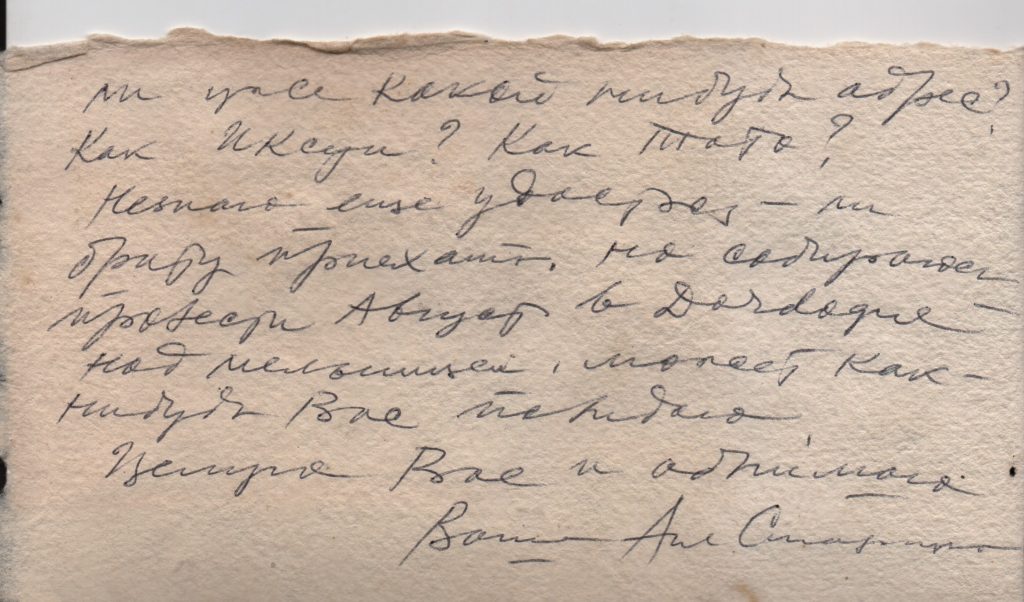
    Ania Staritsky à Valentine et Vania Marcadé en 1977


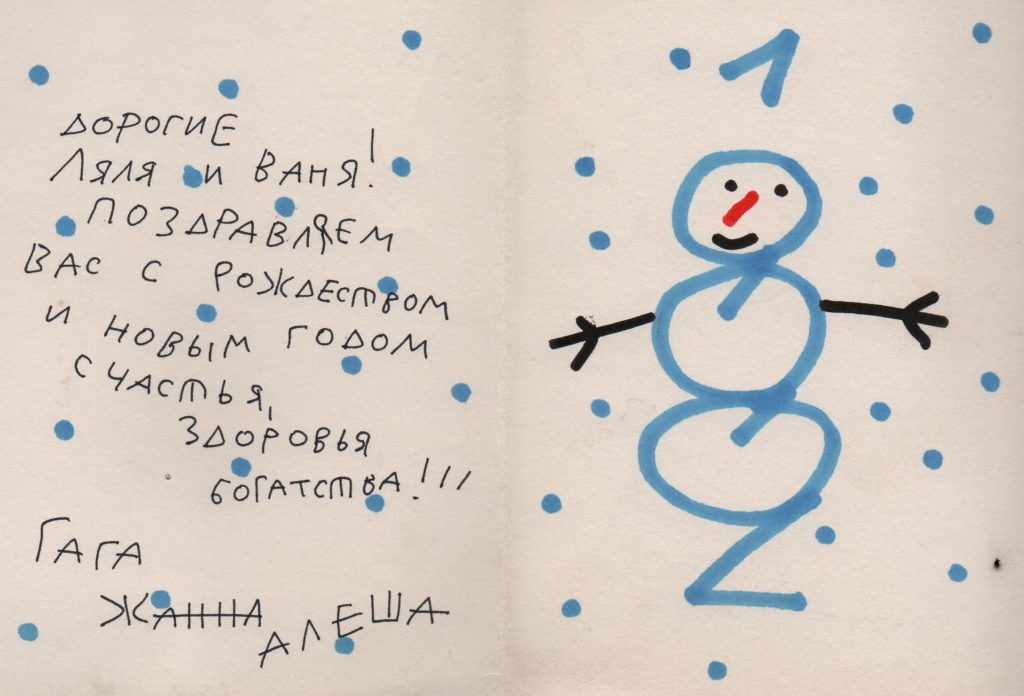
    Gaga (Guéorgui Koventchouk), sa femme Janna et son fils Aliocha à Lialia et Vania – années 1990

  • Russian Icons and the Russian Avant-garde, Two Major Facets of Universal Art (2002)

    500 Anos De Arte Russa/ 500 Years of Russian Art,

    São Paulo, 2002

    Russian Icons and the Russian Avant-garde, Two Major Facets of Universal Art


    Jean-Claude Marcadé


    « The invisible world of divine glory is not the only one to have found its expression in Russian icons. Two planes of being, two worlds dwell there in a dynamic, living way. On one side, the eternal peace of the hereafter, and on the other side, a world that seeks God but has not yet found Him, a chaotic, sinful, suffering existence that nevertheless aspires to the peace of God. As a parallel to these two worlds, the icon reflects and opposes two Russias. One is already anchored in eternal peace, and resounds ineffably to the cherubim’s hymn, « Let us now lay down all the cares of this world’. The other presses against the temple, aspires to it and expects intercession and help. It is around the temple that this Russia builds its secular and ephemeral edifice. »

    Eugène Trubetzkoy, Trois études sur l’icône (1916)[1][i]

    « The art of icon painting made me understand the emotional nature of peasant art. I had loved it before, but had not elucidated its scope. My eyes were opened by the study of icons […]. Icon painters, with great technical skill, transmitted an entire content in an anti-anatomical truth, without any aerial and linear perspective. They used colour and background within a purely emotional perception of the theme. »

    Malevich, Autobiographie (1933)[2]

    Russian plastic arts were long the poor relation of art history, owing to a deeply ingrained notion that Russia undoubtedly produced an impressive body of literature, and original music and ballet, but that it was not a country of painters. Despite a huge exhibition of Russian art organised by Diaghilev at the Autumn Salon in Paris, in 1906, despite the Slavic element in Diaghilev’s Ballets Russes which strongly influenced an entire period, despite Louis Réau’s book L’Art russe des origines à Pierre le Grand, published in 1921[3], this opinion was upheld by many people who saw no seat of learning other than European studios, believed that Western training was essential to become an artist, and occulted Russia’s history.[4] Until the day in the 1960s when art historians (Camilla Gray, Troels Andersen, Valentine Marcadé) revealed the extent of Russian pictorial art movement in the first quarter of the twentieth century, showing Russia to be an artistic centre that was just as original and universal as it was during the flowering of icon painting from the fifteenth to the seventeenth century.

    Icons played a key role in the liturgical, theological and intellectual life of Russia, in the same way as music did.[5] It is well known that Eastern Orthodoxy, in Rus before the fourteenth century, then in Muscovy and the Russian Empire, gave a special place to the liturgy, developing and amplifying it until it not only provided religious and mystic nourishment, but became the impetus for philosophical thought, and the wellspring of spiritual and aesthetic beauty. The sumptuousness of the Russian Orthodox liturgy leaves few of our contemporaries unmoved. Remember that Kandinsky, that quintessential twentieth-century modernist, said that he had experienced the synthesis of the arts, the phenomenon that in the late nineteenth century was known as Gesamtkunstwerk  or synaesthesia, in the izbas of the Volgda region and in the « churches of Moscow, particularly in the Assumption Cathedral and at St Basil the Blessed »: « In these extraordinary izbas, I discovered for the first time the miracle which I later included in my work. That is where I learned to walk right into the picture myself, not just give it a sidelong glance, but live in it. I clearly remember that I stopped on the threshold before this startling sight. The table, the benches, the enormous great stove, the cupboards, the dressers, everything was painted with rich, colourful decorations. On the wall there were lubki [popular Russian woodcuts]: a symbolic representation of a gallant knight, a battle or a song rendered in colour.

    The Beautiful Red Corner [where the icons are kept] was covered with painted and printed icons, and in front of them a night-light glowed red as if it knew something in its heart and had its own inner life, a proud and humble star, whispering mysteriously to itself. When at last I stepped into the room, the painting encircled me and I walked right into it. Ever since, that feeling has lived unconsciously within me, although I have had the same experience in Moscovite churches and particularly in the Assumption Cathedral and in St Basil the Blessed. »[6]

    The last two Moscovite churches were not a random choice, for they are both still lined with frescoes or murals, and the wall of the iconostasis is covered with icons, and therefore with paintings. The liturgy and various services were celebrated in these prestigious parts of the Kremlin. Anyone who attends the liturgy of St John Chrysostom in the Russian orthodox rite is inevitably struck by its resemblance to total theatre. The procession of priests, acolytes and deacons moves in obedience to a changeless symbolism from either side of the iconostasis, around the altar, passing at times through one of the side doors of the iconostasis, going from the church to the sanctuary and vice versa, spilling out into the area set aside for the congregation. These movements are accompanied by the marvellous, familiar music that has been played for centuries. Then there is ample use of incense, especially in front of the icons or the faithful who are, in a way, archetypal icons since « God made man in his image at the time of creation. »[7] Lastly, the congregation moves, too, since there are no seats in the centre of a traditional orthodox church: the faithful move towards the various icons, put candles before them, kiss them, cross themselves but not in unison, bend over to touch the ground with their right hands to seek forgiveness and as a sign of submission to God’s will, and prostrate themselves in some parts of the liturgy. Although the gestures made by the celebrants follow a changeless pattern, the movements of the faithful are more random. Thus, group and individual movements are reconciled.

    Christian Rus was plunged into Byzantine theological culture from the outset, and therefore was deeply involved in the intense iconographic culture which followed the « triumph of Orthodoxy », meaning the triumph of the veneration of icons over Iconoclasm, after the seventh ecumenical council, at Nicaea, in 787 (the Early Church’s last ecumenical council). The Rus’ first iconographic masters were Greek and their art had a profound influence on iconography in Rus from the eleventh to the thirteenth century. Gradually, specifically Slavic features began to appear in the conventional Byzantine models. The Tartar invasion and the capture of Kiev in 1240 hastened the city’s decline as a great artistic centre.[8] Henceforth, the Vladimir and Rostov schools developed in the East, whereas Novgorod, « after the sack of Kiev, became the representative of Byzantine art in Rus; that is why the Novgorod school is venerated as the oldest Russian school. »[9] The Moscovite state witnessed a flowering of icon painting in the fourteenth and fifteenth centuries. The political climate was conducive to such a development, with the loosening of the Tartar yoke, the « reunification of the lands of Rus » and the extraordinary religious revival, under the influence of Hesychasm, led by Saint Sergius of Radonezh in the late fourteenth century.

    Saint Sergius of Radonezh was of incalculable importance for Russia. He set in motion « the moral, then political, renaissance of the Russian people. »[10] From this time on, the close link between the fervent life of the monasteries and civil society became a key fact in understanding Russian life and its political, intellectual and artistic manifestations up until the Bolshevik revolution of 1917. The spiritual thinking of Dostoyevsky, among others, stems from this. The great theologian, thinker, art theorist and scholar Father Pavel Florenskij said: « The notion of morality, the idea of the State, painting, architecture, literature, Russian education and science, all these great lines of thought converge on our saint [Sergius of Radonezh]. In his person, the Russian people became aware of itself, of its place in history and culture and of its cultural task. It is only then that it earned the right to independence. »[11]

    In the orthodox world, the fourteenth century was the time of the controversy between the Hesychasts, partisans of uninterrupted prayer (the Jesus prayer) which led to communion with the Holy Spirit and a vision of the uncreated light that once appeared on Mount Tabor, and the humanists, who upheld the rationalist principle.[12] The triumph of Heyschasm, from St Sergius of Radonezh onwards, had major repercussions for Russia, notably the fact that it did not experience a phenomenon similar to the Western Renaissance. The Heyschast thread is apparent throughout Russian icon painting, dominated by the quest for divine harmony, gentleness, tenderness, and the search for the essential stripped of all psychologism, anecdotal detail and the noise and bustle of time.

    The Trinity is another image which dominates Russian iconographic spirituality after St Sergius. The laura founded by the « first teacher of the Russian popular mind » (in the words of the historian Ključevskij) was dedicated to the Trinity and remained the heart of Russia for centuries. Similarly, the most famous icon, one of the highest achievements of all Russian art, is the Trinity of the Old Testament by St Andrei Rublev. Tradition holds that it was painted to the glory of the saintly founder of the monastery in the first half of the fifteenth century, some time after his dormition (1392). It stayed near his tomb for over five hundred years until it was taken to the Tretyakov Gallery in 1929, where it is still admired, and even venerated, by visitors.

    Mahmud Zibawi, one of the specialists in icons among the new generation, neatly defined the specific nature of Russian iconography: « Now the ‘Third Rome’,[13] Russia carries art towards the quietness of the heyschia. The abstract wins over the concrete. All dramatisation is swallowed up. Men are ‘earthly angels’. Light, tranquillity, joy, peace and love abound. ‘The new, non composite world’ replaces the fallen world. The image reveals « God’s dwelling place among men. » (Apoc. 21:3).[14]

    Unlike the Western religious painting, an icon is not an individual creation, even if each icon painter adds his personal touch, and makes his own choice in the treatment of the subjects and colours from among the canonical archetypal models. An icon can be created only with an ecclesiastical consensus, within the prophetic movement and spiritual experience of the church community.

    The apparent uniformity of icons is constantly belied by various traits in the work of icon painters who closely follow the canons in the composition of the subjects, and the handling of colour. Then, as Bruno Duborgel explains: « Depending on whether it is intended for a church or for private use, depending on the material and the style, depending on the religious practices associated with it, etc…, the ‘same’ image (thematically speaking) represents faces and lifestyles that are differentiated by myriad details. »[15] Although, at first glance, icons may seem repetitive and monotonous, close scrutiny soon dissipates this impression. Admittedly, it is unthinkable to invent new iconographic archetypes, based on the individual imagination of a particular artist rather than on the assent of the entire church community. Yet, what diversity we see in isolated figurative elements, apart from the attributes that are obligatory for recognising the icon, and in the subtle colour variations permitted by the symbolism! Often the painter adds a scene from everyday life, inserting it in the mystical world of the main subject. Or else, there is a pronounced taste for ornamentation, floral in particular. Although it started to spread in the seventeenth century, in the work of painters such as Simon Uchakov, the trend towards elaborate decoration and miniaturisation flourished with the Stroganov school.

    Russian scholars who have studied Russian icons have pointed out that it represents a cosmos in itself, an order that is inscribed within the cosmos of the temple, which is the earthly prefiguration of a transfigured cosmos. Here there is obviously no place for naturalistic, « living » gestures. The hieratic character and apparent immobility of the icon transports us into another dimension that has nothing to do with everyday life; it is a dimension midway between the human and the divine, between the hereunder and the transcendent. The best Russian icons have managed to bring out the divine nature of humanity, the fusion of the divine and the human, the crest between the invisible and the visible, the hidden and the apparent. The barrier that separates these two worlds inside the church is the iconostasis: « The iconostasis is the border between the visible world and the invisible world […] The iconostasis is the manifestation of saints and angels: firstly the Mother of God and Christ Incarnate – witnesses proclaiming the reality of the world beyond flesh, » writes Father Pavel Florenskij.[16]

    The specifically Russian use of the iconostasis developed and was consolidated between the fourteenth and fifteenth centuries. The double Royal Doors in the centre give the celebrant access to the altar; they are covered with icons representing the Annunciation, at the top, and the four Evangelists, while the door posts are covered with a procession of the local saintly bishops and deacons.

    The side doors of the iconostasis, one leading to the prothesis (the table on which the Eucharist is prepared) and the other where the liturgical vestments are kept, are traditionally decorated with icons of the archdeacons St Stephen and St Lawrence.

    The Eucharist is represented above the Royal Doors (two full-length figures of Christ, giving the bread and wine to the apostles).

    The rows of icons above the doors in a Russian iconostasis have been added over the centuries. From Byzantium, there remains the changeless first row with a Deisis in the centre, that is the Mother of God and St John the Precursor (the Baptist) imploring Christ, usually shown as Christ in Majesty; in the fourteenth century, icons of the archangels Michael and Gabriel and those of Peter and Paul were shown on either side of these three central figures.

    The row above the Deisis was added in the fourteenth century: the Twelve Great Feasts representing scenes in the life of Christ and Mary.

    At the end of the fifteenth century, another row was added above the feasts, the row of the Prophets, from Moses to Christ, arranged around the central icon of the Mother of God of the Sign [Znamenie] (Mary has her hands together in prayer and enfolds Christ Emmanuel in her breast).

    Lastly, in the sixteenth century, a row of Patriarchs completed the screen. It presents Old Testament figures from Adam to Moses and usually has a representation of the Trinity in the centre, in the form of the three angelic Travellers who appeared to Abraham. That is the overall pattern, but variations have been introduced at different times and in response to local traditions.

    Icon painting in general, and Russian icons in particular, follow the archetypal models set out in the painters’ manuals only in their essential conformity to ecclesiastical canons. A comparison of the works of three famous icon painters of the heyday of Russion icon painting – Theophanes the Greek (late fourteenth century), St Andrei Rublev (early fifteenth century) and Master Denis (Dionisij) (late fifteenth and early sixteenth centuries) show that their styles are as marked as styles in the history of Western painting. Egon Sendler analyses the differences between the various schools in the treatment of the background: « Green predominates at Pskov; in Novgorod, we find red backgrounds (St Elijah and St George). In Moscow, from the sixteenth century on, backgrounds become quite dark, even brown. In the work of the Stroganov school, there are often dark olive green tones. These colours correspond to the style of icon painting. »[17]

    The recognition of Russian icons, as distinct in spirit and style from all the Eastern and Byzantine branches, began in Russia itself in the second half of the nineteenth century and was fully accepted in the twentieth century. The writer Leskov did much to make icons known « as the beginning of Russian painting. »[18] His short story The Sealed Angel (1873) which Bernard Berenson ranked alongside Balzac’s Le Chef-d’œuvre inconnu as one of the few literary masterpieces to have treated art in a pertinent way, contains technical details on the art of icon painting and an aesthetic appreciation of icons, based on an analysis of their characteristics. This fostered a return to the roots of this liturgical art, that had been disfigured since the end of the seventeenth century by the « European manner », that is by Western painting with its search for mimetic sensuality and its overriding concern for « scientific » perspective. Leskov set his story in the milieu of the Old Believers, because they had maintained the purity of the ancient tradition of icon painting until the seventeenth century, when Italian influences coincided with its slow decline into decadence.

    The leader of the Old Believer schism (raskol), the archpriest Avvakum (1620-1682), who was opposed to the Moscovite patriarch Nikon and was burnt at the stake by the official church, raged: « God has allowed sinful icon painting to proliferate in Russia […] Emmanuel the Saviour is portrayed with a puffy face, scarlet mouth, curly hair, thick muscles and arms, and the overall look of a German except that they have not stuck a sword in his belt […] Good painters in olden times painted the saints differently: they fined down the face and hands and everything that has to do with the senses, and showed them emaciated by fasting and labour and countless afflictions. Whereas now, you have changed the face of the saints, you paint them as you are yourselves.[19]

    Avvakum could well have been thinking of his contemporary, Semen Ushakov, whose icons sometimes had a softer, more carnal and realistic look than earlier works. Ushakov’s icons are closer to Western easel paintings, even though he still used the conventional architectonic structure. He remains the great religious painter of the second half of the seventeenth century, without having all the virtues of a traditional icon painter.

    The severity that the vehement archpriest Avvakum demanded of holy images is only one of the aspects of icon painting. A very rich spectrum of iconic expression developed in Russia, ranging from the outward austerity of the monks, whose bodies bore witness to the struggle against evil impulses, to the finesse of the angels’ bodies in Rublev’s work, and included the portrayal of a « national Russian character », simultaneously physical and spiritual, in many icons of Christ. Andrei Tarkovskij shows this clearly in this film Andrei Rublev, a grandiose fresco which traces the very incarnate and highly spiritual itinerary of the Russian character in the fifteenth century. Contamination by profane painting robbed icon painting of its true meaning, which is theological and philosophical as much as aesthetic.

    In our century, the scholar Father Pavel Florenskij has strongly accentuated the opposition between icon painting, such as it is perpetrated in Orthodox countries, and the development of profane and religious painting in Catholic countries (dominated by oil painting) and Protestant countries (dominated by engraving). He sees in the techniques themselves an indication of their « ontological » divergence; on the one side, the panel of living wood, the surface of which was worked for days and months before outlines were drawn and colours applied, with egg yolk and water, then highlights of white lead, gold dust, etc.; and on the other side, oil paints, canvas or paper. Father Florenskij stated: « Iconography is the metaphysics of concrete existence. Although oil painting is better suited for reproducing the sensory data of the world and engraving captures its rational schema, icons bring out the metaphysical essence of what they represent. Although the pictorial and graphic techniques developed in response to cultural needs and appear to be a résumé of the period, the technique used for icons is a response to the need to express the metaphysics of the world. What is portrayed on the icon is in no way fortuitous, either empirically or metaphysically. »[20]

    In another short story by Leskov, At the Confines of the World (1875), one of the characters says that, contrary to Western religious art, there is an absence of sensuality in the Russian Orthodox representation of the face of Christ, which « has an expression but no passion […].His features are scarcely suggested but the impression we have is complete. Admittedly, he looks rather like a peasant, but despite that, veneration is due to him. » The bishop, who is defending icons before a group of educated but more or less sceptical listeners, adds, « How did our old masters achieve such charm in this representation? The secret died with them and their despised art. It is clearly impossible to want a simpler form of art; the features are scarcely shown but the impression is complete. He looks a little rough, I know, and you would not invite him into a winter garden to listen to the canaries, but there is no great harm in that. »

    Leskov and Dostoyevsky also refuted the new interpretations of Christ in the committed realistic painting of the « Ambulants ». The Ambulants’ religious painting (Repin, Nikolaj Gay, Victor Vasnecov…) has little to do with the tradition of Russion icon painting.

    On the other hand, all the innovative Russian artists of the first quarter of the twentieth century (Natalia Goncharova, Larionov, Malevich, Tatlin, Filonov) were influenced by icons. Icons played a primordial role in the aesthetic revolution led by the « Russian avant-garde » in the 1910 and 1920s. It made these painters realise what a formal treasure it represented. Moreover, it drew easel painting towards the icon, that is, towards an independent space with its own construction and rhythm.

    Natalya Goncharova caused a scandal at the « Donkey’s Tail » exhibition in Moscow in 1912 with a panel representing The Four Evangelists (Russian Museum, St Petersburg), resembling the icons in the apostolic row on the iconostasis. The censorship committee refused to accept that works on a sacred subject (there was also a work entitled God in the exhibition) could be shown in an exhibition with such a facetious and provocative name. But Natalya Goncharova’s works were not icons; they were paintings on a religious theme. The same applies to another painting by Goncharova, The Ancient of Days, or to her sets for the ballet Liturgy designed (but never made) for Diaghilev’s Ballets Russes in 1915. The artist also painted « real » icons, but it must be admitted that few painters in this field have achieved the spiritual perfection of ancient icon painting. In areas where there is no confusion between icon painting and easel painting, icons give decisive clues for understanding easel painting. Goncharova included figurative elements derived from the icon – almond-shaped eyes, a mystic squint, symbolic colours – in a series of paintings on work in the fields, and rustic activities. Larionov gave his Venus Katsape (Nijni-Novgorod Museum) the eyes of an icon. In the work of all the artists in all the currents of the Russian school in the twentieth century, the human face was influenced by iconic faces: portraits are frontal, eyes gaze on another reality, with mystical intensity (sdvig), traversing the visible world without focusing on it, and the overall impression is hieratic and meditative: for example, Self Portrait by Lentulov, Portrait of the Futurist Poet, Vasily Kamiensky by David Bourliuk (1917), Head of an Usbek Boy (1921) or Portrait of Anna Akhmatova (1922) by Petrov-Vodkine (all in the Russian Museum, St Petersburg). Jawlensky was deeply influenced by Russian Byzantine aesthetics in the representation of human faces. He gave them mystic nuances through the use of a sumptuous, refined palette, and achieved a balance between the strong emotional power of the colours and expressive ascesis, which bordered on abstraction in the last meditations of the 1930s.

    Jawlensky and Malevich, each with his own pictorial schema and iconological view, took the human face as a metonymic paradigm of the Face of the World throughout their work.

    The hieratic aspect of the work of Larionov, Natalya Goncharova, Tatlin and Malevic is derived from the icon as much as from lubok, archaic art, or from the Nabis. A single gesture sums up in the image the myriad gestures repeated over years, or even centuries, in our everyday life or work. Filonov, in his Promethean project of recreating the entire world on the surface of the painting, borrows formal and thematic procedures from icon painting. Thus in the Formula of the Proletariat from Petrograd (early 1920s) in the Russian Museum, he uses the combination of an unusual number of parts of the body (as in the icons of The Mother of God with Three Hands or The Holy Trinity in the shape of three eyes), hieratic poses, and the representation of two feet separately or faces only (as in icons with a metal overlay or riza).

    Tatlin was trained in the technique of icon painting and integrated this skill into his paintings from 1911 to 1913: an impression of eternity in faces and poses, coloured light emanating from within the forms, as in The Sailor in the Russian Museum, and the flesh tones of the Nudes painted in 1913. The levkas, a mixture of chalk and animal glue which forms the first luminescent white background on the icon panel, was used in Tatlin’s relief constructions in 1914-15. In the Nudes (State Tretyakov Gallery, Moscow, and the Russian Museum, St Petersburg), the contours, especially the curves, are treated with the straight line found in Picasso and Braque’s early cubist work, with the same aim of constructing the picture in an architectural way. In Tatlin’s work, an extra impetus comes from Michelangelo’s imposing Sibyls in the Sistine Chapel, with a leaning towards sculptural forms in the Nude in the Russian Museum. In these paintings, he seems to be already preparing for the synthesis of painting, sculpture and architecture that he achieved the following year, in 1914, by creating the genre of Painted Reliefs, Relief Constructions and Corner Reliefs.
    We should not lose sight of the fact that Tatlin started his career as an icon painter. Admittedly, the female nude is hardly a subject for ecclesiastical icons, one of the main principles of which is the elimination of all sensualism, and even sensuality. The nudes of the icons representing St Mary the Egyptian or mad devotees (jurodivye) (such as St Basil the Blessed) are completely asexual (we find the same asexual nudes in Filonov’s work). The sex of Tatlin’s Nude in the Russian Museum is show in a blatantly realistic manner (Gabo’s sculpture Torso later used the same procedure). Yet, these works could not be called erotic, in the way that some European works are, such as the female nudes of Cranach the Elder, Goya or even Manet in which the flesh trembles with the loving touch of the artist’s brush.

    Perhaps Father Pavel Florenskij was right to say that oil painting, by its consistency, solidity and carnal nature, its oily, gleaming strokes, is linked to the Catholic culture focused on « phenomenological sensibility »[21] that emerged from the Renaissance. « Although oil painting is better suited to reproducing the sensorial data of the world, and engraving, its rational schema, icons, by contrast, bring out the metaphysical essence of what they represent. »[22]

    Nikolaï Punin, in another context, remarked that icon painting « used colour as a pictorial material, as the result of colouring pigments […] Icon painters never understood colour as relationships in the chromatic range, as values. Hence the magnificent traditions of a powerful, healthy art, traditions which have been preserved until quite recently in icon painting schools and decorative workshops. »[23]

    The background of Tatlin’s two Nudes is utterly « iconic ». The coloured background on which the outline of the subject is drawn is called the sankir[24] in the technical language of Russian icon painting. Its composition varied according to the period and the school. « Modern sankir, » writes Pavel Florenskij, « is made from burnt Sienna, light ochre, a small amount of Dutch soot, etc. »[25]This layer, which is applied once the wood has been prepared with glue and chalk (levkas), brings out all the beauty of the model through the contour line (opis’) which is coloured to remove all trace of drawing. The artist thus obtains a fusion of the model and the « ontological background » which led Punin to say, with slight exaggeration, that « the influence of the Russian icon on Tatlin is undoubtedly greater than the influence of Cézanne or Picasso. »[26]

    In Tatlin’s Nudes, the flesh is carried into a dimension that is other than that of the senses, a purely pictural dimension. The dominant reddish ochre colour is a quintessence of all flesh colour, not an imitation of any one in particular. To quote Punin again: « For Tatlin, colouring means above all studying the pigment; colouring particularly means working the surface picturally. The colour is given objectively, it is a reality and it is an element; the relationship between the colours does not depend on the spatial relationships that exist in reality. Red is red, whatever the amount of light between it and the eye; the ochre on the plank of a palisade and the ochre on the tip of the brush do not differ qualitatively, any difference between them lies only in their chemical composition and the way they are laid down. »[27] Likewise, there is no face in Tatlin’s two Nudes. There is, therefore, no personalisation, no reference to an ephemeral living state. Although we cannot help thinking of the « non-erotic » nudes painted by Picasso and Braque after the Demoiselles d’Avignon (1907-1909), we can also see the conceptual influence of Neo-Primitivism in which nudes (those of Larionov, for instance), even if sexual, have a function other than erotic and are, in any case, beyond eroticism.

    The distinctive feature of Tatlin’s iconographic system, which runs throughout his work, is what David Bourliouk, in 1912, called « Roundism. »[28] Roundism opposes rounded surfaces to units formed by straight lines. It is a trait found in Leger, and even in Malevich in 1911-1912. But in Tatlin’s work it is dominant and conditions all the artist’s output up to and including the Monument to the Third International in 1920 and his Letalin in the early 1930s.

    This procedure, which consists in putting a full length figure across the entire canvas, dominating, by its stature, all the other figurative elements which are represented in a smaller size, obviously comes from the structure of the « biographical » icons which show a saint surrounded by compartments (klejma) that recount episodes in this life (see, for example, in diametrically opposed styles: Boris Koustodiev’s famous Portrait of Chaliapine and many of Malevich’s post-Suprematist paintings).

    The « inverted perspective » taught by icon painting was of capital importance for innovative Russian artists in the twentieth century in their refusal to be bounded only by the « scientific perspective » inherited from the Renaissance.

    At the end of the 1920s, Malevich drew on the archetypes of « Christ Acheiropoietus » (Christ the Saviour?) and « Christ Pantocrator » (Christ in Majesty) to create his own icon-paintings. He did not imitate any particular icon. He constructed an image from the elements of icon painting, elements that he thought out afresh and made his own for the needs of his painting. Several of Malevich’s post-Suprematist faces suggest icons, and yet they have no precise model in icon painting as a whole.

    The link between icons and the Russian avant-garde was revealed in a stunning, even « exoteric » way during the « Last Futurist Exhibition of Paintings 0 to 10 » in Petrograd, at the very end of 1915. Malevich installed his « Suprematism of Painting » like the « beautiful red corner » of Russian orthodox houses, with The Quadrangle (later commonly known as « Black Square on a White Field ») as the central icon, which he called « the icon of our time ». This did not mean that it was an orthodox icon that is an object of liturgical worship, as understood by the seventh ecumenical council at Nicaea (Nicaea II), a tradition kept intact in the Eastern Church, because an ecclesiastical icon has no meaning without the fusion of the human and the divine in the incarnation of Christ. From this orthodox point of view, Malevich’s icon, which shows only the deus absconditus, is incomplete and smacks of monophysitism[29]

    For Malevich, the Suprematist icon had to create a new pictural relationship, going beyond the orthodox icon and easel painting, by developing a new site. It was the expression of an essential image, rid of all figurative clutter, which could be opposed to the imago, the effigy. Its uniqueness was thus restored. Malevich was not only influenced by the formal aspect of icons; he had a brilliant intuition of the philosophical and theological principle of the icon, namely that the real presence is not in the symbolic image represented, but in the relationship between this image and the absent model: « The invisibility of the image is the source of the visibility of the icon. »[30]The Quadrangle oscillates between iconoclasm and iconicity, between the effacement of carnal reality and the manifestation of the only authentic world, the non-objective world (bespredmetnost’). We see a « Hesychast » leaning here, for example, in the Suprematism of Malevich whose great work is called The Non-objective World or Eternal Repose [Mir kak bespredmetnost’ ili večnyj pokoj], which brings to his canvases the silence, minimalist ascesis and harmony of the absence of object.

    Through the holy image, the icon painter accomplishes an act which enters into the liturgical life of the Church. The easel painter makes visible the invisible being of the world. A similar aim but a different approach.

    Note the extent to which Russian avant-garde art, reputed to be materialistic, was obsessed by the Judeo-Christian tradition. Two events are worth mentioning: in 1912, a discussion in St Petersburg and the publication in German of Kandinsky’s book Concerning the Spiritual in Art,[31]; and in 1922 – the publication in Vitebsk of Malevich’s treatise God is not Dethroned. Art. The Church. The Factory. [Bog ne skinut. Iskusstvo. Cerkov’. Fabrika].

    Kandinsky-Malevich: two figureheads of universal art, two pillars of the avant-garde, two founders of Abstraction, who inaugurated and concluded, to put it succinctly, the adventure of the most radical modernity, a modernity which, let us not forget, put a definitive end to over four centuries of ever-recurring codes. Kandinsky and Malevich, who inaugurated and concluded this period by a demonstration of the « spiritual in art, and in painting in particular » and by the statement that « God is not dethroned. »

    Although Kandinsky was the first to formulate, in German and Russian, the principle of the independence of artistic creation and the shaping of artistic material, like all Russian artists in the avant-garde, he categorically refused the temptation of art for art’s sake. Art for its own sake appears only in periods when the « soul has been abandoned and stifled by materialistic ideas and unbelief. »[32] In a note added during the revolution to his autobiography Stages [Stupeni], Kandinsky similarly said that such an attitude, that is attached only to the exterior of things, is « atheistic » (bezboânoe).[33]

    In 1910, in his article « Form and Content » published in the catalogue of the « Second Salon » of Izdebski in Odessa, Kandinsky proclaimed the advent of the « Era of High Spirituality » (Epoxa Velikoj Duxovnosti) founded on the « Principle of Inner Necessity » (Princip Vnutrennej Neobxodimosti).[34] Art « serves the spiritual »,[35] that is, « serves the divine ».[36] The creative act is a « total mystery »;[37]  the artist is not a frivolous creator, « his work is difficult and often becomes a cross to bear. »[38]

    In the 1918 edition of his memoirs, published in German in 1913, by Rückblicke, he adds anti formalist and anti materialist remarks such as: « Now I know that ‘perfection’ is only apparent and ephemeral, and that there cannot be perfect form without perfect content: the mind determines matter, not the contrary […] The great Broom of History which will sweep the inner mind clean of the rubbish of outward appearance will appear, here too, as the impartial final judge. »[39]

    It is precisely the relationship between an inner and an outer sphere which was part of the core of Marxist-Leninism, vulgarised through all the media that were possible at the time. Alongside repetitive slogans such as « Workers of the world unite! » and, less often, « Religion is the opium of the people », we find the famous Marxist truism: « Das gesellschaftliche Sein bestimmt das Bewusstsein » [The social being determines the conscious being] which sounded like a proverb in the Russian translation: « Bytie opredeljaet soznanie » [Being determines consciousness]. What Kandinsky says is exactly the opposite: he makes an absolute claim for the primacy of the mind.

    In 1922, in his treatise God is not Dethroned, Malevich took a similar stance in relation to the Marxist axiom; certainly the concept of being, (bytie) is more complex in the thinking of the founder of Suprematism, since what is, is nothing, that is, from another point of view, the lack of object, bespredmetnost’. But he concludes that « this ‘nothing’, as being, does not determine my consciousness. »[40] So Malevich, too, took the opposite stance from the Marxist formula. He repeated this position in his article « The Tumbler », in 1923[41] The tumbler, (in Russian: van’ka-vstan’ka) is a pot-bellied figurine from the far east, sitting cross-legged on a weighted half-sphere which brings it back to an upright position whenever it is pushed. The tumbler is God – constantly rejected, regularly dethroned, and yet always rocking back to an upright position, and never dethroned. The article « The Tumbler » is a highly ironic response to the attacks of the orthodox Marxist Issakov who had rather heavy-handedly denounced any religious deviation in avant-garde art, and had included in that category « the cock-and-bull story of God is not Dethroned« .

    This diatribe was later followed by a commentary by the Marxist theorist of Constructivist-Productivist art, Boris Arvatov, who, among other compliments, called Malevich a « degenerate »!

    In any case, Malevich retorted in his article « The Tumbler » by presenting the problem of the image in a very acute way. At its negative pole, the image feeds on false representations, those of God or anthropomorphic gods: « All you Socialist revolutionaries are, without exception, in love with antique styles, just as women are in love with the hams of young Apollos. Look at the monuments to the proletariat: no sign of any proletarian, just Apollo wearing Minerva’s helmet. »

    Taking up the Marxist formula that Issakov had thrown at him, Malevich remarked ironically: « Does consciousness determine existence or existence, consciousness? Which came first, the chicken or the egg? Does existence exist outside consciousness or consciousness outside existence? what you think, Comrade Issakov? »

    So, at this stage, Malevich claimed, despite what Issakov and those who fought against « God in art » might think, that « God » is not dethroned, because he takes the shape of the idols and is everywhere to be seen in the form of the revolutionary substitutes on which art feeds – so many fake icons.

    But nor is God dethroned in his apophatic site which is that of « eternal repose. »[42] It is from this impregnable site that every real image springs, that is to say, the true icon.

    ++++++++++++++++++++++++++++++++++++

    The discussion that has arisen in post-Soviet Russia focuses on the way to present and look at icons today. Starting from the obvious fact that an icon is not a work of art like any other, that it takes on its full meaning only in the ecclesiastical symphony-cum-polyphony, a number of Orthodox believers would like to see the most venerated images restored to the churches from which they were forcibly removed. Today, the remarkable Vladimir Mother of God icon [Vladimirskaja Boâ’ja Mater’] is located in the church alongside the Tretyakov Gallery in Moscow, and people go into the museum to pray before the Trinity of the Old Testament by Andrei Rublev. The Monk Gregory, an icon painter who died in France in 1969, stated that the presence of icons in the profane world has a sense: « In that way, the icons that are prayed to (molennye), whose purpose is to serve prayer, accomplish their saving action in the world, and can leave the church and dwell in a museum or in an art collection or join in exhibitions. Such conditions, apparently incongruous, are not fortuitous or absurd. »[43]

    In fact, throughout the twentieth century, Russian icons have been a catalyst for the utopian and prophetic movement towards the metamorphosis and transfiguration of painting, and of life itself, into what Bruno Duborgel calls « the iconophile obsession with approaching an experience of the non-figurable, »[44] in reaction to « iconoclasm by an excess of naturalistic images. » In a handsome recent work, Bruno Duborgel sets up a dialogue between icons and Malevich’s art, and more broadly with easel painting in general, seeking to show a « homology which at once preserves the distance between them, guarantees their differences and reveals that they nevertheless regard one another, and even interact at this elevated level, »[45] proving their full contemporaneity.

    [1] Eugene Trubetzkoy, Trois études sur l’icône, Paris, Ymca-Press, 1986, p. 57-58

    [2] K. Malévitch, « Autobiographie », in: Actes du Colloque International tenu au Centre Georges Pompidou, Lausanne, L’Âge d’Homme, 1979, p. 164

    [3] Louis Réau wrote: « Russian art is interesting much less for what it borrowed than for what it adapted or created. It must not be viewed from the outside, but studied in itself as an independent organism, subjected to the laws of evolution, constantly modified by the action of its social and historical milieu and finally modelling itself on that milieu. »  L’Art russe des origines à Pierre le Grand, Paris, Henri Laurens, 1921, p. 5

    [4] The Russian artists who worked in Paris have helped maintain this idea of a lack of original painting in their native country. In the second half of the twentieth century, it was said that Russian icons were just a branch of the Byzantine tree, with only slight differences. I remember a paper given by the famous Soviet art historian Mikhaïl Alpatov, during a seminar run by Pierre Francastel at the Ecole des Hautes Etudes, in which, referring to the problem of Byzantine art and Russian art in icon painting, he stated that anyone who did not see in them two modes of expression that were identical yet dissimilar made him think of someone who did not distinguish Bach from Mozart…

    As late as 1956, André Salmon wrote: « It must be said that Russia has never had other plastic artists other than the craftsmen who painted icons, assiduously following the Byzantine tradition, and the marvellous painters of store signs, the baker with his golden loaves, the caterer with his dishes of cacha, his bottle of vodka and his napkin folded into an archimandrite’s hat, in a place where there was no napkin at all; and the printers of popular images inspired by national folklore, instinctive little masterpieces. And the only one who ever managed to use them for major art, all at once or turn about, was the innocent and crafty Chagal [sic], who was a Jew.

    At twenty, in St Petersburg, when an early exile left me in ignorance of almost all French painting since Courbet, I did not need to be an expert to be astonished by the Russians’ total lack of pictural brilliance » André Salmon, Souvenirs sans fin. Deuxième époque (1908-1920), Paris, Gallimard, 1956, p. 228

    [5]  See Maxime Kovalevsky, « Chant liturgique – icône sonore », in: F. Boespflug, N. Lossky, Nicée II 787-1987. Douze siècles d’images religieuses, Paris, Cerf, 1987, p. 393-396

    [6] V.V. Kandinsky, Stupeni [Stages], Moscow, 1918, p.27 (republished by Boris Sokolov, in: V.V. Kandinsky, Izdannye trudy po teorii iskusstva [Selected Writings on the Theory of Art], Moscow, « Gileja », 2001, p. 279

    [7] Moine Grégoire (G.I. Krug), Carnets d’un peintre d’icônes, Lausanne, L’Âge d’Homme, 1994, p. 37

    [8] Cf. Valentine Marcadé, Art d’Ukraine, Lausanne, L’Âge d’Homme, 1990, p. 25-36

    [9] Fedor Buslaev, O russkoj ikone [On Russian Icons] [1866], Moscow, 1997, p. 5

    [10] V.O. Ključevskij, « Blagodetel’nyj vospitatel’ russkogo narodnogo duxa » [The gracious teacher of the Russian popular mind] [1892], in: Prepodobnyj Sergij Radonežskij , Berlin, 1922, p. 40

    [11] Father Paul Florensky, La perspective inversée, suivi de l’Iconostase, Lausanne, L’Âge d’Homme, 1992, p. 33

    [12] In Greek, hesychia means « repose ». About 1340, there was a clash between St Gregory Palamas, who developed a theory of divine light, which cannot be perceived in its essence, but only through the uncreated energy which is an emanation of it (the divine light on Mount Tabor), and Barlaam the Calabrian, who particularly condemned the practice of mystical prayer, (the Jesus prayer) among the monks of Mount Athos and fought for a more rational concept of the faith. See Jean Meyendorff, Saint Grégoire Palamas et la mystique orthodoxe, Paris, 1976

    [13] Under the grand prince of Moscow Vasily III, about 1515, Philotheus, a monk from Pskov, developed the thesis of « Moscow – Third Rome« , since the « Second Rome« , that is, Constantinople, no longer existed as such after its capture by the Turks in 1453.

    [14] Mahmud Zibawi, L’icône. Sens et histoire, Paris, Desclée de Brouwer, 1993, p. 15

    [15]  Bruno Duborgel, L’icône, art et pensée de l’invisible, Saint-Etienne, 1991, p. 37

    [16]  Father Paul Florensky, op.cit., p. 140

    [17] Egon Sendler S.J., L’icône, image de l’invisible, Paris, Desclée de Brouwer, 1981, p. 204

    [18] N. Leskov « Blagorazumnyj razbojnik (ikonografičeskaja fantazija) » [The Good Thief – An Iconographic Fantasy], Xudožestvennyj Žurnal, March 1883

    [19] Cited by Eugene Trubetzkoy, op.cit., p. 24-25. For more about Avvakum and his period, see Pierre Pascal’s classic work, Avvakoum et les débuts du raskol, Paris-La Haye, Mouton et C°, 1963

    [20] Father Paul Florensky, op.cit., p. 175

    [21] Father Paul Florensky, op.cit., p. 167 ff.

    [22] Ibidem, p. 175

    [23]  N. Punin, Tatlin (Protiv kubizma) [Tatlin-Against Cubism], St Petersburg, 1921

    [24] See Father Paul Florensky, op.cit., p. 193sq.

    [25]  Ibidem, p. 194

    [26] N. Punin, « Obzor tečenij v iskusstve Peterburga » [Panorama of Artistic Trends in St Petersburg], Russkoe iskusstvo, 1923, N°1; see, too: N. Khardjiev, « Appunti », Paragone(Arte), May 1965, vol. 16, N° 183

    [27] N. Punin, op.cit., ibidem

    [28] D. Burljuk, « Kubizm » [Cubisme], in Poščečina obščestvennomu vkusu [A Smack in the Face for Public Taste], Moscow, 1913

    [29]  On ecclesiastical icons, see: Leonid Ouspensky, Vladimir Lossky, Der Sinn der Ikonen, Berne, 1952 [published in English as The Meaning of Icons, Olton 1952, then in Boston,1969, and lastly in a version revised by Léonide Ouspensky, in New York, 1982, 1983 and 1989]; L. Ouspensky, La Théologie de l’icône dans l’Ěglise Orthodoxe, Paris, 1982 [Russian edition, Moscow,1989]; F.Boespflug, N. Lossky, Nicée II (787-1987). Douze siècles d’images religieuses, Paris, 1987; Nicéphore, Discours contre les iconoclastes, Paris, 1989 (translation and presentation by Marie-José Mondzain-Baudinet); Ephrem Yon, Philippe Sers, Les Saintes Icônes. Une nouvelle interprétation, Paris, 1990; Mahmoud Zibawi, L’icône. Sens et histoire, Paris, Desclée de Brouwer, 1993; Mahmoud Zibawi, Orients chrétiens, Paris, Desclée de Brouwer, 1995; Maria Antonietta Crippa, Mahmoud Zibawi, L’art paléochrétien, Paris, Desclée de Brouwer, 1998

    [30] Marie José Mondzain-Baudinet, Preface to Nicéphore, Discours contre les iconoclastes, op.cit., p. 25; See too: Marie José Monzain, L’image naturelle, Paris, Le Nouveau Commerce, 1995, and Image, icône, économie. Les sources byzantines de l’imaginaire contemporain, Paris, Seuil, 1996

    [31] The basic version of Kandinsky’s founding text was written in German in 1909 under the title of Über das Geistige in der Kunst; Kandinsky wrote a Russian version in 1910  O duxovnom v iskusstve (not published until 1914 in Petrograd); the following versions, in German (1912) and Russia (1913, unpublished), contain additions.

    [32] V.V. Kandinskij, « O duxovnom v iskusstve (Živopis’) », in: Trudy vserossijskogo  s“ezda xudožnnikov v Petrograde, Petrograd, 1914, p. 71; this text has just been republished for the first time, by N. Podzemskaya, in: V.V. Kandinskij, Izbrannye trudy po teorii iskusstva, t.I, Moscow, « Gileja », 2001

    [33] V.V. Kandinskij, Stupeni, Moscow, 1918, p. 36; this text has just been republished in Moscow, by B. Sokolov, in volume I of the publication mentioned in the note above.

    [34] V.V. Kandinskij, « Soderžanie i forma », in: 1910-1911. Salon 2. Meždunarodnaja xudožestvennaja vystavka, Odessa, 1910, p. 16; this text has also been republished in Moscow in volume I mentioned above.

    [35] V.V. Kandinskij, « O duxovnom v iskusstve », op.cit., p. 48

    [36]  Ibidem, p. 49

    [37]  Ibidem, p. 70

    [38]  Ibidem, p. 48, 72

    [39] V.V. Kandinskij, Stupeni, op.cit., p. 36

    [40]  See the pertinent comment on this sentence by Emmanuel Martineau, in the preface to K. Malevich, Écrits II. Le Miroir suprématiste, Lausanne, L’Âge d’Homme, 1993, p. 13-15

    [41] K. Malevich, « Van’ka-Vstan ‘ka », Žizn’ iskusstva, 1923, N° 14

    [42] See: Jiri Padrta, « Le monde en tant que sans-objet ou le repos éternel. Essai sur la précarité d’un projet humaniste », in: Malévitch. Cahier I, L’Age d’Homme, Lausanne, 1983, p. 133 ff., and Emmanuel Martineau, op.cit., p. 10-11

    [43] Moine Grégoire (G.I. Krug), Carnets d’un peintre d’icônes, Lausanne, L’Âge d’Homme, 1994, p. 44; in Russian: Inok Grigorij Krug, Mysli ob ikone, Paris, Ymca-Press, 1978, p. 22

    [44] Bruno Duborgel, Malévitch. La question de l’icône, Université de Saint-Etienne, 1997, p. 35

    [45] Ibidem, p. 9

    43 Moine Grégoire (G.I. Krug), Carnets d’un peintre d’icônes, Lausanne , L’Âge d’Homme, 1994, p. 44 ; en russe : Inok Grigorij Krug, Mysli ob ikone, Paris, Ymca-Press, 1978, p. 22

    44 Bruno Duborgel, Malévitch. La question de l’icône, Université de Saint-Etienne, 1997, p. 35

    45 Ibidem, p. 9

  • С ПРАЗДНИКОМ УСПЕНИЯ ПРЕЧИСТОЙ БОГОРОДИЦЫ!

    С ПРАЗДНИКОМ УСПЕНИЯ ПРЕЧИСТОЙ БОГОРОДИЦЫ!

    […] La Mère de Dieu est placée, par la volonté divine, plus haut que toutes les créations, elle est la reine de tout ce qui est créé, elle qui a reçu dans sa Dormition, l’adoration des forces célestes, terrestres et infernales ; dans sa dignité de Reine des Cieux elle embrasse et relie le monde des ordres angéliques et le genre humain.

    Le Dieu de Gloire s’est fait homme; il a pris sur lui de la Vierge Éternelle tout ce qui est humain, afin de sauver et de rétablir l’image de Dieu, mise dans l’homme depuis sa création et sans cesse obscurcie par le caractère corrompu de la nature humaine déchue, vaincue par le péché.[•••]

    L’unité de la Mère de Dieu et des Apôtres, aussi bien dans l’Ascension que dans la Pentecôte, est immuable et l’événement définitif final dans la vie de la Mère de Dieu et des apôtres a été la Dormition de la Vierge. Ici, l’unité de l’assemblée des apôtres et de la Mère de Dieu s’est exprimée définitivement et de manière irréfutable. La Mère de Dieu a rassemblé par sa Dormition les apôtres de tous les coins de l’Univers. Chacun des apôtres a été transporté par l’Esprit Saint de l’endroit de son ministère à Jérusalem et tous ont constitué une assemblée autour de la Mère de Dieu. Avec les Puissances Incorporelles et les femmes qui assumaient le ministère apostolique ils ont accompli le rite des funérailles et ont porté la couche où repo- sait le corps de la Mère de Dieu à l’endroit où elle a été ensevelie. C’est ici précisément que s’est manifestée la même étroite parenté qui a déterminé la présence de la Mère de Dieu parmi les apôtres, aussi bien sur le mont des Oliviers que sur la montagne de Sion, dans le Cénacle, qui s’est empli le jour de la Pentecôte du feu et du souffle du Saint Esprit. Et dans toute la vie ultérieure de l’Église il est difficile de se représenter la moindre action apostolique sans la présence et la participation de la Mère de Dieu. Il est impossible de se représenter aussi la catholicité (la communion universelle) de l’Église sans la participation de la Mère de Dieu ou d’ignorer d’une certaine façon la présence de la Mère de Dieu partout où la nature catholique (de communion universelle) de l’Église trouve son expression, parce que le ministère de la Mère de Dieu dans l’Église embrasse tout. La Mère de Dieu, comme Reine des cieux et de la terre, ne peut être en dehors de la moindre action de l’Église, angélique ou humaine, et aucune manifestation catholique (de communion universelle) de l’Église ne pourrait être emplie de la plénitude de la bénédiction sans la Mère de Dieu. C’est pour cette raison aussi que la plénitude de l’assem- blée apostolique rassemblée dans le Cénacle le jour de la Pentecôte, plénitude qui a déterminé la nature apostolique de l’Église, ne s’est pas réalisée sans la participation de la Mère de Dieu. Mais c’est par la volonté du Saint Esprit qu’elle a été présente et a participé à la fête et a été sanctifiée par la réception de l’Esprit Saint lors de la descente des langues de feu et elle a sanctifié la fête par Sa participation. [•••]

    page90image29078272 page90image29078464 page90image29078656 page90image29078848

    MOINE GRÉGOIRE (G. I. Krug)

    CARNETS D’UN PEINTRE D’ICÔNES

    TRADUIT DU RUSSE
    PAR JEAN-CLAUDE ET VALENTINE MARCADÉ PRÉFACE PAR VALENTINE MARCADÉ
    ET CATHERINE ASLANOFF

    GRANDS SPIRITUELS ORTHODOXES DU XXe SIÈCLE L’ÂGE D’HOMME