Catégorie : Des arts en général

  • Жан-Клод МАРКАДЭ « МАЛЕВИЧ » (PARIS-KIEV, 2012) МОНОГРАФИЯ

    Жан-Клод МАРКАДЭ

    МАЛЕВИЧ (PARIS-KIEV, 2012)

    МОНОГРАФИЯ


     Сокращения больше всего цитированных латиницей музеев и сочинений


    Andersen, [ N° или страница]   :  Troels Andersen, Malevich. Catalogue raisonné of the Berlin Exhibition 1927 Including the Collection in the Stedelijk Museum Amsterdam, Amsterdam, Stedelijk Museum, 1970

    Malévitch. Cahier I   : Malévitch. Cahier I, Lausanne, L’Age d’Homme, 1983


    Malévitch. Colloque international …  : Malévitch. Colloque international tenu au Centre Pompidou, Musée national d’art moderne, publié sous la direction de Jean-Claude Marcadé, Lausanne, L’Age d’ Homme, 1979

    MNAM  : Musée National d’Art Moderne, Centre Georges Pompidou, Paris

    MoMA : Museum of Modern Art, New York

    Nakov, [ номер каталога]    : Andrei Nakov, Kazimir Malewicz. Catalogue raisonné, Paris, Adam Biro, 2002

    SMA  : Stedelijk Museum, Amsterdam


    Сокращения больше всего цитированных кириллицей сочинений

    Дмитро Горбачов, « Він та я були укрaїнці»…   : Дмитро Горбачов, « Він та я були українці». Малевич та Україна, Київ, Сим Студия, 2006

    ГТГ  : Государственный Pусский Mузей, Санкт-Петербург

    ГТГ : Государственная Третьяковсая Галерея, Москва

    Малевич в Русском музее   :  Малевич в Русском музее, СПб, Palace Editions, 2000

    Малевич о себе…    : Малевич о себе. Современники о Малевиче. Письма. Документы. Воспоминания. Критика (авторы-составители  : И.А. Вакар, Т.Н. Михиенко), Москва, РА, 2004 (2 томa)

    Собр. соч. в пяти томах   : Казимир Малевич, Собрание сочинений в пяти томах, Москва, «Гилея», 1995-2004


    ПРЕДИСЛОВИЕ


    Я решился вновь опубликовать свою моногpафию о Малевиче, которая являлась в 1990 году первой книгой, охватывающей всю эволюцию творчества полско-украинско-русского живописца, архитектора, теоретика, педагога и мыслителя[1]. Новизна этой монографии заключалась в том, что в ней впервые упорядочены стилистические периоды малевического творчества, что не учитывалось ни в искусствоведческих исследованиях ни в выставочных экспозициях. Монография была опубликована тогда в своём французском оригинале и переведена на японский язык. Я работал с французским дизайнером Жилем Нэрэ (Gilles Néret), который сумел создать наряду с словесным текстом визуальный иллюстpативный «текст», так что можно было зрительно «прочесть» художественное развитие  Малевича, следуя за движением изображений. Книга получила приз лучшего роскошного искусствоведческого издания (beau livredart) в мае 1990 года.

    Больше двадцати лет прошло и произошли важные события, особенно после распада СССР и последующего свободного доступа к до тех пор закрытым архивам. В малевичеведении появились новые монографии, биографии, эссе русских, украинских и зарубежных искусствоведов ( Шарлотта Даглас (CharlotteDouglas), Александра Шатских, Анжей Туровский> (Andzej Turowski) Ирина Карасик, Татьяна Горячева, Елена Баснер, Евгения Петрова, Д.В. Сарабьянов, Дмитро Горбачов, Райнер Крон (Rainer Crone), Серж Фошеро (Serge Fauchereau), Андрей Наков, Ганс-Петер Риз (HansPeter Riese), Мэтью Дратт (Matthew Drutt) и др.).

    По моему мнению, три события первой важности принесли новый материал для дальнейшего изучения Малевича:

    • «Собрание сочинение в пяти томах», Москва, «Гилея», 1995-2004 (под общей редакцией Алeксандры Шатских);

    • Andrei Nakov, «Kazimir Malewicz. Catalogue raisonné», Paris, Adam Biro, 2002;

    • Двухтомник «Малевич о себе. Современники о Малевиче. Письма. Документы. Воспоминания. Критика», Москва, РА, 2004 (авторы соcтавители И.А. Вакар, Т.Н. Михиенко)

    Каталог рэзонэ Накова не совсем соответсвует обычным научным правилам этого жанра : он смешивает хронологическую и интерпретационную канву произведений Малевича, что не способствует ясности эволюционного обзора его творчества; этому хаотичному изложению фактов прибавляется совсем произвольные-субъективные названия («отсебятины») многих отдельныxпроизведений или ансамблей (неадекватными для Малевича кажутся такие определения разделов , как то : «нарративный супрематизм», «эклектичный супрематизм», «сезаннистские интересы» постсупрематического Малевича,  и т.п.). Несмотря на это, каталог рэзонэ Накова представляет собой огромную работy собирания материала и поэтому является важной вехой в изучении творчества Малевича; он позволит в будущем создать научное  упорядочение всей продукции создателя супрематизма.[2]

    Есть элемент, который отличает мою работу от большинства других работ о Малевиче, это принятие во внимание украинских корней его живописной поэтики, что замалчивается или туманно освещается и не только в великорусских исследованиях… Во всех моих статьях и книгах о так называемом «русском авангарде», понятие которого прочно установилось лишь с 1960-х годов, я различаю в этом мощном новаторском художественном потокe три направления или «школы» : петербургская, московская и украинская ( в неё входят Александра Экстер, Давид и Владимир Бурлюк, Архипенко, Малевич, Баранов-Россинэ и, отчасти, Ларионов и Татлин)[3]. Так что, когда встречается в моём тексте прилагательное «русское», надо подразумевать, в большинстве случаев, «и украинское».

    Украинская стихия проникла навсегда в человеческое и художественное естество Малевича – это и природа и быт и цветовая гамма. Я помню, что в самом начале 1970-х годов мы с женой бывали у конструктивиста Владимира Стенберга и один раз он нам говорил о Малевиче как об «украинском патриоте» (меня это удивило, так как тогда я совершенно не осознавал, о чём могла быть и речь!). Владимир Стенберг прибавил, что Малевич любил ходить в украинcкой одежде и петь украинские песни. И это было до появления в конце 1970-х годов «Автобиографии» Малевича 1933 года в редакции Н.И. Харджиева, где художник определяет себя без обиняков как укрaинец.

    Одна, казалось бы, побочная черта роднит Малевича с Украиной, а именно с Гоголем. Я не говорю здесь о гипeрболизме художественнoй поэтики ни о юморе, которые можно проследить и в изобразительном искусстве  и в писаниях Малевича. Но я очень поражаюсь тoмy, чтo для многих исследователей, русских и зарубежных, язык Малевича, кажется диким, экстравагантным, сумбурным. Так не полагали между прочим такие люди как, например, М.О. Гершензон или М.М. Бахтин. Конечно, малевический слог  действительно  осложнённый, действительно цветистый, действительно ненормaтивный, но он одновременно чрезвычайно экспрессивный и эфективный. И тут мне припонимается, как некоторыe великоросы реагировали на русский язык украинца Гоголя, которому, например, публицист Н.А. Полевой, советовал «поyчиться русскому языку»; этот критик писал даже о чуднóй галиматье по поводу гоголевского стиля[4]… Вспомним это место из восьмой главы «Мёртвых душ» :

    « <Читатели высшего сословия, а за ними и все причитающие себя к высшему сословию> xотят непременно, чтобы всё было написано языком самым строгим, очищенным и благородным, словом, хотят, чтобы русский язык сам собою опустился вдруг с облаков, обработанный, как следует, и сел бы им прямо на язык, а им бы больше ничего, как только разинуть рты да выставить его. »

    В настоящем украинском издании моей монографии, я ничего не изменил в основном французком текте 1990 года, так как он мне показался не устаревшим. Я только исправил некоторые фактические ошибки и прибавил две главы об учении и учениках Малевича и о постсупрематическом «возвращении к образу». Кроме того, я актуализировал моё исследование многочисленными примечаниями ( их не было в первоиздании), которые учитывают состояние малевичеведения в первом десятилетии 21-го века.


    Апрель 2012


    ВCТУПЛЕНИЕ
     

    КАЗИМИР СЕВЕРИНОВИЧ МАЛЕВИЧ (1879 – 1935)

    ЖИТИЕ САМОРОДКА


    Малевич является художником, который в XX веке довел живописную и концептуальную абстракцию до ее абсолютных пределов. Основоположник супрематизма возвышается над XX веком как мифологическими свойствами чёрного Четыреугольника, так называемого «Чёрного квадрата на белом фоне» (1915) и картин из серии «Белых на белом»  с так называемым «Белым квадратом на белом фоне» (1917), так и мощью, словно от электрического тока, своих произведений с их столь разнообразным стилем и философской высотой, с их хаотичным стилеобразованием, с их загадочностью и блеском. Несмотря на три автобиографические текста, которые нам оставил художник (черновик 1918 г., отрывок  рукописи 1/42 (1923-1925) и Главы из aвтобиографии художника (1933))[5], жизнь Малевича до 1910 г. остаётся сравнительно тёмной и невозможно установить последовательную хронологию его первых тридцати двух лет[6].

    Малевич является настоящим самородком. Самородок рождается неожиданным образом в среде, где ничто не заставляло предвидеть, что он мог сыграть важную роль. В отличие от самоучки, который не идет дальше плодов своего случайного образования, самородок поднимается до уровня, которого простые смертные никогда не достигнут, несмотря на их достоинства, ум, усилия, университетское образование или богатство. Малевич – типичный самородок, противоположность интеллектуала (коим является, например, Кандинский). 

    До двадцати  пяти он не получил никакого профессионального художественного образования. Родившийся в Украине, в польской семье, первый шок, по его собственным словам, он получил от контраста между городским, рабочим, машинистским миром, миром свекло-сахарных заводов, где работал его отец, и украинской деревней с ее крестьянами, природой, красками народного искусства и народной одежды. Но все полученные впечатления далеко не были осмыслены, концептуализированы, так как семейная среда, видимо, не способствовала развитию интеллектуальных интересов. Художник вспоминал:

    «В нашем домашнем быту жизнь протекала обычная для всех работающих людей на сахарных заводах того времени (1880 г.), никаких разговоров об искусстве не было, и я не скоро узнал, что существует слово художество и что есть художники, которые и ничего больше не делали, как только рисовали, что им нравится. Домашняя жизнь уходила в хозяйство у матери, а у отца день проходил весь на работе в сахарном заводе. » [7]

    Когда молодому Казимиру было 12 лет, он уже «приготовлял себе акварельные краски и делал сам кисточки»[8]:

    «Отцу было не особенно приятно мое тяготение к искусству. Он знал, что существуют художники, пишущие картины, но никогда на эту тему не разговаривал. Он все же имел тенденцию, чтобы я шел по такой же линии, как и он. Отец говорил мне, что жизнь художников плоха и большая часть их сидит в тюрьмах, чего он и не хотел для своего сына. Мать моя тоже занималась разными вышивками и плетением кружев. Я этому искусству у нее обучался и тоже вышивал и вязал крючком.»[9]

    Мальчик любуется полями и работниками, которые пололи или прорывали свеклу для завода, где работал его отец:

    «Взводы девушек в цветных одеждах двигались рядами по всему полю. Это была война. Войска в цветных платьях боролись с сорной травой, освобождая свеклу от зарастания ненужными растениями. Я любил смотреть эти поля по утрам, когда солнце еще не высоко, а жаворонки подымаются песнями ввысь и аисты, щелкая, летят за лягушками, и коршуны, кружась в высоте, высматривают птиц и мышей.»[10]

    Украинская деревня – это также и вкусная пища (обильные фрукты, сало с чесноком, борщ с ботвиньей, фасолью, картошкой, бураком, «сметана и жирные паляницы, кныши с луком, мамалыга с молоком или маслом, кислое молоко с картошкой и т.п.»[11]). Это наивное искусство украинских крестьян, которые украшают свои хаты:

    «Я с большим волнением смотрел, как делают крестьяне росписи и помогал им вымазывать глиной полы хаты и делать узоры на печке. Крестьянки здорово изображали петухов, коников и цветы. Краски все были изготовлены на месте из разных глин и синьки.»[12]

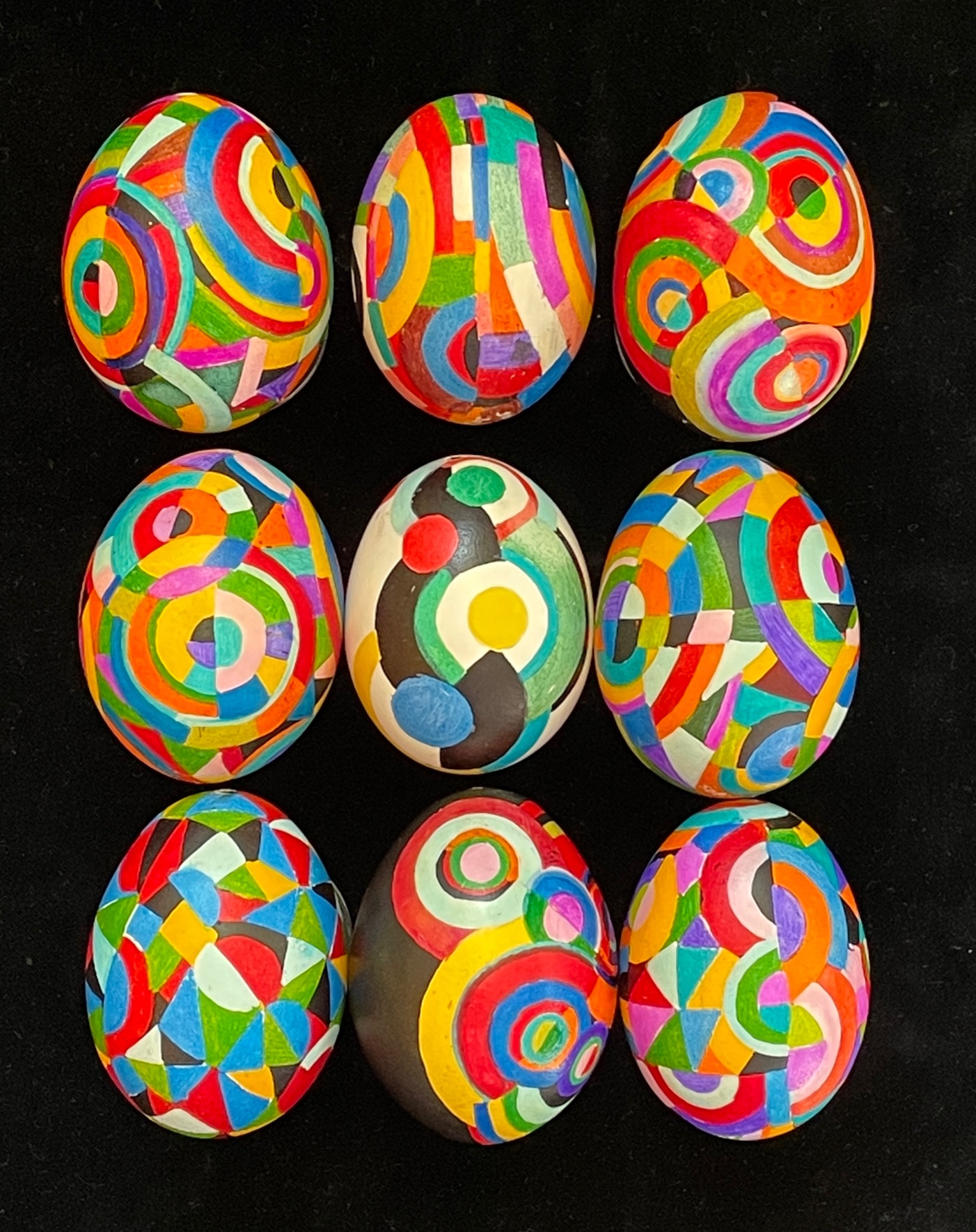
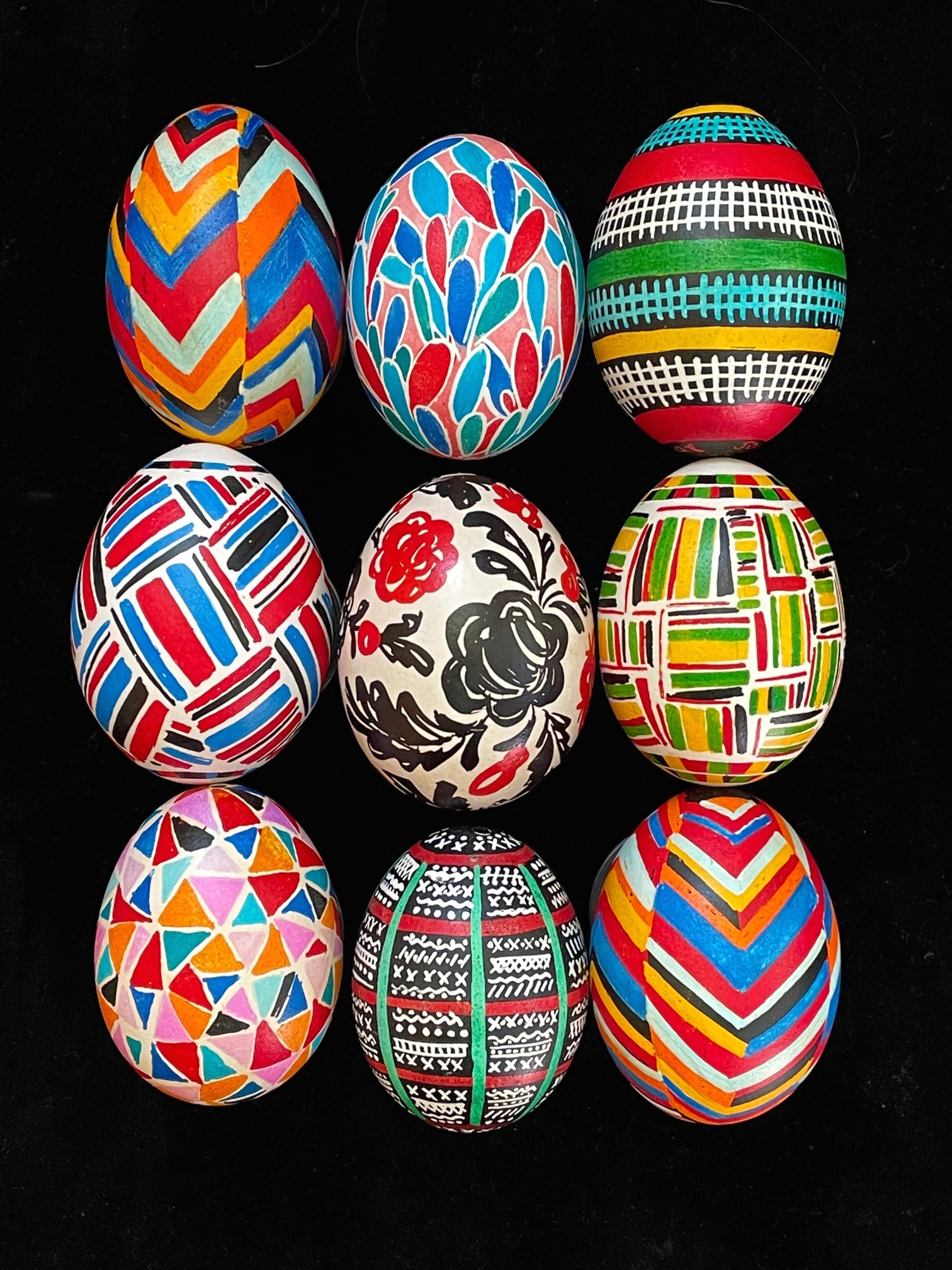
    Крашеные яйца, так называемые писанки с их символическими тонами и узорами составляют часть самых живых традиций Украины и являются главным украшением пасхального стола.

    « Cело на нашій Україні

    Неначе писанка село» (Княжна-поема)

    Tак определил переливающийся характер сельских ландшафтов народный поэт Украины Тарас Шевченко.

    К этому надо еще добавить место иконы в религиозной жизни и в быту православного мира, к которому Малевич прикоснулся самым сокровенным образом, даже если по своему происхождению он был католиком.

    До одиннадцати лет Малевич живёт жизнью украинских крестьян, он накапливает импульсы, полученные от природы, как негативы, которые надо «проявлять» (по его выражению). Случайное созерцание натуралистической картины: наблюдение за маляром, за тремя русскими художниками, которые расписывали собор в Белополье, – все это волнует молодого Казимира, но он не знает, как взяться за дело, чтобы осуществить все, что роится в его мозгу:

    «Я хотел написать то, что видел – как коровы переходят лужи после ливня, и как они отражаются в воде. О как это было хорошо, и как плохо выходило на бумаге. Коровы не разберешь что. Итак мне было двенадцать, тринадцать, пятнадцать лет, и тогда я ничего не понимал, хотя был уже преисполнен великого счастья».[13]

    Он был уже подростком, когда  мать купила ему полный набор красок. Около 1893 года семья переезжает в Конотоп Черниговской губернии в Украине, затем в 1896 году в Курск, уже в России. В Курске Малевич (в возрасте лет двадцати) начинает писать этюды вместе с небольшой группой служащих, которые в свободные от службы часы занимались живописью.

    В 1901 году он женится на польке Казимире Зглейц, восемью годами старше его. У них рождается двое детей. После неожиданной смерти отца в 1902 году он ездит регулярно в Москву, где и обосновывается в 1905 году. Он живёт в это время в коммуне художников, своего рода артели, и посвящает себя профессиональной живописной работе в мастерской Фёдора Ивановича Рерберга, который сам был родом с Украины и являлся автором многочисленных учебников по живописной технике.

    До 1909 года, даты окончательной разлуки со своей первой женой и второй женитьбы на Софье Михайловне Рафалович, живопись Малевича колеблется между импрессионизмом а-ля Монэ и стилем модерн. Известно, что он выставляется в 1907, 1908 и 1909 годах в Московском Товариществе художников, где фигурируют также Кандинский, Ларионов, Гончарова, Давид Бурлюк, Моргунов, Александр Шевченко. Но с 1910 года Малевич приобретает силу и своеобразие, которые не перестанут отличать его от других участников русского авангарда, доминирующей личностью которого он станет в конце концов благодаря смелости и широте своего творчества. 1910 год является поворотным. Художнику тридцать один год. Здесь настоящее начало его творчества. Все, что было до этого – лишь упражнения. Как мог произойти столь резкий переход от символистского стиля гуашей и акварелей на темы и трактовку, близкие Наби, или рисунка 1909 года, изображающего выезд Анатэмы из Москвы (по пьесе Леонида Андреева), к мощному и новому стилю провинциального и крестьянского цикла, начатого в 1910 году?

    Эта перемена произошла в первую очередь благодаря открытию живописного мира икон, что заставило художника переосмыслить весь его прежний опыт:

    «На меня, несмотря на натуралистическое воспитание моих чувств к природе, сильное впечатление произвели иконы. Я в них почувствовал что-то родное и замечательное. В них мне показался весь русский народ со всем его эмоциональным творчеством. Я тогда вспомнил свое детство: коники, цветочки, петушки примитивных росписей и резьбы по дереву. Я учуял какую-то связь крестьянского искусства с иконным: иконописное искусство – формы высшей культуры крестьянского искусства. Я в нем вскрыл всю духовную сторону ‘крестьянского времени’, я понял крестьян через икону, понял их лик не как святых, но простых людей. И колорит, и отношение живописца. Я понял и Боттичелли, и Чимабуэ. Чимабуэ мне ближе, в нем был дух, который я чувствовал в крестьянах.»[14]

    Кроме шока, вызванного иконописью, Малевич также очень сильно ощутил влияние новых направлений, которые дали о себе знать в русском искусстве начиная с 1907 года, и которые порывали с рутиной натурализма и символизма. Одному из этих направлений было суждено сыграть особую роль в творчестве Малевича. Это – неопримитивизм, пионерами которого были Михаил Ларионов, будущий основоположник лучизма, и его спутница жизни Наталья Гончарова. Неопримитивизм имел целью вернуться к национальным источникам народного искусства. Малевич участвовал во всех выставках, организованных этими двумя художниками в Москве, и в остальных, где они принимали активное участие начиная с 1910 года: «Бубновый валет» (1910), «Союз Молодежи» (1911. 1912, 1912-1913), «Ослиный хвост» (1912), «Мишень» (1913). Порвал с ними он только в 1913 году.

    За четыре года, с 1911 по 1915, до своего прыжка в беспредметность, Малевич создает по крайней мере восемь разных типов пиктурологии. Мы перечислим их здесь, обозначая только лишь доминирующую пиктурологию, хотя очевидно, что каждая картина Малевича является комплексом, комбинирующим одновременно несколько живописных культур.

    Итак, неопримитивистские гуаши с импрессионистским и фовистским цветом (1911-1912); «лубок» картины Крестьянка с ведрами <и её ребёнком>(SMA, 1912); геометрически-футуристический сезаннизм картины  Уборка ржиили Дровoсека (SMA, 1912); сдвинутый, «помятый» кубофутуризм картины Крестьянки с ведром. Динамическо<е> разложен<ие> Крестьянки с ведрами» (MoMA, 1912) или картины Утро после вьюги. Пейзаж зимний в музее Соломона Гуггенхайма в Нью-Йорке (1912-1913); мерцающий кубофутуризм Точильщик(Принцип мелькания) в Картинной галерее Йельского университета (1912-1913); заумный реализм Лица крестьянской девушки (SMA) или Усовершенственного портрета Ивана Васильевича Клюнкова (ГРM), или ещё Портрета Матюшина (ГТГ, 1913); аналитический кубизм парижского типа 1913-1914 г., как в Туалетной шкатулкеили Станции без остановки. Кунцево (ГТГ),  Дама y трамвайной остановки , в Конторке и комнате, в Гвардейце, Музыкальных инструментах/Лампе (все из SMA), и в Самоваре из МoМА; алогизм 1914-1915 годов. Авиатора (ГРМ); Коровы и скрипки (ГРМ), Англичанина в Москве, Дамы у афишного столба (все в SMA), Частичное затмение <Композиции с Моной Лизой> (ГРМ).

    В этом чередовании шедевров на протяжении четырех лет, предшествующем монохромной четырехугольной черной форме, художник оперировал скорее очередными взрывами вдохновения, «озарениями», чем эволюционной логикой, что объясняет усвоение в рекордное время живописных культур, которые составляли новаторскую практику его эпохи.

    Цветовая гамма, которую использует Малевич, принципиально отличает его от французских авангардных художников. Около 1910 г. Брак и Пикассо свели свою палитру к охровым, коричневым, серым и черным цветам. Русский же художник, наследник славянской традиции полихромного народного творчества, в особенности в его родной Украине, покрывает геометрические элементы своих картин всевозможными оттенками красного, розового, оранжевого, киновари, берлинской лазури, зеленого, индиго, сиреневого, белого и черного. Это настоящее сверкание всех тонов призмы. Несмотря на то, что краска нанесена смело и свободно, с большой энергией, она постоянно находится в состоянии вибрации, что является интеграцией импрессионистского наследия, благодаря тонкому смягчению тона и игре тени и света. Таким образом создается мощный контраст между иератически-статической твердостью жестов, застывших в неподвижности мгновения, и динамическими сдвигами геометрических объёмов, собранных как колесный механизм машины. Уже в 1912 г. Малевич реализует синтез кубизма и футуризма. Он сам даёт название «кубофутуризм» всем произведениям, которые сохраняют «кристаллическую культуру»[15] структуры, через которую проходят некоторые колебания, своего рода беспокойство, потенциальное или очевидное[16].

    Первая ступень на пути к абсолютной абстракции – это работа художника над декорациями и костюмами кубофутуристической оперы Матюшина Победа над солнцем (пролог Хлебникова, либретто Кручёных), поставленной в Петербурге в декабре 1913 года. Образ затмения, который мы находим в картинах Англичанин в Москве и Частичное затмение <Композиции с Моной Лизой>, здесь, в либретто Крученых, является доминирующим. В опере солнце является символом мира иллюзий, его свет освещает лишь тени, и хор поет:

    «Мы вольные…

    Разбитое солнце.

    Здравствует тьма!»[17]

     Между прочим, именно здесь появляется квадрат, или лучше сказать четырехугольник, как первый знак затмения предметов. Но затмение здесь еще частичное, в действительности четырехугольник, который служит декорацией для второго действа оперы, вкось разделен на два треугольника – один черный, другой белый. Что касается четырехугольника, из которого составлен силуэт Похоронщика, он еще наделен иконографическим символическим смыслом. Зато с появлением в самом конце 1915 г. черного Четыреугольникa[18] на белом фоне на выставке «0.10» в Петрограде затмение будет полным. Появление того, что в последствии привыкли называть «Черным квадратом», поражает своим резким, неожиданным и непредвиденным характером, как в творчестве самого Малевича, так и в искусстве XX века в целом. Если проследить постепенное появление четырехугольников в произведениях 1913-1914 гг., можно отметить, что картины, все без исключения, насыщены формами. По отношению к ним, чистые, обнаженные формы четырехугольника, круга и креста, которые с этого времени населяют супрематические поверхности, поражают своим минимализмом.

    Подход Малевича является радикально-своеобразным в общем движении, которое около 1913 г. удаляется от традиционной предметности. У Кандинского наблюдается преемственность между экспрессионизмом, типа югендштиля, и переходом к абстракции, которая остается символистской в своей воле передать внутренний звук вещей. У Мондриана наблюдается движение от реинструментовки предмета к эквиваленту знаков, дающему чисто живописную версию ощутимой действительности. Один только Малевич совершил прыжок, «благодаря которому человек оставляет одним махом всю прежнюю обеспеченность» (Хайдеггер[19]). Он один разрушил мосты между внешним миром и внутренним миром, между ощутимой действительностью и сверхощутимой реальностью. Эти разрушенные мосты – единственное возникновение бездны бытия, проявляющееся в супрематических холстах.

    Здесь нет никакой точки соприкосновения с предметным творчеством Татлина той же эпохи, ни тем более с будущим конструктивизмом. Известна художественная война, которую Татлин и Малевич объявили друг другу после 1914 года. Это были две незаурядные личности, несовместимые из-за существенных философских причин. Вот свидетельство критика и теоретика Николая Пунина, близкого к Татлину:

     «У них была особая судьба. Когда это началось, не знаю, но сколько я их помню, они всегда делили между собой мир и землю, и небо, и междупланетные пространства, устанавливая всюду сферу своего влияния. Татлин обычно закреплял за собою землю, пытаясь cтолкнуть Малевича в небо за беспредметность. Малевич, не отказываясь от планет, землю не уступал, справедливо полагая, что и она – планета и, следовательно, может быть беспредметной.»[20]

    Итак, абсолютная супрематическая нефигуративность признает лишь один мир – мир бездны бытия. Это ощущение единственно реального мира – беспредметного мира, который сжигает все следы форм в двух полюсах супрематизма в «Чёрном квадрате» и в «Белом квадрате». Между этими двумя полюсами находится ансамбль супрематических картин ярких и контрастных цветов. Однако краски не являются здесь психологическими, искусственно установленными эквивалентами; Малевич против всякой символики цветов, как например у Кандинского. Минимальные знаки, которыми он оперирует и которые никогда не являются точно геометрическими, должны слиться в «цветовые движения»[21], в них раствориться. Раскрашенная поверхность является единственной «живой реальной формой»[22], но так как цвет убивает сюжет, то что в конце концов важно в картине – это движение цветовых масс. Белое совершенство «Белого квадрата на белом фоне», которое завершает собой супрематическую живописную историю (даже если художник будет еще писать в последствии произведения в этом стиле), является одновременно выявлением бездонного бытия и торжеством живописи. Никогда не утверждалось с такой силой владычество чисто цветового движения, в котором формы появляются и исчезают мерцая.

    После революции 1917 года деятельность Малевича посвящена педагогическому обучению: с 1918 по 1921 год он поочередно преподает в Петрограде, Москве и Витебске, а затем с 1921 по 1926 год в Петрограде-Ленинграде. Параллельно он работает в области архитектуры и пишет философские тексты. Весной 1918 года он публикует несколько статей в московском журнале «Анархия». В одной из этих статей он пишет:

    «Гибнет всё в лаке блеска утонченных линий и колорита.

    Мы раскрываем новые страницы искусства в новых зорях анархии […]

    Мы устояли перед напором зловонных волн глубокого моря невежд, обрушившейся на нас критики […]

    Знамя анархии – знамя нашего «я», и дух наш, как ветер свободный, заколышет наше творческое в просторах души.

    Вы, бодрые, молодые, скорей вынимайте осколки распыляющегося руля.

    Омойте касания рук властвующих авторитетов.

    И чистые встречайте и стройте мир сознания нашего дня.»[23]


    Тексты Малевича, которые ещё не все опубликованы[24], обнаруживают философскую мысль, значение, оригинальность и мощь которой мы лишь сегодня начинаем понимать[25]. Супрематизм – это не только новый художественный рецепт, это онтология, откровение бездны бытия, которое должно преобразить до основания все человеческие проявления, освободить человека от предметного веса, от тяжести предметов, являющейся последствием «первородного греха», чтобы вновь обрести божественное безвесие. Если у супрематизма находятся точки соприкосновения со, скажем, некоторыми позициями Бакунинского анархизма или ещё с традиционной русской религиозной философией, то эти импульсы совершенно переплавлены в огне супрематического ощущения, основания, видения абсолюто беспредметного мира. Писать красками, писать словами, мыслить, быть – всё это процессы тождественные, хотя и  не похожие между собой. Живописное и мысль сливаются, не смешиваясь, в одно единственное действие, благодаря которому раскрывается «голос настоящего»[26], «ритм и темп»[27], «жест очерчивания собой форм»[28].

    Единственная жизнь – та, у которой есть «вселенская интуитивная цель»:

    «Интуиция – зерно бесконечности. В ней рассыпает себя и всё видимое на нашем земном шаре […] Шар земной не что иное, как комок интуитивной мудрости, которая должна бежать по путям бесконечного.»[29]

    Дело искусства – влиться в это универсальное движение, которое ведет к абсолютной беспредметности. Здесь наблюдается отождествление живописного действия и движения мира. Дискурс Малевича следует всегда ставить в контекст его радикально-монистического видения мира, которое не признает никакого компромисса символистского типа или иллюзионизма. Художественное действие устремлено к обнажению бытия (к миру беспредметному), к единственному единому. Именно в этом смысле надо понимать принцип экономии, который Малевич выдвинул как пятое измерение искусства. Речь не идет лишь о формальном сведении изображения к минимальным единицам, ни о радикализации того, что Роман Якобсон называл «явной метонимической ориентацией кубизма»[30]. Речь идет о том, чтобы художественное действие слилось с беспредметным движением:

    «Человек – организм энергии, крупица, стремящаяся к образованию единого центра. […] В силу того, что мировая энергия земного шара бежит к единому центру, все экономические предлоги должны будут стремиться к политике единства.»[31]

    Итак, экономия по Малевичу является онто-теологической категорией, и более подробное исследование этого понятия в текстах русского художника позволит увидеть конвергенции с тем, что понимается в богословии, когда речь идет о «Божественной экономии» (о Божественном домостроительстве). Можно сказать, что в обоих случаях существует забота об организации, о подлинном распределении энергии.

    В 1920 году в Витебске, где Малевич организовал школу супрематического обучения под названием УНОВИС (Утвердители нового в искусстве или Утверждение нового в искусстве), он пишет:

    «Установив определённые планы супрематической системы, дальнейшее развитие уже архитектурного супрематизма поручаю молодым архитекторам в широком смысле слова, ибо вижу эпоху новой системы архитектуры только в нём.»[32]

    Ряд проектов (как например Дом летчика из SMA) названы планиты. Это  жилища, которые должны планировать в пространстве по воле атмосферических и магнетических течений. Здесь геометрия делается более точной, подобно тому, как в гипсовых или деревянных макетах архитектоны, хотя в обоих случаях регулярность постоянно разбивается сдвигами элементов на различных планах или ассиметрией, равно как и фактурой, исключающей гладкие поверхности.

    Напряженная работа Малевича педагога и теоретика прервана 15 декабря 1926 года вследствие закрытия властями Государственного института художественной культуры Ленинграда, где с 1923 года под управлением Малевича и при сотрудничестве Матюшина, Татлина, Филонова и Мансурова разрабатывался новый экспериментальный междисциплинарный подход к искусству. Это событие ознаменовало собой начало в Советской России агрессии со стороны власти по отношению к авангарду.Чтобы дать себе отчет в том, насколько положение художника в Советском Союзе стало мучительным и непрочным в конце 1920-ых годов, достаточно процитировать текст, который Малевич написал как своего рода олографическое завещание, в котором он выражает свои пожелания касательно теоретических и философских рукописей, оставленных им в Германии вместе с картинами, выставленными в « GrosseBerliner Kunstausstellung«  в 1927 году:

    «В случае смерти моей или тюремного безвыходного заключения, и в случае если владелец сих рукописей пожелает их издать, то для этого их нужно изучить и тогда перевести на иной язык, ибо находясь в свое время под революционным влиянием могут быть сильные противоречия с той формой защиты Искусства, которая есть у меня сейчас т.е. 1927 года. Эти положения считать настоящими. К.Малевич. 1927. Май 30. Berlin».

    Чтобы Малевич мог написать такие строки, атмосфера в Советском Союзе должна была значительно деградировать. Художник предвидит худшее: смерть, пожизненное заключение, принуждение писать тексты, противоречащие его мысли. Малевич был арестован в 1930 году, после своего пребывания в Германии[33]. Он умер в 1935 году от рака. Можно предположить, что моральное и физическое преследование, которому подвергся основатель супрематизма, сыграло свою роль в его болезни. Несмотря на это, в период между 1928 и 1934 годами Малевич вновь напряженно занимается живописью. В течение этих шести лет он создает более ста картин. Этот возврат к станковой живописи, которую он практически оставил с 1919 по 1926 год ради архитектонов, педагогической работы и углубления своей философии, остается загадочным. На самом деле, это тематический возврат к крестьянскому циклу и формальный возврат к образу.

    Весьма впечатляет эта серия «безликих ликов» с яркими цветными полосами, русско-украинская гамма которых напоминает православный пасхальный стол, как и те деревенскиe ландшафты, где земля и небо создают поразительный живописный контраст, как и крестьянe в иератических позах, пронзенных этой беспредметностью, этим универсальным небытием, которые супрематизм так энергично выявил между 1915 и 1920 годами Малевич показывает здесь, что он не отказался от супрематизма. Живописное, выявленное как таковое в его беспредметной сути, пронзает все формы. Тут, после высшей аскезы абсолютной беспредметности, наблюдается реинтерпретация примитивистского и кубофутуристического цикла 1910-ых годов в живописном синтезе, где разрешается антиномия между подлинной реальностью мира (его беспредметностью) и видимой действительностью. Одновременно наблюдается «реукраинизация»[34] малевического творчества.

    15 мая 1935 года художник умирает в Ленинграде. Его ученик Николай Суетин спроектировал гроб в супрематическом стиле. Тело Малевича везли по Ленинграду на грузовике, на капоте которого был написан большой черный квадрат. Его прах в последствии был перевезен в Немчиновку, неподалеку от дачи, где художник любил проводить летние каникулы.

    Влияние Малевича на искусство XX века огромно. Его утверждение живописного как такового никогда не переставало восприниматься, даже в период латентности, который последовал за смертью художника. Альфред Барр, директор Музея современного искусства в Нью-Йорке, во многом способствовал сохранению супрематической идеи, благодаря организованной им выставке и книге Cubism and Abstract Art (1936). Таким образом, неудивительно появление нового, «чистого цветового движения» (Колор филд) в американском искусстве 1960–1970-ых годов. Минимальное искусство (Minimal art), со своей абсолютной монохромностью, со своей редукцией до элементарных структур, со своим принципом экономии («less is more») является также наследием Малевича, даже если это течение далеко не обладает всей сложностью супрематизма и кажется порой рудиментарным в своей упрощенной геометрии. Карл Андре и Дональд Джадд комбинируют квадраты, кубы и прямоугольники без какой-либо ассоциации с видимым миром. Протекающие акрилические краски на голом холсте Мориса Луиса, небывалые форматы и геометрически-элементарные формы Кеннета Нолланда или Франка Стеллы являются, по определению Доры Валлье, «хроматическими призывами через очень сильное перцептивное восприятие». Из трех самых важных представителей американского абстрактного искусства 1960–1970-ых годов, Барнетта Ньюмана, Марка Ротко и Ад Рейнхардта, безусловно можно сказать, что именно последний, Ад Рейнхардт, наиболее близок супрематизму. Для него писать красками, мыслить, писать словами, быть – является одним и тем же действием, действием чистой свободы, вне модусов и связей, сердцевиной единственного живого мира, который всегда кажется мертвым для неисправимого антропоморфизма, так как это действо находится в напряженной зоне между видимым и невидимым. Восточная мысль здесь недалеко. Ад Рейнхардт приблизился к ней вплотную.

    Философский живописный подход Малевича вписывается в сферу самых высоких вопросов всемирной мысли не только как завершение европейской эстетической эволюции после Сезанна, но и как онтологическая система, позволяющая раскрыться истине.

    [1] Jean-Claude Marcadé, «Malévitch», Paris, Casterman/Nouvelles Editions Françaises, 1990

    [2] B этом будущем каталоге-рэзонэ, придётся ревизовать атрибуцию многиxпроизведений Малевича; этому поможет исследование выдающегося датского малевичеведа Троэльса Андерсена : K.S. Malevich, The Leporskaya Archive (состав. Troels Andersen), Aarhus University Press, 2011 (cм. в особенности главу «Attributions», c. 210-214)

    [3] См. мою книгу : Jean-Claude Marcadé, «L’avant-garde russe. 1907-1927», Paris, Flammarion, 1995, 2-e изд. 2007, ocoб. С. 20-22 («École de Saint-Pétersbourg, École de Moscou, École ukrainienne») и passim

    [4] Н. А. Полевой, Похождения Чичикова, или мертвые души. Поэма Н. Гоголя, « Русский вестник » (1842. No 5/6. Отд. III) ; см. также Edyta M. Bojanowska, «Nikolai Gogol. Between Ukrainian and Russian Nationalism», Cambridge, Massachusetts, London, England, Harvard University Press, 2007, p. 70 sqq.

    [5] Все три автобиографические текста опубликованы в кн. Малевич о себе. Современники о Малевиче. Письма. Документы. Воспоминания. Критика (аторы-составители  : И.А. Вакар, Т.Н. Михиенко), Москва, РА, 2004, т. 1, с.17-45; фрагменты двух автобиографий (1918 г. И 1933 г. Опубликованы в украинском переводе в кн. : Дмитро Горбачов, « Він та я були українці». Малевич та Україна, Київ, Сим Студия, 2006, с. 14-26

    [6] Наиболее полные сведения о жизни Малевича можно найти в фундаментальном двухтомнике И. А. Вакар и Т. Н. Михиенко,  Малевич о себе…, цит. пр.

    [7] К. С. Малевич,  «Из 1/42 : (Автобиографические) заметки (1933-1925)» в каталоге Казимир Малевич/Kazimir Malevich, Министерство культуры СССР/Городской музей, Амстердам, 1988, с. 102; препечатано в кн. Малевич о себе…, цит. пр., т. 1,c .42

    [8] К. С. Малевич,  «Главы из автобиографии художника » в кн. Малевич о себе…, цит. пр., т. 1, c. 21

    [9] Там же, с. 21

    [10] Там же, с. 17

    [11] Там же, с. 19

    [12] Там же, с. 20

    [13] К. С. Малевич,  «Из 1/42 : (Автобиографические) заметки (1933-1925)» в кн. Малевич о себе…, цит. пр., т. 1, c. 44

    [14] К. С. Малевич,  «Главы из автобиографии художника » в кн. Малевич о себе…, цит. пр., т. 1, c. 28

    [15] К.С. Малевич, «Кубофутурізм», Нова генерація, 1929, N° 10: перепечатано в кн. Дмитро Горбачов, « Він та я були українці». Малевич та Україна, цит. произв., с. 111

    [16] В выше упомянутой статье «Кубофутуризм», Малевич пишет по поводу кубофутуризма Соффичи : «деякий відбиток беспокійності», там же, с. 111

    [17] Победа над солнцем, опера А. Кручёных, музыка М. Матюшина, СПб, 1913, 4-я картина

    [18] В каталоге «Последней футуристической выставки картин 0, 10», такой является орфография названия картины.

    [19] Heidegger, Einleitung zu : Was ist Metaphysik ? (1949)

    [20] Цитата из воспоминаний Н.Н. Пунина приведена Е.Ф. Ковтуном в его статье «К.С. Малевич. Письма к М.В. Матюшину», Ежегодник Рукописного отдела Пушкинского дома 1974, Ленинград, «Наука»,1976, с. 183

    [21] Казимир Малевич, «Свет и цвет» [1923]  в Собр. соч. в пяти томах, Москва, «Гилея», т. 4, 2003, c. 261

    [22] Казимир Малевич, От кубизма и футуризма к супрематизму [1916], в Собр. соч. в пяти томах, цит. пр., т. 1, 1995, c. 49

    [23] Казимир Малевич, «К новой грани», Анархия, 1918, N° 31: перечечатано в Собр. соч. в пяти томах, цит. пр., т. 1, c. 66

    [24] Самое полное издание писаний Малевича – Собрание сочинений в пяти томах, цит.пр.1995-2004

    [25] Выбранная литература о супрематической мысли : Miroslav Lamač, „Malevič a jeho okruh“/“Malewitsch und sein Kreis“, Vytvarné umeni , 1967, N° 89, p. 373-383; Jean-Claude Marcadé, «Une esthétique de l’abîme» в кн. K. Malévitch, Écrits I. De Cézanne au suprématisme, Lausanne, L’Âge d’Homme, 1974, 1993, p. 7-32; Emmanuel Martineau, Malévitch et la philosophie, Lausanne, L’Âge d’Homme, 1977; Emmanuel Martineau, «Préface» in : K. Malévitch, Écrits II. Le Miroir suprématiste, Lausanne, L’Âge d’Homme, 1977, 1993; Jean-Claude Marcadé, «An Approach to the Writing of Malevich», Soviet Union/Union Soviétique, 1978, vol. 5, p. 225-240; Miroslav Lamač, Jiři Padrta, „Zum Begriff des Suprematismus“/“The Idea of Suprematismus», in : Kasimir Malewitsch. Zum 100. Geburtstag, Köln, Galerie Gmurzynska, 1978, p. 134-180; Felix Philipp Ingold, «Kunst und Oekonomie. Zur Begründung der suprematistischen Aesthetik bei Kasimir Malewitsch», Wiener Slawistischer Almanach, Bd. 4, 1979, p. 153-193; Jean-Claude Marcadé, «Qu’est-ce que le suprématisme?» in : K. Malévitch, Écrits IV. La lumière et la couleur, Lausanne, L’Age d’Homme, 1981, p. 7-36; Jiři Padrta, „Le monde en tant que sans-objet ou le repos éternel. Essai sur la précarité du projet humaniste, Malévitch. Cahier I, Lausanne, L’Age d’Homme, 1983, p. 133-177; Emmanuel Martineau, „Une philosophie des suprema“, Malévitch. Cahier I, Lausanne, L’Âge d’Homme, 1983, p. 121-131 (Статья была опубликована впервые с английским переводом в каталоге : Suprématisme, Paris, Galerie Jean Chauvelin, 1977); Felix Philipp Ingold, «Welt und Bild. Zur Begründung der suprematistischen Aesthetik bei Kazimir Malevič II», Wiener Slawistischer Almanach, 1983, 12, p. 113-162; Jean-Claude Marcadé, «Le Suprématisme de K.S. Malevič ou l’art comme réalisation de la vie“, Revue des Études Slaves, Paris, LVI/I, 1984, p. 61-77; Jean-Claude Marcadé, «Malevich, Painting and Writing : on the Development of a Suprematist Philosophy», в каталоге : Kazimir Malevich. Suprematism (ed. Matthew Drutt, New York, Guggenheim Museum, 2003, p. 32-43; Gérard Conio, «Malévitch, du Carré blanc au Rien libéré», Kazimir Malévitch, Le suprématisme. Le monde sans-objet ou le repos éternel, Gollion (Suisse), infolio, 2011, p. 9-75

    [26] Kазимир Малевич, «О поэзии» [1919], в Собр. соч. в пяти томах , цит. пр., т. 1, c. 146

    [27] Там же, passim

    [28] Там же, с. 147

    [29] Казимир Малевич, О новых системах в искусстве. Статика и скорость. Установление А[1919], в Собр. соч. в пяти томах,т. 1, c. 172

    [30] Roman Jakobson, Essais de linguistique générale, Paris, Minuit, 1963, p. 63 (по-английски : Fundamentals of Language, La Haye, 1956)

    [31] Казимир Малевич, О новых системах в искусстве. Статика и скорость. Установление А, цит. пр., с. 181-182

    [32] Казимир Малевич, Супрематизм 34 рисунка [1920], в Собp. cоч. в пяти томах, т.1, с. 189

    [33] Cf. Frédéric Valabrègue, Kazimir Sévérinovitch Malévitch, Marseille, Images en Manœuvres, 1994

    [34] См. Дмитро Горбачов, «Київський трикутнік (Пимоненко-Бойчук-Богомазов)», in : ДмитроГорбачов, « Він та я були українці». Малевич та Україна, цит. пр., с. 210-217

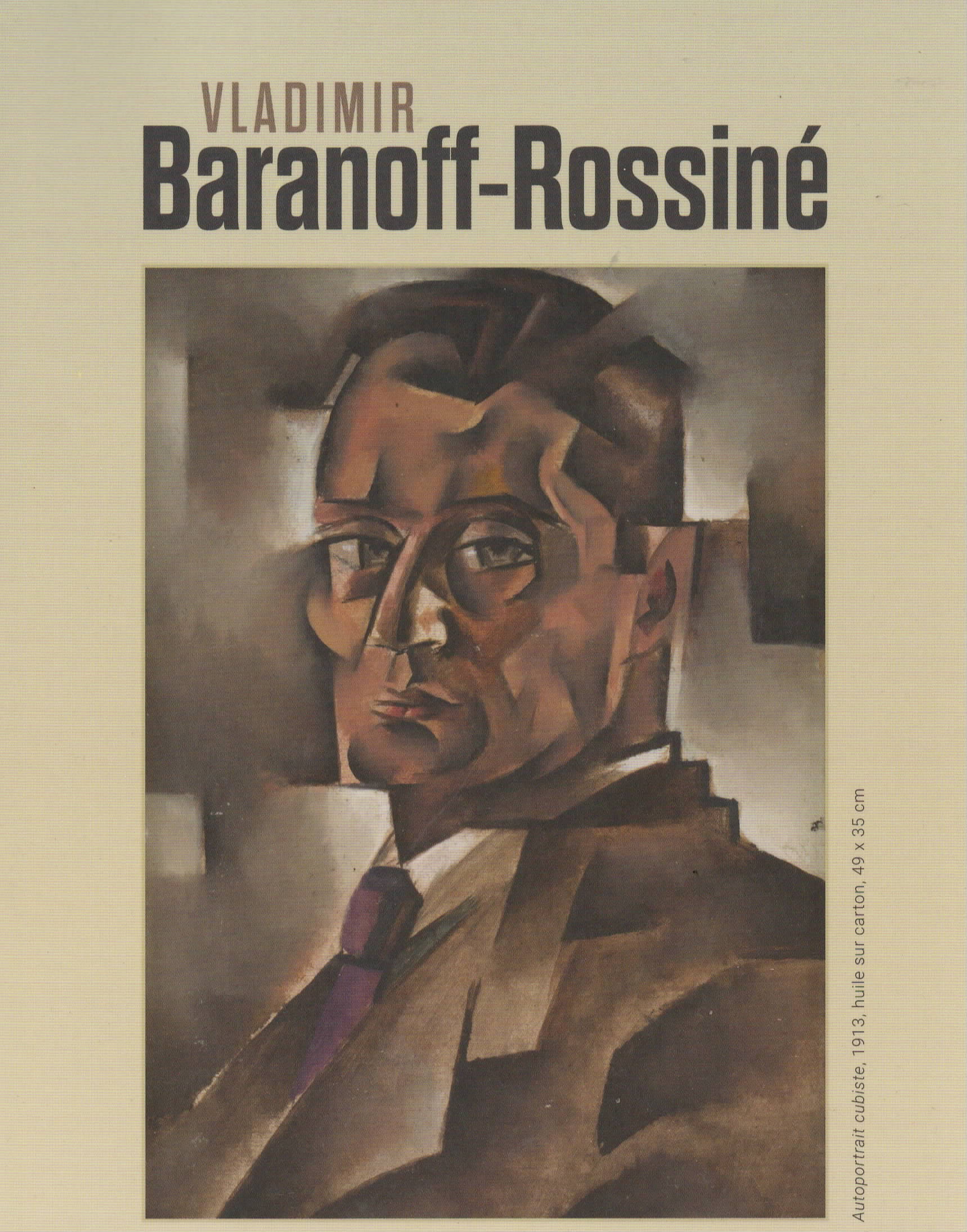
  • A MULTIFACETED GENIUS – BARANOFF-ROSSINÉ

      EXPOSITION À LA GALERIE LE MINOTAURE

    (13MAI-29 JUILLET 2023)

    A MULTIFACETED GENIUS

    Vladimir Baranoff–Rossiné is an eminently representative example of the artist figure as it emerged in the twentieth century. Of course, it is Picasso who, starting in 1910, came to epitomise this image of the creator, a figure that was completely new in relation to all that had gone before in European art. Having rejected four centuries of renascent Renaissance academicism, having wiped the slate clean of conventional codes of representation, the twentieth century artist found himself condemned to a relentless quest for ever new processes and ways of apprehending nature or the world. He became Proteus, as André Malraux said of Picasso.

    When we consider the whole of Baranoff–Rossiné’s oeuvre in its entirety, the striking thing, precisely, is its protean character, its succession of highly varied and sometimes overlapping periods, each so different in style that it is impossible to speak of “transition” or “evolution.” An alchemist of painting, a tireless experimenter, Vladimir Baranoff–Rossiné never stopped creating, inventing and finding original formulas. As a creator of his times, he never confined himself to a formula, constantly keeping his inventive genius on the alert, and although he left more than five hundred oils, drawings, watercolours and gouaches,[1] his activity did not stop there. In z letter he wrote to Robert and Sonia Delaunay from Ljän in Norway on 26 June 1916, he states:

    “I am very busy, as I always have been and always will be, I live only by painting. The period of prolonged rest as well as the journey through Great Russia[2] have had a beneficial effect.

    In painting, I am the same as before: and I will also die, as I am. I do whatever I want. And my struggle consists exclusively in fighting against the impossibilities that prevent the realisation of what I want. I paint academic studies and work in the field of chemistry, I study spectral analysis and the sun; I am also working on a piece with various materials, colours and forms. For me, painting is real life. The main thing is that what I do, I do with love, so much so that I enjoy it.”[3]

    In these few lines we can sense the scope of the Ukrainian-Russian painter’s artistic activity: he practised traditional art (“academic studies”), scientific research into the laws of light (analyses of the Sun’s spectrum), and the invention of objects incorporating a variety of materials. Here we have the summary of Baranoff–Rossiné’s aesthetic concerns throughout his life: easel painting, technical knowledge and technological invention. To reiterate, this approach is typical of the twentieth-century artist for whom art as techne regained its character as an empirical, scientific, cognitive practice, something which secular academic routine had tended to obscure by limiting it to the framework of a single mode of apprehension of reality.

    We can thus see that before the revolution of 1917 Baranoff–Rossiné was following the line that Robert Delaunay had been experimenting with since 1912–13, that of light as a material, retinal element of vision. In his desire to go beyond impressionism and neo-impressionism, which had focused on the effects of light, Delaunay turned to the sources of light, whose coloured wave-rhythms or, as we used to say before 1914, “vibrations in the ether,” had been made visible by science. In another letter from Rossiné dated 15 September 1916, written to the Delaunays from Kristiana, he says that he has studied Chevreul. This was precisely the subject of the Delaunays’ research.                                                                                   

    The importance of the work of the nineteenth century French chemist Michel-Eugène Chevreul for Delaunay’s research into light and colour is well known. The titles of certain essays by this the scientist, who was director of the Manufacture Royale des Gobelins, are enough to indicate the echo his researches found in the painter of the Windows, Circular Forms and Discs (1912–13): On the Law of Simultaneous Contrast of Colours (1839), Dissertation on the Vision of Material Colours in a Rotating Motion and the Numerical Speeds of Circles (1882).

    Another aspect of the Ukrainian-Russian artist’s creative activity is that in 1916 he was working to assemble “various materials, colours and forms.” After his Symphony No. 1 in 1913 (MoMA), he continued to explore a new type of sculpture. From the mid-1910s to the 1930s, he created different types of sculpture. As for what he called in his 1925 “Memo” “counter-reliefs,” possibly under the influence of Tatlin, we are familiar with the Invalid Artist in the Wilhelm Lehmbruck Museum and the Toreador (private collection), which are probably from 1915. In 1933, his Polytechnic Sculpture (MNAM) provoked the sarcasm of the French press, which waxed ironic over these coils of metal, glass and wood. This construction has the rigour of the first spatial works made by the Soviet constructivists from 1921 onwards, but with a “baroque” inflection (the twists, the serpentine spirals which are the mark of the artist’s belonging to the Ukrainian School of the twentieth century).

    It was in Odessa that the young Baranoff first learned his trade. One of his fellow students was none other than Natan Altman, whom he would meet again in Paris between 1910 and 1914, and then in Petrograd after the revolutions of 1917. When he finished his secondary education in 1905, he systematically devoted himself to his profession as a painter at the Academy of Saint Petersburg. By 1907, Baranoff–Rossiné’s innate eclecticism was already apparent. This word should not be taken as pejorative! Everything about the artist’s oeuvre points to his total originality, his “touch.” Like a bee, he took pollen from everything that came his way and pleased him, and turned it into honey. Between 1905 and 1907, the “World of Art” (Mir iskusstva) held sway in Russia. This secessionist movement led by Diaghilev and Alexander Benois  recalled that art had no utilitarian function other than to serve Beauty.

    The exhibition of Russian art organised by Diaghilev and Benois in Paris in 1906 saw poetic realism, art nouveau, symbolism and impressionism coexist peacefully under the banner of the “World of Art.” Traces of all these styles can be found in Baranoff’s landscapes, genre scenes, still lifes, and nudes from this period, but his dominant style is impressionism, which he modulated in multiple variations. Sometimes he created luminist effects with the play of light and shade, in the wake of Repin, the greatest painter of the realist school of Wanderers who, despite his aversion to “foreign discoveries,” had integrated, but without excess, certain principles of French impressionism (pleinairism, division of strokes, solar lighting, etc.); sometimes the heritage of Van Gogh was translated into somewhat coarse variations on the vibrations of pictorial space, doubled by a curious convergence with the first impressionist works of Malevich; sometimes the parcelling out of the canvas into small, nervously adjusted strokes was combined with the use of thick impasto creating a relief, as in the impressionist works of Kandinsky of the 1900s; and sometimes, too, the space was measured out by a network of small quadrilaterals (Self-portrait with a Brush, 1907 and other portraits from this period), or by small meshes, small parcels with which Vladimir Burliuk, his compatriot from Kherson, was constructing his canvases at the time of the first exhibition of what would later be misnamed the “Russian avant-garde” and should be called “Left-wing art in the Russian Empire and the USSR.” The young Ukrainian Baranoff himself took part in this important show, “Στέφανος,” held in Moscow in 1907. This name “Stephanos,” was taken from the title of a collection of poems by the Symbolist theorist Valery Bryusov, which referred to a wreath of flowers, in this case a garland of poems. The Russian name for this was “Venok” and in 1909 there was another exhibition in St. Petersburg called “Venok-Stephanos,” where Baranoff again showed his work. Together with his participation in the 1908 street exhibition in Kiev of work by the young painters of the future avant-garde (“Zveno”/”The Link”), this constituted his contribution to the new painting in Russia before his departure for Paris in 1910. In Russia at the time this was called “impressionism” in opposition to naturalistic realism or academicism, because other names had yet to be found, as they would after 1910: “futurism,” “futuraslavia” (budietliantsvo), or even “cubo-futurism.”

    Arriving in Paris in 1910, the painter took the pseudonym of Daniel Rossiné, and that was how he signed his works until 1917. The French capital was in a ferment of experimentation. Matisse’s Fauvism was already being challenged by the cubism of Picasso, Braque and Léger, whose followers caused a sensation at the Salon d’Automne in 1911. Several of Rossiné’s compatriots, who had come from the Ukraine like him, including Alexander Archipenko, Alexandra Exter, Sonia Delaunay, Baroness Elena Frantsevna of Oettingen and her cousin Serge Férat (Yastrebtsov), who was the editor of the Soirées de Paris in 1913, were actively involved in the general movement of the arts to break away from the age-old figuration that had been limited to the mimetic reproduction of nature.

    For many of these innovators, Cézanne was the main inspiration for the new Parisian style. The Master of Aix’s famous words about treating nature by “the cylinder, the sphere, the cone” was taken literally by the artists of the avant-garde. Rossiné painted a large number of canvases in the cubist style but, as always with him, he applied Cézanne’s precept with great flexibility, never sticking to a “pictorial recipe” but mixing highly diverse approaches as his inspiration dictated, going close for example to the pre-cubists (Village, The House by the Lake, Cock, 1911), to Gleizes (Nude Woman,The Forge, at the MNAM), or even to André Lhote with his rhythmisation of space by the play of fan-shaped curves. But he also asserted his personality intact by his flattening of objects, which would influence the style of David Shterenberg, who exhibited with him in Paris in 1914 and who, in the early days of the 1917 revolution, was the People’s Commissar for Arts (IZO). Also very much his own was his range of colours, with a dominant Fauvist tone but also a specific Slav inflection (harmonies of blues-reds-yellows-greens, as in Still Life with Chair).

    From 1910 to 1914 Rossiné exhibited regularly at the Salon des Indépendants. With Sister of the Artist. Motherhood, shown at the Salon d’Automne in 1913 and noted by the poet and critic André Salmon, the painter added to his cubist volumes the futurist dynamism and orphist simultaneism of Robert and Sonia Delaunay.

    At the same time, he painted a whole series of large-format paintings on biblical subjects (Apocalypse, Man on his Knees, Adam and Eve, etc.) whose symbolist iconography, including references to Michelangelo and William Blake, among others, was quite unusual, but whose workmanship took into account modern experiments with the possibilities of colour. The representation of the solar disc with its emanations in concentric circles shows convergences with certain works by Kupka and especially with the “simultaneous solar discs” of Robert and Sonia Delaunay. Rossiné’s correspondence with the latter indicates their shared artistic purpose.

    The Delaunays’ friend, the Armenian Georgy Yakulov, one of the participants in “Στέφανος” in 1907, had been carrying out research on the solar prism since 1905, independently of Chevreul’s work. And he confronted his experiments with those of the Delaunay couple throughout the summer of 1913 at Louveciennes.

    Rossiné, too, had been working in this experimental direction. In around 1910 he had made a palette, called “polychrome,” on which a series of colours were painted. At his solo exhibition in Kristiana, in 1916, he hung up a palette showing his colours and in an interview responded as follows to the Norwegian critics who were taken aback by his work:

    “Have you seen my palette and […] on the palette you can get any shade you want. This is the law of contrasts between colours […]. White, black, red, any colour is transformed according to the one you place next to it. If you know colours, you cannot fail to see these changes. As you can see, I have divided my palette into sectors of different colours: green, blue, violet, red, orange, black, brown and white. So I can get exactly the shade I want.”[4] Today, the invention of the “polychrome” palette, which is the first of a whole series of inventions by Baranoff–Rossiné, may not seem so bold, but at the time it was really new. Several artists used it to advantage. On 10 December 1917, Natan Altman wrote from Petrograd:

    “I find that Rossiné’s ‘polychrome’ palette 1) organises the work well; 2) helps to find an intense colour, 3) encourages one to treat the material with care and love. This palette is very practical to work with. I have been using it since 1911.”

    We know that in around 1912 Daniel Rossiné was working in the field of music and colour. Here is what Kandinsky wrote to the Russian composer Thomas von Hartmann [Foma Aleksandrovich Gartman]:

    “Rossiné (a young Russian painter), who is working on the theory of painting and especially of musical scores, is dying to meet you. He himself is fantastic. He may come to Munich again in September, otherwise he asks you to come to Switzerland (to Weggis near Lucerne – there is a centre for Swiss who paint: the Moderner Bund).”[5]

    This is confirmed by Hans Arp in the memoirs he wrote in the 1950s:

    “The Russian painter Rossiné, who visited me during this time (in Switzerland), was unexpectedly understanding of my attempts. Rossiné showed me some of his drawings, on which he described his inner world in a new way with coloured punctuation marks and lines. His and my works were concrete art.”[6]

    Around 1914, Rossiné did more than make an original contribution to the cubist geometrisation of form, to futurist dynamism and to Parisian colourist experiments; he also created an iconography with fragments of ribbons with cylindrical volumes that curled in the space of the painting, unwinding and turning over in constant movement. This transposed the principle of the ribbon defined by the German mathematician Möbius into plastic space, as Max Bill would also do some thirty years later.

    This led to a series of paintings entitled “Shavings” (Copeaux) in around 1919–20. Baranoff–Rossiné’s famous painting with this title, now at the MNAM, is not from 1910 as the date on the canvas, which has obviously been scraped at, seems to indicate. According to the “Memo” that the artist wrote in 1925 about his main artistic works since 1911, the piece is indeed from the abstract period in Kherson around 1919–20. I have translated this Memo, in which the Ukrainian painter sometimes mixes Latin and Cyrillic characters. Attempts to date Baranoff–Rossiné’s abstract creation to before 1914 are not justified and many works from the 1920s and 30s are wrongly dated to the 1910s.

    These years of research were marked by two exceptional moments: the exhibition of two sculptures called Symphony at the 1913 and 1914 Salons des Indépendants and the destruction of one of these works, Symphony No. 2, which, according to Sonia Delaunay’s recollections, was thrown into the Seine after the 1914 Salon. This last action, which was part of a ceremony involving other painters, anticipates similar gestures, such as the ones carried out several decades later by Yves Klein. This exemplifies what, at that time, a form of behaviour typical of Futurism, and in particular of Russian Futurism. In one of their 1913 manifestos, the poets Khlebnikov and Kruchenykh wrote:

    “To be torn up after reading!”

    This was what one might call a pre-Dadaist spirit, like the conceptual acts of Marcel Duchamp. Moreover, the preserved Symphony No. 2, now at MoMA, shows how disconcerting these constructions of heterogeneous elements could be. Critics at the time spoke of “paradoxical assemblages of varnished zinc daubed with fresh and vivid colours, serving as a support for strange pepper mills, blue, cream or madder discs intermingled with unexpected springs and steel rods.” These objects are at the limit between painting and sculpture, narrowing the margin that separates pictorial art from sculptural art, as was then beginning to be practiced (Picasso’s first reliefs, Archipenko’s sculpture-paintings and Tatlin’s pictorial reliefs). It was no longer traditional sculpture that served as a structure, but the pictorial that was appropriating space, integrating what Margit Rowell called in a memorable 1978 exhibition at the Guggenheim in New York “the planar dimension”: this was the pictorial dimension unfolding in space, which the Soviet constructivists would systematise from 1920 onwards.

    A dominant feature of Rossiné’s entire pictorial output after 1910 is precisely its sculptural potential. This is certainly one of the lines developed by cubism in its contrasting  volumes, the other line being, conversely, the flattening of the elements structuring the pictorial surface, which would be raised to its maximum intensity in Malevich’s suprematism. In Rossiné’s work, this tendency towards volume is combined with a very particular way of making the subject of the representation stand out on the flat pictorial surface, thus contrasting the background of the painting with the object set against it. In most of the artist’s paintings between 1910 and 1943, the object is no longer integrated into the pictorial construction, but is like an excrescence whose contours, although anchored to the support of the painting, are clearly delimited in relation to the surface. There is never any pulverisation (raspyliéniyé) of the object, as Nikolai Berdyaev put it in his 1914 article on Picasso, but, on the contrary, its emergence, the concretisation of its voluminal mass.

    For all his many activities, painting would remain the Ukrainian artist’s privileged domain until the end. If he made forays into other fields, the starting point was always his passion for the art of painting. After the outbreak of the First World War, he settled in the capital of Norway, Kristiana, and stayed there until the revolution of 1917. There he held the only solo exhibition of his career. Familiarity with Scandinavian expressionism, especially Edward Munch, and with Norwegian landscapes, resulted in a more muted palette and more pronounced line, and he even showed a neo-primitivist tendency to simplify the lines dominated by the concentric rays of the sun. But when he returned to revolutionary Russia, he created cubo-futuristic canvases with flamboyant colours and swirling spiral forms on the Norwegian theme, referring to the Möbius strip.

    During the Russian revolutionary events of 1917, Rossiné returned to his country and played an active part in the reorganisation of the arts that was under way there. This was when he took the name we know him by today, Vladimir Baranoff–Rossiné. He showed his works in numerous group exhibitions and, like all artists, took part in agit-prop, decorating the Square of the Apparition of the Mother of God (Znamienskaya plochtchad’) in Petrograd in 1918, opposite the Moscow Railway Station, which became the Square of the Insurrection (Plochtchad’ Vosstaniya). He opened a studio in the rooms of the former Petersburg Academy of Fine Arts, which had become “Free Studios” (Svomas), and taught in the Higher Art and Technical Studios (Vkhutemas) in Moscow in the “Forms-Colours” section. It was then that the result of his simultaneist–synesthetic research took shape with the creation of his famous Optophonic Piano, which he demonstrated in 1924, on the eve of his departure for the West, at the Meyerhold Theatre, then at the Bolshoi in Moscow. The posters announced: “For the first time in the world: A colour–visual (optophonic) concert. The reincarnation of music in visual images with the visual piano invented by the painter Vladimir Davydovich Baranoff–Rossiné”;

    or:

    “Optophonic, coloro-visual concert: reproduction of music in colour with the help of a new invention, the visual piano of the painter Vladimir Davydovich Baranoff-Rossiné.”

    At the Bolshoi, the performance was preceded by an introductory lecture by the literary theorist Viktor Shklovsky, who belonged to the “School of Form.” An orchestra, dancers and opera singers took part in the performance. The artist’s wife, Pauline Sémionovna Boukharova, was at the “piano.”

    With the Optophonic Piano, Baranoff–Rossiné wanted, starting from the pictorial, to make real the romantic (especially German) and symbolist dream of the synthesis of the arts, what Richard Wagner had called the Gesamtkunstwerk. This notion had become almost magical by the beginning of the twentieth century; it was translated above all into the performing arts and, since then, theatre has always sought to be a “total art.” It has to be said that in order to clear up the ambiguities surrounding the word Gesamtkunstwerk, which were compounded by the monumental 1983 exhibition “Der Hang zum Gesamtkunstwerk” (The Tendency Towards the Total Art Work) in Zurich in its confusing of synthesist research with the search for totality. It is important to say that the Gesamtkunstwerk is defined as a work, an object, which unites sound, movement, form, colour and even smell in a concrete (and not fantastical or poetic) whole. The Optophonic Piano is part of a whole series of attempts to “combine the perceptions of our senses so that we experience the integration of simultaneous sensations, modified in time in keeping with a concerted rhythm, a particular artistic impression,” as Baranoff–Rossiné says in handwritten notes in which he recalls that the philosopher Eckartshausen had transcribed popular songs into a colour composition in the seventeenth century. He also mentions Johann Sebastian Bach’s childhood dream of a building in which architectural rhythms were combined with sound rhythms, where rainbows were transformed into perfumes, where the chromatic scale fell in bas-reliefs on the columns. Although this anecdote is apocryphal, it provides a good definition of the “Gesamtkunstwerk tendency.” The painter also refers to the eighteenth-century French Jesuit mathematician Castel, who derived the idea of colour scales from Newton’s optical theories; Abbé Castel published his book La musique en couleurs in 1720 and invented an “Ocular Harpsichord” (the composer Telemann translated the description of this harpsichord into German in 1739). Numerous attempts were made at the end of the nineteenth century and the beginning of the twentieth – we need only think of the Remington Colour Organ (London, 1895), of Scriabin’s “keyboard with lights” (Tastiera per luce, Moscow, 1911), of Arnold Schönberg’s colour scheme for his choral work Die glückliche Hand (1911), of the Danish singer Thomas Wilfrid’s Clavilux (New York, 1922), or of the “chromophonic” instrument of the French composer Carol-Bérard, who presented his ideas in La Revue musicale in 1922. Baranoff–Rossiné systematised the experiments of his predecessors, who were mainly scientists or musicians (Schönberg, who was both a composer and a painter, is the exception). He wanted to “extract the elements of music (intensity of sound, pitch, rhythm and movement) in order to bring them closer to similar elements that exist or can exist in light.” At the Second Congress of Aesthetics in Berlin in 1925, the Optophonic Piano captured attention. Its abstract dynamic paintings (coloured discs whose movement depended on the keys of the keyboard) created moving images that were projected onto a screen in time with the music. They show that the cinematograph, then still in its infancy, had given the painter pointers for solving the problem of the relationship between movement/light/music; but at the same time they were part of the technological research that sought to improve the cinematographic art itself. As Baranoff–Rossiné wrote,

    “Art can at last breathe freely and allow itself to make a gift to Nature, the cinema in colour, while preserving the elements of pure art.”

    With optophony, the Ukrainian painter intended to create a new artistic genre:

    “It is not a matter of simply superimposing one phenomenon on another,” he wrote. “By integrating the sensations of different nerves we should come to experience a new artistic impression.”

    Although we can now see applications of these intuitions in kinetic art in general, in the cinema, and even in pop music (light shows), the painter was never able to fully realise his dream of creating a “European optophonic centre.”

    After the “polychrome” palette, after the optophonic piano, Baranoff–Rossiné made other inventions: the “photo-chromo-meter” or “mensurator” which was “a complete and perfected magnifying glass” to determine mathematically the five[mais on ne cite que quatre] qualities of a precious stone (weight, size, impeccability, vivacity); the “Chameleon” or “Pointillist Camouflage” process is an astonishing application of pictorial art to military art, since it involves projecting spots of colour magnified to the maximum on any kind of military target, “so that it looks like the air.”

    All these para-pictorial inventions, to which can be added one that has nothing to do with painting, the purely commercial “Multi-Perco,” a “patented apparatus for the manufacture, sterilisation and distribution of various carbonated drinks (Vitaminade, Expressinade, wines, ciders, aperitifs, etc.),” can be explained by the general situation of artists, and in particular artists from the Russian Empire and the USSR, in France during the interwar years. As André Warnod wrote in 1925, “The Russian painters of Montparnasse, who cannot live by their painting alone, provided for  their material needs by doing other jobs. They accept all sorts of tasks. Some are taxi drivers, window cleaners, but most are decorators, batik workers, stencillers, etc., or even house painters. They make art outside of their working day.”

    In the 1920s, Baranoff–Rossiné’s friend Sonia Delaunay, who like him was originally from Ukraine, turned her Paris flat into a workshop offering “dresses, coats, scarves, carpet bags, simultaneous fabrics,” thus putting the most modern discoveries in pictorial art at the service of sartorial art. Baranoff–Rossiné, for his part, composed a letterhead which offered: “Inventions. Studies. Scientific, optical and electrical research, mechanical improvements. Construction and development etc..”

    Of course, this was just another way of earning a living, without straying too far from the field of painting, but for Baranoff–Rossiné there was above all a compelling need to constantly find new forms and ideas. This industrious innate genius was expressed in his pictorial creation after 1925 by very different stylistic phases (surrealist post-cubism, abstraction based on the biomorphic forms of Hans Arp, with whom he had been in contact since the beginning of the 1910s,[7] and then the organic and inorganic world), but what dominates is the undulating, melodic, dynamic, enveloping line, which imparts a musical rhythm to his paintings. This undoubtedly explains the invitation extended to Baranoff–Rossiné by the founder of musicalism, Henry Valensi,[8] to exhibit his works at the exhibition of artists working in this trend in Limoges in 1939.

    Baranoff–Rossiné was a painter of brilliant intuitions and many of his works contain discoveries that would be further developed later on. However, his psychic complexion kept his mind in constant turmoil, did not allow him to rest, and pushed him to explore ever new terrae incognitae, and this prevented him from fully pursuing individual discoveries,  leading him to abandon them in order to make new ones. There is something in this Ukrainian artist of the fantastical Khlestakov, a character in his compatriot Gogol’s The Government Inspector, but, unlike the latter, he did not confine himself to the invention of seductive and alluring chimeras. His abundant, multifaceted work enriches the art of the twentieth century with its own original sound, occupying a privileged position in the “left-wing art in the Russian Empire and the USSR” that was the exemplary crucible of the essential artistic revolutions on which the art of today still lives, unable as it is to throw off this prestigious and difficult-to-surpass heritage.

    Jean-Claude Marcadé


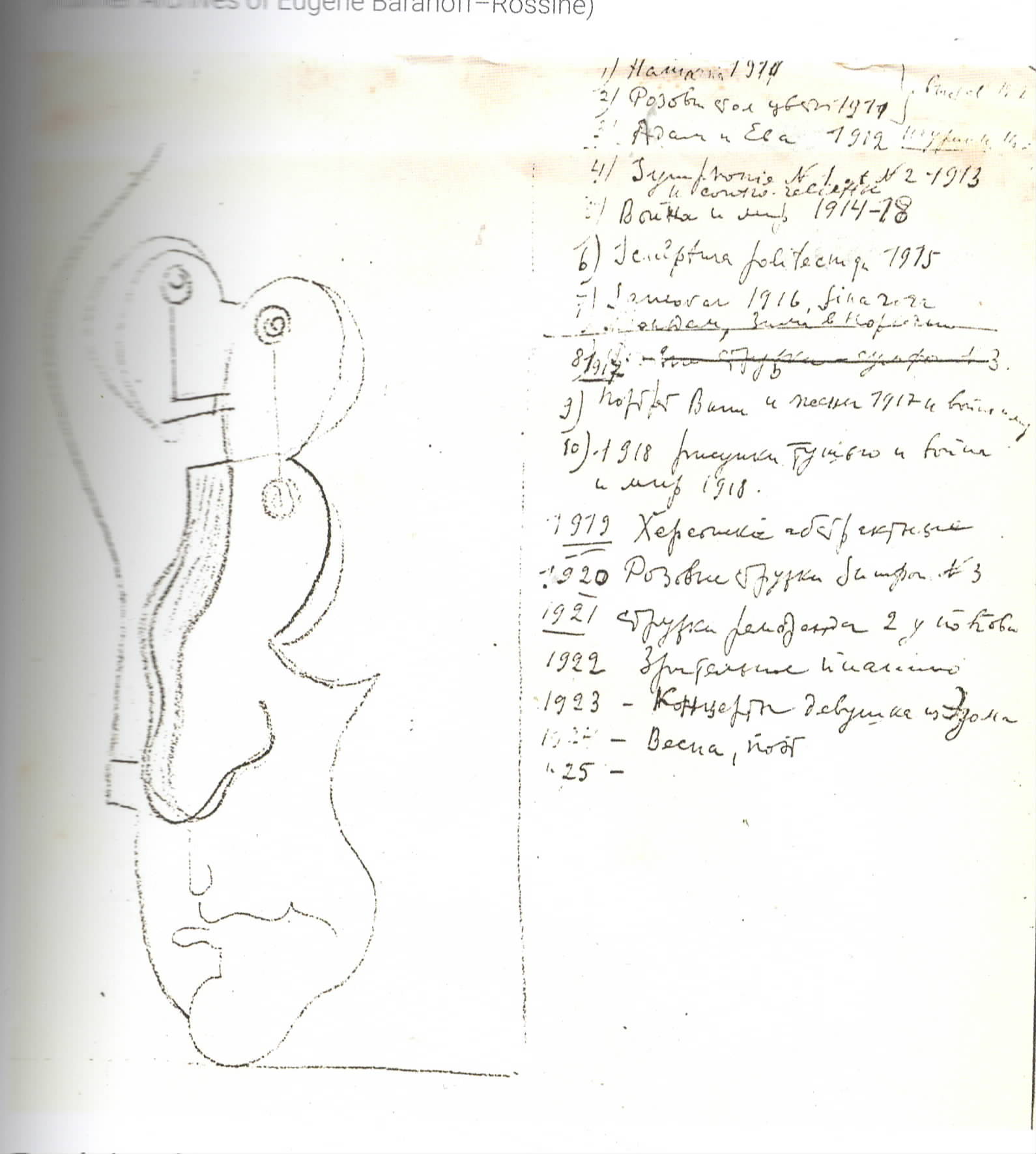
    Baranoff–Rossiné’s “Memo” in 1925 (Former Archives of Eugène Baranoff–Rossiné)


    Translation of the “Memo

    1) [illegible] 1911

    2) Pink table flowers 1911- expo. 1912

    3) Adam and Eve 1912 Shurik and [illegible]

    4) Symphonies N°1 and N°2 1913 and counter-reliefs

    5) War and peace 1914–18

    6) Sculptura politecniqa [sic] 1915

    7) Samovar, Synagogue, Trondheim, Winter in Norway

    8) [crossed out]

    9) Portrait of Vanya and my wife

    1917 and war and peace

    10) 1918 Indian ink drawings and War and Peace 1918

    1919 Kherson Abstractions

    1920 Pink shavings. Symphony N°3

    1921 Shavings [illegible].

    1922 Visual piano [sic]

    1923 Concerts, the young line of Edom

    1924 Spring, the poet

    and 25 –

    [1] According to the Catalogue des œuvres de Baranoff–Rossiné by Christiane Wiehn, established as a dissertation presented at the École du Louvre under the supervision of Michel Hoog in 1976.

    [2] Here we see that Rossiné presents himself as coming from “Little Russia” (one of the names for Ukraine in the Russian Empire at the time) and travelling in “Great Russia” (one of the names of Russia at the time).

    [3] Former Archives of Eugène Baranoff–Rossiné.

    [4] “Vandreren Mr.Rossiné ug hans Palet” [The migrant Mr.Rossiné and his palette], Tidens Tegen, 19/11/1916.

    [5] Letter from V.V. Kandinsky to F.A. Gartman of 20.VIII. 1912, Russian National Archive (RGALI), Moscow

    [6] Hans Arp, Unsrem täglichen Traum, Zurich, 1955, p. 8: “Der russische Maler Rossiné, der mich in dieser Zeit besuchte [in der Schweiz], brachte dagegen meinen Versuchen ein unerwartet grosses Verständnis entgegen. Rossiné zeigte mir einige seiner Zeichnungen, auf denen er mit farbigen Punkten und Kurven seine innere Welt auf eine nie gesehene Art dargestellt hatte. Seine und meine Arbeiten waren konkrete Kunst.”

    [7] See the memoirs of Hans Arp,Ibidem

    [8] On this painter, see the catalogue Henry Valensi. Du Futurisme au Musicalisme, Paris, Galerie Le Minotaure, 2014.


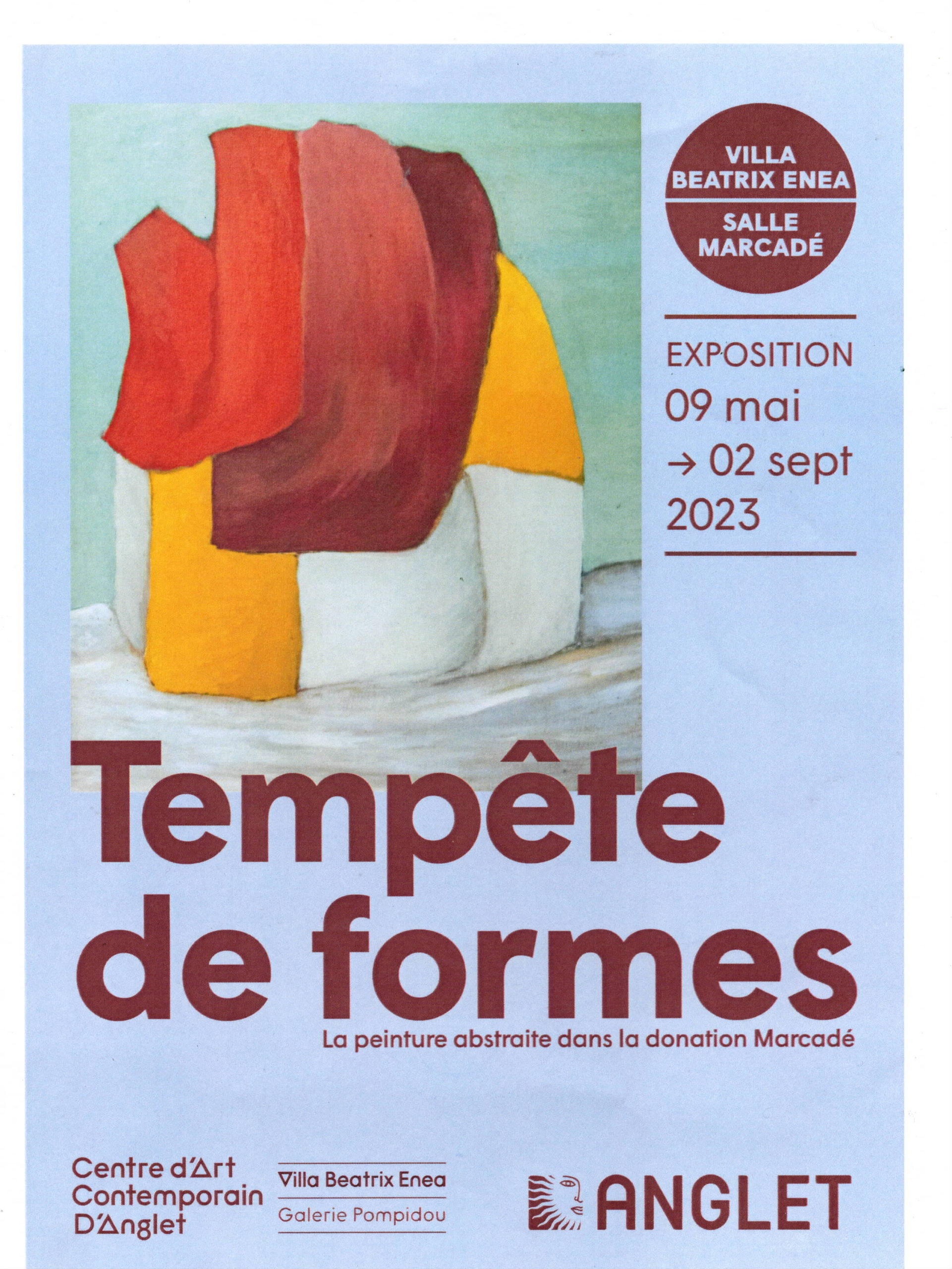
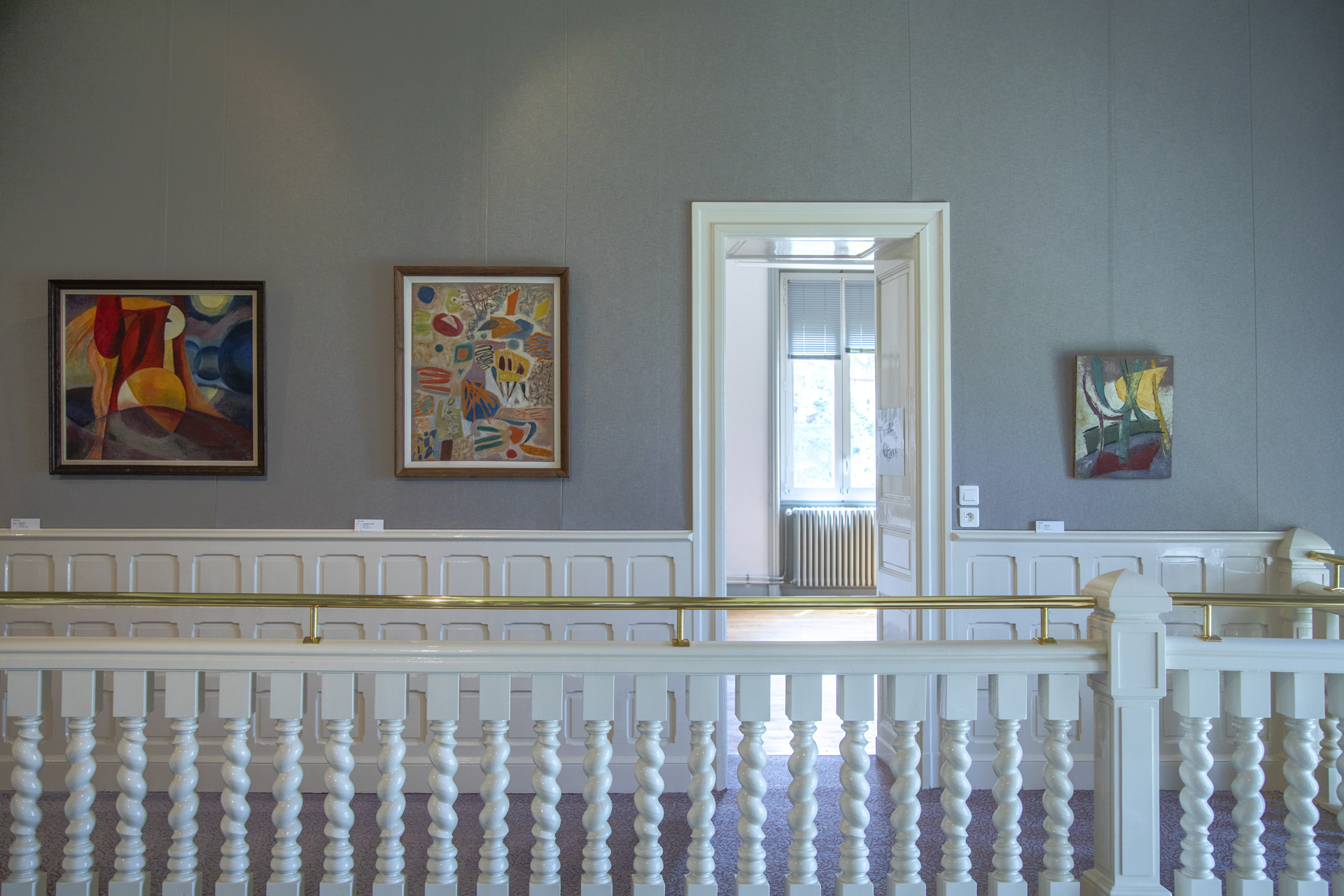
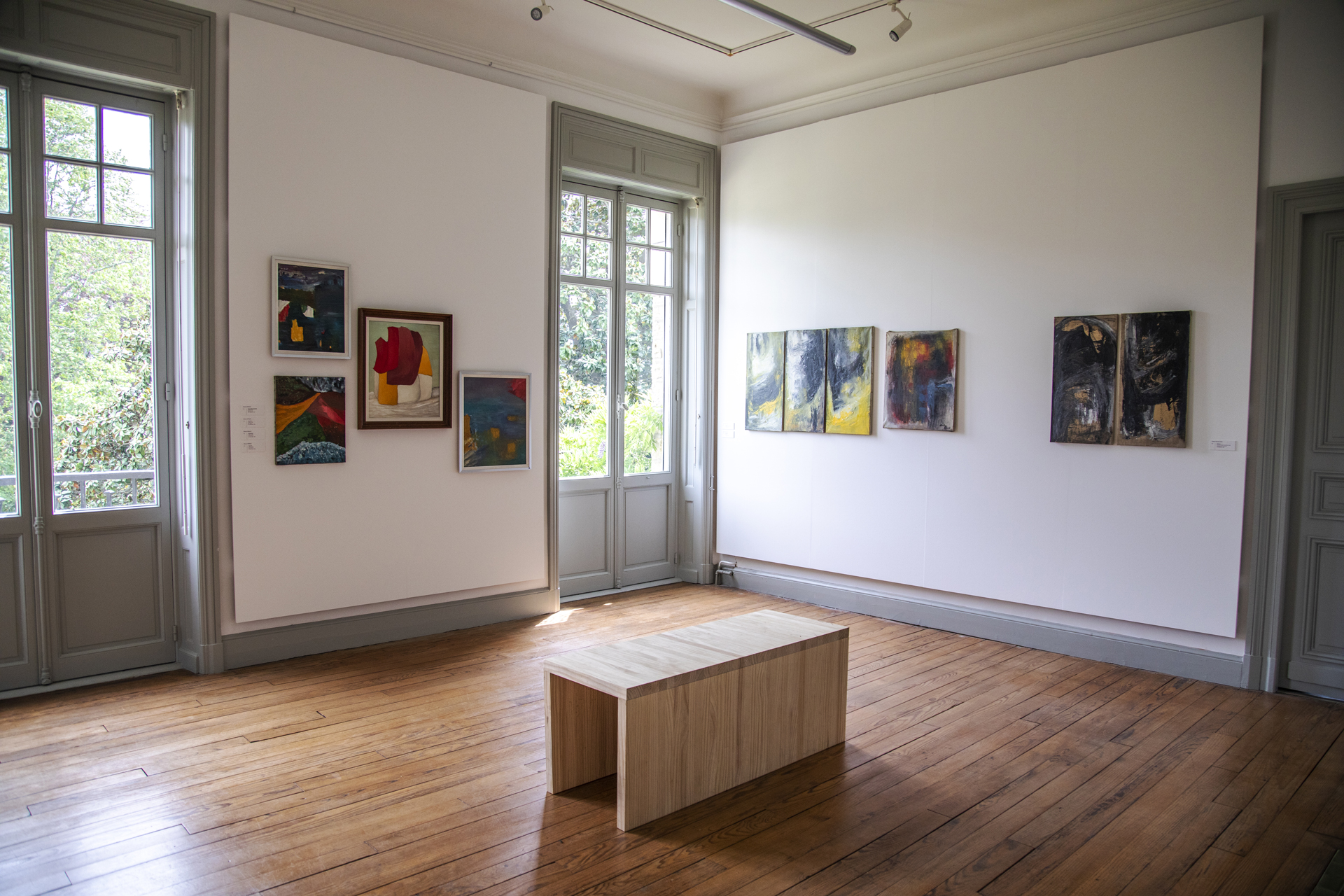
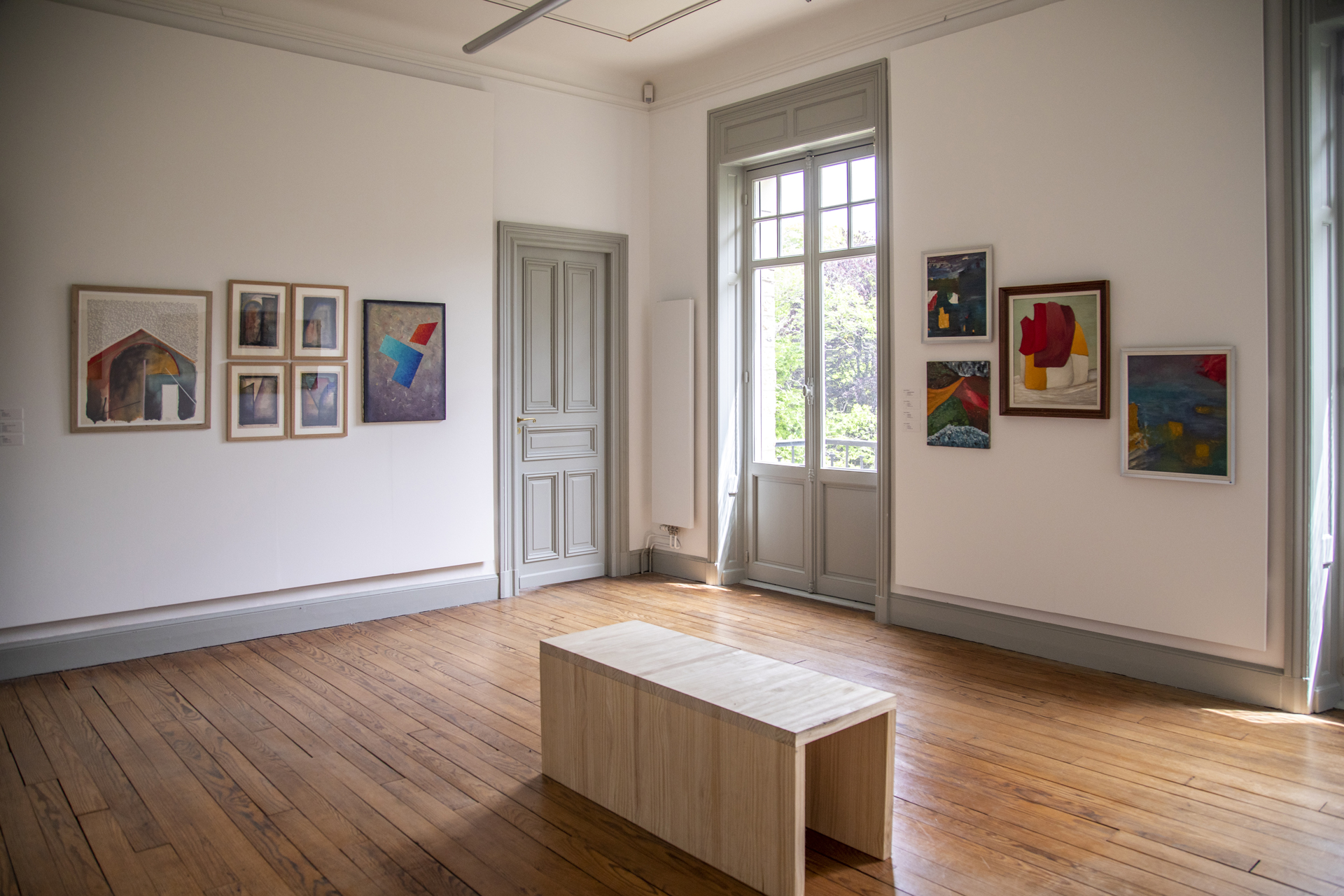
  • CIMAISES DE L »EXPOSITION « TEMPÊTE DE FORMES »  DANS LES  SALLES VALENTINE & JEAN-CLAUDE MARCADÉ DE LA VILLA BEATRIX ENEA À ANGLET


    CIMAISES DE L »EXPOSITION « TEMPÊTE DE FORMES »  DANS LES  SALLES VALENTINE & JEAN-CLAUDE MARCADÉ DE LA VILLA BEATRIX ENEA À ANGLET

    CIMAISZE ALVARO VARGAS
    DE GAUCHE À DROITE – ORIX, ANONYME RUSSE DE LÉNINGRAD (ANNÉES 1960), LUTKA PINK;
    DE GAUCHE À DROITE – ANONYME LÉNINGRADOIS, LUTKA PINK, ARMAN (ARMAND FERNANDEZ, 1954)
    CIMAISES ALVARO VARGAS ET CARLOS SALAS SILVA
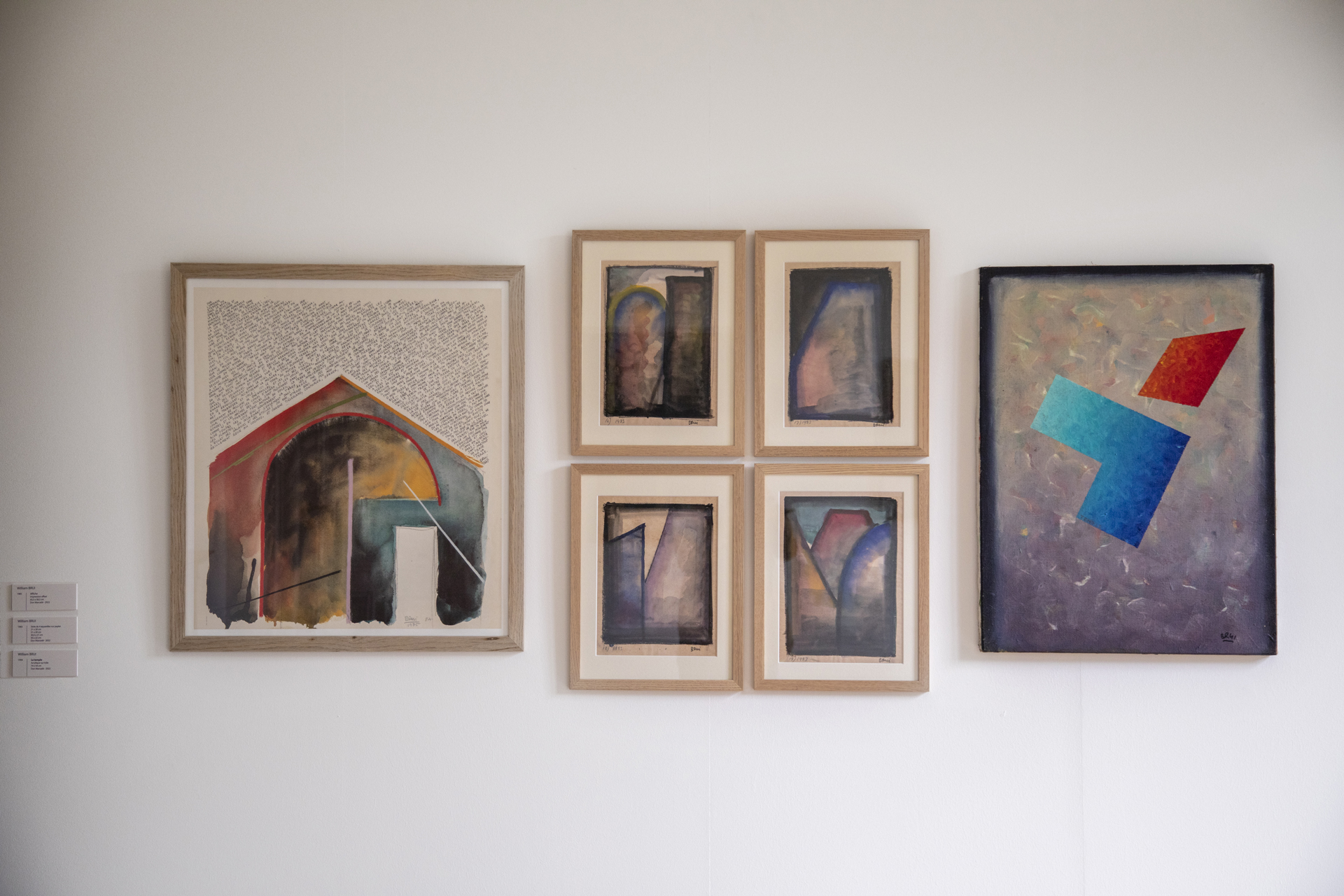
    CIMAISES WILLIAM. BRUI (VARIATIONS DUR LE TEMPLE) ET ALVARO VARG
    CIMAISES ORIX ET WULLIAM BRUI
    CIMAISE CARLOS SALAS SILVA
    CIMAISE WILLIAM BRUI (VARIATIONS UR LE TEMPLEÀ
  •     UN GÉNIE MULTIPLE – VLADIMIR BARANOFF- ROSSINÉ

      EXPOSITION À LA GALERIE LE MINOTAURE

    (13MAI-29 JUILLET 2023)

    UN GÉNIE MULTIPLE

      Vladimir Baranoff-Rossiné est une figure éminemment représentative de ce qu’aura été l’artiste au XXème siècle. C ’est sans aucun doute Picasso qui résume à lui seul de manière exemplaire la complexion, tout à fait nouvelle par rapport à l’histoire européenne passée de l’art, du créateur à partir de 1910 : ayant rejeté quatre siècles d’académisme renaissant, ayant fait table rase des codes conventionnels de la représentation, l’artiste du XXème siècle se trouva condamné à la quête inlassable de procédés et de modes d’appréhension de la nature ou du monde qui soient toujours nouveaux. Il se fait Protée, comme l’a souligné André Malraux à propos de Picasso précisément.

    Lorsque l’on considère l’ensemble de l’œuvre de Baranoff-Rossiné, on est frappé par son caractère protéiforme. Les périodes les plus variées se succèdent, quelquefois se chevauchent, chaque fois si différentes dans leur style qu’il est impossible de parler de « transition » ou d’« évolution ». Alchimiste de la peinture, expérimentateur infatigable, Vladimir Baranoff-Rossiné n’a cessé de créer, d’inventer, de trouver des formules originales. Créateur de son temps, il ne s’est jamais borné à une formule, il a tenu constamment son génie inventif en éveil, et s’il a laissé plus de cinq cents huiles, dessins, aquarelles, gouaches[1] , son activité ne s’est pas arrêtée là. Dans sa lettre, écrite à Robert et Sonia Delaunay de Ljän en Norvège le 26 juin 1916, il déclare :

    « Je suis très occupé, comme je l’ai toujours été et comme toujours je le suis, je ne vis que par la peinture. La période d’un repos prolongé autant que le voyage à travers la Grande Russie[2] ont eu une action bénéfique.

    En peinture, je suis le même qu’auparavant : et je mourrai aussi, tel que je suis. Je fais tout ce que je veux. Et ma lutte consiste exclusivement à lutter contre les impossibilités qui empêchent la réalisation de ce que je veux. Je peins des études académiques et travaille dans le domaine de la chimie, j’étudie les analyses spectrales et le soleil ; je travaille aussi à une œuvre avec divers matériaux, diverses couleurs et formes. Pour moi, la peinture c’est la vraie vie. Le principal est que ce que je fais, je le fais avec amour, à tel point cela me plaît. »[3]

    Dans ces quelques lignes on voit l’amplitude de l’activité artistique du peintre ukraino-russe : il s’exerce à la fois dans l’art traditionnel (« les études académiques »), la recherche scientifiques des lois de la lumière (les analyses du spectre du. Soleil »), l’invention d’objets intégrant des matériaux divers. C’est là le résumé de ce qu’ont été tout au long de sa vie les préoccupations esthétiques de Baranoff-Rossiné : la peinture de chevalet, la connaissance technique et l’invention technologique. Répétons-le, il s’agit d’une attitude typique de l’artiste du XXème siècle pour qui l’art comme technè a retrouvé son caractère de pratique empirique, scientifique, cognitive, que la routine académique séculaire avait contribué à occulter, en la limitant au cadre d’un seul mode d’appréhension du réel.

    On voit donc que Baranoff-Rossiné, avant la révolution de 1917, se situe dans la ligne que Robert Delaunay expérimentait depuis 1912-1913, celle de la lumière en tant qu’élément matériel, rétinien, de la vision. Dans sa volonté de dépasser l’impressionnisme et le néo-impressionnisme, qui s’en tenait aux effets de la lumière, Robert Delaunay s’est tourné vers les sources de la lumière, telles que la science permettait d’en faire apparaître les rythmes-ondes colorées ou, comme on disait avant 1914, « les vibrations dans l’éther ». Dans une autre lettre de Rossiné du 15 septembre 1916, écrite aux Delaunay depuis Kristiana, il dit avoir étudié Chevreul. Or c’est précisément l’objet des recherches du couple Delaunay.

    On connaît l’importance des travaux du chimiste français du XIXe siècle Michel-Eugène Chevreul sur la recherche de la lumière-couleur chez Delaunay. Les titres seuls du savant, qui fut directeur de la Manufacture Royale des Gobelins, nous montrent quel écho ces recherches trouvèrent chez le peintre des Fenêtres, des Formes circulaires ou des Disques (1912-1913): De la loi du contraste simultané des couleurs (1829), Mémoire sur la vision des couleurs matérielles en mouvement de rotation et des vitesses numériques de cercles (1883).

    Un autre aspect de l’activité créatrice de l’artiste ukraino-russe, c’est aussi qu’il travaille en 1916 sur des œuvres « avec divers matériaux, diverses couleurs et formes ». Il continue donc, après sa Symphonie N° 1 de 1913 (MoMA) à explorer un nouveau type de sculpture. C’est ainsi que depuis le milieu des année 1910 jusque dans les années 1930, il a créé différents types sculpturaux. De ce qu’il appelle dans son « Mémo » de 1925 des « contre-reliefs », possiblement sous l’influence de Tatline, on connaît l’Artiste invalide du Wilhelm Lehmbruck Museum et le Toréador (coll. privée), qui sont sans doute de 1915. De la fin des années 1920 (et non de 1913, comme cela est indûment répété) la monumentale sculpture en bois peinte Rythme (ancienne collection Dimitri et Tatiana Baranoff-Rossiné) représente un couple enlacé dansant. Et, en 1933, sa Sculpture polytechnique (MNAM) provoque les sarcasmes de la presse française qui ne trouve pas assez de mots pour ironiser sur ces enroulements de métal, de verre et de bois. Cette construction a la rigueur des premières œuvres spatiales des constructivistes soviétiques à partir de 1921, avec une inflexion « baroque » (les torsions, les spirales serpentines qui sont la marque de l’appartenance de l’artiste à l’École ukrainienne du XXème siècle.

    C’est à Odessa que le jeune Baranoff fit ses premières armes ; un de ses condisciples n’est autre que Natan Altman qu’il retrouvera à Paris entre 1910 et 1914, puis à Pétrograd après les révolutions de 1917. À la fin de ses études secondaires en 1905, il se consacre de façon systématique à son métier de peintre à l’Académie de Saint-Pétersbourg. Jusqu’en 1907 s’esquisse déjà l’éclectisme inné de Baranoff-Rossiné. Que l’on ne prenne pas ce mot péjorativement ! Tourte la création de l’artiste est là pour prouver sa totale originalité, sa « griffe ». Telle une abeille, il butinait avec délectation tout ce qui se trouvait sur sa route et lui plaisait, et en faisait du miel. Entre 1905 et 1907, c’était en Russie le règne du « Monde de l’art » (Mir iskousstva), mouvement sécessionniste animé par Diaghilev et Alexandre Benois, qui avait rappelé que l’art n’avait aucune fonction utilitaire autre que le service de la Beauté.

    L’exposition d’art russe organisée par Diaghilev et Alexandre Benois à Paris en 1906 faisait coexister pacifiquement sous le sigle du Monde de l’art le réalisme poétique, l’Art Nouveau, le Symbolisme, l’impressionnisme. On trouve les traces de tous ces styles dans les paysages, les scènes de genre, les natures-mortes, les nus de Baranov à cette époque, mais son style dominant est l’impressionnisme qu’il module en de multiples variations. Tantôt il s’agit d’effets luministes avec le jeu des ombres et des lumières, dans le sillage de Répine, le plus grand peintre de l’école réaliste des Ambulants qui, malgré son aversion pour « les découvertes étrangères », avait intégré, sans excès, certains principes de l’impressionnisme français (pleinairisme, parcellisation des touches, éclairages solaires…) ; tantôt l’héritage de Van Gogh donne des variantes un peu grossière des vibrations de l’espace pictural, avec une convergence curieuse avec les premières œuvres impressionnistes de Malévitch ; tantôt la parcellisation de la toile en petites touches nerveusement ajustées se conjugue à l’emploi d’une pâte épaisse créant un relief, comme dans les œuvres impressionnistes de Kandinsky dans les années 1900 ; tantôt encore l’espace est cerné par un réseau de petits quadrilatères (Autoportrait au  pinceau, 1907 et d’autres portraits de cette époque), ou bien de petites mailles, de petites parcelles avec lesquelles Vladimir Bourliouk, son compatriote de Kherson, construisait ses toiles au moment de la première exposition de ce qui sera appelé indûment par la suite « l’avant-garde russe » et qui devrait s’appeler « L’art de gauche dans l’Empire Russe et l’URSS », à savoir «Στέφανος» à Moscou en 1907, exposition importante à laquelle le jeune Ukrainien Baranov participa. Le nom de « Stéphanos » reprenait le titre d’un recueil poétique du théoricien du Symbolisme, Valéri Brioussov, qui désignait une couronne de fleurs, en l’occurrence une guirlande de poésies. En russe, cela se disait « Viénok » et en 1909 il y eut, cette fois à Saint-Pétersbourg, une autre exposition intitulée « Viénok-Stéphanos » où Baranov montra à nouveau ses œuvres. Avec la participation à l’accrochage dans les rues de Kiev en 1908 des toiles des jeunes peintres de la future avant-garde (exposition « Zvéno »/ « Le maillon »), ce sera  la contribution de  Baranov, avant son départ pour Paris en 1910, au renouveau pictural en Russie, que l’on appelait alors « impressionnisme » pour l’opposer au réalisme naturaliste ou à l’académisme, car d’autres dénominations n’avaient pas été encore trouvées en Russie, comme ce sera le cas après 1910 avec les dénominations de « futurisme », de « futuraslavie » (boudietlianstvo), voire de « cubo-futurisme ».

    Venu à Paris en 1910, le peintre prend le pseudonyme de Daniel Rossiné avec lequel il signera ses travaux jusqu’en 1917. À Paris, c’est alors le bouillonnement des recherches : le fauvisme de Matisse est déjà mis à mal par le cubisme de Picasso, de Braque ou de Léger, dont les suiveurs font sensation au Salon d’automne de 1911. Plusieurs compatriotes de Rossiné, venus d’Ukraine comme lui, entre autres, Archipenko, Alexandra Exter, Sonia Delaunay, la baronne Éléna Frantsevna d’Oettingen et son cousin Serge Férat (Yastrebtsov), éditeurs en 1913 des Soirées de Paris, participaient activement au mouvement général des arts pour sortir de la figuration séculaire qui s’était limitée à la reproduction mimétique de la nature.

    C’est Cézanne qui pour beaucoup de ces novateurs fut le principal inspirateur du nouveau style parisien. La fameuse phrase du Maître d’Aix sur le traitement de la nature par « le cylindre, la sphère, le cône » fut prise à la lettre par les artistes de l’avant-garde. Rossiné peindra un grand nombre de toiles dans le style cubiste mais, comme toujours chez lui il applique le précepte cézannien avec une grande souplesse, il ne s’en tient jamais à une « recette picturale », il mêle, selon son inspiration, les procédés les plus divers, qu’ils soient proches des pré-cubistes (Village, La maison au bord du lac, Coq, 1911), de Gleizes (Femme nue, La forge du MNAM), voire d’André Lhote avec sa rythmisation de l’espace par le jeu des courbes en éventail, il garde intacte sa personnalité avec l’aplatissement des objets, ce qui aura une influence sur la manière de David Sterenberg qui avait exposé avec lui à Paris en 1914 et qui fut au début des révolutions russes de 1917 commissaire du peuple de la Section des Arts Plastiques (IZO), grâce aussi à sa gamme colorée, à la tonalité dominante fauviste avec une inflexion slave spécifique (harmonies de bleus-rouges-jaunes-verts, comme dans Nature-morte à la chaise).

    De 1910 à 1914 Rossiné expose régulièrement au Salon des Indépendants. Avec la Sœur de l’artiste. Maternité, montrée au Salon d’Automne de 1913 et signalée par le poète et critique André Salmon, le peintre ajoute au volume cubiste la dynamisation futuriste et le simultanéisme orphiste de Robert et Sonia Delaunay.

    À la même époque, il peint toute une série de grands formats sur des sujets bibliques (Apocalypse, L’Homme à genoux, Adam et Ève, etc.) dont l’iconographie symboliste, avec des références, entre autres, à Michel-Ange ou William Blake, est tout à fait insolite, mais dont la facture tient compte des expériences modernes sur les possibilités de la couleur. La figuration du disque solaire avec ses émanations en cercles concentriques montre des convergences avec certaines œuvres de Kupka et surtout avec les « disques solaires simultanés » de Robert et Sonia Delaunay. La correspondance de Rossiné avec ces derniers indique leur totale communauté artistique.

    L’ami des Delaunay, l’Arménien Georges Yakoulov, un des participants de «Στέφανος » en 1907, avait effectué depuis 1905 des recherches sur le prime solaire, indépendamment des travaux de Chevreul. Et il a confronté ses expériences avec le couple Dalaunay durant tout l’été 1913 à Louveciennes.

    Rossiné avait, lui aussi, œuvré dans cette direction expérimentale, puisque autour de 1910 il avait fabriqué une palette, appelée « polychrome » sur laquelle était peinte une série de couleurs. Lors de son exposition personnelle à Kristiana en 1916, il accroche une palette avec ses couleurs et à la critique norvégienne décontenancée par son œuvre il déclare dans une interview : 

    « Avez-vous vu ma palette et […] sur la palette on peut obtenir les nuances que l’on veut. C’est la loi sur les contrastes entre les couleurs […]. Du blanc, du noir, du rouge, n’importe quelle couleur se transforme en fonction de celle que l’on place à côté. Si vous connaissez les couleurs, vous ne pouvez pas ne pas voir ces changements. Comme vous voyez, j’ai partagé ma palette en secteurs de différentes couleurs : vert, bleu, violet, rouge, orangé, noir, marron et blanc. Aussi je peux obtenir exactement la nuance que je veux »[4].

    Aujourd’hui, l’invention de la palette « polychrome », qui est la première de toute une série d’inventions de Baranoff-Rossiné, ne nous paraît pas aussi audacieuse mais alors elle était vraiment une nouveauté. Plusieurs artistes l’utilisèrent avec profit. Le 10 décembre 1917, Natan Altman écrivait de Pétrograd : « Je trouve que la palette “polychrome“ de Rossiné 1) organise bien le travail ; il aide à trouver une couleur intense 3) il incite à traiter avec soin et amour le matériau. Cette palette est très pratique pour travailler. Je m’en sers depuis 1911 ».

    On sait que Daniel Rossiné travaillait autour de 1912 dans le champ musique-couleur. Voici ce que Kandinsky écrivait au compositeur russe Thomas von Hartmann [Foma Alksandrovitch Gartman] :

    « Rossiné (un jeune peintre russe), qui travaille la théorie de la peinture et tout spécialement des partitions musicales, veut absolument faire ta connaissance. Lui-même est fantastique. Peut-être qu’il viendra encore une fois à Munich en septembre, autrement il te demande de venir en Suisse (à Weggis près de Lucerne – il y a un centre de la Suisse qui peint : « Moderner Bund »)[5].

    Cela est confirmé par Hans Arp dans ses mémoires des années 1950 :

    « Der russische Maler Rossiné, der mich in dieser Zeit besuchte (in der Schweiz), brachte dagegen meinen Versuchen ein unerwartet grosses Verständnis entgegen. Rossiné zeigte mir einige seiner Zeichnungen, auf denen er mit farbigen Punkten und Kurven seine innere Welt auf eine nie gesehene Art dargestellt hatte. Seine und meine Arbeiten waren konkrete Kunst »[6].

    Rossiné ne se contente pas, autour de 1914, d’apporter une contribution originale à la géométrisation cubiste de la forme, au dynamisme futuriste ou aux expériences coloristes parisiennes, il crée une iconographie avec des fragments de rubans aux volumes cylindriques qui s’enroulent dans l’espace du tableau, se déroulent et se retournent dans un mouvement constant. C’est le principe du ruban du géomètre allemand Möbius qui est transposé dans un espace plastique, ce que fera aussi, quelques trente ans plus tard un Max Bill.

    Cela conduira autour de 1919-1920 à une série de tableaux intitulés « Copeaux ». Le célèbre tableau de Vladimir Baranoff-Rossiné Les copeaux, qui se trouve au MNAM, n’est pas de 1910 comme semble l’indiquer la date inscrite sur le tableau où la date a visiblement été “grattée”. Dans le « Mémo » que l’artiste a écrit en 1925 sur sa production artistique principale depuis 1911, l’œuvre est bien de la période abstraite à Kherson autour de 1919-1920. J’ai traduit ce mémo où parfois le peintre ukrainien mêle les lettres latines et les cyrilliques… Les essais pour dater la création abstraite de Baranoff-Rossiné d’avant 1914, ne se justifient pas et beaucoup d’œuvres des années 1920-1930 sont indûment datées des années 1910.

    Ces années de recherche sont marquées par deux moments exceptionnels : l’exposition de deux sculptures baptisées « La danse » ou « Symphonie » aux Salons des Indépendants de 1913 et de 1914et la destruction d’une de ces œuvres, la Symphonie N° 2, jetée, selon les souvenirs de Sonia Delaunay, dans la Seine après le Salon de 1914. Cette dernière action, qui se déroula selon un cérémonial où participèrent d’autres peintres, devance des gestes analogues, comme ceux accomplis plusieurs décennies plus tard par Yves Klein. Il y avait, à cette époque, un comportement typique du futurisme, en particulier du futurisme russe. Les poètes Khlebnikov et Kroutchonykh n’écrivaient-ils pas dans un de leurs manifestes de 1913 : « À déchirer après lecture ! ». Il y avait là ce que l’on pourrait appeler un esprit pré-dadaïste, à l’instar des actes conceptuels de Marcel Duchamp. D’ailleurs, d’après la Symphonie N° 2 qui s’est conservée et se trouve actuellement au MoMA, on mesure ce que pouvait avoir de déconcertant ces constructions faites d’éléments hétéroclites. La critique de l’époque parle « d’assemblages paradoxaux de zinc vernissé aux bariolures fraîches et vives, servant de support à d’étranges moulins à poivre, rondelles bleues, crème ou garance entremêlées de ressorts inattendus et de tiges d’acier ». Ces objets sont à la limite de la peinture et de la sculpture, une réduction de la marge qui sépare l’art. pictural de l’art sculptural, comme cela commençait alors à se pratiquer (les premiers reliefs de Picasso, les sculpto-peintures d’Archipenko ou les reliefs picturaux de Tatline). Ce n’était plus la sculpture traditionnelle qui servait de structure mais le pictural qui s’appropriait l’espace, qui intégrait ce que Margit Rowell a appelé dans une exposition mémorable au Guggenheim new-yorkais « the planar dimension » en 1978 : c’est le pictural qui se développait en espace, ce que les constructivistes soviétiques systématiseront à partir de 1920.

    Un trait dominant de toute la création picturale de Rossiné après 1910 est précisément leur potentialité sculpturale. Il s’agit là, certes, d’une des lignes développées par le cubisme dans ses contrastes de volume, l’autre ligne étant, à l’opposé, l’aplatissement des éléments structurant la surface picturale, ce qui sera porté à son intensité maximale dans le suprématisme de Malévitch. Chez Rossiné, cette tendance au volume se conjugue à une façon toute particulière de faire saillir sur la surface plane picturale le sujet de la représentation, mettant ainsi en contraste le fond du tableau et l’objet qui s’en détache. L’objet dans la plupart des peintures de l’artiste entre 1910 et 1943 ne s’intègre plus dans la construction picturale, il est comme une excroissance dont les contours, bien qu’ancrés au support du tableau sont bien délimités par rapport à la surface. Il n’y a jamais chez lui pulvérisation (raspyliéniyé) de l’objet, selon l’expression de Nikolaï Berdiaev à propos de Picasso dans son article de 1914 sur ce dernier, mais, au contraire, son émergence, la concrétisation de sa masse volumique.

    Au milieu des multiples activités, le pictural restera jusqu’au bout le domaine privilégié de l’artiste ukrainien. S’il fait des incursions dans d’autres domaines, c’est toujours en prenant comme point de départ sa passion pour l’art de peindre. Après le début de la Première guerre mondiale, il s’installa jusqu’à la révolution de 1917 dans la capitale de la Norvège qui s’appelait alors Kristiana. Il y organise la seule exposition personnelle qui eut lieu de son vivant. Au contact de l’expressionnisme scandinave, surtout d’Edward Munch, au contact aussi de la nature norvégienne, sa palette se fait plus sourde, la ligne devient plus appuyée, on note même une tendance néo-primitiviste à la simplification des lignes où dominent les rayons concentriques du soleil. Mais, revenu dans la Russie révolutionnaire, il crée des toiles cubo-futuristes aux couleurs flamboyantes et aux formes spiralées tournoyantes sur le thème norvégien, qui se réfèrent au ruban de Möbius.

    Au moment des événements révolutionnaires russes de 1917, Rossiné rentre dans son pays et prend une part active à la réorganisation des arts qui s’y opère. C’est alors qu’il prend le nom de Vladimir Baranoff-Rossiné sous lequel il est connu. Il montre ses œuvres dans de nombreuses expositions de groupe, participe, comme tous les artistes, à l’agit-prop, en décorant à Pétrograd en 1918 la Place de l’Apparition de la Mère de Dieu (Znamienskaya plochtchad’) en face de la Gare de Moscou, devenue Place de l’Insurrection (Plochtchad’ Vosstaniya). Il ouvre un atelier dans les salles de l’ancienne Académie pétersbourgeoise des beaux-arts, devenue « Ateliers libres » (Svomas), enseigne aux Ateliers supérieurs d’art et de technique (Vkhoutémas) à Moscou dans la section « Formes-Couleurs ». C’est alors que se concrétisa le résultat de ses recherches simultanéistes-synesthésistes avec la création de son fameux « Piano optophonique » dont il fait une démonstration en 1924, à la veille de son départ pour l’Occident, au Théâtre Meyerhold, puis au Bolchoï à Moscou. Les affiches annoncent :

    « Pour la première fois au monde : Un concert coloro-visuel (optophonique). La réincarnation de la musique en images visuelles avec le piano visuel inventé par le peintre Vladimir Davydovitch Baranov-Rossiné » ;

    ou bien :

    « Concert optophonique ; coloro-visuel (reproduction de la musique en couleur à l’aide d’une nouvelle invention, celle du piano visuel du peintre Vladimir Davydovitch Baranov-Rossiné. »

    Au Bolchoï, la représentation fut précédée d’un exposé d’introduction du théoricien de la littérature Viktor Chklovski qui faisait partie de « l’École de la forme ». Un orchestre, des danseurs et des chanteurs d’opéra participèrent au spectacle. La femme de l’artiste, Pauline Sémionovna Boukharova, était au « piano ».

     Avec le Piano optophonique, Baranoff-Rossiné voulait matérialiser, en partant du pictural, le rêve romantique (surtout allemand) et symboliste de synthèse des arts, ce que Richard Wagner avait baptisé Gesamtkunstwerk.  Cette notion de était devenue presque magique au début du XXème siècle ; elle se traduisait surtout dans les arts du spectacle et, depuis, le théâtre n’en finit pas de se vouloir « un art total ». Il faut dire que pour dissiper les équivoques qui pèsent sur ce mot de Gesamtkunstwerk et qu’a contribué à épaissir l’exposition monumentale « Der Hang zum Gesamtkunstwerk » à Zurich en 1983, en confondant la recherche synesthésiste et la recherche de la totalité ; il faut donc dire que le Gesamtkunstwerk se définit comme une œuvre, un objet, qui unit en un ensemble concret (et non fantasmatique ou poétique) le son, le mouvement, la forme, la couleur, voire l’odeur. Le « Piano optophonique s’inscrit dans toute une série d’essais pour « associer les perceptions de nos sens pour que nous éprouvions l’intégration de sensations simultanées, modifiées dans le temps suivant un rythme concerté, une impression artistique particulière », selon ce qu’écrit Baranoff-Rossiné dans des notes manuscrites où il rappelle que le philosophe Eckartshausen avait transcrit au XVIIème siècle des chansons populaires en composition colorée. Il mentionne aussi le songe qu’aurait fait Jean-Sébastien Bach, alors qu’il était enfant, d’une construction où les rythmes architecturaux s’unissaient aux rythmes sonores, où les arcs-en-ciel se transformaient en parfums, où la gamme chromatique tombait en bas-reliefs sur les colonnes. Bien que cette anecdote soit apocryphe, elle donne une bonne définition de la « tendance au Gesamtkunstwerk ». Le peintre se réfère aussi au mathématicien français du XVIIIème siècle, le Jésuite Castel qui avait tiré des théories optiques de Newton l’idée de gammes de couleurs ; l’abbé Castel avait publié en 1720  son livre La musique en couleurs et inventé un « Clavecin oculaire » (Le compositeur Telemann traduira en allemand en 1739 la description de ce clavecin). Les tentatives furent nombreuses à la fin du XIXème siècle et au début du XXème. Que l’on songe seulement au « Remington Colour Organ » (Londres, 1895), à la « Tastiera per luce » de Skriabine (Moscou, 1911), au jeu de couleurs prévu par Arnold Schönberg pour son œuvre chorale Die glückliche Hand (1911), au « Clavilux » du chanteur danois Thomas Wilfrid (New York, 1922) ou encore à l’instrument « chromophonique » du compositeur français Carol-Bérard qui exposa ses idées dans La Revue musicale en 1922. Vladimir Baranoff-Rossiné a systématisé les expériences de ces prédécesseurs qui étaient surtout des scientifiques ou des musiciens (l’exemple de Schönberg, à la fois compositeur et peintre, est exceptionnel). Il veut « extraire les éléments de la musique (intensité sonore, hauteur du son, rythme et mouvement) pour les rapprocher d’éléments semblables existants ou pouvant exister dans la lumière ». Au Deuxième Congrès d’esthétique à Berlin en 1925, le Piano optophonique est remarqué. Ses peintures dynamiques abstraites (les disques colorés dont le mouvement dépend des touches du clavier) créent des images mouvantes qui sont projetées sur un écran au rythme de la musique. Elles montrent que le cinématographe, encore à ses débuts, a donné des indications au peintre pour résoudre le problème des rapports mouvement/lumière/musique ; mais en même temps elles participent aux recherches technologiques tendant à perfectionner l’art cinématographique lui-même : Baranoff-Rossiné écrit :

    « L’art peut enfin respirer librement et se permettre de faire un cadeau à la Nature, le cinéma en couleurs, tout en conservant les éléments de l’art pur ».

    Avec l’optophonie, le peintre ukrainien a voulu créer un genre artistique nouveau :

    « Il ne s’agit pas, écrit-il, de superposer un phénomène à un autre phénomène purement et simplement, il faut que de l’intégration de la sensation de nerfs différents nous connaissions une impression artistique nouvelle ».

    Si on décèle maintenant des applications de ces intuitions dans l’art cinétique en général, au cinéma, jusque dans la pop-musique (light-show), il ne fut jamais donné au peintre, de son vivant, de réaliser pleinement son rêve de créer un « centre européen optophonique ».

    Après la  palette « polychrome », après le Piano optophonique, Baranoff-Rossiné fera encore d’autres inventions : le « photo-chromo-mètre » ou « mensurateur » qui est « une loupe complète et perfectionnée » pour déterminer mathématiquement les cinq qualités d’une pierre précieuse, poids, grandeur, impeccabilité, vivacité) ; le procédé « Caméléon » ou  « Camouflage pointilliste » est une étonnante application du pictural à l’art militaire, puisqu’il s’agissait de projeter des taches  de couleurs grossies au maximum sur tout objectif militaire, « de façon à ce qu’il ressemble à l’air »…

    Toutes ces inventions para-picturales auxquelles s‘ajoute encore une invention qui n’a rien à voir avec la peinture, qui est purement à visée commerciale, celle du « Multi-Perco », « appareil breveté de fabrication, stérilisation et distribution des différentes boissons gazeuses (Vitaminade, Expressinade, vins, cidres, apéritifs etc. », pouvant s’expliquer par la situation générale des artistes, et en particulier aux artiste issus de l’Empire Russe et de l’URSS, dans la France d’entre les deux guerres mondiales. André Warnod écrit en 1925 :

    « Les peintres russes de Montparnasse, que leur peinture ne nourrit pas, assurent leur matérielle en faisant d’autres métiers. Ils acceptent toute sorte de besognes. Il y en a qui sont chauffeurs de taxi, nettoyeurs de carreaux, mais la plupart sont plutôt décorateurs, ouvriers en batik, au pochoir, etc., ou même peintres en bâtiment. Ils font de l’art en dehors de leur journée de travail ».

    Dans les années 1920, l’amie de Baranoff-Rossiné, Sonia Delaunay, originaire d’Ukraine comme lui, fait de son appartement parisien un atelier proposant « robes, manteaux, écharpes, sacs-tapis, tissus Simultané », mettant ainsi les découvertes les plus modernes de l’art pictural au service de l’art vestimentaire. Baranoff-Rossiné, lui, met sur l’en-tête de son papier à lettre :

    « Inventions. Études. Recherches scientifiques, optiques, électriques, perfectionnement mécanique. Construction et mise au point etc. ».

    Certes, il y avait là une façon comme une autre de gagner sa vie, sans trop s’éloigner du domaine de la peinture, mais chez Baranoff-Rossiné , il y avait surtout un besoin impérieux de trouver perpétuellement des formes et des idées nouvelles. Ce génie industrieux inné s’est traduit, dans sa création picturale d’après 1925, par des phases stylistiques très différentes (post-cubisme surréalisant, abstraction prenant comme base les formes biomorphiques de Hans Arp, avec qui il était en contact depuis le début des années 1910[7]), puis le monde organique et inorganique), mais ce qui domine, c’est la ligne ondulante, mélodique, dynamique, enveloppante, donnant un rythme musical à ses toiles ; cela explique sans doute l’invitation faite à Baranoff-Rossiné par le fondateur du musicalisme, Henry Valensi[8], d’accrocher ses œuvres à l’exposition des artistes de cette tendance à Limoges en 1939.

    Baranoff-Rossiné est un peintre aux intuitions géniales, beaucoup de ses œuvres contiennent des découvertes qui seront développées plus tard. Cependant, sa complexion psychique maintenait son esprit en constante ébullition, ne lui laissait aucun repos, le poussait à explorer des terrae incognitae toujours nouvelles, ce qui l’empêchait d’aller jusqu’au bout des trouvailles et le poussait à les abandonner pour en faire d’autres. Il y a quelque chose chez cet artiste ukrainien de la légère facilité du Khlestakov dans le Révizor de son compatriote Gogol , mais, à la différence de ce dernier, il ne s’en est pas tenu à l’invention de  chimères séduisantes et séductrices : son œuvre abondante, multiforme, est là pour montrer qu’elle enrichit d’une sonorité originale l’art du XXème  siècle en tenant une place privilégiée dans « l’art de gauche dans l’Empire Russe et en URSS » qui fut le creuset exemplaire des révolutions artistiques essentielles dont vit encore l’art d’aujourd’hui, lequel n’arrive pas à se débarrasser de cet héritage prestigieux et difficilement surpassable .

    Jean-Claude Marcadé

      Mémo de Baranoff-Rossiné en 1925 (Anciennes Archives d’Eugène Baranoff-Rossiné)


    Traduction du „Mémo“

    1) [illisible] 1911

    2) Table rose fleurs 1911- expo. 1912

    3) Adam et Ève 1912 Chourik et [illisble]

    4) Symphonies N°1 et N°2 1913 et contre-reliefs

    5) Guerre et paix 1914-18

    6) Sculptura politecniqa [sic] 1915

    7) Samovar, Synagogue, Trondheim, Hiver en Norvège


    8) [rayé]

    9) Portrait de Vania et de ma femme

    1917 et guerre et paix

    10) 1918 dessins à l’encre de Chine et Guerre et paix 1918

    1919 Abstractions de Kherson

    1920 Copeaux roses. Symphonie N°3

    1921 Copeaux [illisible]

    1922 Piano visuel [sic]

    1923 Concerts, la jeune file d’Edom

    1924 Le printemps, le poète

    et 25 –

    [1] Selon le Catalogue des œuvres de Baranoff-Rossiné réalisé par Christiane Wiehn, comme Mémoire présenté à l’École du Louvre sous la direction de Michel Hoog en 1976

    [2] On voit ici que Rossiné se présente comme venant de la « Petite Russie » (une des appellations alors de l’Ukraine dans l’Empire Russe) et voyageant dans la « Grande Russie » (un des noms alors de la Russie)

    [3] Anciennes Archives d’Eugène Baranoff-Rossiné

    [4] « Vandreren Mr.Rossiné ug hans Palet» [Le migrant M.Rossiné et sa palette], Tidens  Tegen, 19/11/1916

    [5] Lettre de V.V. Kandinsky à F.A. Gartman du 2O.VIII. 1912, Archives Nationales de Russie (RGALI), Moscou

    [6] Hans Arp, Unsrem täglichen Traum, Zurich, 1955, p. 8

    [7] Voir les mémoires de Hans Arp, Unsrem täglichen Traum, Zurich, 1955, p. 8

    [8] Sur ce peintre, voir le catalogue Henry Valensi. Du Futurisme au Musicalisme, Paris, Le Minotaure, 2014

  • Nouvelle exposition d’œuvres de la Collection V. et J.Cl. Marcadé à la Villa Beatrix Enea (mai-septembre 2023)

    Nouvelle exposition d’œuvres de la Collection V. et J.Cl. Marcadé à la Villa Beatrix Enea (mai-septembre 2023

    Tempête de formes – Regard sur l’abstraction dans la donation Marcadé 

    L’abstraction est un sujet d’étude cher à Jean-Claude Marcadé, éminent spécialiste de l’un de ses fondateurs, Kazimir Malévitch. Aussi ce courant est-il particulièrement bien représenté dans la collection Valentine et Jean-Claude Marcadé donnée par le collectionneur à la Ville d’Anglet en 2022.

    C’est à travers les productions d’artistes d’horizons divers comme William Brui, Carlos Salas Silva ou encore Alvaro Vargas, que l’abstraction, ce courant, qui se traduit en langue russe par « sans objet », prend ici plusieurs formes. À la fois « vapeur impétueuse », « cosmos pictural », « beauté sans histoire » ou « tempête de formes », selon les mots de Jean-Claude Marcadé, elle devient, sous le pinceau de chacun de ces artistes, la transfiguration de leur réflexion picturale marquée par leurs parcours respectifs.

    VARGAS Alvaro

    1955, Cali (Colombie) – 1991, Paris (France)

    Alvaro Vargas est un historien de la littérature, poète et peintre colombien. Durant ses études littéraires à Bogota, il prépare une thèse sur le poète mexicain Octavio Paz. C’est lorsqu’il s’installe à Paris entre 1986 et 1990 chez Valentine et Jean-Claude Marcadé, qu’il s’adonne à la peinture et à l’aquarelle et crée une œuvre picturale hors du commun. D’après Jean-Claude Marcadé, « les aquarelles, les crayons, les huiles d’Alvaro Vargas n’appartiennent à rien, qu’à eux-mêmes, qu’à lui-même ». Il meurt soudainement en 1991, laissant une production qui « n’appartient à aucune histoire temporelle ».

    ORIX Bill

    1900, Anvers (Belgique) – 1983, Paris (France)

    Artiste belge né en 1900, Bill Orix a eu plusieurs vies. Après une participation aux Jeux olympiques d’hiver de 1928 en tant qu’hockeyeur sur glace, et des études de médecine, il entre dans la résistance entre 1940 et 1942. Il se fait alors arrêter et est déporté au camp de concentration de Mauthausen où il reste jusqu’en 1945. C’est à la suite de cette expérience traumatisante que sa pratique de la peinture se développe. Après une période qu’il qualifie d’« essentialiste surréalisante », il s’intéresse à l’abstraction, plus sereine, se sentant « libéré des visions d’horreur de camp de concentration ». Il utilise un langage géométrique sobre et coloré qui lui permet d’évoquer la poétique des univers oniriques. Il est le mari d’Ania Staritsky.


    BRUI William

    1946, Léningrad (Russie) –

    Vit et travaille en France

    Bercé par la culture artistique russe des années 1910, William Brui puise son répertoire pictural dans les mouvements constructivistes et suprématistes des figures emblématiques de K. Malévitch, V. Kandinsky ou A. Rodtchenko. Dans ses réflexions abstraites, il s’intéresse au temple de l’Ancien Testament, lieu réel qui ne peut être construit sans devenir une idole. Il dépeint ainsi l’universalité de la forme comme cosmos et multiplie les formules géométriques à la manière du Quadrangle noir de Malévitch.

    « Brui a gardé pour toute la vie le souci de ne pas se perdre dans le flot illusoire des apparences pour ne se vouer qu’aux rythmes essentiels du monde au-delà (ou plutôt au cœur) du visible »

    SALAS SILVA Carlos

    1957, Pitalito (Colombie) –

    Vit et travaille à Bogota

    Dans la lignée de l’expressionnisme abstrait des années 1940, Carlos Salas Silva expérimente par la couleur et la matière. Dans ses toiles, parfois divisées en diptyques ou triptyques, c’est une ébullition tempêtueuse rythmée par le trait agité du pinceau qui s’exprime. Quand Jean-Claude Marcadé lui dédie une exposition dans son appartement parisien en 1988, il parle de sa peinture comme d’une « puissante polychromie aux cadences aussi sinueuses que les reliefs de la géographie du monde ».

    « […] les couleurs, telle une lave incandescente dirigée par un passionné alchimiste, se précipitent en charriant avec elles toutes les alluvions accumulées en strates séculaires, créant de nouveaux espaces, inconnus jusqu’ici, où la lumière se diffuse savamment à partir du centre le plus secret du monde. »

    Il est possible de voir les cimaises de la salle Marcadé en ouvrant wetransfer https://we.tl/t-9vEXOZKjdk

  • Vœux pour le 8 mai de Sabine Buchmann et Anabella Weismann

    SABINE BUCHMANN « OISEAU JOYEUX »


    ANABELLA WEISMANN « COLLAGE AU PAPILLON »


  • « PYSSANKY » DE L’ARTISTE UKRAINIENNE SOFYÏA ZÉLYK

    « PYSSANKY » DE L’ARTISTE UKRAINIENNE SOFYÏA ZÉLYK

    CADEAU DE VITA


    « PYSSANKY » DE L’ARTISDTE UKRAINIENNE SOFYÏA ZÉLYK PYSSANKY’