Catégorie : Des arts en général
-
Kyiv, the Capital of “Modernity” in the Turn of the Twentieth Century
Kyiv, the Capital of “Modernity” in the Turn of the Twentieth Century
Throughout its long history Kyiv experienced many ups and downs, from the early tenth century, when it was the capital of the Kyivan Principality, to our own times, when it became the capital of an independent Ukrainian state.
We see no evidence that Malevich had any connection with the art works produced in the Kyiv Art School, but the influence of Pymonenko, even if not attested in Malevich’s output before 1905 (for which period there is no reliable information), is nevertheless obvious. To my mind, for instance, Malevich’s gouache Floor Polishers (1911) exhibits the rythme of the Hopak dance. Dmytro Horbachov has pointed out his influence on Malevich’s postsuprematist works—for example, in The Reapers (1928-1929) or Flower Girl (1930) from the Russian Museum.
After the first Russian revolution of 1905 and Tsar Nicholas II’s manifesto of October 17 that same year, which permitted street demonstrations, Kyiv became the site of clashes between extreme-right monarchists and socialists.
Among these dissidents were two artists, Alexander Archipenko and Oleksandr Bohomazov, who “lost their deferment from military service.” They were rescued from this unhappy fate (what a stint in the Russian army meant was well known) thanks to the painter and follower of the Barbizon school Serhii Svitoslavs´kyi (1857–1931). Many painters passed through Svitoslavs´kyi’s studio, including Vadim Falileev, Bohomazov, Manevіch, Sofiia Levyts´ka, and Ekster.
The distinguished twentieth-century artist Antoine Pevsner (Natan Abramovich Pevzner), who was born in the Belarusian town of Klimavichy, spent five years at the Kyiv Art School. Before becoming a master of Russian constructivism after 1920, he was a painter and sketch artist influenced by Vrubel´. Of course, Kyiv was still a somewhat provincial city, but, as Dmytro Horbachov writes, “There was much to take comfort in: the Tereshchenko collection (which rivaled that of Tret´iakov and Alexander III), the collection of Western European paintings belonging to Varvara and Bohdan Khanenko (a descendant of a hetman of Ukraine)…; a European standard of book printing—Vasyl´ Kul´zhenko’s journals Iskusstvo and V mire iskusstva; the intellectualism of the Kyivan school of philosophy—Berdiaev, Shestov, Aleksandr Zakrzhevskii; and, most important for Pevsner, the ‘avant-garde’ exhibitions Zveno (The Link) and the Izdebski Salon.”
This took place in the winter of 1909–1910 at the Burliuks’ Ukrainian estate in Taurida gubernia. Kyiv had reassembled there, and there arose the so-called “Russian futurism,” whose source must be sought in Kyiv and in Ukraine.
***
-
SOUTENANCE DE THÈSE POUR LE DOCTORAT D’ÉTAT DE VALENTINE MARCADÉ (SUITE)
SOUTENANCE DE THÈSE POUR LE DOCTORAT D’ÉTAT DE VALENTINE MARCADÉ (SUITE)
EXTRAITS DE SES ARCHIVES
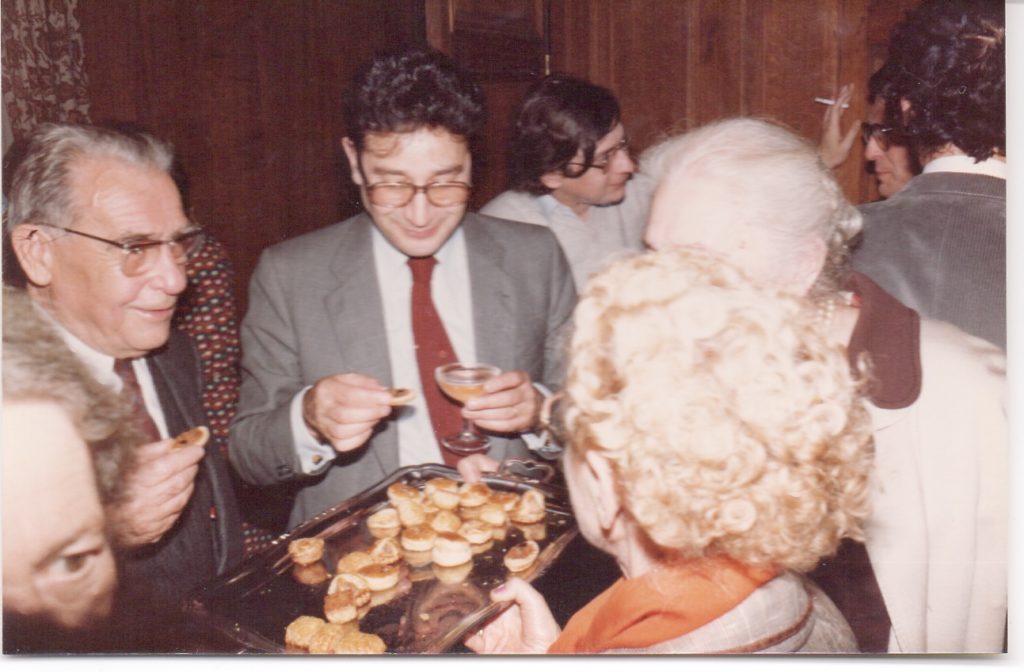
BORIS LOSSKY, MICHEL HOOG, EMMANUEL MARTINEAU 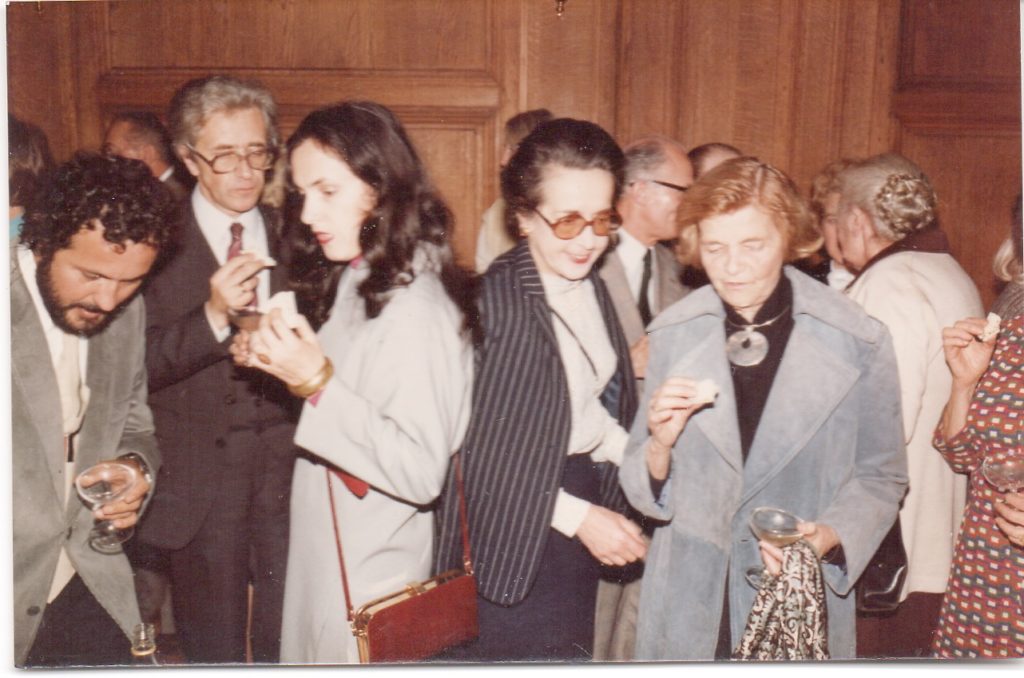
JEAN-CLAUDE MARCADÉ, VIKROR KOPTILOV ET SON ÉPOUSE, JULIETTTE LAFOND, GENEVIÈVE NOUAILLE-ROUAULT 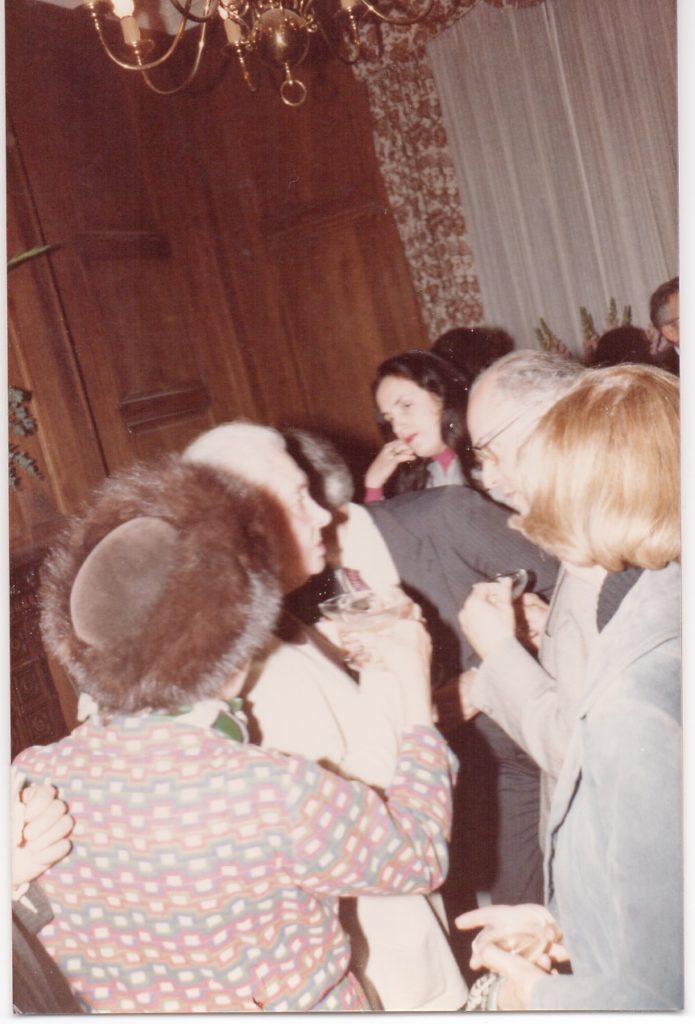
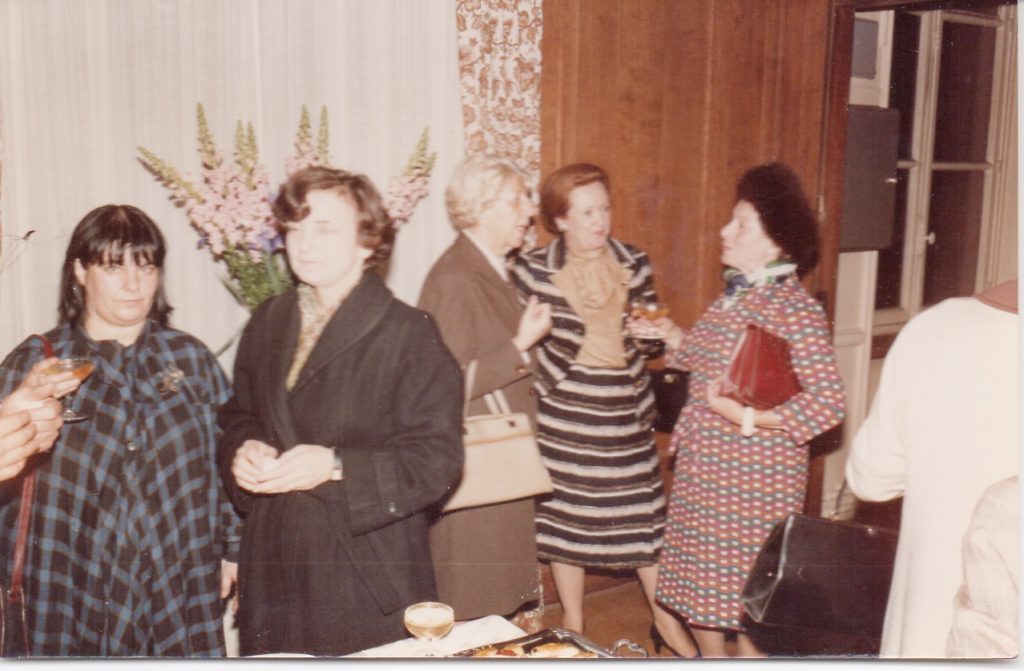
KYRA SAPGUIR, NON IDENTIFIÉ, VALENTINE NILOUS, PAULE BARANOFF-ROSSINÉ, YVETTE MOCH 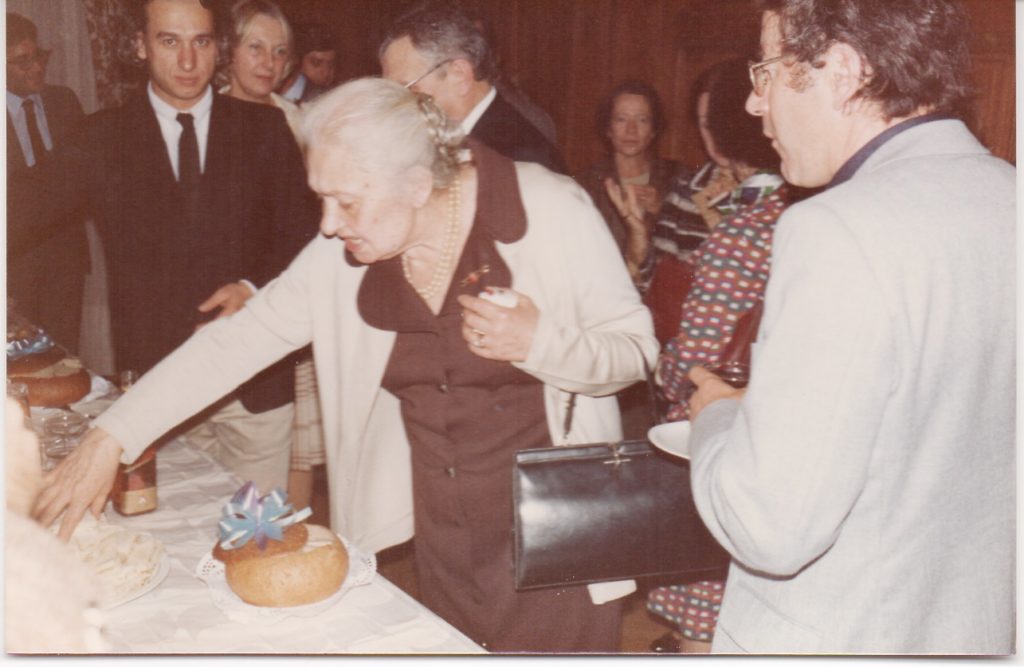
VALENTINE MARCADÉ, ÉMILE KRUBA (DE DOS EN PROFIL) 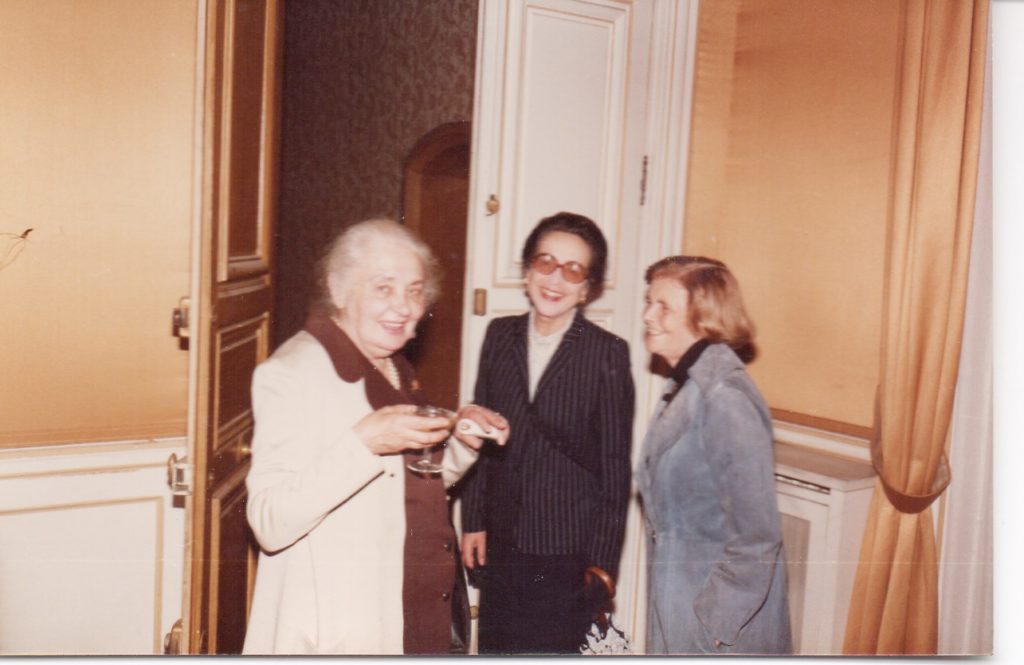
VALENTINE MARCADÉ, JULIETTE LAFOND, GENEVIÈVE NOUAILLE-ROUAULT 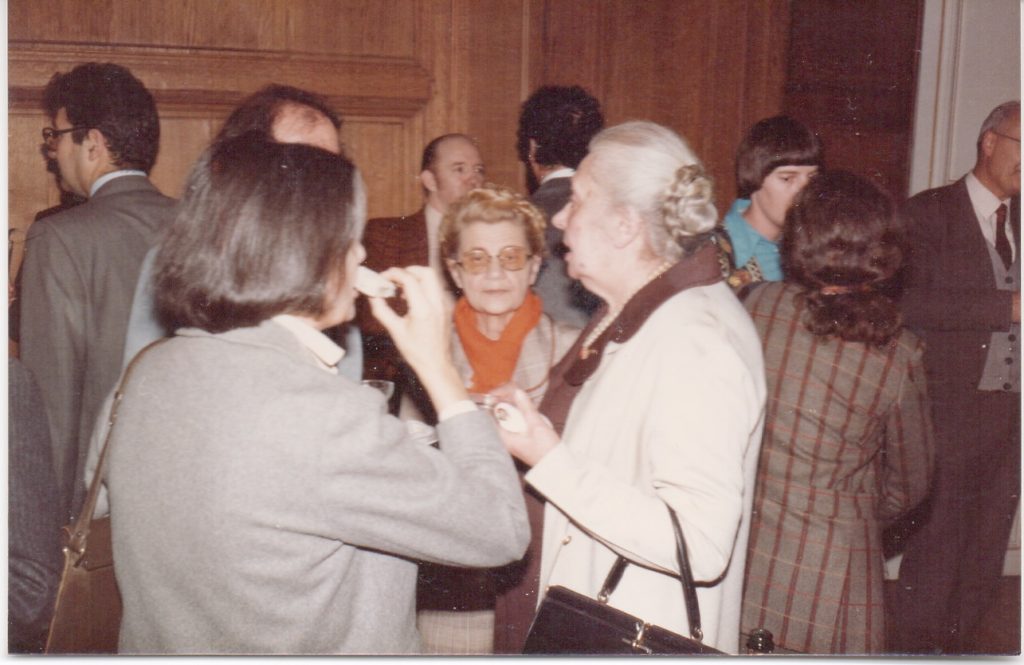
AU CENTRE – MARIE SCHERRER-DOLGOROUKY 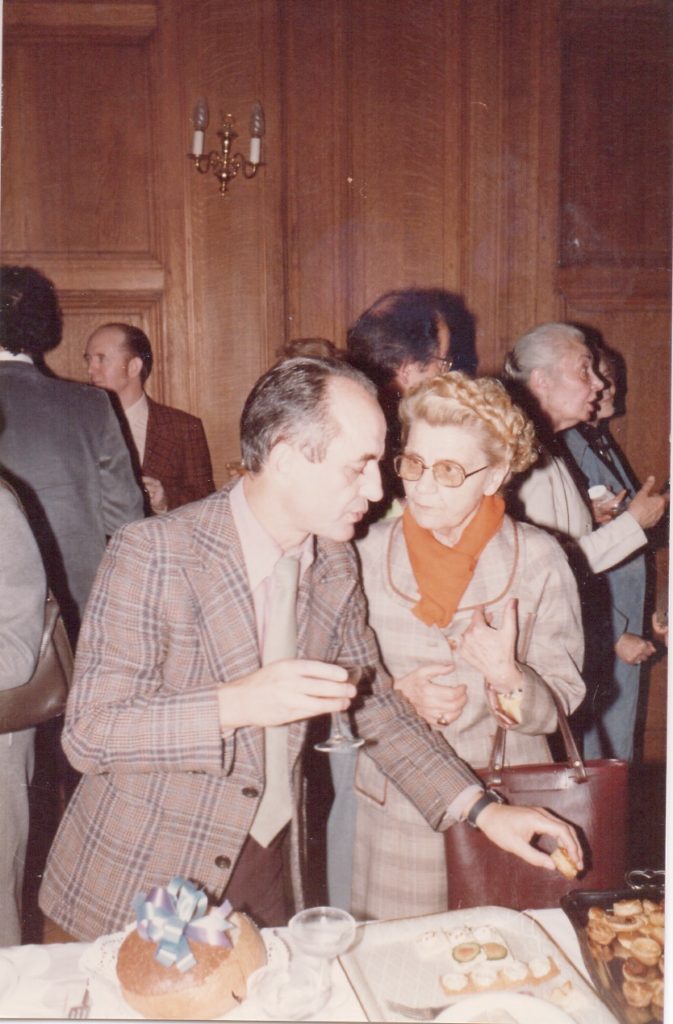
LE LINGUISTE MARCEL FERRAND, MARIE SCHERRER-DOLGOROUKY 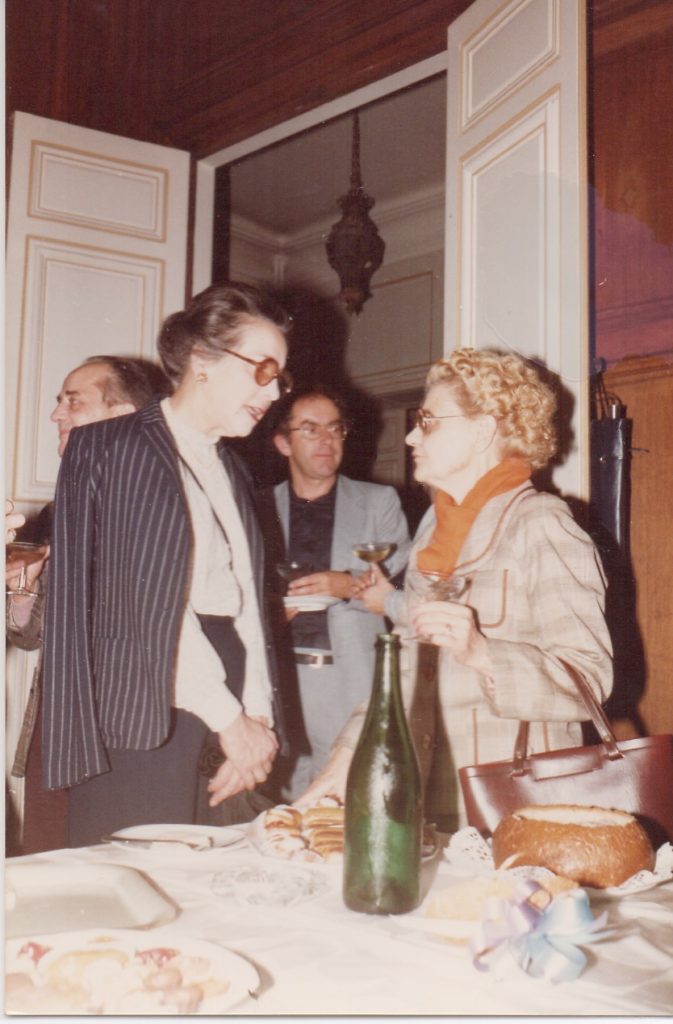
JULIETTE LAFOND, ÉMILE KRUBA, MARIE SCHERRER-DOLGOROUKY 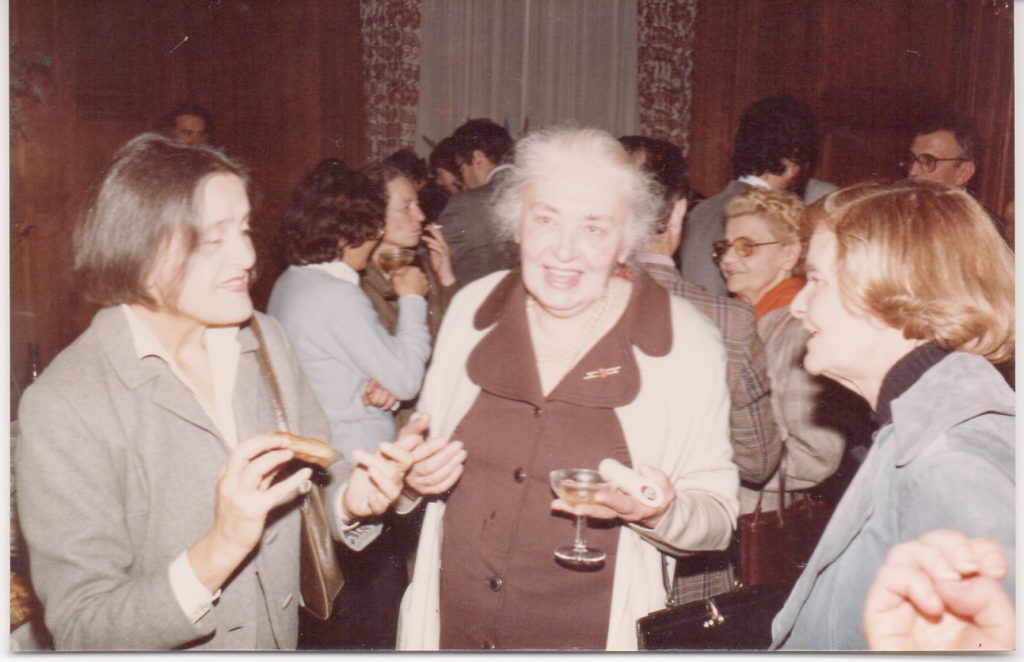
DORA VALLIER, VALENTINE MARCADÉ, GENEVIÈVE NOUAILLE-ROUAULT -
Soutenance de thèse pour le doctorat d’État de Valentine Marcadé sur l’art en Ukraine, le 17 octobre 1981
Soutenance de thèse pour le doctorat d’État de Valentine Marcadé sur l’art en Ukraine, le 17 octobre 1981 aux Langues’O et réception dans les salons de l’Université
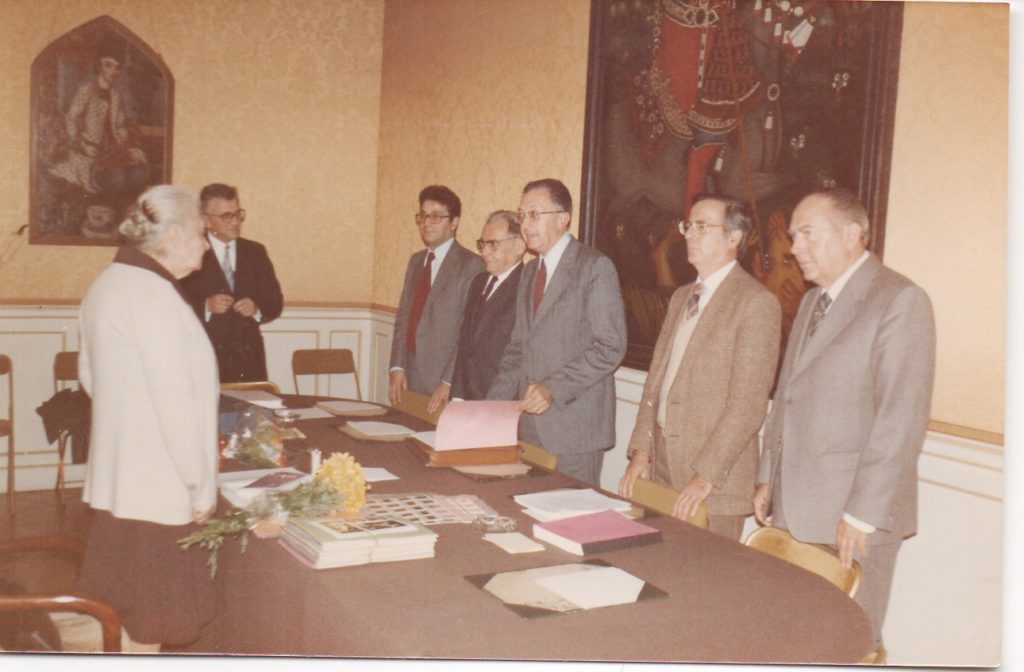
FRANÇOIS DE LABRIOLLE, MICHEL HOOG, BORIS LOSSKY, MICHEL CADOT, LOUIS BAZIN, DÉCLARERNT VALENTINE MARCADÉ DOCTEUR ÈS LETTRES AVEC LA PLUS HAUTE MENTION 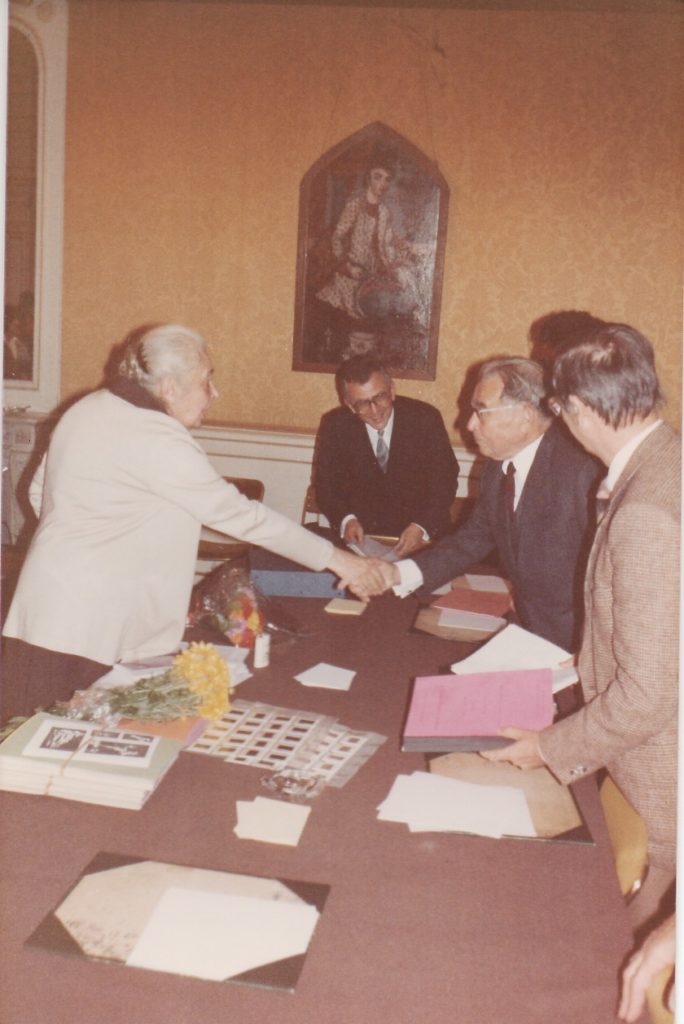
VALENTINE MARCADÉ REMERCIE LES MEMBRES DU JURY 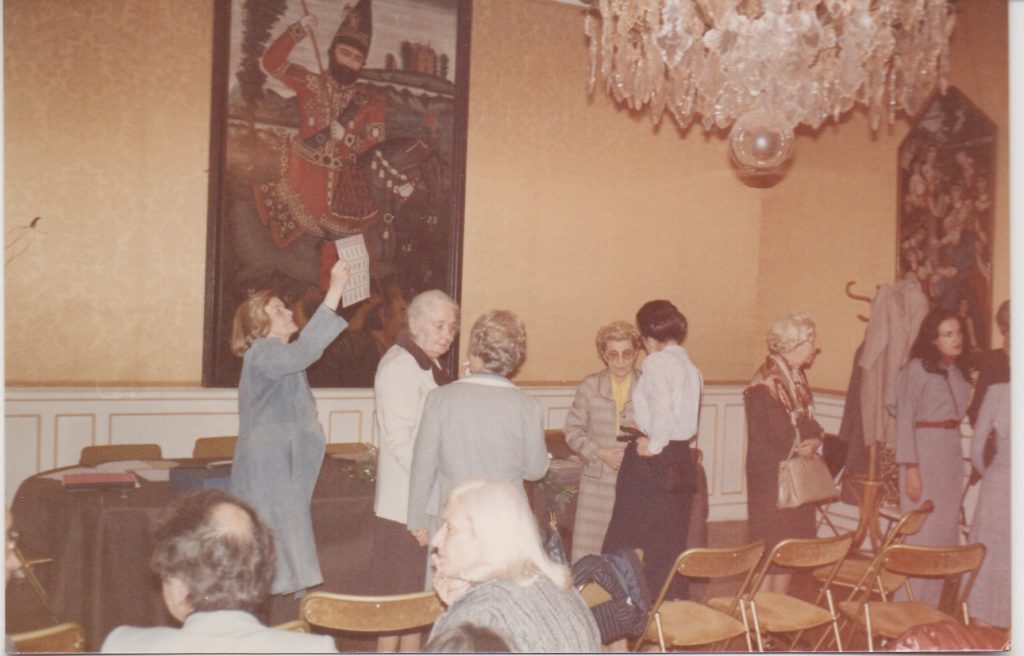
AU FOND : GENEVIÈVE NOUAILLE-ROUAUT PRENANT UNE PHOTO, VALENTINE MARCDADÉ, MARIE SCHERRER-DOLGOROUKY, VALENTINE NILOUS, Mme KOPTILOVA 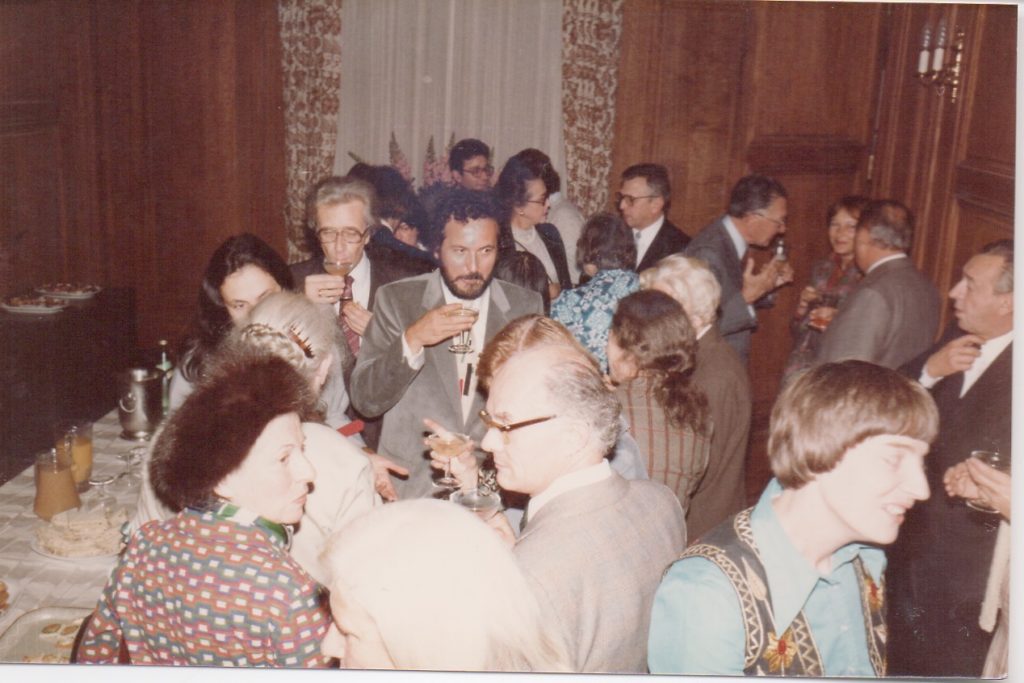
DE GAUCHE À DROITE :YVETTE MOCH, VALENTINE DE DOS, MME KOPTILOVA, SON MARI VIKTOR KOPTILOV, JEAN-CLAUDE MARC&DÉ, DERRIÈRE LUI – MICHEL HOOG, JULIETTE LAFOND PARLANT AVEC FRANÇOIS DE LA BRIOLLE; EN BAS À DROITE – SYVIANE SIGER 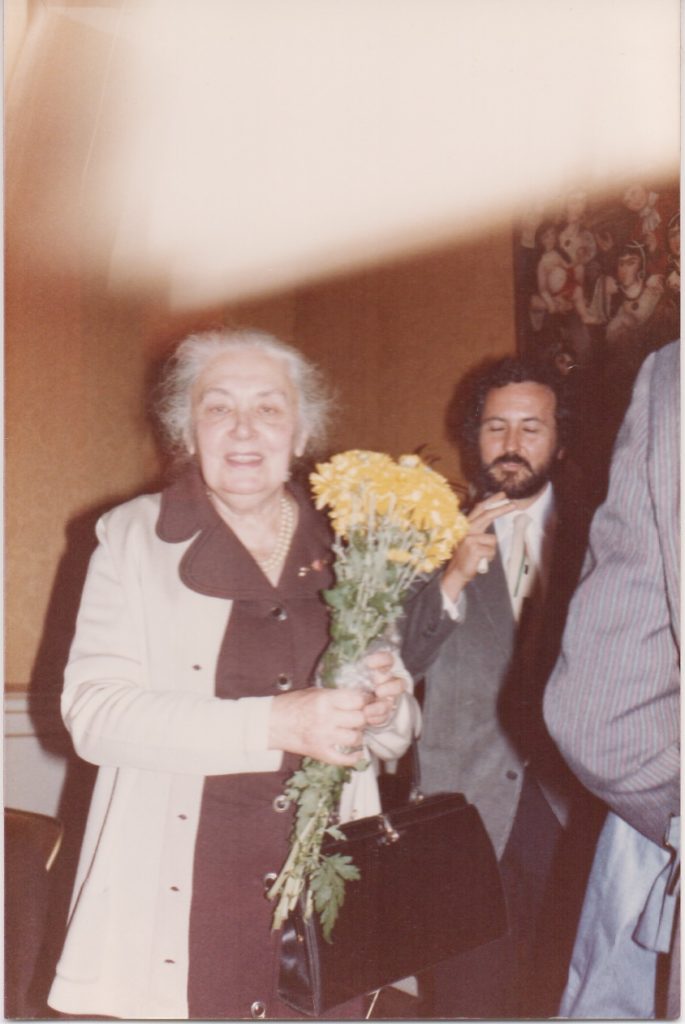
VALENTINE MARCADÉ, Jean-Claude Marcadé 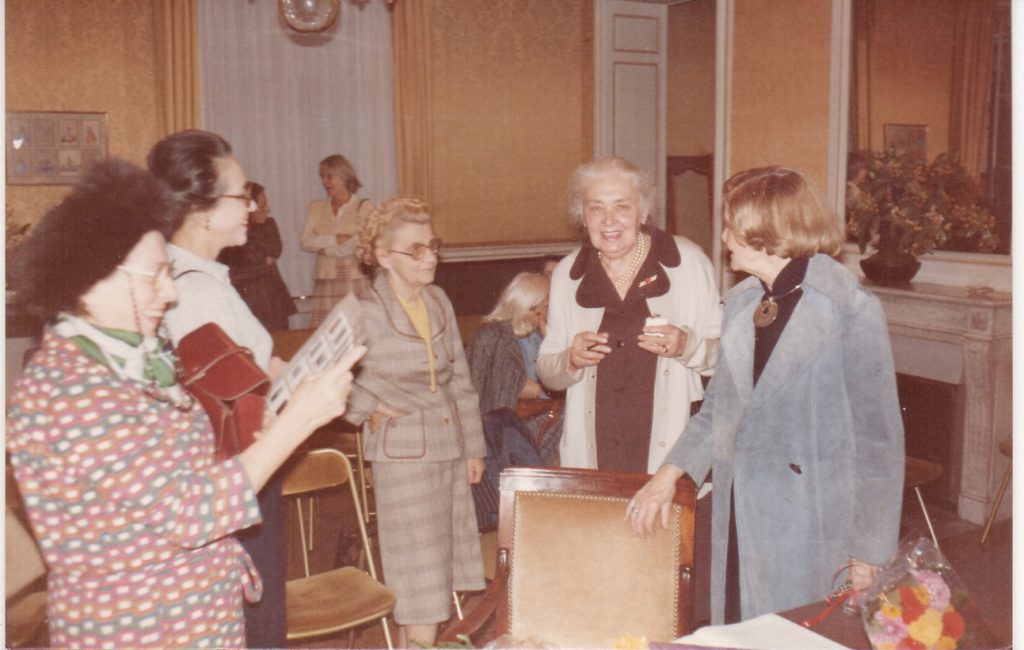
YVETTE MOCH, JULIETTE LAFOND, MARIE SCHERRER-DOLGOROUKY, VALENTINE MARCADÉ, GENEVIÈVE NOUAILLE-ROUAULT 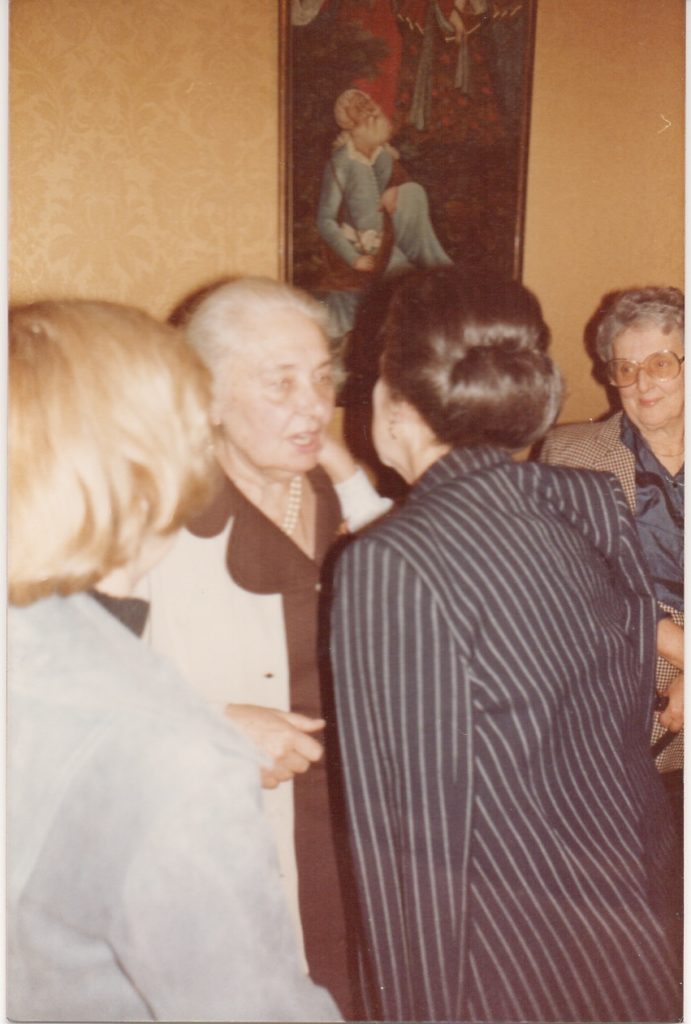
VALENTIONE MARCADÉ, JULIETTE LAFOND (DE DOS), MARIE SCHERRER-DOLGOROUKY 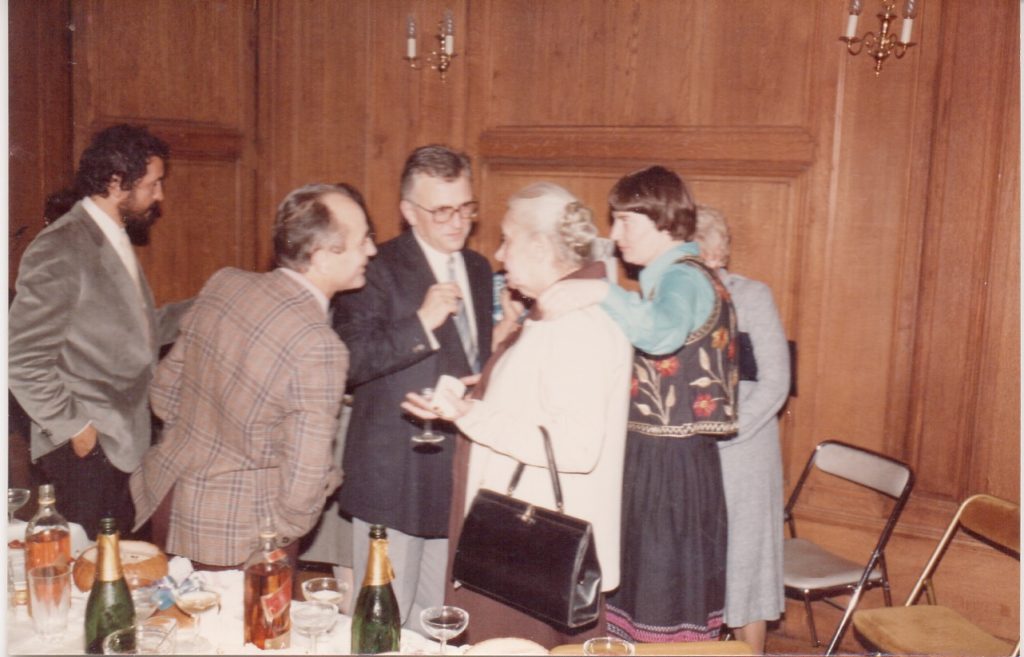
JEAN-CLAUDE MARCADÉ, MARCEL FERRAND, FRANÇOIS DE LABRIOLLE, VALENTINE MARCADÉ, SYLVIANE SIGER 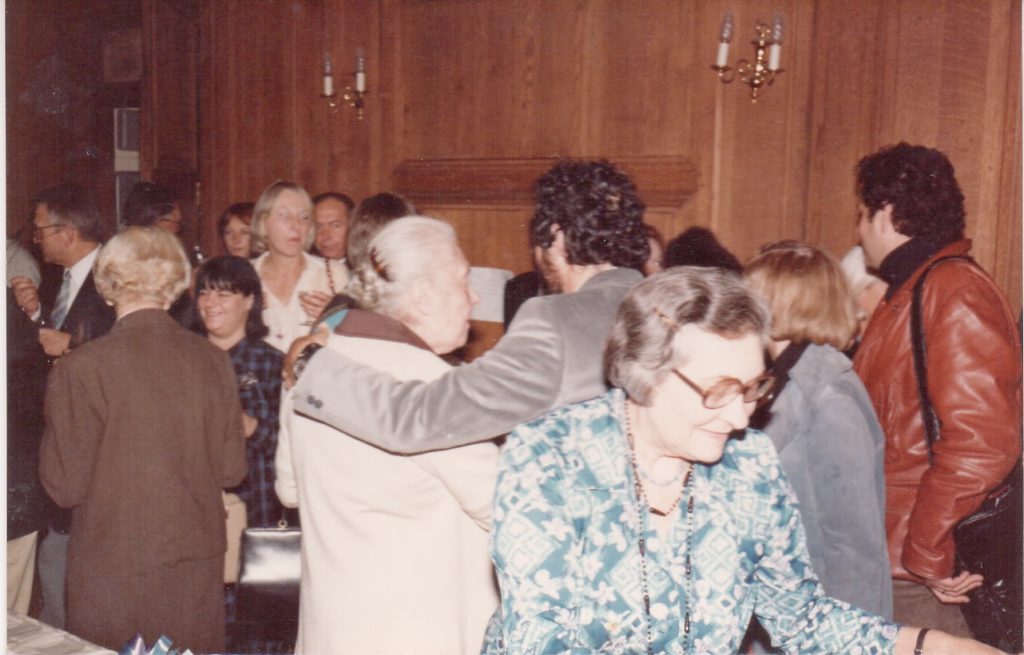
KYRA SAPGUIR, VALENTINE ET JEAN-CLAUDE MARCADÉ DE DOS 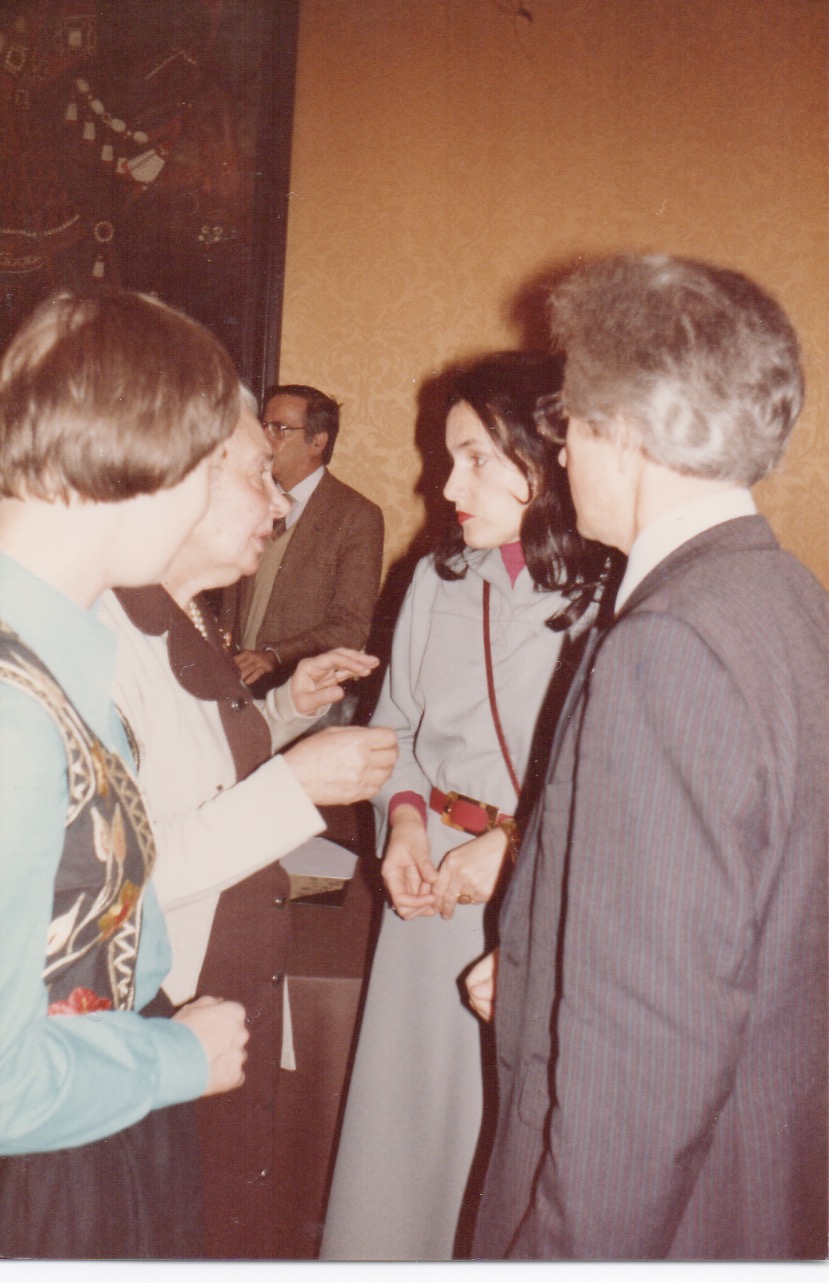
SYLVIANE SIGER, VALENTINE MARCADÉ, MME KOPTILOVA ET SON MARI VIKTOR KOPTILOV 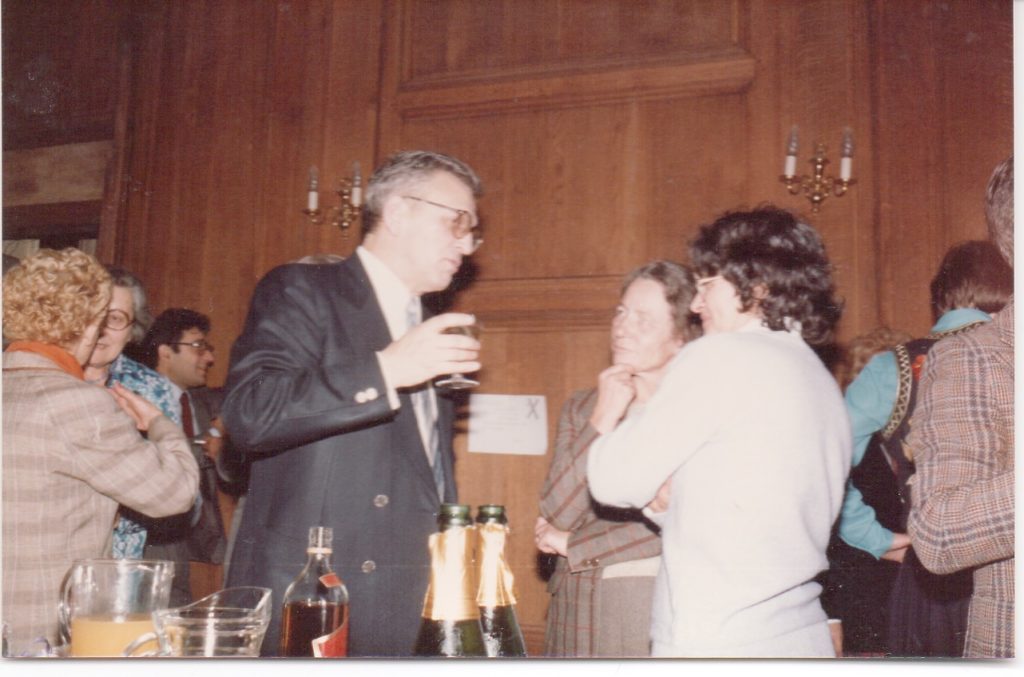
AU FOND – MICHEL HOOG, FRANÇOIS DE LABRIOLLE PARLANT AVEC JOSETTE GRIVEAU ET UNE AUTRE PERSONNE 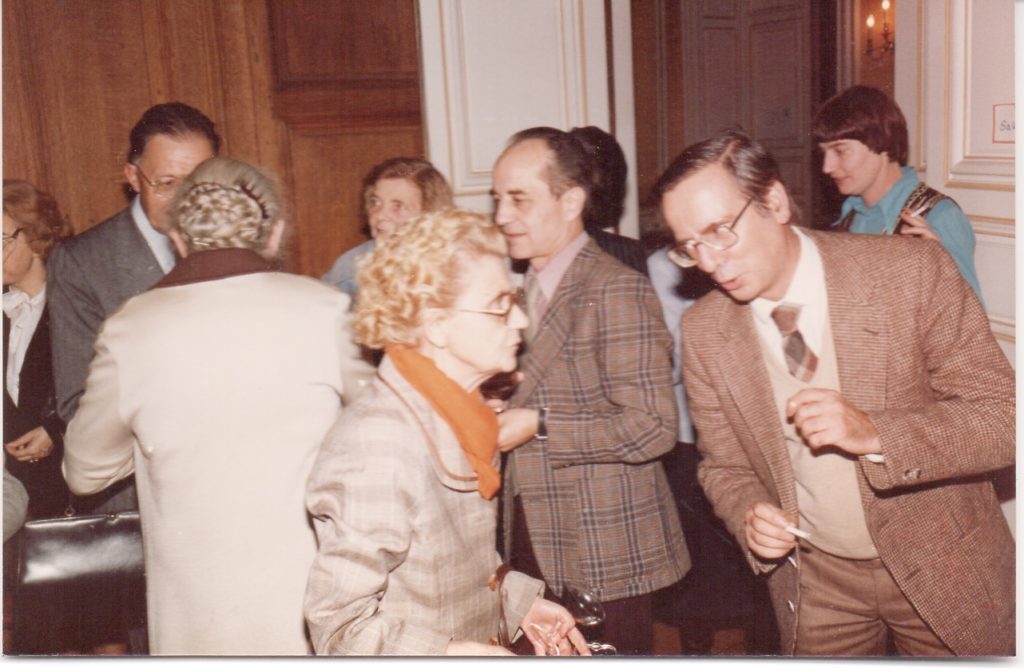
AU PREMIER PLAN – MARIE SCHERRER-DOLGOROUKY, MARCEL FERRAND, MICHEL CADOT, AU FOND À DROITE – SYLVIANE SIGER 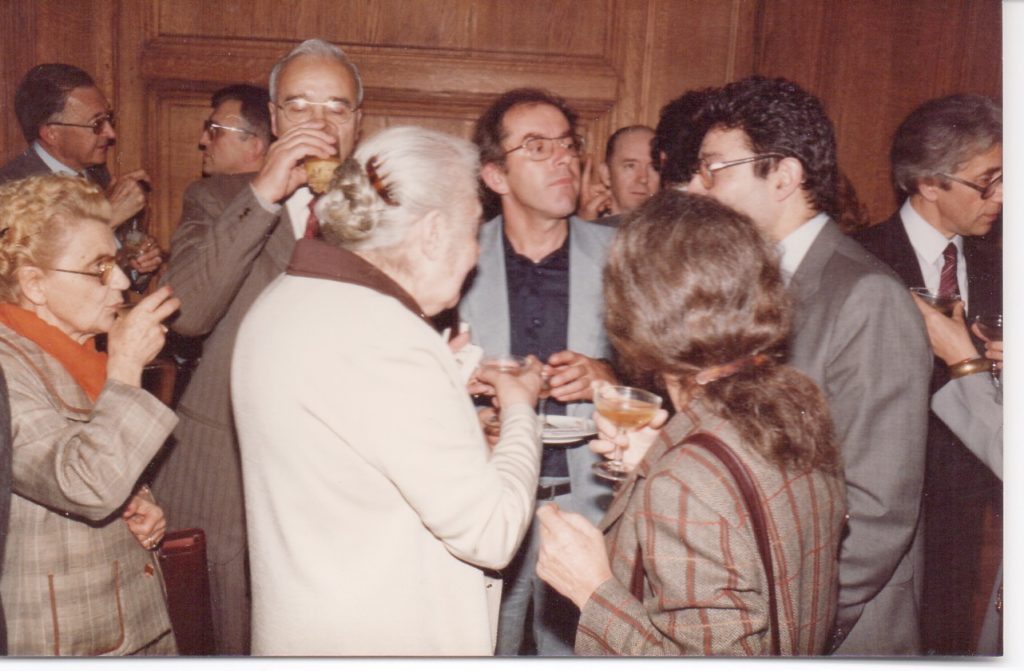
MARIE SCHERRER-DOLGOROUKY, ARKADY JOUKOVSKY, VALENTINE MARCADÉ, ÉMILE KRUBA, MICHEL HOOG 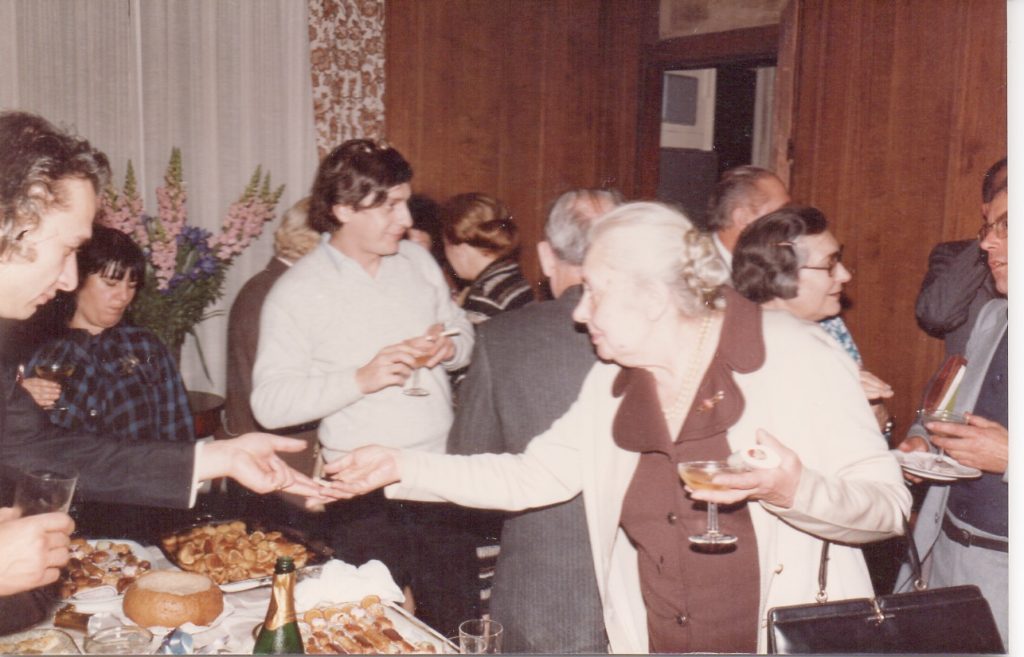
EMMANUEL MARTINEAU, VALENTINE MARCADÉ 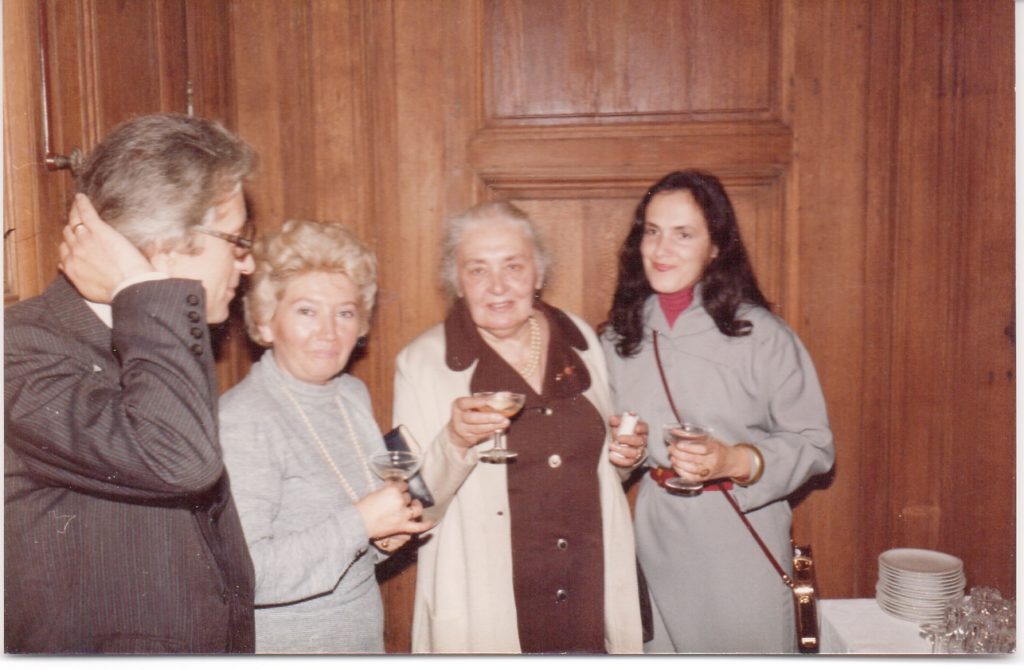
VIKTOR KOPTILOV, UNE PERSONNE NON IDENTIFIÉE, VALENTINE MARCADÉ, MME KOPTILOVA 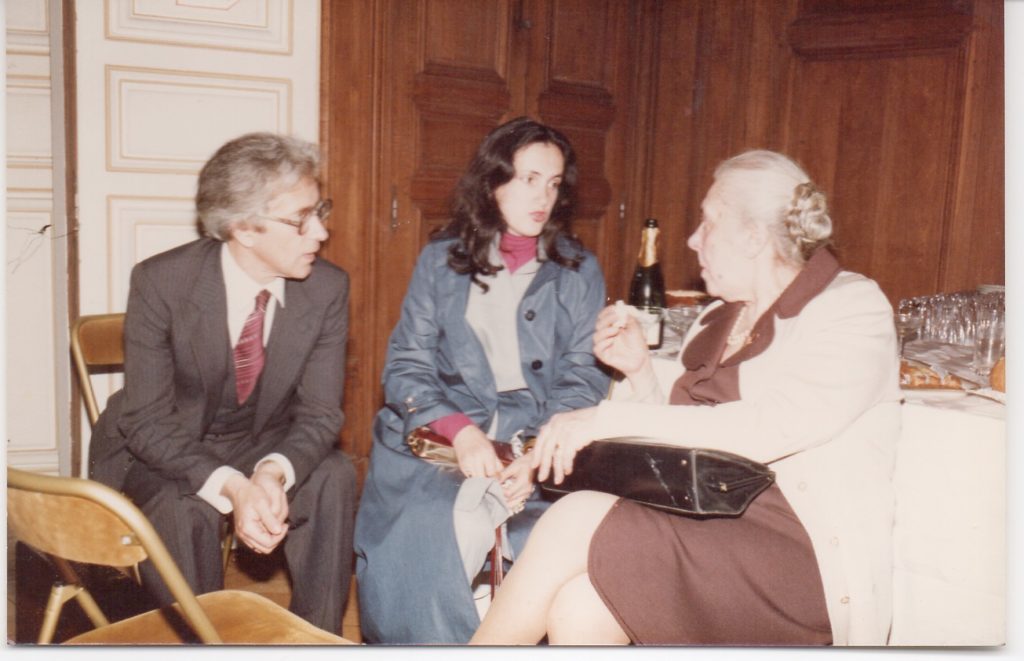
VIKTOR KOPTILOV ET SA FEMME, VALENTINE MARCADÉ 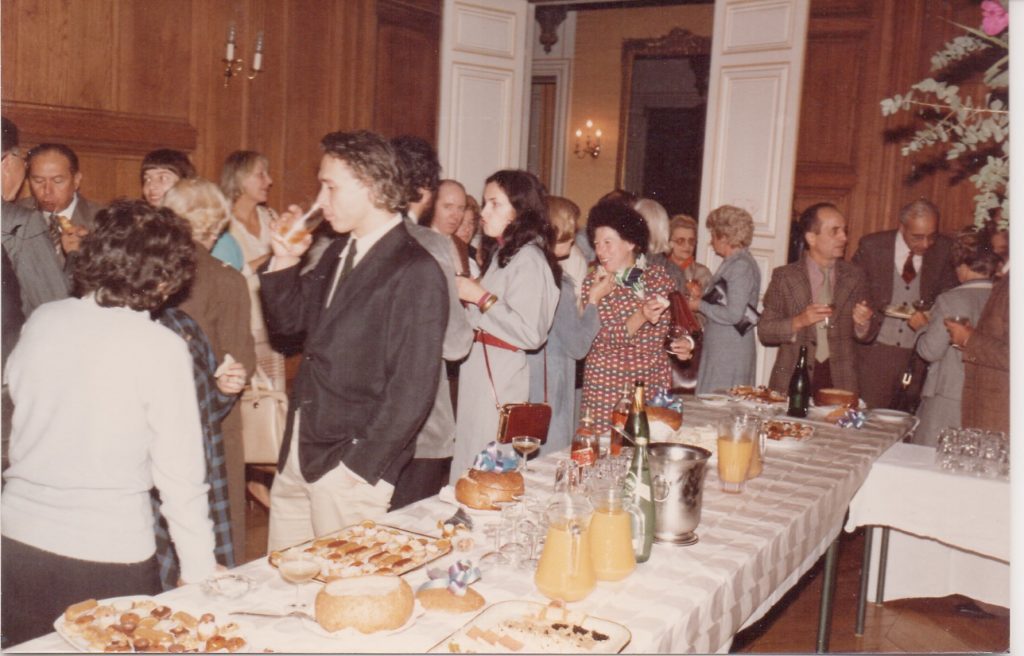
WILLIAM BRUI BUVANT -
Archives Lialia
Ces deux reproductions sont tirées des 200 illustrations présentées par Valentine Marcadé au Jury de la soutenance de sa thèse de doctorat d’État en octobre 1981
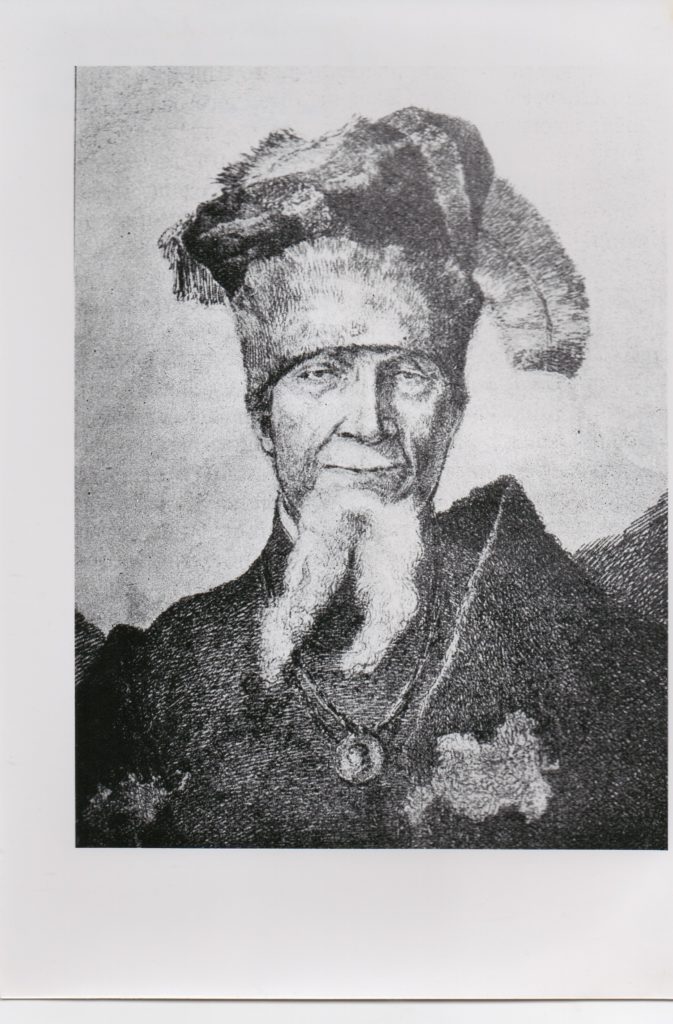
IVAN MAZÉPA 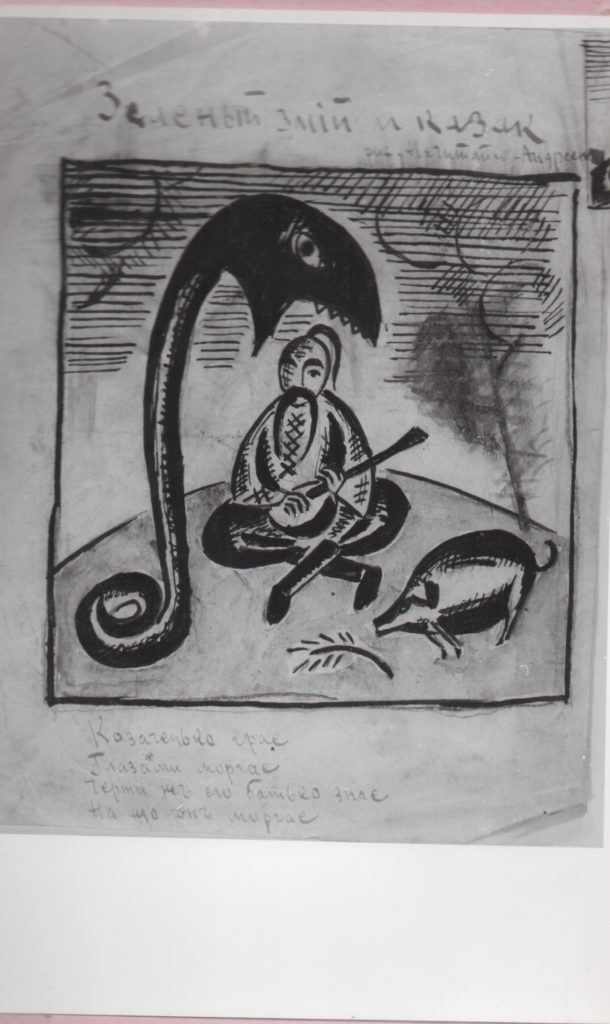
ANDREENKO, LA BÊTE VERTE ET LE COSAQUE, DESSIN QUI A ILLUSTRÉ LA REVUE UKRAINIENNE DE KHERSON « KARAVELLA », N0 2, 1918. Le quatrain écrit par Andreenko en ukrainien a disparu dans l’état actuel de l’oeuvre. Удивительно, но в буреломные годы гражданской войны, в 1918 году в Херсоне издавался журнал сатиры и юмора «Каравелла». Его редактором был М.С. Либерман (Михаил Мирский), а художественным и литературным отделом журнала заведовал Владимир Винкерт. И весьма успешно. Отзывы об издании были самые положительные: «…совершенно необычный для Херсона и вообще для провинции журнал смело мог бы по своей внешности рассчитывать на успех даже в столице, избалованной «стрекозами», «сатириконами» и т.п. журналами… CONTRIBUTION À L’ÉTUDE DE L’ART PICTURAL UKRAINIEN*
par Valentine M ARCADÉ
Dès le début, je tiens à préciser le but et les limites de mes recherches ; je ne prétends pas donner une analyse exhaustive ou une étude complète de l’art plastique en Ukraine. Mon travail se borne uniquement à donner un aperçu exact des faits qui ont déterminé l’évolution esthétique, à travers le temps, afin de reconstituer les phases essentielles, depuis ses origines et jusqu’à la rupture finale qui, en 1934, a jugulé la liberté d’expression dans tous les domaines.
Les XIe, XVIIe, XVIIIe et la première moitié du XXe siècle furent les grandes époques de création artistique en Ukraine. Pour ces quatre étapes la documentation a exigé des investigations complexes dans les archives et les musées aussi bien de l’Est que de l’Ouest ; dans les bibliothèques de Paris, New York, Kiev, Moscou et Leningrad.
Les sources relatives aux XIe, XVIIe, XVIIIe siècles ont été puisées dans les ouvrages spécialisés, publiés en Ukraine et en Russie, mais peu utilisés et jamais présentés en français.
En ce qui concerne le XXe siècle, il a fallu un acharnement sans relâche pour découvrir les documents dans les bibliothèques occidentales et, souvent, dans les archives familiales des émigrés, qui ont bien voulu les mettre à ma disposition.
Afin de prouver la spécificité de l’art ukrainien, depuis ses débuts, il a été indispensable de doter mon travail d’une solide iconographie. Plus de deux cents reproductions dont une centaine en couleurs viennent à l’appui du texte. Elles proviennent aussi bien d’Europe que des États-Unis et même de Tel Aviv.
Pour retracer le cheminement de cette évolution, il a été nécessaire de remonter aux époques reculées car les traces laissées par les différents peuples et leur culture sur les espaces traversés, qui s’étendent de l’Oural aux Carpates, marquèrent profondément l’inspiration populaire des Slaves implantés sur ces territoires.
Aussi, dès le XIe siècle, l’originalité de la création artistique en territoire ukrainien rejaillit- elle avec vigueur à chaque tournant de son histoire et s’affirma-t-elle dans ses formes, dans sa gamme de couleurs et dans son rythme plastique.
Les contacts permanents avec les diverses civilisations enrichissent l’éventail des sujets, les éléments figuratifs et la symbolique d’ornementation animalière, florale, géométrique et gestuelle reconnaissable d’emblée par son style propre.
* Thèse de doctorat d’État soutenue le 17 octobre 1981 à l’Université de la Sorbonně nouvelle. 534 p. dactyl., plus de 200 Ш.
Rev. Étud. slaves, Paris, LIV/3, 1982, p. 497-504.
-
Lettres d’artistes aux Marcadé
Vladimir Bekhtéïev (Bechtejeff) et sa femme Natalia à Valentina Dmitrievna et Vania Marcadé
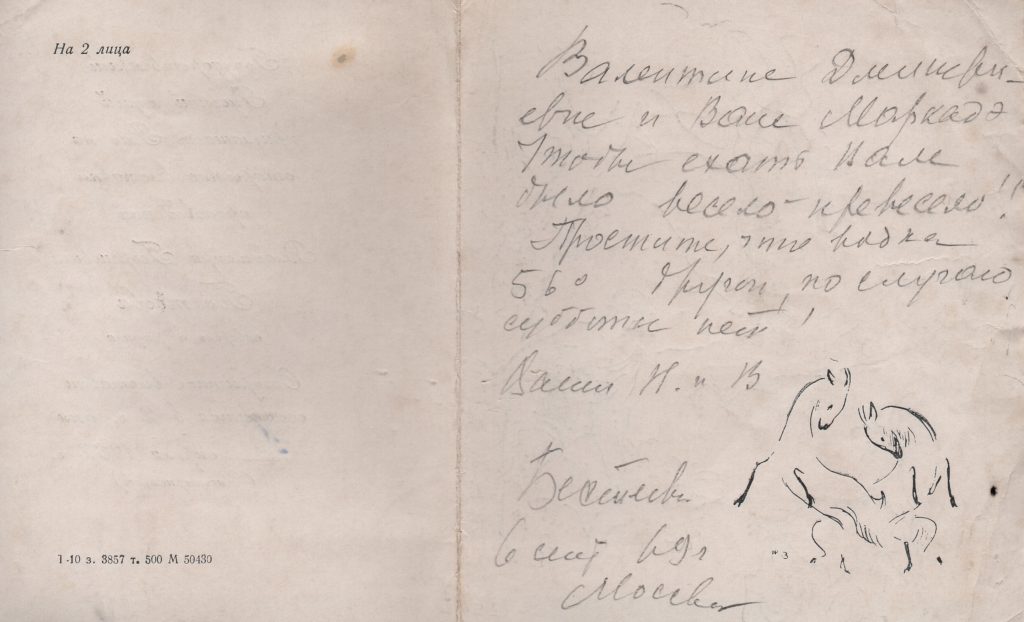
6 septembre 1969 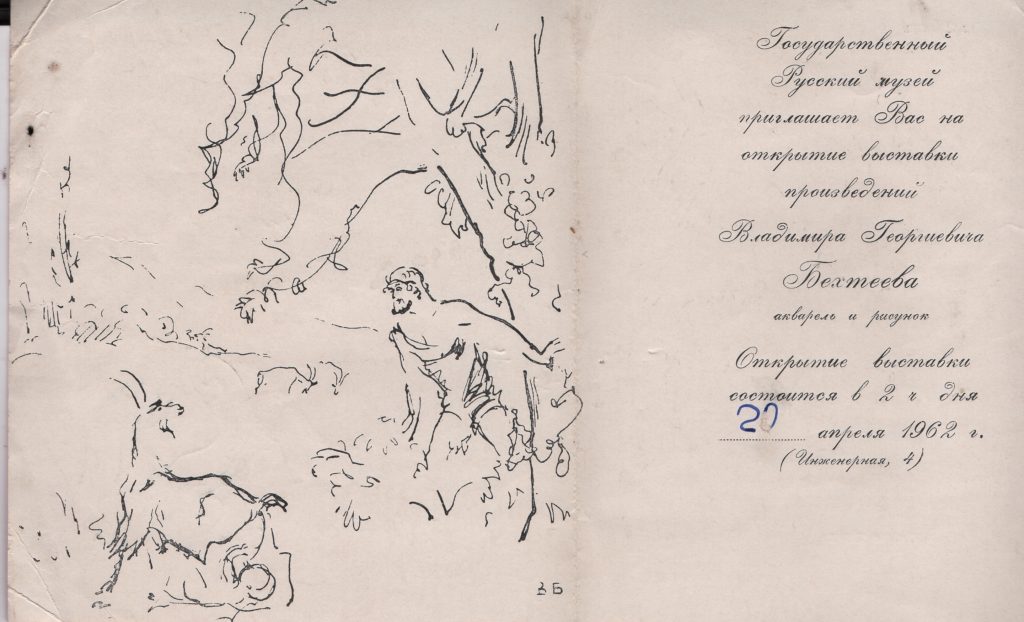
Le graveur Adrian Kaploune à Valentina Dmitrievna
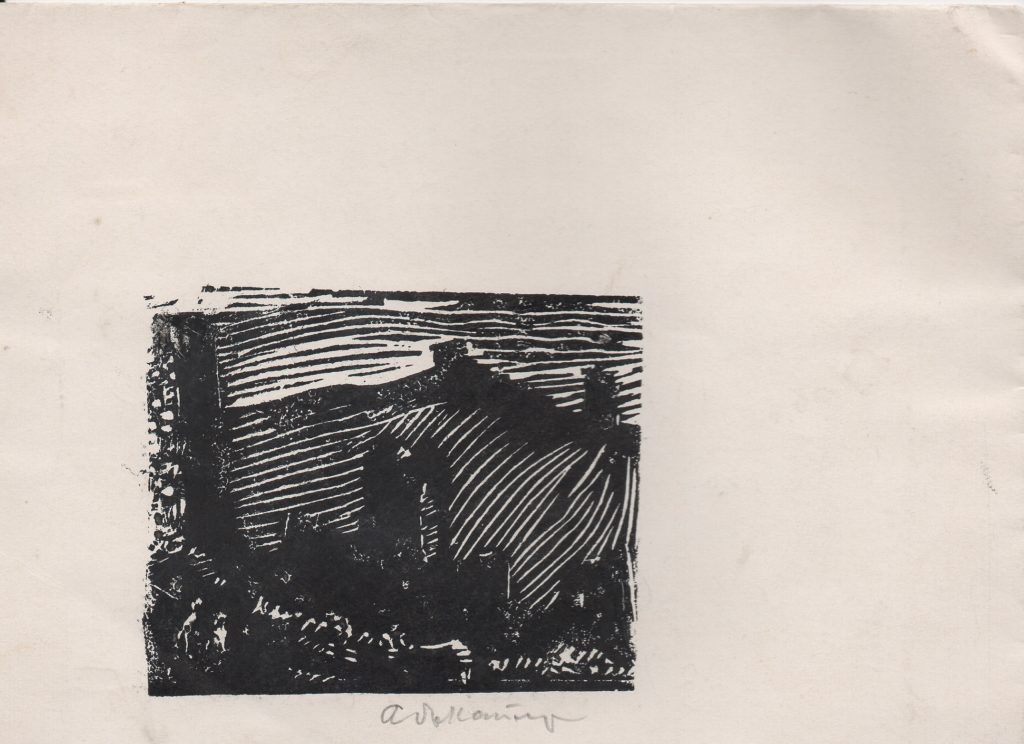
Gravure d’Adrian Kaploune 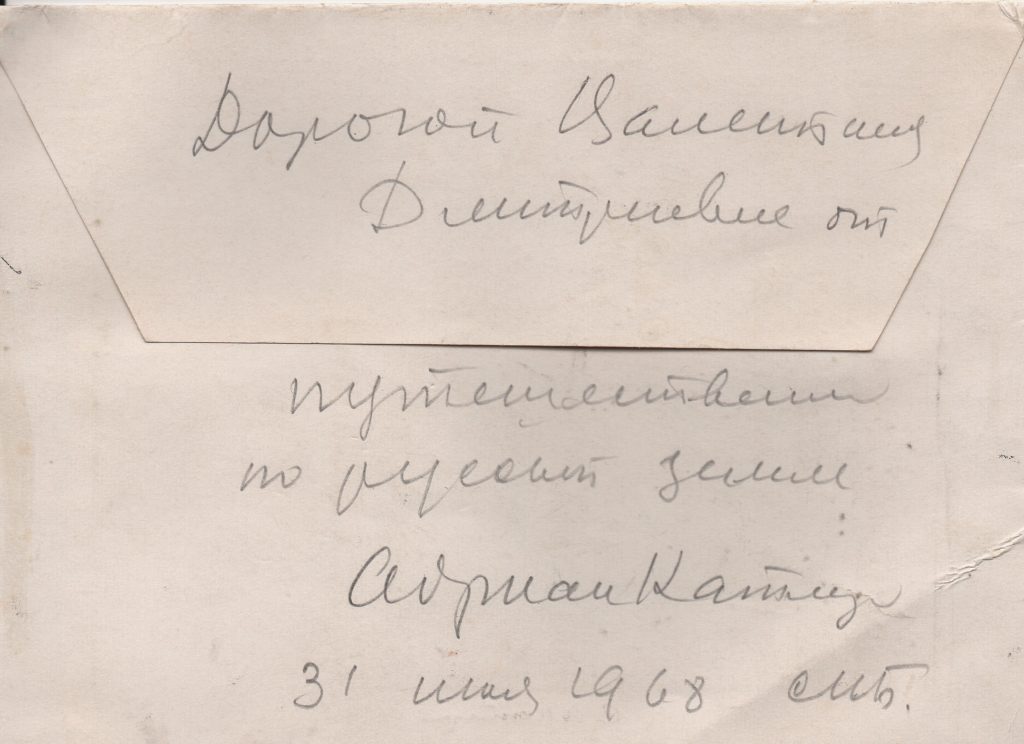
Saint-Pétersbourg (sic!), 31 juin 1968 Czeslaw Milosz envoie à Valentine Marcadé le portrait de son cousin Oscar Milosz qu’il lui avait promis à Berkeley en 1977
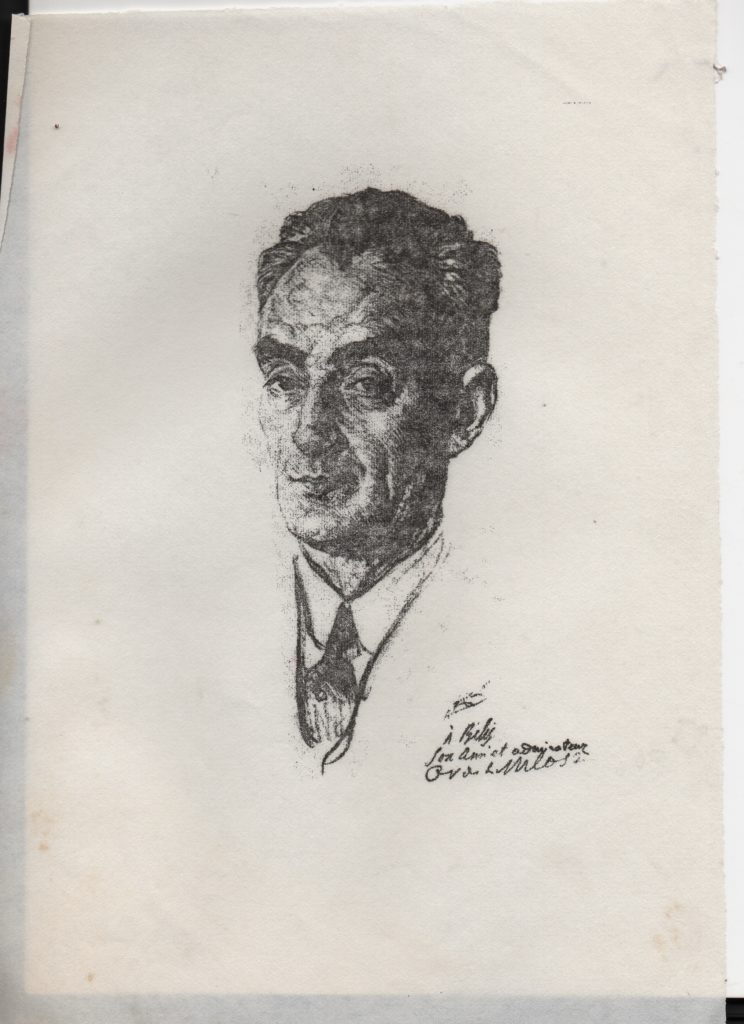
Oscar Milosz 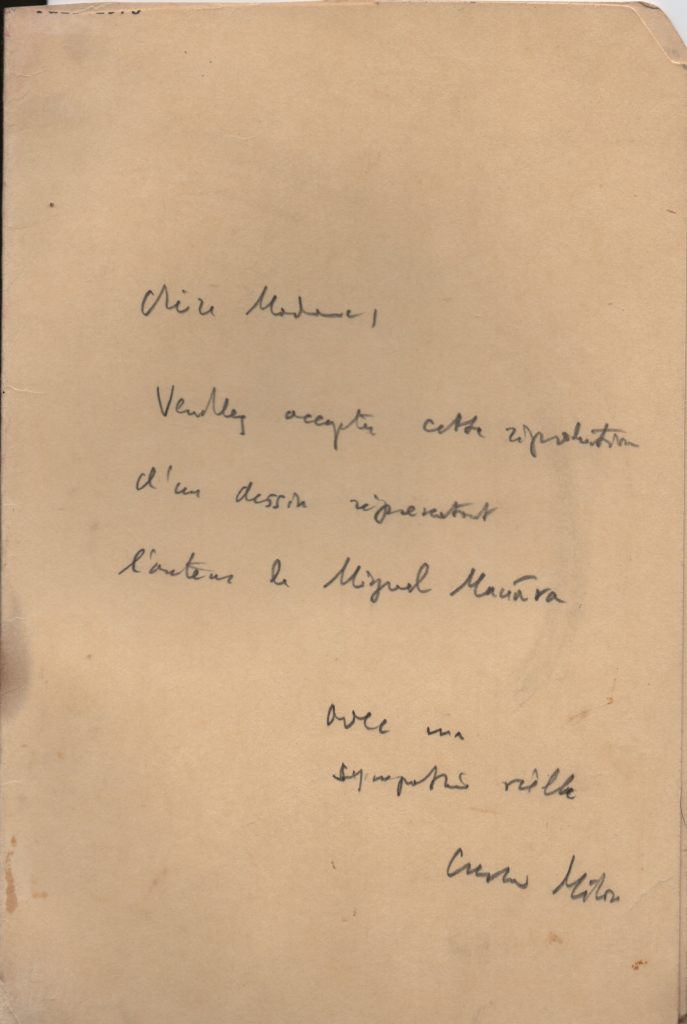
Czeslaw Milosz Ania Staritsky à Valentine et Vania Marcadé en 1977
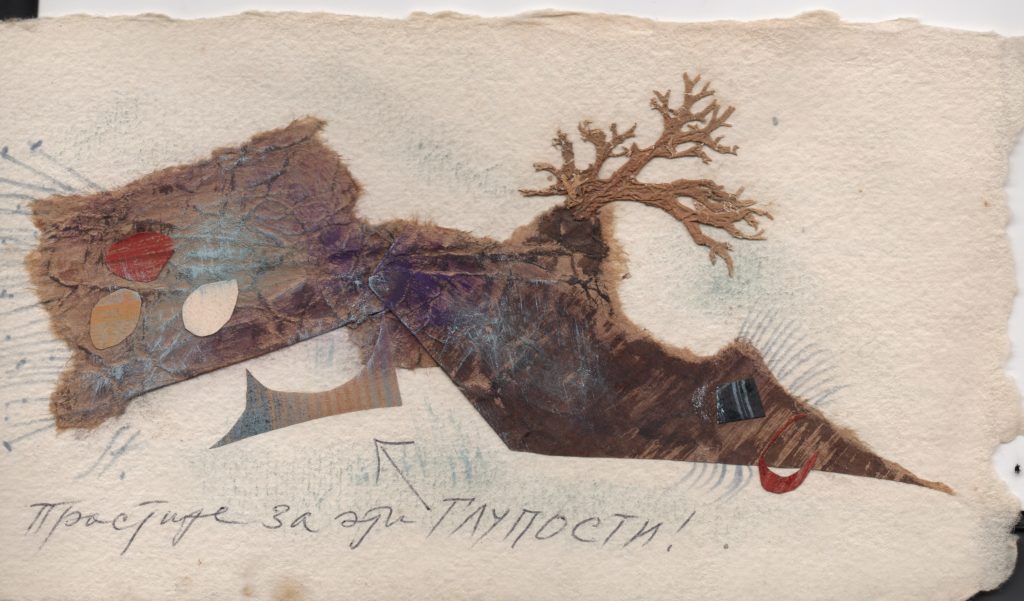
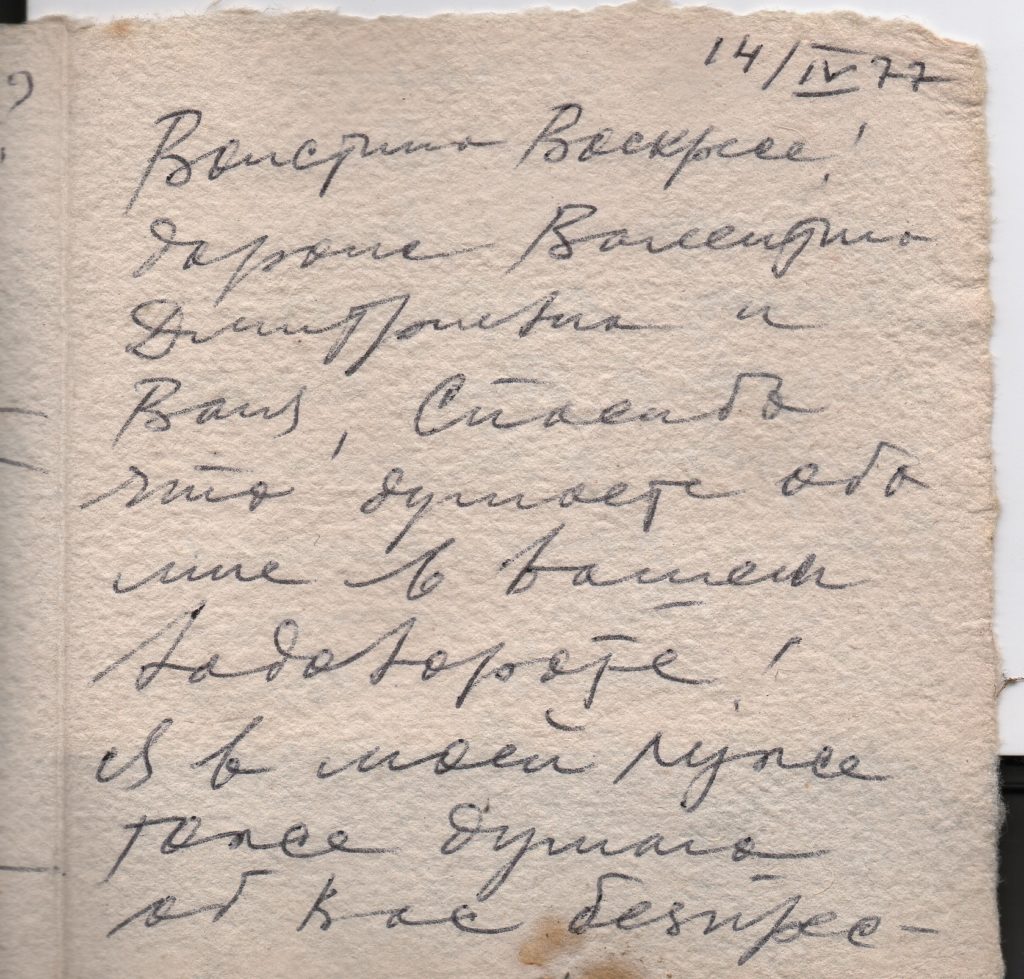
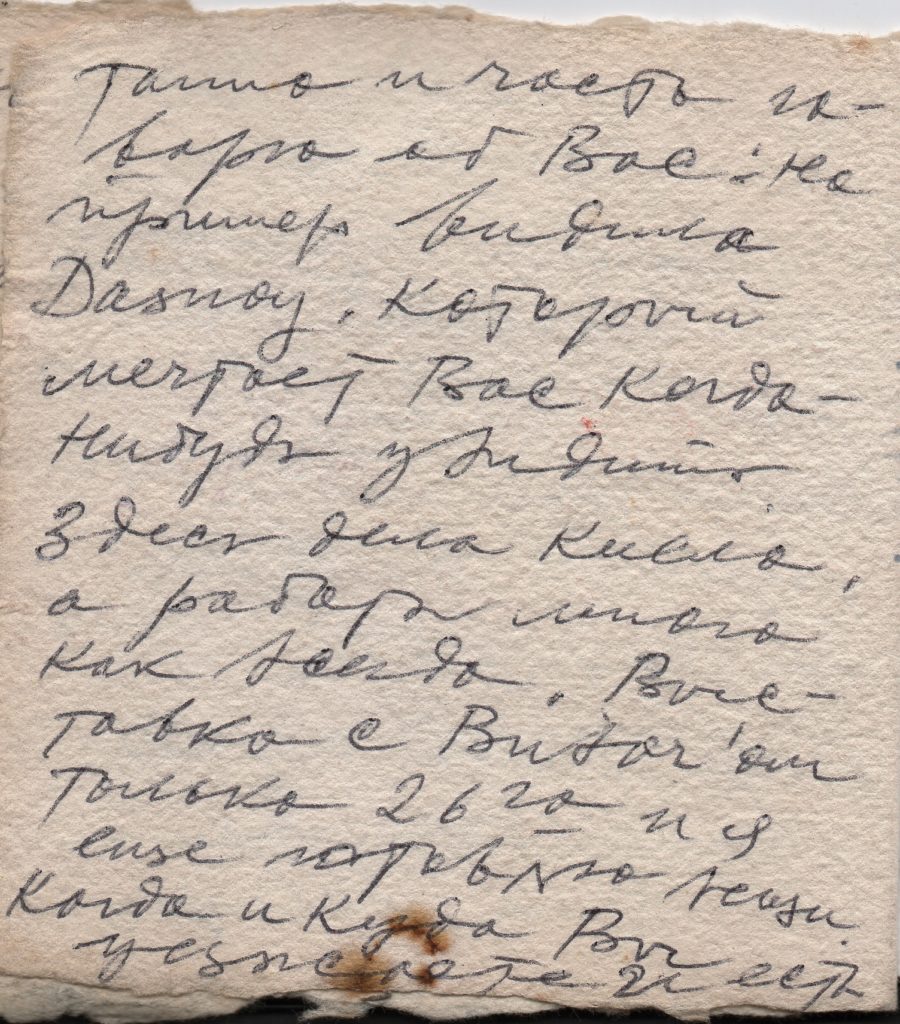
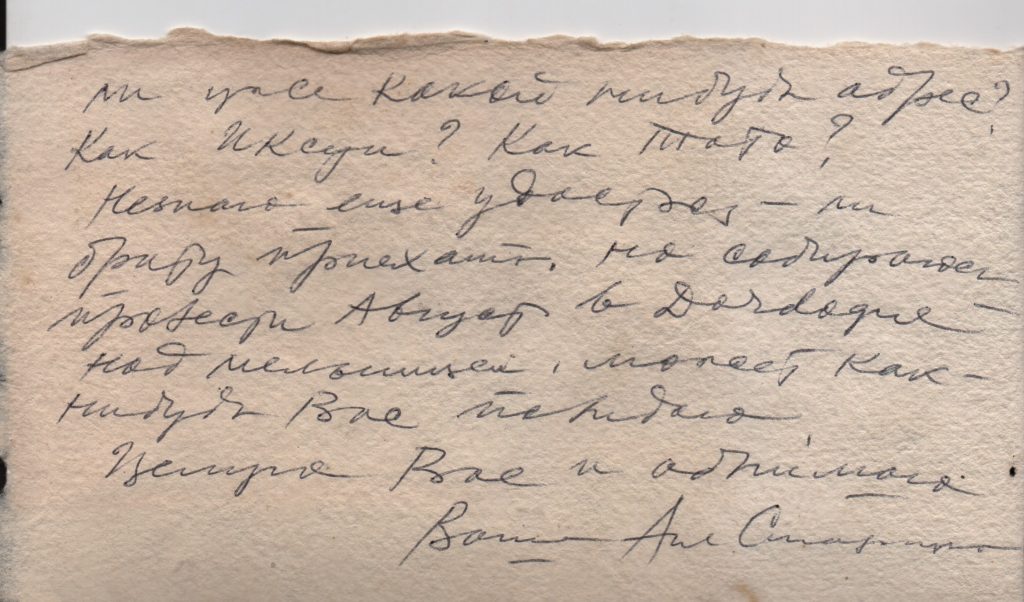 Gaga (Guéorgui Koventchouk), sa femme Janna et son fils Aliocha à Lialia et Vania – années 1990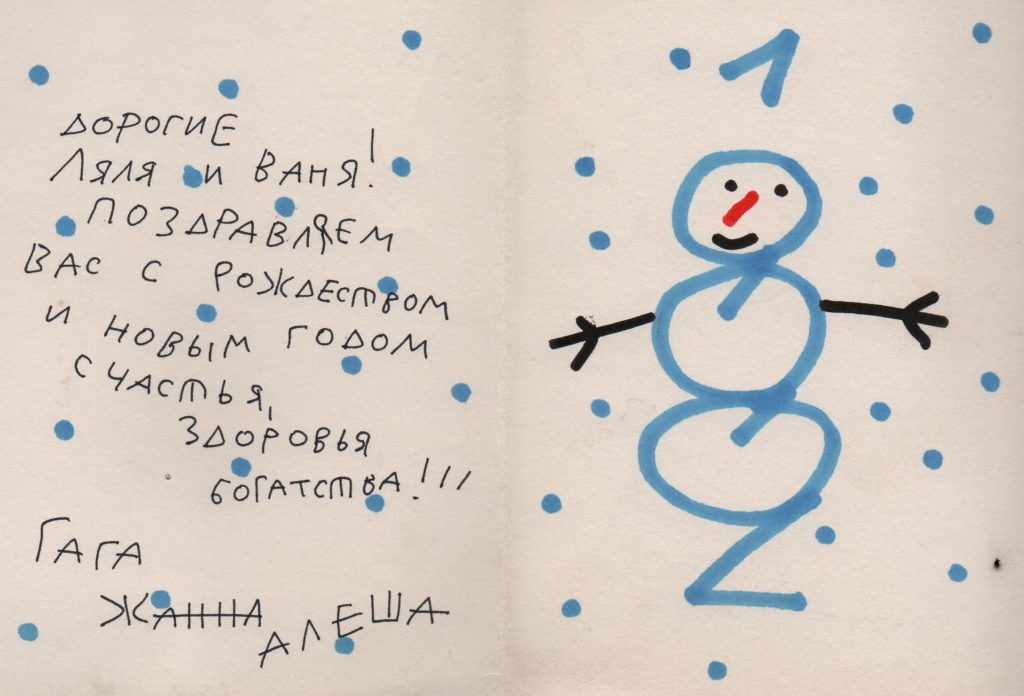
-
Russian Icons and the Russian Avant-garde, Two Major Facets of Universal Art (2002)
500 Anos De Arte Russa/ 500 Years of Russian Art,
São Paulo, 2002
Russian Icons and the Russian Avant-garde, Two Major Facets of Universal Art
Jean-Claude Marcadé
« The invisible world of divine glory is not the only one to have found its expression in Russian icons. Two planes of being, two worlds dwell there in a dynamic, living way. On one side, the eternal peace of the hereafter, and on the other side, a world that seeks God but has not yet found Him, a chaotic, sinful, suffering existence that nevertheless aspires to the peace of God. As a parallel to these two worlds, the icon reflects and opposes two Russias. One is already anchored in eternal peace, and resounds ineffably to the cherubim’s hymn, « Let us now lay down all the cares of this world’. The other presses against the temple, aspires to it and expects intercession and help. It is around the temple that this Russia builds its secular and ephemeral edifice. »
Eugène Trubetzkoy, Trois études sur l’icône (1916)[1][i]
« The art of icon painting made me understand the emotional nature of peasant art. I had loved it before, but had not elucidated its scope. My eyes were opened by the study of icons […]. Icon painters, with great technical skill, transmitted an entire content in an anti-anatomical truth, without any aerial and linear perspective. They used colour and background within a purely emotional perception of the theme. »
Malevich, Autobiographie (1933)[2]
Russian plastic arts were long the poor relation of art history, owing to a deeply ingrained notion that Russia undoubtedly produced an impressive body of literature, and original music and ballet, but that it was not a country of painters. Despite a huge exhibition of Russian art organised by Diaghilev at the Autumn Salon in Paris, in 1906, despite the Slavic element in Diaghilev’s Ballets Russes which strongly influenced an entire period, despite Louis Réau’s book L’Art russe des origines à Pierre le Grand, published in 1921[3], this opinion was upheld by many people who saw no seat of learning other than European studios, believed that Western training was essential to become an artist, and occulted Russia’s history.[4] Until the day in the 1960s when art historians (Camilla Gray, Troels Andersen, Valentine Marcadé) revealed the extent of Russian pictorial art movement in the first quarter of the twentieth century, showing Russia to be an artistic centre that was just as original and universal as it was during the flowering of icon painting from the fifteenth to the seventeenth century.
Icons played a key role in the liturgical, theological and intellectual life of Russia, in the same way as music did.[5] It is well known that Eastern Orthodoxy, in Rus before the fourteenth century, then in Muscovy and the Russian Empire, gave a special place to the liturgy, developing and amplifying it until it not only provided religious and mystic nourishment, but became the impetus for philosophical thought, and the wellspring of spiritual and aesthetic beauty. The sumptuousness of the Russian Orthodox liturgy leaves few of our contemporaries unmoved. Remember that Kandinsky, that quintessential twentieth-century modernist, said that he had experienced the synthesis of the arts, the phenomenon that in the late nineteenth century was known as Gesamtkunstwerk or synaesthesia, in the izbas of the Volgda region and in the « churches of Moscow, particularly in the Assumption Cathedral and at St Basil the Blessed »: « In these extraordinary izbas, I discovered for the first time the miracle which I later included in my work. That is where I learned to walk right into the picture myself, not just give it a sidelong glance, but live in it. I clearly remember that I stopped on the threshold before this startling sight. The table, the benches, the enormous great stove, the cupboards, the dressers, everything was painted with rich, colourful decorations. On the wall there were lubki [popular Russian woodcuts]: a symbolic representation of a gallant knight, a battle or a song rendered in colour.
The Beautiful Red Corner [where the icons are kept] was covered with painted and printed icons, and in front of them a night-light glowed red as if it knew something in its heart and had its own inner life, a proud and humble star, whispering mysteriously to itself. When at last I stepped into the room, the painting encircled me and I walked right into it. Ever since, that feeling has lived unconsciously within me, although I have had the same experience in Moscovite churches and particularly in the Assumption Cathedral and in St Basil the Blessed. »[6]
The last two Moscovite churches were not a random choice, for they are both still lined with frescoes or murals, and the wall of the iconostasis is covered with icons, and therefore with paintings. The liturgy and various services were celebrated in these prestigious parts of the Kremlin. Anyone who attends the liturgy of St John Chrysostom in the Russian orthodox rite is inevitably struck by its resemblance to total theatre. The procession of priests, acolytes and deacons moves in obedience to a changeless symbolism from either side of the iconostasis, around the altar, passing at times through one of the side doors of the iconostasis, going from the church to the sanctuary and vice versa, spilling out into the area set aside for the congregation. These movements are accompanied by the marvellous, familiar music that has been played for centuries. Then there is ample use of incense, especially in front of the icons or the faithful who are, in a way, archetypal icons since « God made man in his image at the time of creation. »[7] Lastly, the congregation moves, too, since there are no seats in the centre of a traditional orthodox church: the faithful move towards the various icons, put candles before them, kiss them, cross themselves but not in unison, bend over to touch the ground with their right hands to seek forgiveness and as a sign of submission to God’s will, and prostrate themselves in some parts of the liturgy. Although the gestures made by the celebrants follow a changeless pattern, the movements of the faithful are more random. Thus, group and individual movements are reconciled.
Christian Rus was plunged into Byzantine theological culture from the outset, and therefore was deeply involved in the intense iconographic culture which followed the « triumph of Orthodoxy », meaning the triumph of the veneration of icons over Iconoclasm, after the seventh ecumenical council, at Nicaea, in 787 (the Early Church’s last ecumenical council). The Rus’ first iconographic masters were Greek and their art had a profound influence on iconography in Rus from the eleventh to the thirteenth century. Gradually, specifically Slavic features began to appear in the conventional Byzantine models. The Tartar invasion and the capture of Kiev in 1240 hastened the city’s decline as a great artistic centre.[8] Henceforth, the Vladimir and Rostov schools developed in the East, whereas Novgorod, « after the sack of Kiev, became the representative of Byzantine art in Rus; that is why the Novgorod school is venerated as the oldest Russian school. »[9] The Moscovite state witnessed a flowering of icon painting in the fourteenth and fifteenth centuries. The political climate was conducive to such a development, with the loosening of the Tartar yoke, the « reunification of the lands of Rus » and the extraordinary religious revival, under the influence of Hesychasm, led by Saint Sergius of Radonezh in the late fourteenth century.
Saint Sergius of Radonezh was of incalculable importance for Russia. He set in motion « the moral, then political, renaissance of the Russian people. »[10] From this time on, the close link between the fervent life of the monasteries and civil society became a key fact in understanding Russian life and its political, intellectual and artistic manifestations up until the Bolshevik revolution of 1917. The spiritual thinking of Dostoyevsky, among others, stems from this. The great theologian, thinker, art theorist and scholar Father Pavel Florenskij said: « The notion of morality, the idea of the State, painting, architecture, literature, Russian education and science, all these great lines of thought converge on our saint [Sergius of Radonezh]. In his person, the Russian people became aware of itself, of its place in history and culture and of its cultural task. It is only then that it earned the right to independence. »[11]
In the orthodox world, the fourteenth century was the time of the controversy between the Hesychasts, partisans of uninterrupted prayer (the Jesus prayer) which led to communion with the Holy Spirit and a vision of the uncreated light that once appeared on Mount Tabor, and the humanists, who upheld the rationalist principle.[12] The triumph of Heyschasm, from St Sergius of Radonezh onwards, had major repercussions for Russia, notably the fact that it did not experience a phenomenon similar to the Western Renaissance. The Heyschast thread is apparent throughout Russian icon painting, dominated by the quest for divine harmony, gentleness, tenderness, and the search for the essential stripped of all psychologism, anecdotal detail and the noise and bustle of time.
The Trinity is another image which dominates Russian iconographic spirituality after St Sergius. The laura founded by the « first teacher of the Russian popular mind » (in the words of the historian Ključevskij) was dedicated to the Trinity and remained the heart of Russia for centuries. Similarly, the most famous icon, one of the highest achievements of all Russian art, is the Trinity of the Old Testament by St Andrei Rublev. Tradition holds that it was painted to the glory of the saintly founder of the monastery in the first half of the fifteenth century, some time after his dormition (1392). It stayed near his tomb for over five hundred years until it was taken to the Tretyakov Gallery in 1929, where it is still admired, and even venerated, by visitors.
Mahmud Zibawi, one of the specialists in icons among the new generation, neatly defined the specific nature of Russian iconography: « Now the ‘Third Rome’,[13] Russia carries art towards the quietness of the heyschia. The abstract wins over the concrete. All dramatisation is swallowed up. Men are ‘earthly angels’. Light, tranquillity, joy, peace and love abound. ‘The new, non composite world’ replaces the fallen world. The image reveals « God’s dwelling place among men. » (Apoc. 21:3).[14]
Unlike the Western religious painting, an icon is not an individual creation, even if each icon painter adds his personal touch, and makes his own choice in the treatment of the subjects and colours from among the canonical archetypal models. An icon can be created only with an ecclesiastical consensus, within the prophetic movement and spiritual experience of the church community.
The apparent uniformity of icons is constantly belied by various traits in the work of icon painters who closely follow the canons in the composition of the subjects, and the handling of colour. Then, as Bruno Duborgel explains: « Depending on whether it is intended for a church or for private use, depending on the material and the style, depending on the religious practices associated with it, etc…, the ‘same’ image (thematically speaking) represents faces and lifestyles that are differentiated by myriad details. »[15] Although, at first glance, icons may seem repetitive and monotonous, close scrutiny soon dissipates this impression. Admittedly, it is unthinkable to invent new iconographic archetypes, based on the individual imagination of a particular artist rather than on the assent of the entire church community. Yet, what diversity we see in isolated figurative elements, apart from the attributes that are obligatory for recognising the icon, and in the subtle colour variations permitted by the symbolism! Often the painter adds a scene from everyday life, inserting it in the mystical world of the main subject. Or else, there is a pronounced taste for ornamentation, floral in particular. Although it started to spread in the seventeenth century, in the work of painters such as Simon Uchakov, the trend towards elaborate decoration and miniaturisation flourished with the Stroganov school.
Russian scholars who have studied Russian icons have pointed out that it represents a cosmos in itself, an order that is inscribed within the cosmos of the temple, which is the earthly prefiguration of a transfigured cosmos. Here there is obviously no place for naturalistic, « living » gestures. The hieratic character and apparent immobility of the icon transports us into another dimension that has nothing to do with everyday life; it is a dimension midway between the human and the divine, between the hereunder and the transcendent. The best Russian icons have managed to bring out the divine nature of humanity, the fusion of the divine and the human, the crest between the invisible and the visible, the hidden and the apparent. The barrier that separates these two worlds inside the church is the iconostasis: « The iconostasis is the border between the visible world and the invisible world […] The iconostasis is the manifestation of saints and angels: firstly the Mother of God and Christ Incarnate – witnesses proclaiming the reality of the world beyond flesh, » writes Father Pavel Florenskij.[16]
The specifically Russian use of the iconostasis developed and was consolidated between the fourteenth and fifteenth centuries. The double Royal Doors in the centre give the celebrant access to the altar; they are covered with icons representing the Annunciation, at the top, and the four Evangelists, while the door posts are covered with a procession of the local saintly bishops and deacons.
The side doors of the iconostasis, one leading to the prothesis (the table on which the Eucharist is prepared) and the other where the liturgical vestments are kept, are traditionally decorated with icons of the archdeacons St Stephen and St Lawrence.
The Eucharist is represented above the Royal Doors (two full-length figures of Christ, giving the bread and wine to the apostles).
The rows of icons above the doors in a Russian iconostasis have been added over the centuries. From Byzantium, there remains the changeless first row with a Deisis in the centre, that is the Mother of God and St John the Precursor (the Baptist) imploring Christ, usually shown as Christ in Majesty; in the fourteenth century, icons of the archangels Michael and Gabriel and those of Peter and Paul were shown on either side of these three central figures.
The row above the Deisis was added in the fourteenth century: the Twelve Great Feasts representing scenes in the life of Christ and Mary.
At the end of the fifteenth century, another row was added above the feasts, the row of the Prophets, from Moses to Christ, arranged around the central icon of the Mother of God of the Sign [Znamenie] (Mary has her hands together in prayer and enfolds Christ Emmanuel in her breast).
Lastly, in the sixteenth century, a row of Patriarchs completed the screen. It presents Old Testament figures from Adam to Moses and usually has a representation of the Trinity in the centre, in the form of the three angelic Travellers who appeared to Abraham. That is the overall pattern, but variations have been introduced at different times and in response to local traditions.
Icon painting in general, and Russian icons in particular, follow the archetypal models set out in the painters’ manuals only in their essential conformity to ecclesiastical canons. A comparison of the works of three famous icon painters of the heyday of Russion icon painting – Theophanes the Greek (late fourteenth century), St Andrei Rublev (early fifteenth century) and Master Denis (Dionisij) (late fifteenth and early sixteenth centuries) show that their styles are as marked as styles in the history of Western painting. Egon Sendler analyses the differences between the various schools in the treatment of the background: « Green predominates at Pskov; in Novgorod, we find red backgrounds (St Elijah and St George). In Moscow, from the sixteenth century on, backgrounds become quite dark, even brown. In the work of the Stroganov school, there are often dark olive green tones. These colours correspond to the style of icon painting. »[17]
The recognition of Russian icons, as distinct in spirit and style from all the Eastern and Byzantine branches, began in Russia itself in the second half of the nineteenth century and was fully accepted in the twentieth century. The writer Leskov did much to make icons known « as the beginning of Russian painting. »[18] His short story The Sealed Angel (1873) which Bernard Berenson ranked alongside Balzac’s Le Chef-d’œuvre inconnu as one of the few literary masterpieces to have treated art in a pertinent way, contains technical details on the art of icon painting and an aesthetic appreciation of icons, based on an analysis of their characteristics. This fostered a return to the roots of this liturgical art, that had been disfigured since the end of the seventeenth century by the « European manner », that is by Western painting with its search for mimetic sensuality and its overriding concern for « scientific » perspective. Leskov set his story in the milieu of the Old Believers, because they had maintained the purity of the ancient tradition of icon painting until the seventeenth century, when Italian influences coincided with its slow decline into decadence.
The leader of the Old Believer schism (raskol), the archpriest Avvakum (1620-1682), who was opposed to the Moscovite patriarch Nikon and was burnt at the stake by the official church, raged: « God has allowed sinful icon painting to proliferate in Russia […] Emmanuel the Saviour is portrayed with a puffy face, scarlet mouth, curly hair, thick muscles and arms, and the overall look of a German except that they have not stuck a sword in his belt […] Good painters in olden times painted the saints differently: they fined down the face and hands and everything that has to do with the senses, and showed them emaciated by fasting and labour and countless afflictions. Whereas now, you have changed the face of the saints, you paint them as you are yourselves.[19]
Avvakum could well have been thinking of his contemporary, Semen Ushakov, whose icons sometimes had a softer, more carnal and realistic look than earlier works. Ushakov’s icons are closer to Western easel paintings, even though he still used the conventional architectonic structure. He remains the great religious painter of the second half of the seventeenth century, without having all the virtues of a traditional icon painter.
The severity that the vehement archpriest Avvakum demanded of holy images is only one of the aspects of icon painting. A very rich spectrum of iconic expression developed in Russia, ranging from the outward austerity of the monks, whose bodies bore witness to the struggle against evil impulses, to the finesse of the angels’ bodies in Rublev’s work, and included the portrayal of a « national Russian character », simultaneously physical and spiritual, in many icons of Christ. Andrei Tarkovskij shows this clearly in this film Andrei Rublev, a grandiose fresco which traces the very incarnate and highly spiritual itinerary of the Russian character in the fifteenth century. Contamination by profane painting robbed icon painting of its true meaning, which is theological and philosophical as much as aesthetic.
In our century, the scholar Father Pavel Florenskij has strongly accentuated the opposition between icon painting, such as it is perpetrated in Orthodox countries, and the development of profane and religious painting in Catholic countries (dominated by oil painting) and Protestant countries (dominated by engraving). He sees in the techniques themselves an indication of their « ontological » divergence; on the one side, the panel of living wood, the surface of which was worked for days and months before outlines were drawn and colours applied, with egg yolk and water, then highlights of white lead, gold dust, etc.; and on the other side, oil paints, canvas or paper. Father Florenskij stated: « Iconography is the metaphysics of concrete existence. Although oil painting is better suited for reproducing the sensory data of the world and engraving captures its rational schema, icons bring out the metaphysical essence of what they represent. Although the pictorial and graphic techniques developed in response to cultural needs and appear to be a résumé of the period, the technique used for icons is a response to the need to express the metaphysics of the world. What is portrayed on the icon is in no way fortuitous, either empirically or metaphysically. »[20]
In another short story by Leskov, At the Confines of the World (1875), one of the characters says that, contrary to Western religious art, there is an absence of sensuality in the Russian Orthodox representation of the face of Christ, which « has an expression but no passion […].His features are scarcely suggested but the impression we have is complete. Admittedly, he looks rather like a peasant, but despite that, veneration is due to him. » The bishop, who is defending icons before a group of educated but more or less sceptical listeners, adds, « How did our old masters achieve such charm in this representation? The secret died with them and their despised art. It is clearly impossible to want a simpler form of art; the features are scarcely shown but the impression is complete. He looks a little rough, I know, and you would not invite him into a winter garden to listen to the canaries, but there is no great harm in that. »
Leskov and Dostoyevsky also refuted the new interpretations of Christ in the committed realistic painting of the « Ambulants ». The Ambulants’ religious painting (Repin, Nikolaj Gay, Victor Vasnecov…) has little to do with the tradition of Russion icon painting.
On the other hand, all the innovative Russian artists of the first quarter of the twentieth century (Natalia Goncharova, Larionov, Malevich, Tatlin, Filonov) were influenced by icons. Icons played a primordial role in the aesthetic revolution led by the « Russian avant-garde » in the 1910 and 1920s. It made these painters realise what a formal treasure it represented. Moreover, it drew easel painting towards the icon, that is, towards an independent space with its own construction and rhythm.
Natalya Goncharova caused a scandal at the « Donkey’s Tail » exhibition in Moscow in 1912 with a panel representing The Four Evangelists (Russian Museum, St Petersburg), resembling the icons in the apostolic row on the iconostasis. The censorship committee refused to accept that works on a sacred subject (there was also a work entitled God in the exhibition) could be shown in an exhibition with such a facetious and provocative name. But Natalya Goncharova’s works were not icons; they were paintings on a religious theme. The same applies to another painting by Goncharova, The Ancient of Days, or to her sets for the ballet Liturgy designed (but never made) for Diaghilev’s Ballets Russes in 1915. The artist also painted « real » icons, but it must be admitted that few painters in this field have achieved the spiritual perfection of ancient icon painting. In areas where there is no confusion between icon painting and easel painting, icons give decisive clues for understanding easel painting. Goncharova included figurative elements derived from the icon – almond-shaped eyes, a mystic squint, symbolic colours – in a series of paintings on work in the fields, and rustic activities. Larionov gave his Venus Katsape (Nijni-Novgorod Museum) the eyes of an icon. In the work of all the artists in all the currents of the Russian school in the twentieth century, the human face was influenced by iconic faces: portraits are frontal, eyes gaze on another reality, with mystical intensity (sdvig), traversing the visible world without focusing on it, and the overall impression is hieratic and meditative: for example, Self Portrait by Lentulov, Portrait of the Futurist Poet, Vasily Kamiensky by David Bourliuk (1917), Head of an Usbek Boy (1921) or Portrait of Anna Akhmatova (1922) by Petrov-Vodkine (all in the Russian Museum, St Petersburg). Jawlensky was deeply influenced by Russian Byzantine aesthetics in the representation of human faces. He gave them mystic nuances through the use of a sumptuous, refined palette, and achieved a balance between the strong emotional power of the colours and expressive ascesis, which bordered on abstraction in the last meditations of the 1930s.
Jawlensky and Malevich, each with his own pictorial schema and iconological view, took the human face as a metonymic paradigm of the Face of the World throughout their work.
The hieratic aspect of the work of Larionov, Natalya Goncharova, Tatlin and Malevic is derived from the icon as much as from lubok, archaic art, or from the Nabis. A single gesture sums up in the image the myriad gestures repeated over years, or even centuries, in our everyday life or work. Filonov, in his Promethean project of recreating the entire world on the surface of the painting, borrows formal and thematic procedures from icon painting. Thus in the Formula of the Proletariat from Petrograd (early 1920s) in the Russian Museum, he uses the combination of an unusual number of parts of the body (as in the icons of The Mother of God with Three Hands or The Holy Trinity in the shape of three eyes), hieratic poses, and the representation of two feet separately or faces only (as in icons with a metal overlay or riza).
Tatlin was trained in the technique of icon painting and integrated this skill into his paintings from 1911 to 1913: an impression of eternity in faces and poses, coloured light emanating from within the forms, as in The Sailor in the Russian Museum, and the flesh tones of the Nudes painted in 1913. The levkas, a mixture of chalk and animal glue which forms the first luminescent white background on the icon panel, was used in Tatlin’s relief constructions in 1914-15. In the Nudes (State Tretyakov Gallery, Moscow, and the Russian Museum, St Petersburg), the contours, especially the curves, are treated with the straight line found in Picasso and Braque’s early cubist work, with the same aim of constructing the picture in an architectural way. In Tatlin’s work, an extra impetus comes from Michelangelo’s imposing Sibyls in the Sistine Chapel, with a leaning towards sculptural forms in the Nude in the Russian Museum. In these paintings, he seems to be already preparing for the synthesis of painting, sculpture and architecture that he achieved the following year, in 1914, by creating the genre of Painted Reliefs, Relief Constructions and Corner Reliefs.
We should not lose sight of the fact that Tatlin started his career as an icon painter. Admittedly, the female nude is hardly a subject for ecclesiastical icons, one of the main principles of which is the elimination of all sensualism, and even sensuality. The nudes of the icons representing St Mary the Egyptian or mad devotees (jurodivye) (such as St Basil the Blessed) are completely asexual (we find the same asexual nudes in Filonov’s work). The sex of Tatlin’s Nude in the Russian Museum is show in a blatantly realistic manner (Gabo’s sculpture Torso later used the same procedure). Yet, these works could not be called erotic, in the way that some European works are, such as the female nudes of Cranach the Elder, Goya or even Manet in which the flesh trembles with the loving touch of the artist’s brush.
Perhaps Father Pavel Florenskij was right to say that oil painting, by its consistency, solidity and carnal nature, its oily, gleaming strokes, is linked to the Catholic culture focused on « phenomenological sensibility »[21] that emerged from the Renaissance. « Although oil painting is better suited to reproducing the sensorial data of the world, and engraving, its rational schema, icons, by contrast, bring out the metaphysical essence of what they represent. »[22]
Nikolaï Punin, in another context, remarked that icon painting « used colour as a pictorial material, as the result of colouring pigments […] Icon painters never understood colour as relationships in the chromatic range, as values. Hence the magnificent traditions of a powerful, healthy art, traditions which have been preserved until quite recently in icon painting schools and decorative workshops. »[23]
The background of Tatlin’s two Nudes is utterly « iconic ». The coloured background on which the outline of the subject is drawn is called the sankir[24] in the technical language of Russian icon painting. Its composition varied according to the period and the school. « Modern sankir, » writes Pavel Florenskij, « is made from burnt Sienna, light ochre, a small amount of Dutch soot, etc. »[25]This layer, which is applied once the wood has been prepared with glue and chalk (levkas), brings out all the beauty of the model through the contour line (opis’) which is coloured to remove all trace of drawing. The artist thus obtains a fusion of the model and the « ontological background » which led Punin to say, with slight exaggeration, that « the influence of the Russian icon on Tatlin is undoubtedly greater than the influence of Cézanne or Picasso. »[26]
In Tatlin’s Nudes, the flesh is carried into a dimension that is other than that of the senses, a purely pictural dimension. The dominant reddish ochre colour is a quintessence of all flesh colour, not an imitation of any one in particular. To quote Punin again: « For Tatlin, colouring means above all studying the pigment; colouring particularly means working the surface picturally. The colour is given objectively, it is a reality and it is an element; the relationship between the colours does not depend on the spatial relationships that exist in reality. Red is red, whatever the amount of light between it and the eye; the ochre on the plank of a palisade and the ochre on the tip of the brush do not differ qualitatively, any difference between them lies only in their chemical composition and the way they are laid down. »[27] Likewise, there is no face in Tatlin’s two Nudes. There is, therefore, no personalisation, no reference to an ephemeral living state. Although we cannot help thinking of the « non-erotic » nudes painted by Picasso and Braque after the Demoiselles d’Avignon (1907-1909), we can also see the conceptual influence of Neo-Primitivism in which nudes (those of Larionov, for instance), even if sexual, have a function other than erotic and are, in any case, beyond eroticism.
The distinctive feature of Tatlin’s iconographic system, which runs throughout his work, is what David Bourliouk, in 1912, called « Roundism. »[28] Roundism opposes rounded surfaces to units formed by straight lines. It is a trait found in Leger, and even in Malevich in 1911-1912. But in Tatlin’s work it is dominant and conditions all the artist’s output up to and including the Monument to the Third International in 1920 and his Letalin in the early 1930s.
This procedure, which consists in putting a full length figure across the entire canvas, dominating, by its stature, all the other figurative elements which are represented in a smaller size, obviously comes from the structure of the « biographical » icons which show a saint surrounded by compartments (klejma) that recount episodes in this life (see, for example, in diametrically opposed styles: Boris Koustodiev’s famous Portrait of Chaliapine and many of Malevich’s post-Suprematist paintings).
The « inverted perspective » taught by icon painting was of capital importance for innovative Russian artists in the twentieth century in their refusal to be bounded only by the « scientific perspective » inherited from the Renaissance.
At the end of the 1920s, Malevich drew on the archetypes of « Christ Acheiropoietus » (Christ the Saviour?) and « Christ Pantocrator » (Christ in Majesty) to create his own icon-paintings. He did not imitate any particular icon. He constructed an image from the elements of icon painting, elements that he thought out afresh and made his own for the needs of his painting. Several of Malevich’s post-Suprematist faces suggest icons, and yet they have no precise model in icon painting as a whole.
The link between icons and the Russian avant-garde was revealed in a stunning, even « exoteric » way during the « Last Futurist Exhibition of Paintings 0 to 10 » in Petrograd, at the very end of 1915. Malevich installed his « Suprematism of Painting » like the « beautiful red corner » of Russian orthodox houses, with The Quadrangle (later commonly known as « Black Square on a White Field ») as the central icon, which he called « the icon of our time ». This did not mean that it was an orthodox icon that is an object of liturgical worship, as understood by the seventh ecumenical council at Nicaea (Nicaea II), a tradition kept intact in the Eastern Church, because an ecclesiastical icon has no meaning without the fusion of the human and the divine in the incarnation of Christ. From this orthodox point of view, Malevich’s icon, which shows only the deus absconditus, is incomplete and smacks of monophysitism[29]
For Malevich, the Suprematist icon had to create a new pictural relationship, going beyond the orthodox icon and easel painting, by developing a new site. It was the expression of an essential image, rid of all figurative clutter, which could be opposed to the imago, the effigy. Its uniqueness was thus restored. Malevich was not only influenced by the formal aspect of icons; he had a brilliant intuition of the philosophical and theological principle of the icon, namely that the real presence is not in the symbolic image represented, but in the relationship between this image and the absent model: « The invisibility of the image is the source of the visibility of the icon. »[30]The Quadrangle oscillates between iconoclasm and iconicity, between the effacement of carnal reality and the manifestation of the only authentic world, the non-objective world (bespredmetnost’). We see a « Hesychast » leaning here, for example, in the Suprematism of Malevich whose great work is called The Non-objective World or Eternal Repose [Mir kak bespredmetnost’ ili večnyj pokoj], which brings to his canvases the silence, minimalist ascesis and harmony of the absence of object.
Through the holy image, the icon painter accomplishes an act which enters into the liturgical life of the Church. The easel painter makes visible the invisible being of the world. A similar aim but a different approach.
Note the extent to which Russian avant-garde art, reputed to be materialistic, was obsessed by the Judeo-Christian tradition. Two events are worth mentioning: in 1912, a discussion in St Petersburg and the publication in German of Kandinsky’s book Concerning the Spiritual in Art,[31]; and in 1922 – the publication in Vitebsk of Malevich’s treatise God is not Dethroned. Art. The Church. The Factory. [Bog ne skinut. Iskusstvo. Cerkov’. Fabrika].
Kandinsky-Malevich: two figureheads of universal art, two pillars of the avant-garde, two founders of Abstraction, who inaugurated and concluded, to put it succinctly, the adventure of the most radical modernity, a modernity which, let us not forget, put a definitive end to over four centuries of ever-recurring codes. Kandinsky and Malevich, who inaugurated and concluded this period by a demonstration of the « spiritual in art, and in painting in particular » and by the statement that « God is not dethroned. »
Although Kandinsky was the first to formulate, in German and Russian, the principle of the independence of artistic creation and the shaping of artistic material, like all Russian artists in the avant-garde, he categorically refused the temptation of art for art’s sake. Art for its own sake appears only in periods when the « soul has been abandoned and stifled by materialistic ideas and unbelief. »[32] In a note added during the revolution to his autobiography Stages [Stupeni], Kandinsky similarly said that such an attitude, that is attached only to the exterior of things, is « atheistic » (bezboânoe).[33]
In 1910, in his article « Form and Content » published in the catalogue of the « Second Salon » of Izdebski in Odessa, Kandinsky proclaimed the advent of the « Era of High Spirituality » (Epoxa Velikoj Duxovnosti) founded on the « Principle of Inner Necessity » (Princip Vnutrennej Neobxodimosti).[34] Art « serves the spiritual »,[35] that is, « serves the divine ».[36] The creative act is a « total mystery »;[37] the artist is not a frivolous creator, « his work is difficult and often becomes a cross to bear. »[38]
In the 1918 edition of his memoirs, published in German in 1913, by Rückblicke, he adds anti formalist and anti materialist remarks such as: « Now I know that ‘perfection’ is only apparent and ephemeral, and that there cannot be perfect form without perfect content: the mind determines matter, not the contrary […] The great Broom of History which will sweep the inner mind clean of the rubbish of outward appearance will appear, here too, as the impartial final judge. »[39]
It is precisely the relationship between an inner and an outer sphere which was part of the core of Marxist-Leninism, vulgarised through all the media that were possible at the time. Alongside repetitive slogans such as « Workers of the world unite! » and, less often, « Religion is the opium of the people », we find the famous Marxist truism: « Das gesellschaftliche Sein bestimmt das Bewusstsein » [The social being determines the conscious being] which sounded like a proverb in the Russian translation: « Bytie opredeljaet soznanie » [Being determines consciousness]. What Kandinsky says is exactly the opposite: he makes an absolute claim for the primacy of the mind.
In 1922, in his treatise God is not Dethroned, Malevich took a similar stance in relation to the Marxist axiom; certainly the concept of being, (bytie) is more complex in the thinking of the founder of Suprematism, since what is, is nothing, that is, from another point of view, the lack of object, bespredmetnost’. But he concludes that « this ‘nothing’, as being, does not determine my consciousness. »[40] So Malevich, too, took the opposite stance from the Marxist formula. He repeated this position in his article « The Tumbler », in 1923[41] The tumbler, (in Russian: van’ka-vstan’ka) is a pot-bellied figurine from the far east, sitting cross-legged on a weighted half-sphere which brings it back to an upright position whenever it is pushed. The tumbler is God – constantly rejected, regularly dethroned, and yet always rocking back to an upright position, and never dethroned. The article « The Tumbler » is a highly ironic response to the attacks of the orthodox Marxist Issakov who had rather heavy-handedly denounced any religious deviation in avant-garde art, and had included in that category « the cock-and-bull story of God is not Dethroned« .
This diatribe was later followed by a commentary by the Marxist theorist of Constructivist-Productivist art, Boris Arvatov, who, among other compliments, called Malevich a « degenerate »!
In any case, Malevich retorted in his article « The Tumbler » by presenting the problem of the image in a very acute way. At its negative pole, the image feeds on false representations, those of God or anthropomorphic gods: « All you Socialist revolutionaries are, without exception, in love with antique styles, just as women are in love with the hams of young Apollos. Look at the monuments to the proletariat: no sign of any proletarian, just Apollo wearing Minerva’s helmet. »
Taking up the Marxist formula that Issakov had thrown at him, Malevich remarked ironically: « Does consciousness determine existence or existence, consciousness? Which came first, the chicken or the egg? Does existence exist outside consciousness or consciousness outside existence? what you think, Comrade Issakov? »
So, at this stage, Malevich claimed, despite what Issakov and those who fought against « God in art » might think, that « God » is not dethroned, because he takes the shape of the idols and is everywhere to be seen in the form of the revolutionary substitutes on which art feeds – so many fake icons.
But nor is God dethroned in his apophatic site which is that of « eternal repose. »[42] It is from this impregnable site that every real image springs, that is to say, the true icon.
++++++++++++++++++++++++++++++++++++
The discussion that has arisen in post-Soviet Russia focuses on the way to present and look at icons today. Starting from the obvious fact that an icon is not a work of art like any other, that it takes on its full meaning only in the ecclesiastical symphony-cum-polyphony, a number of Orthodox believers would like to see the most venerated images restored to the churches from which they were forcibly removed. Today, the remarkable Vladimir Mother of God icon [Vladimirskaja Boâ’ja Mater’] is located in the church alongside the Tretyakov Gallery in Moscow, and people go into the museum to pray before the Trinity of the Old Testament by Andrei Rublev. The Monk Gregory, an icon painter who died in France in 1969, stated that the presence of icons in the profane world has a sense: « In that way, the icons that are prayed to (molennye), whose purpose is to serve prayer, accomplish their saving action in the world, and can leave the church and dwell in a museum or in an art collection or join in exhibitions. Such conditions, apparently incongruous, are not fortuitous or absurd. »[43]
In fact, throughout the twentieth century, Russian icons have been a catalyst for the utopian and prophetic movement towards the metamorphosis and transfiguration of painting, and of life itself, into what Bruno Duborgel calls « the iconophile obsession with approaching an experience of the non-figurable, »[44] in reaction to « iconoclasm by an excess of naturalistic images. » In a handsome recent work, Bruno Duborgel sets up a dialogue between icons and Malevich’s art, and more broadly with easel painting in general, seeking to show a « homology which at once preserves the distance between them, guarantees their differences and reveals that they nevertheless regard one another, and even interact at this elevated level, »[45] proving their full contemporaneity.
[1] Eugene Trubetzkoy, Trois études sur l’icône, Paris, Ymca-Press, 1986, p. 57-58
[2] K. Malévitch, « Autobiographie », in: Actes du Colloque International tenu au Centre Georges Pompidou, Lausanne, L’Âge d’Homme, 1979, p. 164
[3] Louis Réau wrote: « Russian art is interesting much less for what it borrowed than for what it adapted or created. It must not be viewed from the outside, but studied in itself as an independent organism, subjected to the laws of evolution, constantly modified by the action of its social and historical milieu and finally modelling itself on that milieu. » L’Art russe des origines à Pierre le Grand, Paris, Henri Laurens, 1921, p. 5
[4] The Russian artists who worked in Paris have helped maintain this idea of a lack of original painting in their native country. In the second half of the twentieth century, it was said that Russian icons were just a branch of the Byzantine tree, with only slight differences. I remember a paper given by the famous Soviet art historian Mikhaïl Alpatov, during a seminar run by Pierre Francastel at the Ecole des Hautes Etudes, in which, referring to the problem of Byzantine art and Russian art in icon painting, he stated that anyone who did not see in them two modes of expression that were identical yet dissimilar made him think of someone who did not distinguish Bach from Mozart…
As late as 1956, André Salmon wrote: « It must be said that Russia has never had other plastic artists other than the craftsmen who painted icons, assiduously following the Byzantine tradition, and the marvellous painters of store signs, the baker with his golden loaves, the caterer with his dishes of cacha, his bottle of vodka and his napkin folded into an archimandrite’s hat, in a place where there was no napkin at all; and the printers of popular images inspired by national folklore, instinctive little masterpieces. And the only one who ever managed to use them for major art, all at once or turn about, was the innocent and crafty Chagal [sic], who was a Jew.
At twenty, in St Petersburg, when an early exile left me in ignorance of almost all French painting since Courbet, I did not need to be an expert to be astonished by the Russians’ total lack of pictural brilliance » André Salmon, Souvenirs sans fin. Deuxième époque (1908-1920), Paris, Gallimard, 1956, p. 228
[5] See Maxime Kovalevsky, « Chant liturgique – icône sonore », in: F. Boespflug, N. Lossky, Nicée II 787-1987. Douze siècles d’images religieuses, Paris, Cerf, 1987, p. 393-396
[6] V.V. Kandinsky, Stupeni [Stages], Moscow, 1918, p.27 (republished by Boris Sokolov, in: V.V. Kandinsky, Izdannye trudy po teorii iskusstva [Selected Writings on the Theory of Art], Moscow, « Gileja », 2001, p. 279
[7] Moine Grégoire (G.I. Krug), Carnets d’un peintre d’icônes, Lausanne, L’Âge d’Homme, 1994, p. 37
[8] Cf. Valentine Marcadé, Art d’Ukraine, Lausanne, L’Âge d’Homme, 1990, p. 25-36
[9] Fedor Buslaev, O russkoj ikone [On Russian Icons] [1866], Moscow, 1997, p. 5
[10] V.O. Ključevskij, « Blagodetel’nyj vospitatel’ russkogo narodnogo duxa » [The gracious teacher of the Russian popular mind] [1892], in: Prepodobnyj Sergij Radonežskij , Berlin, 1922, p. 40
[11] Father Paul Florensky, La perspective inversée, suivi de l’Iconostase, Lausanne, L’Âge d’Homme, 1992, p. 33
[12] In Greek, hesychia means « repose ». About 1340, there was a clash between St Gregory Palamas, who developed a theory of divine light, which cannot be perceived in its essence, but only through the uncreated energy which is an emanation of it (the divine light on Mount Tabor), and Barlaam the Calabrian, who particularly condemned the practice of mystical prayer, (the Jesus prayer) among the monks of Mount Athos and fought for a more rational concept of the faith. See Jean Meyendorff, Saint Grégoire Palamas et la mystique orthodoxe, Paris, 1976
[13] Under the grand prince of Moscow Vasily III, about 1515, Philotheus, a monk from Pskov, developed the thesis of « Moscow – Third Rome« , since the « Second Rome« , that is, Constantinople, no longer existed as such after its capture by the Turks in 1453.
[14] Mahmud Zibawi, L’icône. Sens et histoire, Paris, Desclée de Brouwer, 1993, p. 15
[15] Bruno Duborgel, L’icône, art et pensée de l’invisible, Saint-Etienne, 1991, p. 37
[16] Father Paul Florensky, op.cit., p. 140
[17] Egon Sendler S.J., L’icône, image de l’invisible, Paris, Desclée de Brouwer, 1981, p. 204
[18] N. Leskov « Blagorazumnyj razbojnik (ikonografičeskaja fantazija) » [The Good Thief – An Iconographic Fantasy], Xudožestvennyj Žurnal, March 1883
[19] Cited by Eugene Trubetzkoy, op.cit., p. 24-25. For more about Avvakum and his period, see Pierre Pascal’s classic work, Avvakoum et les débuts du raskol, Paris-La Haye, Mouton et C°, 1963
[20] Father Paul Florensky, op.cit., p. 175
[21] Father Paul Florensky, op.cit., p. 167 ff.
[22] Ibidem, p. 175
[23] N. Punin, Tatlin (Protiv kubizma) [Tatlin-Against Cubism], St Petersburg, 1921
[24] See Father Paul Florensky, op.cit., p. 193sq.
[25] Ibidem, p. 194
[26] N. Punin, « Obzor tečenij v iskusstve Peterburga » [Panorama of Artistic Trends in St Petersburg], Russkoe iskusstvo, 1923, N°1; see, too: N. Khardjiev, « Appunti », Paragone(Arte), May 1965, vol. 16, N° 183
[27] N. Punin, op.cit., ibidem
[28] D. Burljuk, « Kubizm » [Cubisme], in Poščečina obščestvennomu vkusu [A Smack in the Face for Public Taste], Moscow, 1913
[29] On ecclesiastical icons, see: Leonid Ouspensky, Vladimir Lossky, Der Sinn der Ikonen, Berne, 1952 [published in English as The Meaning of Icons, Olton 1952, then in Boston,1969, and lastly in a version revised by Léonide Ouspensky, in New York, 1982, 1983 and 1989]; L. Ouspensky, La Théologie de l’icône dans l’Ěglise Orthodoxe, Paris, 1982 [Russian edition, Moscow,1989]; F.Boespflug, N. Lossky, Nicée II (787-1987). Douze siècles d’images religieuses, Paris, 1987; Nicéphore, Discours contre les iconoclastes, Paris, 1989 (translation and presentation by Marie-José Mondzain-Baudinet); Ephrem Yon, Philippe Sers, Les Saintes Icônes. Une nouvelle interprétation, Paris, 1990; Mahmoud Zibawi, L’icône. Sens et histoire, Paris, Desclée de Brouwer, 1993; Mahmoud Zibawi, Orients chrétiens, Paris, Desclée de Brouwer, 1995; Maria Antonietta Crippa, Mahmoud Zibawi, L’art paléochrétien, Paris, Desclée de Brouwer, 1998
[30] Marie José Mondzain-Baudinet, Preface to Nicéphore, Discours contre les iconoclastes, op.cit., p. 25; See too: Marie José Monzain, L’image naturelle, Paris, Le Nouveau Commerce, 1995, and Image, icône, économie. Les sources byzantines de l’imaginaire contemporain, Paris, Seuil, 1996
[31] The basic version of Kandinsky’s founding text was written in German in 1909 under the title of Über das Geistige in der Kunst; Kandinsky wrote a Russian version in 1910 O duxovnom v iskusstve (not published until 1914 in Petrograd); the following versions, in German (1912) and Russia (1913, unpublished), contain additions.
[32] V.V. Kandinskij, « O duxovnom v iskusstve (Živopis’) », in: Trudy vserossijskogo s“ezda xudožnnikov v Petrograde, Petrograd, 1914, p. 71; this text has just been republished for the first time, by N. Podzemskaya, in: V.V. Kandinskij, Izbrannye trudy po teorii iskusstva, t.I, Moscow, « Gileja », 2001
[33] V.V. Kandinskij, Stupeni, Moscow, 1918, p. 36; this text has just been republished in Moscow, by B. Sokolov, in volume I of the publication mentioned in the note above.
[34] V.V. Kandinskij, « Soderžanie i forma », in: 1910-1911. Salon 2. Meždunarodnaja xudožestvennaja vystavka, Odessa, 1910, p. 16; this text has also been republished in Moscow in volume I mentioned above.
[35] V.V. Kandinskij, « O duxovnom v iskusstve », op.cit., p. 48
[36] Ibidem, p. 49
[37] Ibidem, p. 70
[38] Ibidem, p. 48, 72
[39] V.V. Kandinskij, Stupeni, op.cit., p. 36
[40] See the pertinent comment on this sentence by Emmanuel Martineau, in the preface to K. Malevich, Écrits II. Le Miroir suprématiste, Lausanne, L’Âge d’Homme, 1993, p. 13-15
[41] K. Malevich, « Van’ka-Vstan ‘ka », Žizn’ iskusstva, 1923, N° 14
[42] See: Jiri Padrta, « Le monde en tant que sans-objet ou le repos éternel. Essai sur la précarité d’un projet humaniste », in: Malévitch. Cahier I, L’Age d’Homme, Lausanne, 1983, p. 133 ff., and Emmanuel Martineau, op.cit., p. 10-11
[43] Moine Grégoire (G.I. Krug), Carnets d’un peintre d’icônes, Lausanne, L’Âge d’Homme, 1994, p. 44; in Russian: Inok Grigorij Krug, Mysli ob ikone, Paris, Ymca-Press, 1978, p. 22
[44] Bruno Duborgel, Malévitch. La question de l’icône, Université de Saint-Etienne, 1997, p. 35
[45] Ibidem, p. 9
43 Moine Grégoire (G.I. Krug), Carnets d’un peintre d’icônes, Lausanne , L’Âge d’Homme, 1994, p. 44 ; en russe : Inok Grigorij Krug, Mysli ob ikone, Paris, Ymca-Press, 1978, p. 22
44 Bruno Duborgel, Malévitch. La question de l’icône, Université de Saint-Etienne, 1997, p. 35
45 Ibidem, p. 9
-
С ПРАЗДНИКОМ УСПЕНИЯ ПРЕЧИСТОЙ БОГОРОДИЦЫ!
С ПРАЗДНИКОМ УСПЕНИЯ ПРЕЧИСТОЙ БОГОРОДИЦЫ!
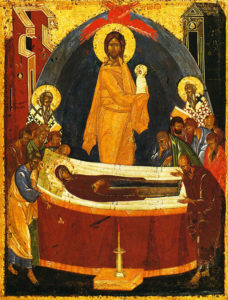
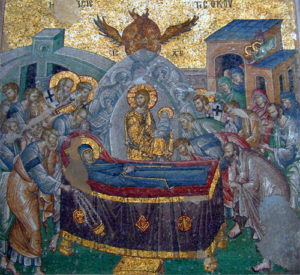
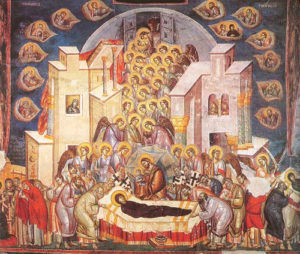
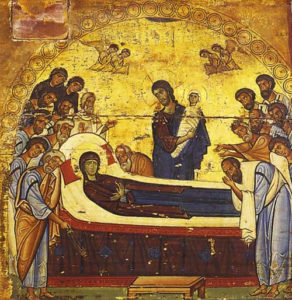
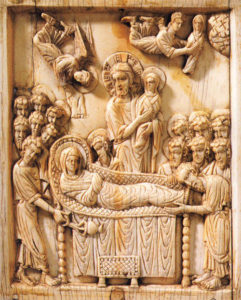
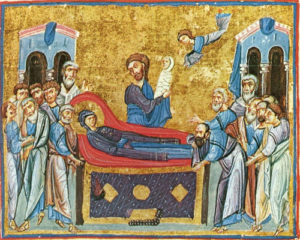
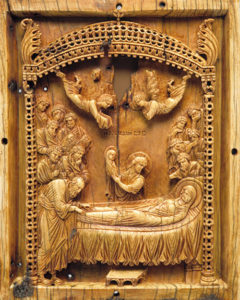
[…] La Mère de Dieu est placée, par la volonté divine, plus haut que toutes les créations, elle est la reine de tout ce qui est créé, elle qui a reçu dans sa Dormition, l’adoration des forces célestes, terrestres et infernales ; dans sa dignité de Reine des Cieux elle embrasse et relie le monde des ordres angéliques et le genre humain.
Le Dieu de Gloire s’est fait homme; il a pris sur lui de la Vierge Éternelle tout ce qui est humain, afin de sauver et de rétablir l’image de Dieu, mise dans l’homme depuis sa création et sans cesse obscurcie par le caractère corrompu de la nature humaine déchue, vaincue par le péché.[•••]
L’unité de la Mère de Dieu et des Apôtres, aussi bien dans l’Ascension que dans la Pentecôte, est immuable et l’événement définitif final dans la vie de la Mère de Dieu et des apôtres a été la Dormition de la Vierge. Ici, l’unité de l’assemblée des apôtres et de la Mère de Dieu s’est exprimée définitivement et de manière irréfutable. La Mère de Dieu a rassemblé par sa Dormition les apôtres de tous les coins de l’Univers. Chacun des apôtres a été transporté par l’Esprit Saint de l’endroit de son ministère à Jérusalem et tous ont constitué une assemblée autour de la Mère de Dieu. Avec les Puissances Incorporelles et les femmes qui assumaient le ministère apostolique ils ont accompli le rite des funérailles et ont porté la couche où repo- sait le corps de la Mère de Dieu à l’endroit où elle a été ensevelie. C’est ici précisément que s’est manifestée la même étroite parenté qui a déterminé la présence de la Mère de Dieu parmi les apôtres, aussi bien sur le mont des Oliviers que sur la montagne de Sion, dans le Cénacle, qui s’est empli le jour de la Pentecôte du feu et du souffle du Saint Esprit. Et dans toute la vie ultérieure de l’Église il est difficile de se représenter la moindre action apostolique sans la présence et la participation de la Mère de Dieu. Il est impossible de se représenter aussi la catholicité (la communion universelle) de l’Église sans la participation de la Mère de Dieu ou d’ignorer d’une certaine façon la présence de la Mère de Dieu partout où la nature catholique (de communion universelle) de l’Église trouve son expression, parce que le ministère de la Mère de Dieu dans l’Église embrasse tout. La Mère de Dieu, comme Reine des cieux et de la terre, ne peut être en dehors de la moindre action de l’Église, angélique ou humaine, et aucune manifestation catholique (de communion universelle) de l’Église ne pourrait être emplie de la plénitude de la bénédiction sans la Mère de Dieu. C’est pour cette raison aussi que la plénitude de l’assem- blée apostolique rassemblée dans le Cénacle le jour de la Pentecôte, plénitude qui a déterminé la nature apostolique de l’Église, ne s’est pas réalisée sans la participation de la Mère de Dieu. Mais c’est par la volonté du Saint Esprit qu’elle a été présente et a participé à la fête et a été sanctifiée par la réception de l’Esprit Saint lors de la descente des langues de feu et elle a sanctifié la fête par Sa participation. [•••]


MOINE GRÉGOIRE (G. I. Krug)
CARNETS D’UN PEINTRE D’ICÔNES
TRADUIT DU RUSSE
PAR JEAN-CLAUDE ET VALENTINE MARCADÉ PRÉFACE PAR VALENTINE MARCADÉ
ET CATHERINE ASLANOFFGRANDS SPIRITUELS ORTHODOXES DU XXe SIÈCLE L’ÂGE D’HOMME
-
La aventura pictórica y filosófica de Kasimir Malévich
Fundación Proa (Buenos Aires), novembre 2016
La aventura pictórica y filosófica de Kasimir Malévich
Jean-Claude Marcadé
Kasimir Malévich nació en Kiev, Ucrania, en el seno de una familia mitad polaca mitad ucraniana, y fue bautizado en la iglesia católica de la ciudad[1]. El artista destacó en sus escritos autobiográficos la influencia indeleble que la naturaleza ucraniana[2] había ejercido sobre él. El arte naif que empleaban los campesinos para decorar las khaty (casas populares de Ucrania), los pyssanky (huevos pintados) y los iconos, considerados «la forma superior del arte campesino», constituyó su primera academia «silvestre»[3].
Entre 1896 y 1905 el pintor en ciernes reside en Kursk, Rusia, donde, con un grupo de artistas aficionados, dedica sus ratos de ocio a una serie de estudios que, según sus propias palabras, evolucionan desde el realismo inspirado en el pintor de género ucraniano Mykola Pymonenko (1862-1912) y sobre todo en Repin (1844-1930), el artista más importante del movimiento realista comprometido de los Ambulantes, hacia el impresionismo. Este período de formación, que se prolongará hasta 1910, nos es prácticamente desconocido. Sólo sabemos que a partir de 1905 Malévich se instala definitivamente en Moscú, donde se inicia profesionalmente en la técnica pictórica en el taller de Fiodor Roehrberg, pintor originario de Kiev. Se entrega entonces al impresionismo y pinta directamente de la naturaleza (como Larionov en aquellos años[4]): «Me gustaba mucho la naturaleza en primavera, en abril y a principios de mayo. Ya no estudiaba y trabajaba en un manzanar, cerca de una casita que había alquilado por doce rublos al mes. Este jardín era mi verdadero taller»[5]. Malévich es contundente: el impresionismo le enseñó que «lo esencial no era pintar fenómenos u objetos al detalle, sino que residía en una factura (o una textura) pictórica pura, y en la única relación de toda mi energía con los fenómenos, con la cualidad pictórica que poseían. Toda mi obra se asemejaba a la de un tejedor que elabora una tela con una textura sorprendentemente pura»[6].
Malévich permanecerá fiel a esta base impresionista a lo largo de toda su carrera, incluso en los estilos en principio más alejados, surgidos de las lecciones del arte geométrico de Cézanne entre 1912 y 1914 (gusto por los degradados, por las luminiscencias en contraste con zonas sombreadas), incluso cuando aborde el suprematismo, donde la textura blanca de los fondos está animada por los surcos ondulados que traza el pincel en su vaivén.
Uno de los escasos ejemplos de arte impresionista de esta época inicial, que Malévich se llevó consigo a Berlín, es La mujer del periódico (hoy en el Stedelijk Museum, Amsterdam[7]), pintado hacia 1905-1906 cuando frecuentaba el taller de Roehrberg, su primera verdadera escuela de aprendizaje. Tenía veintiséis años. El periódico que el personaje femenino tiene sobre sus rodillas lleva escrito en cirílico el título «Kursk» (que corresponde sin duda a las primeras letras del periódico Kurskiyé Gubernskiyé Viédomosti [Noticias del Gobierno de Kursk]). El pintor contó que la ciudad de Kursk, adonde había llegado en 1896 procedente de Kiev para trabajar en una compañía ferroviaria, ocupaba un «lugar destacado» en su biografía[8]. Pinta como aficionado fuera de las horas de trabajo, crea un círculo artístico en el que se integran compatriotas ucranianos como los pintores Loboda o Kvachevski («Ambos éramos ucranianos»[9]). No queda rastro alguno de esta época en la que afirmaba hallarse bajo la influencia del realismo de los Ambulantes Chichkin y Repin. En 1906 le influye sobre todo Monet, cuya obra pudo contemplar en la Colección Shchukin en Moscú (en un texto sobrecogedor relata la impresión que le produjeron las dos Catedrales de Rouen [mañana y atardecer]). Para él, Monet «hace crecer la pintura que se alza sobre los muros de la catedral. No eran las luces y las sombras su principal objetivo, sino la pintura que se encontraba en la sombra y en la luz»[10]. Si esta influencia es particularmente sorprendente en La iglesia de la Colección Costakis (Museo de Arte Moderno de Tesalónica[11]) o en los dos Paisajes del Museo Estatal Ruso de San Petersburgo[12], en La mujer del periódico de Amsterdam ésta se conjuga en connivencia con la poética de Bonnard. Los toques impresionistas juegan con las unidades coloreadas del mantel blanco, de la blusa y la falda rosa y malva del personaje y del objeto que pende del árbol con amplias pinceladas que dan lugar a relaciones cromáticas audaces («los súbitos estallidos de un color franco» en Bonnard): «Algo a lo que llamábamos luz se ha convertido en algo tan estanco como cualquier material»[13].
A estos años de tanteo (1905-1909) pertenece una serie de dibujos y gouaches, muy parecidos a bocetos de taller (retratos, paisajes, viñetas decorativas), que oscilan entre el realismo, la caricatura, el primitivismo, el simbolismo y el Art Nouveau. Hasta 1910-1911 Malévich se nutre de una inspiración simbolista, tomando prestados los temas literarios y las formas estilizadas comunes a los artistas de Mir Iskusstva (El Mundo del Arte) de San Petersburgo o de la Rosa Azul de Moscú. Expone en varias ocasiones (1907, 1908, 1909) en la Asociación de Artistas de Moscú, donde coincide con figuras de vanguardia como Kandinsky, Larionov, Burliuk o Morgunov.
Sabemos que tras su participación en el Primer Salón de Moscú, en 1911[14], no volvió a exhibir en vida sus obras de estilo simbolista o «moderno» (en Rusia se denomina «estilo moderno» a lo que en otros lugares se conoce como Art Nouveau, Jugendstil, Secessionstil o Modern Style [N. T.: modernismo en España]). Por aquel entonces, las había agrupado en tres ciclos: «Serie de los amarillos», «Serie de los blancos» y «Serie de los rojos». Léase, tres variantes estilísticas del simbolismo ruso entre 1900 y 1910: un estilo que mezclaba la estética nabi con las de Carrière, Whistler, Vrubel y Borisov-Musatov[15]; un estilo francamente «moderno», surgido sobre todo del movimiento peterburgués del Mundo del Arte, y un estilo primitivista-fauvista.
La primera exhibición documentada de obras simbolistas del artista tuvo lugar en la XVIª Exposición de la Asociación de Artistas de Moscú, en 1908. Se trata de las aguadas El triunfo del cielo y La oración (ambas en el Museo Estatal Ruso), caracterizadas por la tendencia a la monocromía amarilla. Si por su espíritu místico-esotérico se las puede relacionar con las obras de los pintores de la Rosa Azul que destacan en la escena artística moscovita entre 1904 y 1907, la elección del fondo amarillo-oro constituye un desafío a este movimiento y expresa la voluntad de distanciarse de él. Por otra parte, no se trata de una elección inocente, como se descubre en el Primer Salón de Moscú, en 1911, en el que el artista polaco-ucraniano-ruso pone punto final a su aventura simbolista, de la que ya se ha alejado con sus envíos al primer Valet de Carreau de 1910-1911 en Moscú y a la Unión de la Juventud de San Petersburgo en los meses de abril y mayo de 1911, en los que ya despunta un poderoso estilo primitivista fauvista. Es en el Primer Salón de Moscú donde expone las series amarillas, blancas y rojas antes mencionadas.
Lo realmente importante aquí es el «movimiento del color», que tiene su origen en el impresionismo, pero que se amolda a estructuras estilísticas distintas en cada una de las tres series. En la «Serie de los amarillos», nos hallamos ante el estilo simbolista original, predominante en los pintores de la Rosa Azul. En la «Serie de los blancos», nos las vemos con el Art Nouveau que domina en el Mundo del Arte. Finalmente, en la «Serie de los rojos», encontramos un estilo primitivista fauvista en el que está presente una iconografía de tipo simbolista.
La «Serie de los amarillos» es un buen ejemplo de estilo simbolista. El elemento vegetal se halla omnipresente en todas las obras que la integran. Ya no nos encontramos ante una naturaleza de tipo impresionista (la reproducción directa), sino ante un paisaje imaginario, una síntesis simbólica de una vegetación universal, de un crecimiento universal cuyo ritmo coloreado y formal revela la pintura; la tradición de los nabis se replantea a la luz de la estética del Extremo Oriente. Por otro lado, este color amarillo dominante que explica por qué Malévich no fue aceptado en la Rosa Azul, este color que tiene una fuerte consonancia budista, es también un analogon (equivalente) pictórico de la luz solar, pero de la luz de un sol interior que irradia todo el espacio, que surge de todas partes, sin generar claroscuros, sin proyectar sombras. El amarillo se diluye en dorados, en enrojecimientos. Se trata de un espacio icónico, pero no en el sentido de un icono ortodoxo litúrgico, sino más bien en el de un lienzo al cual le habría sido otorgado el estatuto de imagen esencial, no mimética, de la realidad sensible, que alcanzara el corazón de la realidad mundana, puesto que se alimentaría de las raíces de las apariencias. Conjugar elementos plásticos o conceptuales provenientes de iconos y del arte del Extremo Oriente constituye una síntesis profundamente original con respecto a la tradición francesa, y en particular con la síntesis cristiano-budista lograda por Odilon Redon. Los Cristos de Redon tienen el rostro pensativo, recuerdan al de Buda (suponen un precedente de las magníficas Santas Faces de Cristo de Jawlensky). Se ha destacado a menudo este elemento extremo oriental, sobre todo japonizante, en las obras de Redon, y es una de las filiaciones que habría que buscar en la «Serie de los amarillos» de Malévich. Igualmente, la envoltura floral, los personajes inmersos en una vegetación matizada y lujuriante, forma parte de la herencia de Redon, cuya deuda con Rodolfo Bresdin es bien conocida (Théodore de Banville señaló el carácter cósmico del paso de la planta al mundo animal en la obra de Bresdin: «La transición entre la vida vegetal y la animal se nos escapa al igual que ocurre entre la vida animal y la divina».
Hay que puntualizar que Malévich procedía de una cultura pictórica marcada, entre los siglos xix y xx, por Vrubel. En las obras de Vrubel, los personajes despuntan, emanan de parterres floridos. Malévich lleva el panteísmo, ya muy presente en Redon o en Vrubel, a su máxima intensidad. Esta fusión de seres y del florecimiento del mundo se manifiesta particularmente en Estudio para un fresco, que representa un «bosque sagrado»[16] y que debió de ser una de las tres obras expuestas en 1911 en la «Serie de amarillos» con el título de «Santos». En mi opinión, las otras dos obras a las que podría aplicarse esta denominación son El triunfo del cielo[17] y Autorretrato[18].
El «bosque sagrado» está en la línea de Redon en lo que respecta al estilo, y en la de los nabis, sobre todo de Maurice Denis, en lo relativo al espíritu. Esta aguada representa una patética escena semejante a la de los discípulos de Cristo en los «descendimientos». El cuerpo inerte emerge de la floración y su cabeza se pierde entre los troncos esbeltos de árboles no reales, «simbólicos». Recordemos lo que Mariana Werefkin (Marianna Vladimirovna Veriovkina) escribió a principios de la década de 1910: «El objeto “árbol” no existe, pero la palabra “árbol” sí existe y a ella va unido el concepto de algo que no existe […]. Hay un árbol, y otro, y otro, pero el árbol en sí no existe. Existe empero la palabra “árbol”, y es el símbolo de todo lo que se asemeja a un árbol»[19].
El triunfo del cielo es un ejemplo paradigmático del panteísmo pictórico de Malévich, en general próximo al de los simbolistas rusos. Una divinidad —Buda y Cristo a la vez— forma un árbol-cosmos; la divinidad que abarca el cosmos transfigurado es sustituida en la iconografía plástica ucraniana por el tema del Árbol de la Vida como elemento central del cuadro (por ejemplo en Árbol y dríadas, de la antigua Colección N. Manoukian) y por la Virgen de la Misericordiaque acoge a la humanidad bajo su manto, un tema también presente en los iconos ucranianos. Se observa también el sincretismo de la sinaxis (reunión) de los santos en los iconos ortodoxos con el tema de los mil budas, por ejemplo en el arte de Extremo Oriente, caracterizado por el ritmo de los nimbos. En cuanto al Autorretrato, muestra al personaje emergiendo de ramificaciones arborescentes y de la sinaxis de los «elegidos». Veremos que en la «Serie de los rojos» serán las escenas eróticas las que rondarán al pintor. Recolección de fruta, en la antigua Colección Khardjiev, parece un «bosque sagrado». Exhibida en la XVIIª Exposición de la Asociación de Artistas de Moscú, en 1909-1910, su iconografía nos permite descubrir una tendencia filosófico-esotérica en la línea de los nabis, sobre todo de Maurice Denis, quien, precisamente en 1909 se había trasladado a Moscú para instalar los paneles decorativos de La historia de Psique en el palacete del mecenas y coleccionista Morozov; la realización pictórica de la obra, por el contrario, revela un trazo primitivista, una monocromía y una poética floral en la línea de Redon. La oración está mucho más imbuida del «estilo moderno», en particular las ondas del pelo de la figura, que actúan como una metonimia de la cabeza sumida en la meditación; pero la tendencia a la monocromía, el espíritu panteísta de la unión del hombre inmerso en la naturaleza se nutren del mismo simbolismo que las demás obras de la “Serie de los amarillos”.
En la «Serie de los blancos», por el contrario, nos hallamos ante una estética más próxima al movimiento peterburgués del Mundo del Arte, como, por ejemplo, en Bodas y Sociedad pornográfica con sombreros de copa (Museo Ludwig de Colonia), Descanso. Sociedad con sombreros de copa (Museo Estatal Ruso), Ciudad pequeña (Museo Nacional Radishchev de Saratov) o Sociedad en un parque[20] (antigua Colección Khardjiev). El estilo de la «Serie de los blancos» recuerda a la estética gráfica «secesionista» del Mundo del Arte. Los temas, tratados con ironía y sarcasmo, proceden de la vida contemporánea e incluyen situaciones triviales (el hombre que orina en Descanso. Sociedad con sombreros de copa), próximas a las del «arte de izquierdas» ruso que empezaba a mostrarse por aquellas fechas en exposiciones como «Stephanos-Vienok-La Guirlande», de 1907-1908.
El Árbol preside el centro de la acuarela inacabada Sociedad pornográfica con sombrero de copa; se yergue a la orilla del «río de la vida» (el «paso del agua» como en el Jardín de las delicias del Bosco), tal como lo describe el último capítulo del Apocalipsis. El misticismo de Malévich se inscribe en la atmósfera general de la Rusia de la época, en la que imperan las ansias religiosas, teosóficas, antroposóficas, esotéricas, incluso ocultistas.
Obras cargadas de simbolismo, pero que apuntan claramente hacia el primitivismo fauvista, conforman la «Serie de los rojos». Entre los amarillos y los rojos, una obra de transición, Epitaphios, en la Galería Tretiakov. Se trata de un Santo Sudario, en eslavo Plachtchanitsa, una tabla pintada que representa el cuerpo de Cristo, que se expone y es venerada en la Iglesia ortodoxa el Viernes Santo. Malévich transforma el tema tradicional en una imagen más bien próxima a modelos budistas, si bien la iconografía se inspira directamente en los trabajos de Vrubel para la iglesia de San Cirilo de Alejandría, en Kiev, en los años 1880. Una vez más destaca la floración universal que envuelve el cuerpo.
El rojo domina el gouache Árboles y dríadas. Nos hallamos en este caso ante una síntesis de la tradición griega, la tradición bíblica del Árbol de la Vida y la del «árbol de las iluminaciones» característica de Extremo Oriente. El misterio del cosmos se manifiesta en la unión de los principios masculino (el árbol-falo) y femenino (la matriz en el centro del árbol). Al igual que en el arte budista, lo sagrado es al mismo tiempo místico y está impregnado de erotismo catártico. El contraste entre el rojo y el verde es típico del arte tibetano antiguo.
El Autorretrato de la Galería Tretiakov está impregnado del mundo nabi. Mientras que el mundo de la santidad rondaba el Autorretrato de la «Serie de los amarillos», aquí el artista aparece rodeado por un enjambre de mujeres desnudas, en diversas posturas. Su mirada, como ocurre casi siempre en sus retratos, no se dirige hacia ningún lugar concreto; aquejado por un leve estrabismo, el artista mira hacia el interior.
Así pues, Malévich pagó su tributo al simbolismo más puro durante tres o cuatro años; y no se trata de un «error de juventud», pese a que el fundador del suprematismo será un enconado detractor del simbolismo ilusionista y descriptivo. Toda la obra de Malévich bebe de las fuentes si no del simbolismo (entre 1907 y 1911) cuando menos de lo simbólico, entendido como revelación de la pura sensación del mundo a través de los colores en su quintaesencia en el sin-objeto suprematista e incluso en el retorno post-suprematista a la figura.
A partir de 1910 la obra de Malévich experimenta un cambio. El artista participa en la primera exposición en Moscú del Valet de Carreau (Sota de Diamantes), un círculo de pintores divididos entre el cezannismo de Piotr Konchalovski, Ilia Machkov o Aristark Lentulov, y el neoprimitivismo de Mijail Larionov y de Natalia Goncharova, que pretendía recuperar las fuentes del arte popular nacional[21]. Malévich trabaja por aquel entonces en grandes gouaches que denotan la influencia de Goncharova, pero también la de Gauguin, Matisse, Picasso y Braque (había tenido la oportunidad de contemplar obras de los pintores vanguardistas franceses en los salones del Toisón de Oro, en Moscú, en 1908 y 1909, y en las colecciones de los marchantes moscovitas Iván Morozov y Serguei Shchukin[22]).
El conjunto, que incluye los dos Autorretratos del Museo Estatal Ruso y de la Galería Tretiakov, y el ciclo del Stedelijk Museum de Amsterdam —Bañista, Los enceradores de suelos, El pedicuro (en los baños), Hombre llevando un saco, Jardinero, En el bulevar—, es único por su ejecución y su gama de colores. Guy Habasque fue uno de los primeros críticos que valoró estos gouaches en su justa medida y demostró que, a partir de este momento, el artista se había liberado de todas sus dudas anteriores: «El tema ahora es sólo un pretexto, un punto de partida, el soporte de una composición ante todo plástica. Utiliza el color de manera totalmente instintiva y con una fuerza brutal e incluso casi agresiva. Los colores dominantes son cálidos, al parecer con una preferencia por el rojo, por los tonos intensos y saturados. El dibujo, voluntariamente esquemático y muy marcado, sigue siendo realista, pero adopta un rol esencialmente rítmico. No hay líneas rectas, en efecto, sino amplias curvas que se oponen asimétricamente y recorren el cuadro en toda su extensión»[23].
No insistiré en las filiaciones «cezannianas», «matissianas» y «picassianas», transformadas por la estructura primitivista de las que ya he hablado en otras ocasiones.[24] Como es sabido, el neoprimitivismo ruso se dio a conocer en el III Salón de del Toisón de Oro en Moscú, en 1909[25], siendo Larionov y Goncharova sus principales artífices. El neoprimitivismo suponía el renacimiento de la frescura naif, el dinamismo y el vigoroso esquematismo de los grabados populares rusos (lubok), de los rótulos, de los moldes de pastelería, de los juguetes, etc. La desintelectualización de la pintura se conjugaba con una desintelectualización de los temas. En 1911-1912, Malevitch sigue la estela de Larionov y sobre todo de Goncharova, de la que toma prestados los amplios contornos y los colores lisos a lo Gauguin, la rudeza de las líneas y el hieratismo bizantino, en particular en el dibujo de los ojos. Los había seguido en su escisión de los «cezannianos» rusos del Valet de Carreau en 1911 y participará enteramente en la aventura del neoprimitivismo. Con el grupo de Larionov expone sus gouaches en la Unión de la Juventud de San Petersburgo, en abril de 1911, y en el Oslinyi Khvost (Rabo del Asno) en Moscú, en marzo de 1912[26].
Si bien Larionov fue el detonante, no sólo en el caso de Malévich sino en todos los innovadores rusos de los años 1910, parece que fue Goncharova quien más influyó en el autor de Portadora de cubos (Stedelijk Museum, Amsterdam) para encontrar su propio camino. Nikolai Khardjiev transcribe: «Natalia Goncharova y yo trabajábamos sobre todo en el ámbito de la vida social. Cada una de nuestras obras tenía un contenido: nuestros personajes, pese a estar representados a la manera primitivista, respondían a un ámbito social. Ahí radicaba nuestro desacuerdo de principios con el Valet de Carreau, cuya línea se remontaba a Cézanne»[27].
Las obras de Malévich eran tan originales y tan diferentes de las de los demás neoprimitivistas rusos, y esta diferencia se incrementó tanto a medida que la producción del artista se enriquecía con nuevas propuestas plásticas, que la ruptura con el grupo de Larionov se produjo al año siguiente, en 1913. En una recopilación de textos editada por este último Varsanofii Parkine (seudónimo del poeta Valentin Parnakh) escribe: «K. Malévich cubre una pared con amplias acuarelas de colores chillones, embadurnados, de figuras insípidas, carentes de expresión, con este estilo polaco sin valor tan abundante en las obras de Vrubel».[28]
En realidad, los charcos coloreados que «embadurnan» las superficies pintadas constituyen lo pictórico como tal: las «manchas de color se mueven» y «crecen infinitamente»[29] formando «avalanchas de tonos» surgidos de la mente en ebullición del pintor[30].
Entre 1911 y 1913 Malévich elabora sin duda el ciclo más impresionante que jamás se haya dedicado a la vida campesina; en él ocupa un lugar privilegiado la representación popular de la vida religiosa ortodoxa[31]. El artista aúna el esquematismo y el laconismo naïf del neoprimitivismo con los principios del precubismo «cezanniano» (tratamiento estereométrico de las formas y construcción no ilusionista del espacio). La siega del centeno, El leñador, Rostro de una joven campesina (Stedelijk Museum, Amsterdam), Mañana en el campo después de la tormenta (Solomon R. Guggenheim Museum, Nueva York) son el resultado de la puesta en práctica del célebre precepto de Cézanne en la carta que envía a Emile Bernard el 15 de abril de 1904: «Reproducir la naturaleza mediante el cilindro, la esfera, el cono, todo dispuesto en perspectiva […]. Para nosotros, los hombres, la naturaleza es más profunda que en su superficie». Sabemos la fortuna que esta declaración tuvo entre los pintores cubistas. Podemos decir que la interpretación que de ella hace Malévich es totalmente original respecto a la de los pintores franceses con la que algunos críticos la han querido comparar (las obras de Picasso y de Braque de 1907-1909 o los Desnudos en el bosque[o Leñadores] [1910] de Léger). Lo que, en 1911, Louis Vauxcelles denominó «tubismo» de Léger, no guarda sino una relación superficial con los elementos iconográficos que intervienen en la estructura de los cuadros de Malévich en 1912. La diferencia capital entre el pintor ruso y los pintores franceses reside en que el primero parte de una estructura de base primitivista, la del lubok, el rótulo de tienda, el icono, en tanto que los franceses añaden elementos procedentes de las artes primitivas a una estructura de base «civilizada», «cezanniana». Por tanto, el pintor ruso emprende el camino inverso al de los pintores franceses.
Sin embargo, si bien Malévich mantuvo la estructura de base de sus cuadros primitivistas anteriores, también aplicó a pies juntillas el principio «cezanniano» de la simplificación cilíndrica, esférica y cónica, dando lugar a una mutación iconográfica total. Pese a que los contornos de los personajes, los objetos, los motivos paisajísticos son perfectamente reconoscibles, nos hallamos, de hecho, ante un nuevo realismo, que el pintor calificó de «transmental» (zaumnyi). En efecto, si bien los elementos de referencia (campesinos, cubos, hachas, casas, troncos, haces, gestos) no presentan ninguna ambigüedad semántica y semiótica, su representación en el lienzo ya no responde a las leyes del «sentido común» y de la lógica visual, sino a las de la «creación intuitiva», más allá del sentido común y de la lógica. Oponiendo la razón, que desarrolla lógicamente formas utilitarias para el uso cotidiano, a la intuición, como manifestación del subconsciente, el pintor escribe: «La creación intuitiva es subconsciente y no tiene un objetivo ni una respuesta concreta […] El sentimiento intuitivo ha encontrado una nueva belleza en los objetos: la energía de las disonancias resultante del encuentro de dos formas»[32]. Y añade: «La forma intuitiva debe salir de la nada»[33].
La gama de colores utilizada distingue totalmente al autor de Recolección del centeno de los artistas franceses de su época. Alrededor de 1910, Braque y Picasso habían reducido su paleta a unos pocos ocres, marrones, grises y negros. El pintor ruso, por el contrario, heredero de una tradición eslava de arte popular multicolor (particularmente en su Ucrania natal), cubre los elementos geométricos de sus cuadros con toda suerte de matices rojos, rosas, naranjas, bermellones, azules de Prusia, verdes, índigos, malvas, blancos y negros. Un verdadero universo del color que, pese a ser aplicado con determinación y energía, se mantiene en una vibración constante que integra, como ya hemos destacado, la herencia impresionista merced a degradados sutiles y al juego de luces y sombras. A su vez, genera un contraste vigoroso entre la rigidez sacra y estática de los gestos, fijados en la inmovilidad del instante, y los deslizamientos, los desplazamientos dinámicos de los volúmenes geométricos ensamblados como las ruedas de una máquina, recubiertos con pintura metalizada. Es la primera síntesis del cubismo y el futurismo.
Hasta 1913 Malévich se mantiene fiel a la figura, cuyo contorno primitivista de base mantiene, sin cesar de interpretarlo en diferentes estilos. Se entiende a la perfección cómo pudo pasar en unos meses del «realismo transmental» (Retrato perfeccionado de Ivan Vass. Kliunkov [Museo Estatal Ruso]) a lo que denominó «realismo cubofuturista» (Retrato de Matiuchin [Galería Tretiakov]). En los dibujos para el retrato de Matiuchin, así como en el lienzo, la legibilidad de la representación se oscurece al máximo. Aquí y allá aparecen elementos decorativos (un fragmento de cráneo, un teclado, partes de un piano, etc.), pero su distribución ya no se corresponde con ninguna figuración «reconocible». Nos hallamos ante un equivalente semiótico, un sistema de signos dispuestos únicamente en función de las leyes internas del cuadro. Estamos en pleno cubofuturismo, pues la estructura sólidamente construida se fusiona con la interpenetración de los objetos y del hombre (según los principios y la práctica del futurismo italiano, en concreto de Boccioni y de Balla hacia 1912).
El año 1913 es especialmente fecundo para Malévich. Con los poetas y teóricos del futurismo ruso Velimir Khlebnikov y Alexei Kruchenij, trabaja en las recopilaciones litografiadas Los tres (Troïé) y Juego en el infierno (Igra v adu). Su concepción del espectáculo Victoria sobre el sol, una ópera de Matiuchin basada en un prólogo de Khlebnikov y un libreto de Kruchenij, en diciembre de 1913, marca un punto de inflexión en la evolución de las artes del siglo xx. Desde el punto de vista escénico es el primer espectáculo cubista del mundo, y es también la primera obra teatral enteramente futurista. En definitiva, supone, para Malévich, la primera etapa hacia el suprematismo. Dice al respecto el poeta Benedikt Livchits: «En los límites de la caja escénica, la estereometría pictórica nacía por vez primera; un sistema rígido de volúmenes reducía a la mínima expresión los elementos del azar impuesto desde el exterior por el movimiento de los cuerpos humanos. Los haces de los faros fragmentaban estos cuerpos, que perdían alternativamente brazos, piernas, la cabeza, ya que para Malévich no eran sino cuerpos geométricos sometidos a la descomposición en elementos y a la completa desagregación en el espacio pictórico. La única realidad existente era la forma abstracta que había engullido, sin dejar nada, toda la vanidad mundana de Lucifer»[34]. También en los bocetos de Victoria sobre el solaparece por vez primera el «cuadrado negro», en concreto en el apunte del personaje del Enterrador, cuyo cuerpo forma un cuadrado[35]. Este «embrión de todas las posibilidades»[36] culminará en 1915 en el «suprematismo de la pintura». En las telas de 1913-1914, las superficies cuadrangulares invaden el espacio. Pero triunfa el «alogismo» —una nueva denominación de la «transmentalidad» (zaum) con la que calificó sus obras de 1912. A principios de 1913 escribe a Matiuchin: «Hemos llegado al rechazo del sentido y de la lógica de la antigua razón, pero tenemos que esforzarnos en conocer el sentido y la lógica de la nueva razón que se ha manifestado, el más allá de la razón si se quiere; comparativamente, hemos llegado a la transmentalidad (zaumnost´) […] Empiezo a entender que en lo transmental también rige una ley estricta que justifica el derecho a la existencia de los cuadros»[37]. El triunfo del «alogismo» en las pinturas de Malévich en 1913-1914 se confirma en una serie de obras que podríamos denominar «programáticas». La pintura pierde definitivamente su estatuto de representación del mundo sensible gracias a un «gesto» que introduce el absurdo. Así, en Vaca y violín (Museo Estatal Ruso) una vaca destruye la imagen del violín, el objeto figurativo por excelencia del cubismo; una cuchara de madera auténtica aparecía encolada en el sombrero de Uninglés en Moscú (Stedelijk Museum), confrontando de manera irónica el objeto material, útil, con lo pintado; una reproducción de la Gioconda pegada y tachada con dos cruces en Eclipse parcial con Mona Lisa (antigua Colección Leporskaia) reduce este eidolon de la expresión figurativa del arte del Renacimiento a un objeto de trueque (bajo la imagen de la Gioconda, un recorte de periódico anuncia: «Piso en venta en Moscú»). Sobre la tela, escrito a pincel, leemos: «Eclipse parcial». Con la presentación del Cuadrángulo negro rodeado de blanco en la «Última exposición futurista: 0.10», en Petrogrado a finales de 1915, el eclipse de los objetos es total. Cuadrángulo se exhibió colgado del ángulo superior del muro, al igual que el icono central del «hermoso rincón rojo» (krasny ugol) en todas las casas ortodoxas eslavas. No se podría expresar mejor, esotéricamente, el carácter icónico del «suprematismo de la pintura», nombre con el que Malévich bautizó su iconostasis pictórica en la «Última exposición futurista: 0.10». Si seguimos la progresión de los cuadriláteros en las obras de 1913-1914, observamos que todos los cuadros sin excepción están «saturados» de formas. Respecto a éstas, las formas puras, desnudas del cuadrilátero, del círculo y de la cruz, que en lo sucesivo ocuparán las superficies suprematistas, llaman la atención por su minimalismo.
La práctica poética «transmental» de Klebnikov y la teoría de la reducción de la palabra al sonido-letra de Kruchenij tuvieron un papel significativo en el paso que Malévich obligó a dar a su pintura hacia la reducción minimalista al color «solo», y primero al blanco y al negro, es decir, a la absorción y a la difusión de la gama prismática. «Contemporáneo del naciente formalismo, Malévich estuvo profundamente sometido a su influencia. Así, el blanco sobre blanco deriva de una reflexión sobre el color como tal, que hace juego con el verbo como tal de Khlebnikov, convertido en el sonido como tal de Jakobson […] A esto hay que añadirle el problema de la factura, la pintura concebida en su especificidad material […]. Pero lo que predomina sobre todo en el procedimiento de Malévich es la exigencia básica del formalismo: la reducción a las unidades mínimas.»[38]
Sin embargo, si este movimiento «formalista» ha tenido un papel capital en la evolución pictórica de Malévich, su itinerario filosófico llevará al pintor a afirmar que el arte no es un procedimiento más o menos refinado para conformar los materiales, sino la apertura al ser no-figurativo, sin-objeto, cuya exigencia, al ser reconocido, altera completamente la vida. Para Malévich, que desarrollará su filosofía en numerosos escritos[39], el único mundo vivo es el mundo sin-objeto (mir kak bespredmietnost´). Afirmando la primacía de la quinta dimensión (la economía), definirá el suprematismo en sus diversos estadios, estático y dinámico, como una manifestación estrictamente (económicamente) pictórica de la naturaleza en tanto que physis, el lugar del ser, de la vida, de esta Nada que el pintor libera en la tela. Pues el acto creador no es mimético, sino un «acto puro», que capta la excitación universal del mundo, el Ritmo, allí donde desaparecen todas las representaciones figurativas del tiempo y del espacio y donde sólo subsiste la excitación, esta «llama cósmica» «sin número, sin precisión, sin tiempo, sin espacio, sin estado absoluto ni relativo».[40] Del Cuadrángulo negro de 1915 al Blanco sobre blanco (el Cuadrado blanco sobre fondo blanco del MoMA) de 1917, el espacio del mundo emerge a través del «semáforo del color en su abismo infinito»[41]. Habiendo alcanzado el cero con el «cuadrado negro», es decir, la Nada como «esencia de la diversidad», el «mundo sin-objeto», Malévich explora más allá del cero los espacios de la Nada.
La abstracción suprematista, pues, sólo reconoce un universo, el del abismo del ser. Si la no-figuración abstracta de Kandinsky es aún dualista-simbolista, si la abstracción neo-plástica de Mondrian es un sistema de equivalencias pictóricas semióticas, el sin-objeto de Malévich supone la destrucción radical del puente que tienden sobre el «gran abismo» la metafísica y el arte tradicionales (Kant), y separa el mundo accesible a la razón del que no lo sería. La sensación (ochtchutchénié) del único mundo real, del mundo sin-objeto (bespredmietny mir), quema todos los vestigios de formas en los dos polos del suprematismo, el «cuadrado negro» y el «cuadrado blanco». Una serie de cuadros suprematistas de vivos y contrastados colores se sitúa entre estos dos polos. En este caso, los colores no son equivalentes psicológicos artificialmente (culturalmente) establecidos; Malévich se opone al simbolismo de los colores (el de Kandinsky, por ejemplo). Los signos mínimos a los que recurre, y que nunca son enteramente geométricos, deben diluirse, disolverse, en el «movimiento coloreado». La superficie coloreada es, en efecto, la única «forma viva real», pero como el color «mata el tema», lo que finalmente cuenta en el cuadro es el movimiento de las figuras coloreadas.
Durante diez años, entre 1916 y 1926, Malévich es uno de los protagonistas del arte de izquierdas ruso. Participa en debates, polemiza con tradicionalistas como Alexandre Benois[42], con los constructivistas-produccionistas[43] tras la revolución de 1917, anima grupos suprematistas en Petrogrado y Moscú (1916-1918), Vitebsk (1919-1922), Petrogrado-Leningrado (1922-1927), difunde su experiencia sin descanso y crea una arquitectura utópica (arquitectones, planites, etc.)[44]. Malévich escribe mucho: panfletos («Los vicios secretos de los académicos»[45]), manifiestos en el periódico moscovita Anarquía en 1928, artículos de opinión[46], pero sobre todo, y con gran empeño, textos teóricos y filosóficos —muy pocos fueron publicados en vida del artista—, que no fueron comprendidos por sus contemporáneos y que causaron gran indignación entre los adversarios marxistas-leninistas del suprematismo. Malévich fue violentamente atacado en el número 7 de la revista marxista Petchat´i revolyutsiya [Prensa y revolución], en 1922, por Boris Arvatov, uno de los teóricos marxistas más autorizados del arte constructivista-produccionista, quien calificó el hermoso artículo «De la poesía»[47], de 1919, de «palabrería de iletrado». En la misma revista, el oscuro I. Kornitskii definió el folleto De Cézanne al suprematismo, publicado en Moscú en 1920 en las ediciones oficiales de la Sección de Artes Plásticas (IZO), como «un amasijo de frases ineptas». Arvatov arremetía también contra el tratado Dios no ha sido destronado. El Arte, la Iglesia, la Fábrica: «El lenguaje es ininteligible y revela no sé que mezcla patológica y maníaca de ventrílocuo; es el de un degenerado que se imagina que es un profeta».
Dios no ha sido destronado. El Arte, La Iglesia, La Fábrica (Vitebsk, 1922) es el último folleto publicado en vida del fundador del suprematismo. Se trata de uno de los textos filosóficos más trascendentales del siglo xx. Malévich, que carecía de formación académica, supo desarrollar, gracias a su talento, y a partir de conocimientos adquiridos aquí y allá (es probable que del Tertium Organum (1911) del teósofo Piotr Uspensky, tomara las ideas procedentes de Grecia, la India o Extremo Oriente), un pensamiento complejo, orientado hacia el cuestionamiento del ser, en busca de una nueva figura de Dios y de una nueva espiritualidad. Acerca de Dios no ha sido destronado… el filósofo Emmanuel Martineau, autor de Malévitch et la philosophie [Malévich y la filosofía][48], no ha dudado en escribir: «Así, ¿qué nos dice Malévich? La verdad del ser (y no la esencia de lo que es) como inobjetividad; la inefabilidad divina y la purificación posible de la relación entre el hombre y lo divino; las condiciones de un comunismo superior al humanismo del joven Marx; sobre todo: la libertad propia de la Nada, de una Nada en la que el hombre tiene que aprender a volar libremente. En otras palabras: el objetivo del pensamiento suprematista es exactamente el mismo que la fenomenología heideggeriana llevará más tarde a la palabra. Y resulta más sorprendente aún que, resumiendo de este modo las enseñanzas del pintor, no hayamos añadido nada a sus enunciados, ni ornado ni embellecido nada: pese a una más que probablemente escasa formación filosófica, pese a su desconocimiento de las condiciones históricas que concitaron la eclosión de la meditación de Heidegger, Malévich, consiguiendo lo máximo de lo mínimo, encuentra en diez años de reflexión solitaria el nombre propio de la cuestión suprema: la “Nada liberada”»[49].
El libro de Malévich es de una riqueza inaudita y a día de hoy sólo ha dado lugar a los orígenes de una exégesis y una hermenéutica, en particular en los escritos de Emmanuel Martineau. Seguiremos al filósofo francés, para quien Dios no ha sido destronado… se sitúa en las regiones de la «teología espiritual en sentido amplio, patrística entre otras, incluida la teología negativa clásica» y de «la teología apofática del Dios inobjetivo, presuponiendo, además de un acceso experimental a la vida positiva de la Nada, un replanteamiento “fenomenológico” […] del significado de la apofasis como tal: esta última palabra sobre Dios culmina naturalmente en la cita de la retirada de Dios en el capítulo 32 de Dios no ha sido destronado, un motivo en el que entran, en un eco imperceptible, la palabra de Malévich, la palabra de Hölderlin y la palabra última de Nietzsche».[50]
Para Malévich, la «puesta a cero» de las formas no es más que un trampolín que le llevará más allá del cero, a las regiones de la Nada liberada. Este «más allá» no es una trascendencia en el sentido tradicional sino que se halla inmerso en el mundo sin-objeto, la única realidad.
Hay que citar aquí un extenso párrafo de la carta, hasta ahora inédita, que Malévich escribió a Mijail Gerchenzon el 11 de abril de 1920, precisamente cuando inicia su gran obra filosófica. Esta carta confirma, si fuera necesario, el antimaterialismo innato del pintor y su ambición de hacer del suprematismo pictórico y filosófico una nueva religión del espíritu, llamada a reemplazar todas las religiones, una «religión del acto puro»:
«Ya no considero el suprematismo como pintor o como forma surgida de lo más profundo de mi mente, me enfrento a él como alguien externo que contempla un fenómeno. Durante muchos años, he estado ocupado en mi evolución con los colores y he dejado de lado la religión del espíritu. Han transcurrido veinticinco años, y ahora he vuelto, o he entrado, en el Mundo religioso; no sé por qué ha ocurrido. Frecuento las iglesias, observo a los santos y todo el mundo espiritual en acción, y he aquí que veo en mí, y quizá en el mundo entero, que ha llegado el momento de cambiar las religiones. He visto que al igual que la pintura se ha dirigido hacia la forma pura del acto, también el Mundo de las religiones se encamina hacia la religión del Acto Puro; todos los santos y los profetas recibieron este estímulo, pero no lo lograron porque se enfrentaban a la barrera de la razón que en todas las cosas ve objetivo y sentido, y todo el acto del Mundo religioso se ha estrellado contra los dos muros de la empalizada racional»[51].
Los textos de Malévich permiten captar el alcance de su acto pictórico. Si Malévich empezó a escribir frenéticamente fue tanto para defender su sistema pictórico como por una necesidad ontológica de formular para el verbo lo que formulaba, en silencio, para lo pictórico. Los escritos de Malévich nos conducen por los meandros mismos de la creación en la que «pintar-escribir-pensar-ser» son posturas idénticas o semejantes. Son el fruto de una reflexión posterior a la obra realizada. A un tiempo defensa e ilustración del arte sin-objeto, nos ofrecen la versión filosófica de una práctica pictórica. Malévich no es un filósofo-teólogo profesional. Es un pintor que supo expresar en el discurso, con los medios verbales proporcionados por su entorno cultural, la necesidad filosófica del arte pictórico. Lo extraordinario, lo realmente único en la historia universal de las artes, es que Malévich no es un pintor-filósofo sino un gran pintor y un gran filósofo que supo plantear en términos filosóficos, a menudo, idiolécticos, y al mismo nivel que los grandes pensadores, la cuestión de la verdad del ser.
El 22 de mayo de 1923 Malévich publica El espejo suprematista (Suprematitcheskoïe zierkalo), un credo en forma de manifiesto, que comprende ocho propuestas en las que de nuevo establece los fundamentos de su arte sobre una filosofía de la Nada: «El mundo como conjunto de las diversidades humanas es igual a cero […] La esencia de las diversidades es el mundo sin-objeto»[52]. Posteriormente, en un artículo publicado el 29 de mayo titulado «El tentempié» (Van´ka-vstan´ka), responde de un modo paródico al ideólogo marxista-ortodoxo S. Issakov, quien lo había acusado de «desviación teológica». Aludiendo a la fórmula de Marx según la cual el ser-consciente (das Bewusstsein) está determinado por el ser social (das gesellschaftliche Sein), escribe: «¿La conciencia determina la existencia o la existencia la conciencia? ¿La gallina viene del huevo o el huevo de la gallina? ¿Existe la existencia fuera de la conciencia o la conciencia fuera de la existencia? ¿Qué opina usted, camarada Issakov?»[53].
Elegido director del Museo de la Cultura Pictórica de Petrogrado, el 15 de agosto de 1923, Malévich recibe el encargo de reorganizarlo. Este establecimiento, que había sido creado en 1921 y albergaba 257 obras de 69 artistas que representaban todas las corrientes «desde el impresionismo hasta el cubismo dinámico», constituía de hecho, con otro parecido en Moscú, el primer «museo de arte moderno» del mundo. Malévich decide ampliar las actividades y, con este objeto, lo transforma en el Instituto Nacional de la Cultura Artística (Inchuk), reservándose el derecho de dirigir la sección «Búsquedas formales y teóricas»; Matiuchin y Tatlin asumen, respectivamente, las secciones «Cultura orgánica» y «Cultura material»; Pavel Mansuroff, la «Experimental», y Filonov primero y más adelante Nikolaï Punin, la de «Ideología general».
En 1927 el artista es autorizado a ir a Varsovia, y luego a Berlín, donde, en el marco de la «Grosse Berliner Kuntsausstellung» (del 7 de mayo al 20 de septiembre) se presenta una retrospectiva de su obra. Conoce a Schwitters, a Arp y a Moholy-Nagy e, invitado por Walter Gropius, visita la Bauhaus en Dessau. A finales de aquel año, aparece un volumen de sus escritos, Die gegenstandslose Welt, en la serie «Bauhausbücher». Viendo la precaria situación de la vanguardia en la Unión Soviética, deja sus cuadros y una importante selección de manuscritos inéditos en manos de unos amigos alemanes. El 30 de mayo redacta un testamento hológrafo sobre su obra escrita: «En el caso de que muera o de que me encarcelen definitivamente, y en el caso de que el propietario de estos manuscritos decidiera publicarlos, habrá que estudiarlos a fondo y, posteriormente, publicarlos en otro idioma; en efecto, como me encontré en su momento bajo influencias revolucionarias, podría haber en ellos fuertes contradicciones con mi manera de defender el Arte actual, es decir, en 1927. Estas disposiciones deben ser consideradas como las únicas válidas. K. Malévich, 30 de mayo de 1927. Berlín».
A su regreso a la Unión Soviética, Malevich es arrestado varios días. Entre 1928 y 1934 vuelve a pintar intensamente. Durante estos seis años, pinta más de cien cuadros. Esta vuelta a la pintura de caballete, que había abandonado prácticamente entre 1919 y 1927 en favor de su labor pedagógica, de la creación de una «arquitectura artística» (los arquitectones) y de la formulación de su filosofía, sigue siendo un enigma. Retoma, en efecto, la temática del ciclo de los campesinos, y regresa formalmente a la figuración. Hay algo impresionante en la serie de estos «rostros sin rostro» con franjas de colores vivos, cuya gama ruso-ucraniana recuerda la de la mesa pascual ortodoxa, en estos paisajes campestres en los que la tierra y el cielo conforman un contraste pictórico sobrecogedor, en estos campesinos de hieráticas poses, atravesados por este sin-objeto, este no-ser universal que el suprematismo había hecho aparecer de manera tan enérgica entre 1915 y 1920. En ellos Malévich muestra que no ha renegado del suprematismo. En este postsuprematismo uno se entrega a un espacio icónico donde todo está impregnado por el color, elemento revelador de la verdadera dimensión, de la verdadera medida de las cosas. El color es puro, riguroso, lacónico. El parentesco con la pintura de iconos es aún más claro que en las obras anteriores a 1914. Algunas «cabezas de campesinos» descansan sobre una estructura de base tomada de los iconos de la Santa Faz (o Cristo aquerotipo) o del Pantocrator. Al lado del título que remite al tema (Mujer con rastrillo, Los deportistas, Mujeres en un campo), expresiones como «Composiciones coloreadas» sugieren las intenciones ante todo pictóricas del artista.
El 15 de mayo de 1935 el artista muere en Leningrado.
La singladura filosófico-pictórica de Malévich se inscribe en el ámbito de los grandes interrogantes del pensamiento universal, no sólo como punto culminante de la evolución estética europea a partir de Cézanne, sino también como un sistema ontológico que permite que la «verdad del ser» se revele.
[1] Hoy sabemos que Kasimir Severinovich Malévich nació el 12 de febrero de 1879 (y no en 1878 como afirmaba el propio artista). Su certificado de bautismo ha sido publicado en una obra reciente de gran relevancia por los documentos que recoge sobre su vida y su obra: Malévitch o sebié. Sovremenniki o Malevitchié. Dokumenty. Vospominaniya. Kritika [Malévich sobre sí mismo. Los contemporáneos sobre Malévich. Documentos. Recuerdos. Crítica] (a cargo de Irina Vakar y Tatiana Mikhienko), 2 tomos, RA, Moscú, 2004). Descubrimos, entre otras cosas, que Malévich era polaco, por parte de padre, un «noble hereditario». Su madre, según el testimonio de una hermana del artista, era de origen ucraniano y de religión ortodoxa; se llamaba Luzmila Galinovska y habría adoptado el nombre de Ludwika y quizá la religión católica al contraer matrimonio (no existen documentos que lo prueben, ya que el certificado de matrimonio, en la iglesia católica romana de Kiev, sólo menciona que los esposos eran feligreses de dicha parroquia).
[2] Véase «Autobiography», en Malévich, Essays on Art, 1915-1923, ed. Troels Andersen, Nueva York, George Wittenborn, 1971, t. 2, pp. 147-154; el mismo texto en alemán en Kasimir Malewitsch. Zum 100. Geburtstag, Galería Gmurzynska, Colonia, 1978, pp. 11-19, y en francés en K. Malévitch, Ecrits IV. La lumière et la couleur. Textes inédits de 1918 à 1926, L’Age d’Homme, Lausana, 1981, pp. 49-58; Dietstvo i younost’Kazimira Maliévitcha. Glavy iz avtobiografii khoudojnika [Infancia y adolescencia de Kasimir Malévich. Capítulos de la autobiografía del artista] (1933), en The Russian Avant-Garde, Almquist & Wiksell, Uppsala, 1976, pp. 85-129; el mismo texto en francés en: Malévitch. Colloque International, L’Age d’Homme, Lausana, 1979, pp. 153-168.
[3] Malévitch. Colloque International, op. cit., p. 163.
[4] Jean-Claude Marcadé, «De quelques impulsions méridionales dans l’œuvre de Larionov», en el catálogo Nathalie Gontcharova-Michel Larionov (a cargo de Jessica Boissel), Centre Georges Pompidou, París, 1995, pp. 195-196.
[5] Malévitch. Colloque International, op. cit., p. 167.
[6] Ibid.
[7] Acerca de la colección del Stedelijk Museum de Amsterdam, véase el catálogo Malévitch. Un choix dans les collections du Stedelijk Museum d’Amsterdam (a cargo de Suzanne Pagé y Rudi Fuchs), Paris-Musées, París, 2003.
[8] Malévitch. Colloque International, op. cit., p. 161.
[9] Ibid., p. 162.
[10] K. Malévich, «Des nouveaux systèmes en art», op. cit., p. 102.
[11] Angelica Zander Rudenstein, Russian Avant-Garde. The George Costakis Collection, Thames and Hudson, Londres, pp. 252, núm. 474.
[12] Véase el catálogo razonado del Fondo Malévich del Museo Estatal Ruso: Kasimir Malevich in the State Russian Museum, Palace Editions, San Petersburgo, 2001, lám. 1 y 2 (el catálogo existe también en ruso y en sueco).
[13] K. Malévich, «La lumière et la couleur» (a principios de los años 1920), en Ecrits IV. La lumière et la couleur, L’Age d’Homme, Lausana, 1993, p. 68.
[14] Las obras de estilo simbolista y moderno fueron mostradas por vez primera en toda su amplitud en la memorable exposición holandesa-soviética de 1988-1989 en el Museo Estatal Ruso, en la Galería Tretiakov y en el Stedelijk Museum de Amsterdam. La Galería Jean Chauvelin había expuesto en 1977 Árboles y dríadas de la antigua Colección N. Manoukian; véase el catálogo Suprématisme, Galerie Jean Chauvelin, París, 1977, p. 115; la retrospectiva en el Centro Georges Pompidou en 1978 mostró también una serie de dibujos simbolistas y modernos pertenecientes a la antigua Colección Anna Léporskaya; véase: Malévitch. Colloque International, op. cit., núm. 21-36.
[15] He intentado mostrar que existía verdaderamente un «estilo» simbolista ruso específico, distinto del simbolismo del art nouveau europeo y del simbolismo en el fauvismo; véase Jean-Claude Marcadé, «Le Symbolisme russe dans les arts plastiques», en el catálogo Le Symbolisme russe, Museo de Bellas Artes, Burdeos, 2000, pp. 11-17.
[16] Véase el catálogo razonado Kasimir Malevich in the State Russian Museum, op. cit., núm. 5.
[17] Ibid., núm. 4.
[18] Ibid., núm. 6.
[19] Marianne von Werefkin, «Causerie sur le symbole, le signe et sa signification dans l’art mystique» (1914), en L’année 1913. Les formes esthétiques et l’œuvre d’art à la veille de la première guerre mondiale, Klincksieck, París, 1971, t. 3, p. 203 (el texto ruso original apareció publicado en la revista rusa de Nueva York Novy Journal, núm. 85, 1955, pp. 115-122).
[20] Véase la reproducción en Malévitch. Un choix dans les collections du Stedelijk Museum d’Amsterdam, op. cit., p. 69.
[21] Véase Jean-Claude Marcadé, «The Russian Cézanneists-Fauvists-Neoprimitives of the Knave of Diamonds (1910s) and Western European Fauvists and Expressionists», en The Knaves of Diamonds in the Russian Avant-Garde, San Petersburgo, Palace Editions, San Petersburgo, 2004, pp. 21-26.
[22] Véase la lista de exposiciones en el Toisón de Oro y de las obras de las colecciones de Morozov y de Shchukin en Valentine Marcadé, Le renouveau de l’art pictural russe. 1863-1914, L’Age d’Homme, Lausana, 1972, pp. 271-295 y ss. En el tratado publicado en Vitebsk en 1919 O novykh sistemakh v iskousstvié [Acerca de los nuevos sistemas en el arte], Malévich destacó la importancia de la colección de pintura francesa de Serguei Shchukin en la vanguardia rusa así como las polémicas que suscitó: «Mientras visitaba la colección de S. Shchukin, pude ver cómo varias personas se acercaban a un Picasso y se esforzaban en reconocer a toda costa el motivo; como hallaban defectos en la pintura de Cézanne con respecto al modelo natural, decidieron que este pintor veía de manera primitiva y que pintaba bastamente. Acercándose a la Catedral de Rouen, de Monet, entrecerraban los ojos y se esforzaban en hallar los contornos de la catedral; pero como las manchas borrosas no reproducían nítidamente las formas, el guía comentó que había visto el cuadro anteriormente y que recordaba que estaba más definido; era evidente que había perdido color; al mismo tiempo, describía el embrujo y la belleza de la catedral. Propusieron entonces colgar una fotografía junto al cuadro, de modo que, como el pintor habría reproducido los colores y la fotografía el contorno, la ilusión de realidad sería completa. Pero nadie veía la pintura, nadie veía que las manchas coloreadas se movían, que crecían infinitamente: para ellos, Monet, al pintar esta catedral, se había esforzado en reflejar la luz y las sombras de las paredes. Sin embargo, no eran las luces y las sombras su principal preocupación, sino la pintura que se encontraba en la sombra y en la luz. Cézanne, Picasso y Monet perseguían lo pictórico como si fuera una madreperla», K. Malévitch, Ecrits I. De Cézanne au Suprématisme, op. cit., p. 102.
[23] Guy Habasque, «Documents inédits sur les débuts du Suprématisme», Aujourd’hui, septiembre de 1955.
[24] Véase Jean-Claude Marcadé, Malévitch, Casterman, París, 1990, pp. 51 y ss.
[25] Véase Valentine Marcadé, Le renouveau de l’art pictural russe. 1863-1914, L’Age d’Homme, Lausana, 1972, pp. 295-296.
[26] Ibid, pp. 318 y 322.
[27] N. Khardjiev, Maïakovski i jivopis’ [Maiakovski y la pintura], 1940, p. 359, citado a partir de Valentine Marcadé, op. cit., p. 205.
[28] Varsanofii Parkine, Oslinyi khvost i Michen [El Rabo del Asno y la Diana], Moscú, 1913.
[29] K. Malévitch, «Des nouveaux systèmes en art», op. cit., p. 102.
[30] K. Malévitch, «De la poésie» (1919), Ecrits II. Le miroir suprématiste, L’Age d’Homme, Lausana, 1993, p. 74.
[31] Véase Valentine Marcadé, «Le thème paysan dans l’oeuvre de Kazimir Sévérinovitch Malévitch», Malévitch. Cahier I, L’Age d’Homme, Lausana, 1983, pp. 7-16 (el mismo texto en inglés y en alemán en Kasimir Malewitsch. Zum 100. Geburtstag, op. cit., y en ucraniano en la revista Soutchastnist’, núm. 2 [218], 1979, pp. 65-76).
[32] K. Malévitch, «Du Cubisme au Suprématisme. Le nouveau réalisme pictural», (Petrogrado, 1915), en Ecrits I. De Cézanne au Suprématisme, op. cit., pp. 40-41.
[33] K. Malévich, «Du Cubisme et du Futurisme au Suprématisme. Le nouveau réalisme pictural» (Moscú, 1916), en Ibid. , p. 61.
[34] Bénédikt Livchits, L’Archer à un oeil et demi, L’Age d’Homme, Lausana, 1971, p. 181.
[35] Remito a mi artículo «La Victoire sur le Soleil ou le merveilleux futuriste comme nouvelle sensibilité», en la edición bilingüe de la ópera La Victoire sur le Soleil, L’Age d’Homme, Lausana, 1976, pp. 65-97 (el Enterrador aparece reproducido por vez primera en la p. 62).
[36] K. Malévich, carta a Matiuchin en mayo de 1915, publicada en francés en: Malévitch. Colloque International, op. cit., p. 173; en alemán, en: Sieg über die Sonne, Akademie der Künste, Berlín, 1983, pp. 48-49.
[37] K. Malévich, carta a Matiuchin del 3 de julio de 1913, en: Malévitch o sebié. Sovremenniki o Malevitchié. Dokumenty. Vospominaniya. Kritika [Malévich sobre sí mismo. Los contemporáneos sobre Malévich. Documentos. Recuerdos. Crítica], op. cit., t. 1, p. 53.
[38] Dora Vallier, «Malévitch et le modèle lingüistique en peinture», Critique, núm. 334, marzo de 1975, París, pp. 294-295.
[39] En ruso, destaca K. Malévitch, Sobranié sotchinénii v pyati tomakh [Obras en cinco tomos], Guiléïa, Moscú, 1995-2004; en inglés, K. Malevitch, Essays on Art (4 tomos, ed. de Troels Andersen), Borgen, Copenhague, 1968-1978; en francés, K. Malévitch, Écrits (4 tomos, ed. de Jean-Claude Marcadé), L’Age d’Homme, Lausana, 1974-1994; en italiano: K. Malevic, Scritti (ed. de Nakov), Feltrinelli, Milán, 1977; en alemán, K. Malewitsch , Die gegenstandslose Welt (trad. de A. van Riesen), Bauhausbücher, Munich, 1927; Suprematismus. Die gegenstandslose Welt (trad. de H. van Riesen), DuMont Schauberg, Colonia, 1962; K. Malevic, Gott ist nicht gestürzt. Schriften zu Kunst, Kirche, Fabrik(ed. De Aage A. Hansen-Löve), Hanser, Munich y Viena, 2004. [N. del T.: Una traducción en español está en preparación (ed. Marta Llorente)].
[40] K. Malévich, Dieu n’est pas détrôné. L’Art, L’Eglise, La Fabrique, L’Age d’Homme, Lausana, 2002, párrafos 1 y ss.
[41] K. Malévich, «Le Suprématisme», en Ecrits II. Le miroir suprématiste, op. cit., p. 83.
[42] Véase la carta de Malévich a Alexandre Benois en mayo de 1916 en K. Malévich, Ecrits II. Le miroir suprématiste, op. cit., pp. 44-48.
[43] Véase, entre otras, la carta de Malévich a la redacción de la revista constructivista de arquitectura Sovrémiennaya Arkhitektoura en 1928 en K. Malévich, Ecrits II. Le miroir suprématiste, op. cit., pp. 112-113.
[44] Véanse Patrick Vérité, «Malevic et l’architecture», Cahiers du MNAM, núm. 65, 1998; Patrick Vérité, «Sur la mise en place du système architectural», Revue d’Etudes slaves, núms. 1-2, 2000; Malévitch, peintures, dessins (textos de Jean Hubert Martin, Jacques Ohayon, Paul Pedersen, Chantal Quirot), Centre Georges Pompidou, París, 1980; véase también: Jean-Claude Marcadé, «Le Suprématisme de K. S. Malevic ou l’art comme réalisation de la vie», Revue des Etudes slaves; K. Malévich, Ecrits II. Le miroir suprématiste, op. cit., pp. 61-77.
[45] K. Malévich, Ecrits II. Le miroir suprématiste, op. cit., pp. 48-99.
[46] Ibid., pp. 49-61.
[47] K. Malévich, «De la poésie», en K. Malévich, Ecrits II. Le miroir suprématiste, op. cit., pp. 73-82.
[48] Emmanuel Martineau, Malévitch et la philosophie, L’Age d’Homme, Lausana, 1977. Este libro, a un tiempo «panfleto juvenil» y profunda reflexión sobre la abstracción, pretende sentar las bases de una «fenomenología apofática» a partir del pensamiento suprematista de Malévich.
[49] Emmanuel Martineau, «Préface», en K. Malévich, Ecrits II. Le miroir suprématiste, op. cit., p. 9.
[50] Ibid., p. 12.
[51] K. Malévich, Carta a M. O. Gerchenzon del 11 de abril de 1920, en Sobranié sotchinénii v pyati tomakh [Obras en cinco tomos], op. cit., t. 1, p. 341.
[52] K. Malévich, «Le miroir suprématiste», en Ecrits II. Le miroir suprématiste, op. cit., pp. 96-97.
[53] K. Malévich, «Le Poussah» [El tentempié], en Ibidem, p. 100.