Catégorie : Non classé
-
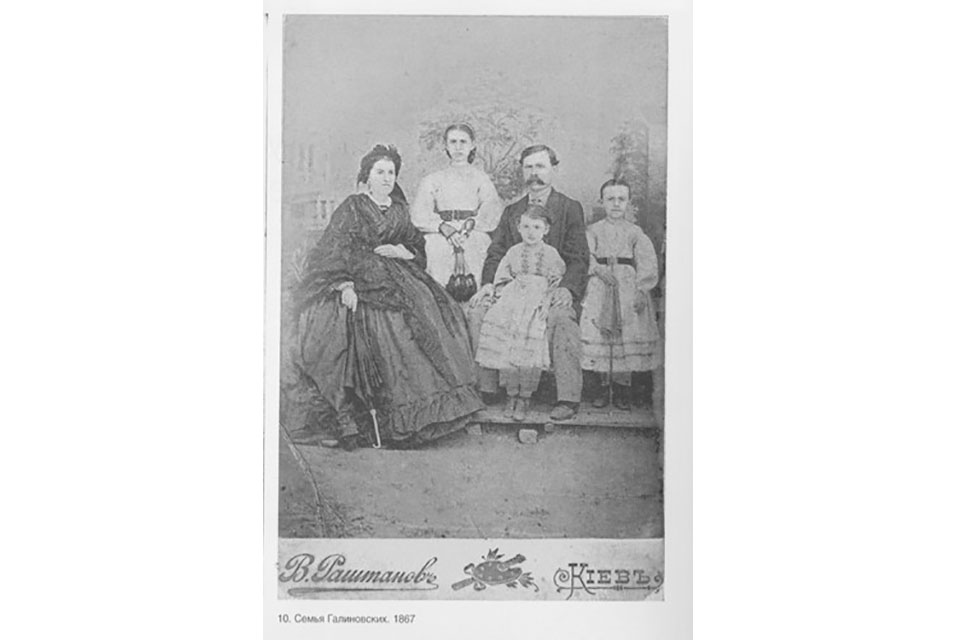
Les parents Galinovski de la mère de Kazimir Malévitch, Ludvika
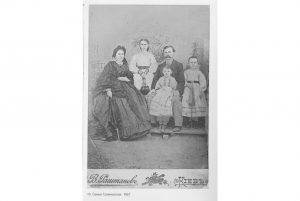
Malevich’s mother Ludovika with her parents and siblings (Ludovika is standing between her parents holding a bag). Image courtesy www.artdependence.com. Photo by Tetyana Filevska
KYIV.- Kazimir Malevich is one of the key figures in avant-garde art. His life and oeuvre has been researched in detail and dozens of books about him are published every year all over the globe. However, it seems that there are still lagoons to be filled and mysteries to be solved. Like the one of his birth house.
Kazimir Malevich is often referred to as a hoaxer, in speaking about different information he has shared with different people. Often times, he created legends around his life on purpose. In other cases, he did not know the precise facts himself and said what he thought was correct. The latter is true for his birthdate. He always mentioned 1878 as the year he was born. But when researchers found a document about his birth – the metric book of St. Aleksandr Cathedral in Kyiv – they found out that the Malevich was born a year later, in 1879. The reason for this “mistake” can be explained by many facts. First, the family had eight kids, and four more who died as infants, and there was no tradition to celebrate birthdays before the beginning of the 20th century, only name-days were held so the exact year may have been lost in memory. The other reason may be that Malevich could have changed the date when he was called to serve the army to cut the service period shorter. We might only guess now as there are no practical ways to prove either theory.
The other mystery is his birthplace. Malevich himself never mentioned any addresses but only the name of the city where he was born – Kyiv. This fact is proven by the metric book, but the house still remained unknown. In late 1970’s, Kyiv-based Ukrainian art historian and collector Ihor Dychenko found out that Malevich’s younger sister, Victoria Zaiceva was in the hospital in the city. He went to meet her and asked if she knew where her brother was born. She responded that it was in the house of their aunt Maria Orzhehovska. She was the older sister of their father Severin Antonovich Malevich, and also Kazimir’s godmother. Victoria told Ihor that she could recognize the house if she saw it. She remembered that the street was Bulyonska. Ihor Dychenko called his friend Oleksandr Pavlov, an artist and writer to take them in his car. Pavlov drove them to the area where Bulyonska Street used to be. In the early 20th century, the area was redesigned and Bulyonska was connected to another street and renamed after a famous Bolshevik commander, Vasyl Bozhenko. By the end of 1970’s, there were still many houses left from late 19th century. After a short overview of the area, Victoria stopped near a two-story brick house, typical housing of late 19th century Kyiv. In the yard of the house, Victoria also recognized a wall of yellow bricks from the former stable. Yellow brick was the most common building material for the time and the house was numbered 15.
Shortly after the described event, it was announced at a Slavic congress that the house where Malevich was born was discovered and its address was 15 Bulyonska Street in Kyiv. Oleksandr Pavlov made several drawings and a painting of the house. He also took photographs of the home and of Victoria Zaiceva. Unfortunately, the film was lost and only one picture of the house remained. A few years later, the home was destroyed. The land belonged to the Institute of Dwelling and they built a large new building there. In the following years, the address spread from one book to another and no one ever questioned its origin or accuracy because no documents proved otherwise. In December 2017, research for a film documentary on Malevich found new archive materials. In trying to find proof for the birth house on Bulynska, the author of this article found documents about a home that belonged to Maria Orzhehovska at least between the years of 1871 and 1889. It was the only housing in her name and included a sizeable piece of land, measuring 10 x 31’5 “sazhen” (1 sazhen is equal to 2,1336 meters) with a wooden house, cellar, barn, shed and a well. In 1872, she redesigned the barn into a dwelling house and built another 4-room outhouse in the garden. Unless she had other unknown houses elsewhere, this house on Zhylyanska Street was her home in Kyiv for at least 18 years. Maria was married and had one son. Considering that no other homeowners with last name Malevich were found, we can assume that Severin Malevich stayed at his sister’s home at the end of 1870’s into the early 1880’s. And in one of the houses, Kazimir Malevich was born.
Zhylyanska Street near Pankivska is at the edge of two areas of the city – a more respected one of wealthy citizens (a few of the homes are those of famous cultural and political figures of the time) and the less privileged. The street was built in the 1830’s and the rest of the area was connected with the building of the University of St. Vladimir. Zhylyanska is parallel to the railway and was the edge of the city until the end of 19th century. In 1870’s, the street was reconstructed and many of the old buildings were destroyed. All of the squares around former Orzhehovska’s mention have been totally redesigned. In approximately the same place where the home was, there are two multi-story buildings and a yard for communal service. Nothing about the place reminds us of its 150-year old history now. Thanks to the new discoveries however, the site may be brought to the attention of historians and art lovers.
Why did Victoria Zaiceva point out the wrong house? This might be explained by the temporal distance between her childhood memories when she could have visited relatives in Kyiv and the fact that at least after 1899, Maria Orzhehovska no longer owned the home on Zhylyanska and moved to the house in Bulyonska, where number 58 later turned into number 64. This second house of Orzhehovska was ruined either during World War II or right after and was no longer there when she returned in late 1870’s so she would have been unable to see it. The other reason may be that within two blocks of house number 15 on Bulyonska, there was another aunt’s house, her mother Ludovika’s sister. Aunt Helya – Magnushevska Olena Oleksandrivna lived on Laboratorna 12 (the house was not preserved to present times). Ludovika Malevich visited her sister in the time period from 1910-1920’s, while we could not find any signs of Maria Orzhehovska or her family members in Kyiv after 1909. There is also very little known about her life and her family. We can say that after 1899, her husband Ivan Voicehovych Orzhehovsky owned different houses and they may have divorced. Since 1901, their son Oleksandr Ivanovych was the owner of his father’s house, so likely his father had died or moved from Kyiv. There is a family legend that Victoria told: her husband was a gambler and lost all of their property in cards. Afterwards, Maria became the mistress of a Polish military man who supported her and her son. However, this legend has no documents or proof.
It is surprising that we can still discover basic information about one of the most influential artists in art history. This does not mean that the researchers failed to do their work, it only shows how many details can be hidden behind the general facts. The story of the house will soon be shown in a documentary: Malevich. Born in Ukraine, which is shot in the Ukraine. The film will discuss the Ukrainian-based facts of Malevich’s life and work. There is also a film being made by Hans Richter based on a Kazimir Malevich script. The film will be released in spring 2018.
Tetyana Filevska is a free-lance art-manager and scholar based in Kyiv, Ukraine. Graduated from the Department of Philosophy at Taras Shevchenko National University of Kyiv. Has worked for the EIDOS Arts Development Foundation, CSM/The Center for Contemporary Art Foundation, and the IZOLYATSIA Platform for Cultural Initiatives, as well as at Mystetskyi Arsenal as part of the Education and Public Programming team for the First Kyiv Biennale of contemporary art, ARSENALE 2012. She was a co-curator of the course “Malevych’s Kyiv Lectures: A Reconstruction” (November–December 2015). She initiated and organized International conference “Kazymyr Malevych: the Kyiv Aspect” (6-9 October 2016). Her academic interest is modern art, Ukrainian avant-garde art and Kazimir Malevich.
This article has been reproduced with permission from www.artdependence.com.
-
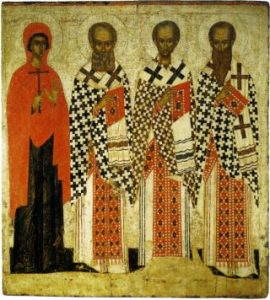
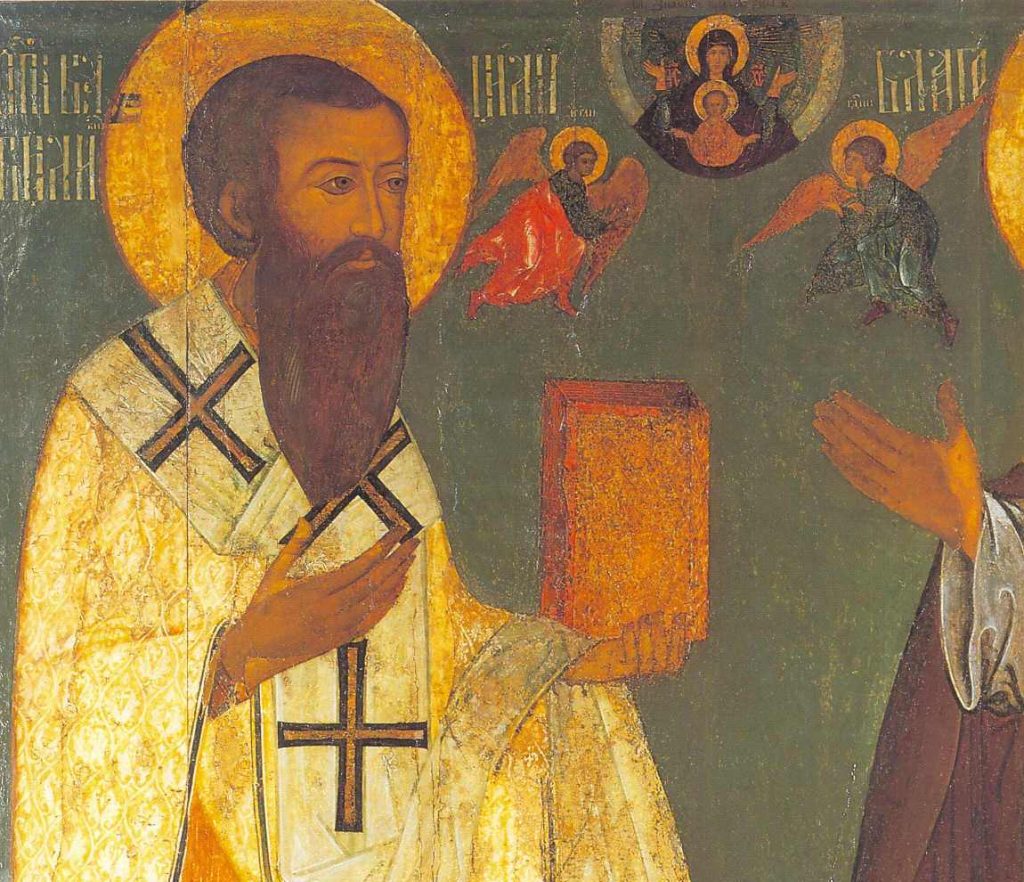
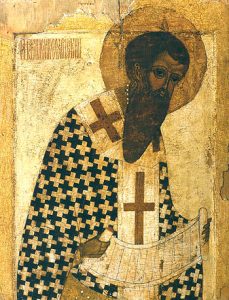
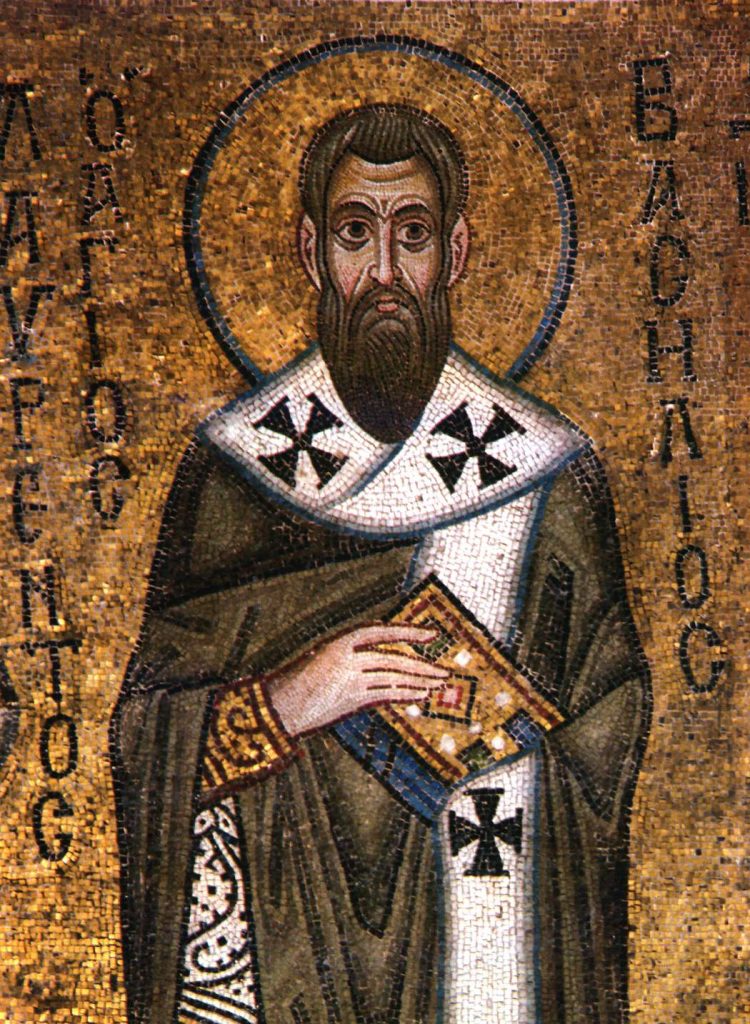
С ДНЁМ ПАМЯТИ СВЯТИТЕЛЯ ВАСИЛИЯ ВЕЛИКОГО!
С ДНЁМ ПАМЯТИ СВЯТИТЕЛЯ ВАСИЛИЯ ВЕЛИКОГО!
-
Monographie de Oleksa/Alexei Grichtchenko par Vita Susak
Vient de paraître aux éditions « Rodovid » de Kiev la monumentale monographie du peintre ukraino-russe Oleksa/Alekseï Grichtchenko en langue ukrainienne (une édition anglaise et une française suivront) : Vita Susak, Oleksa Hrychtchenko. Dynamokolir [Oleksa Grichtchenko. La dynamocouleur]
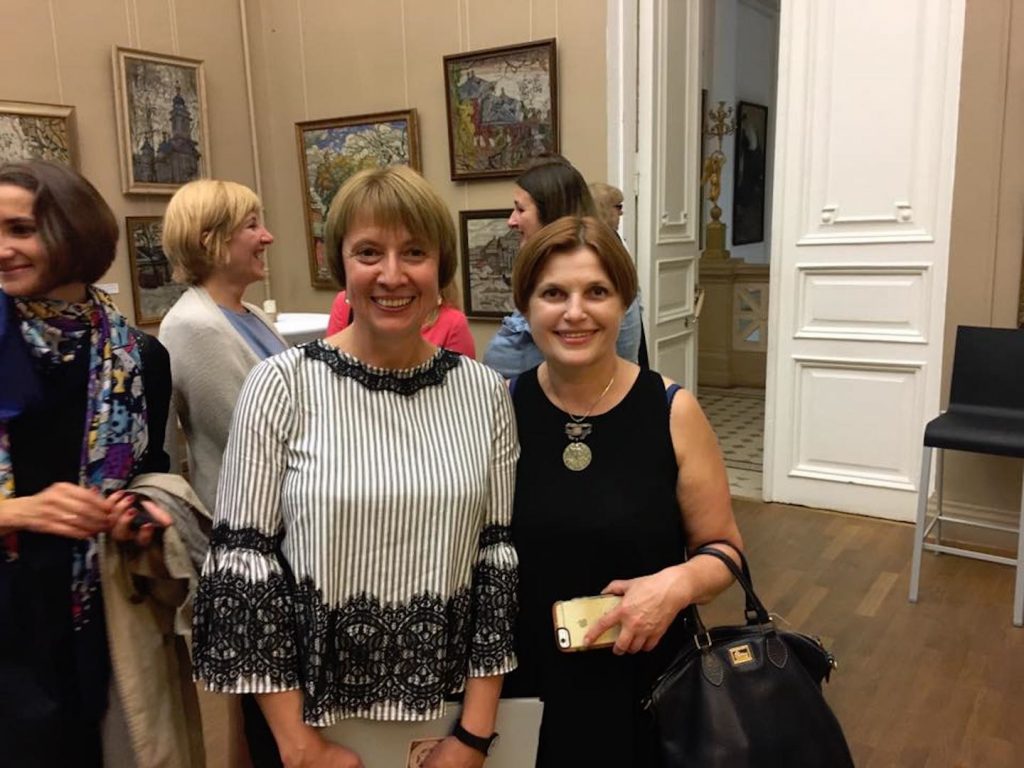
Vita Susak et son éditrice Lidia Lykhatch lors de la présentation du livre à Kiev 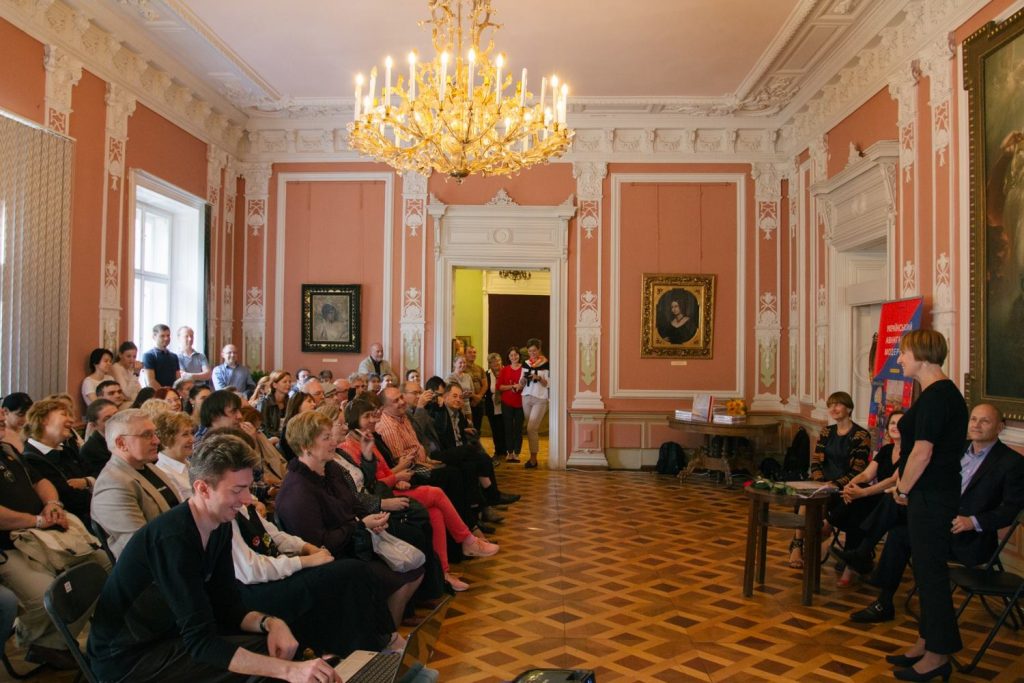
Vita Susak présentant son livre à Lviv 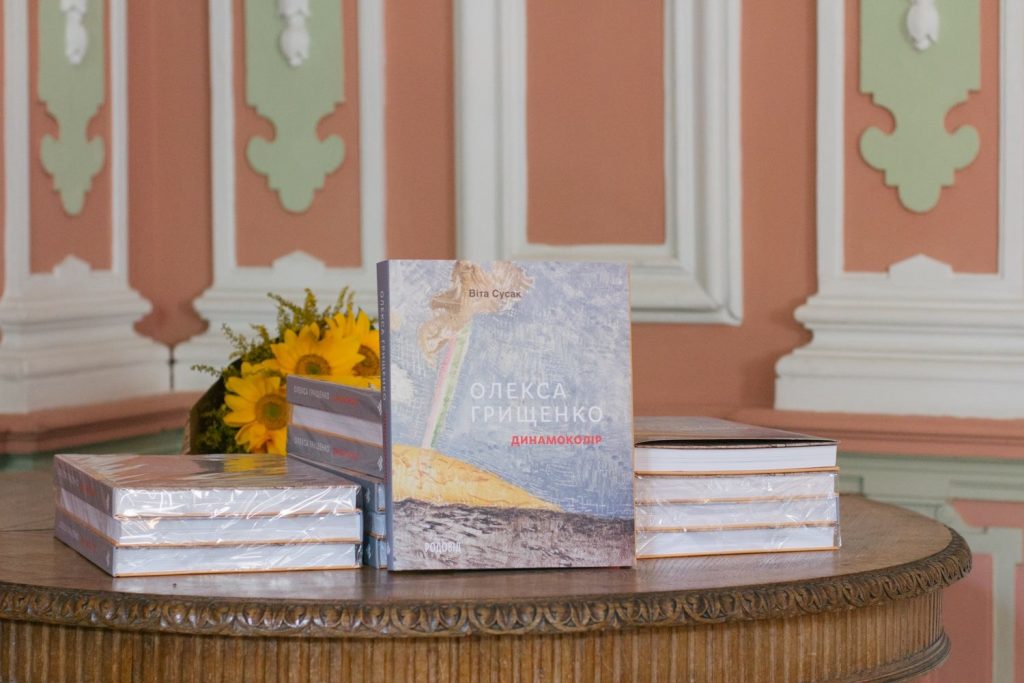
La monographie « Oleksa Hrychtchenko. Dynamokoli » РОДОВІД
ОЛЕКСА ГРИЩЕНКО. ДинамоколірАвтори: Віта Сусак
Дизайн: Олег Грищенко (Київ)
Книги. Український модернізм / авангардПро книгу
Олекса Грищенко (Alexis Gritchenko, Алексей Грищенко, 1883-1977) – живописець, художній критик, чия творчість найтісніше пов’язана з Україною, Росією і Францією. В 1910-і рр. він розробив власний мистецький напрямок – Динамоколір / Цветодинамос, базований на поєднанні принципів кубізму і формальної мови ікони.
Коли в пореволюційній Москві відкрили Музей живописної культури (1919-1929), в ньому «динамоколір» Грищенка експонувався поруч з «примітивізмом» О. Шевченка, «експресіонізмом» Кандинського і «супрематизмом» Малевича. Чому динамоколір забули? Забутий – неважливий? А хто пам’ятав Малевича, Бойчука, Богомазова у 1950-70-і? Чому сучасники оцінювали динамоколір як самостійне явище в авангарді? Як далі розвинулася творчість Грищенка, коли він залишив Москву у 1919, провів два роки в Константинополі, помандрував до Греції, дістався до Парижа і осів у Франції? Яке його місце серед представників Паризької школи? Яке значення цього майстра для українського мистецтва ХХ ст.?
Відповіді на ці та інші запитання шукає авторка Віта Сусак.
Свою першу статтю про Олексу Грищенка Віта Сусак опублікувала у 1989 р. в журналі «Всесвіт». У 1997 вона захистила в Москві кандидатську дисертацію на тему: «Олекса Грищенко в мистецькому житті Москви 1910-х років»; 2017-го – скінчила монографію «Олекса Грищенко. Динамоколір».rodovid.box@gmail.com
вул. Хрещатик, 17, оф. 45
Київ 01001
ПІДПИСАТИСЯ
Facebook Twitter Instagram
РОДОВІД
Copyright © 2017 -
Le « New York Times » sur Emmanuel Macron
President Emmanuel Macron of France speaking at the Élysée Palace in Paris this week. President Emmanuel Macron of France speaking at the Élysée Palace in Paris this week.
President Emmanuel Macron of France is liberalism’s new poster boy. Hailed as the answer to Europe’s populist tide, he has brought a buzz back into French diplomacy by facing down President Trump and President Vladimir Putin of Russia. “The Macron method,” a leading European think tank gushed recently, is the new Third Way, threading the needle between technocracy and populism.
At home in France, it’s a very different story. A recent poll found that Mr. Macron’s popularity fell by 14 points in August, after a fall of 10 points in July. Only 40 percent of respondents said they were satisfied with the president’s performance.
To be fair, Mr. Macron never had much popular support to begin with. In the first round of the presidential election in April, when the vote was split among four main contenders, he won just under 24 percent. (By comparison, François Hollande received 28 percent of the vote in the first round in 2012. Nicolas Sarkozy won 31 percent in 2007.) Mr. Macron won the second round handily, but only because he was the lesser-evil candidate in the runoff — his competitor was Marine Le Pen, the leader of the far-right populist National Front party.
Electoral arithmetic explains only so much. Mr. Macron’s popularity suffers from something more fundamental: Macronism. His entire political project has been far too focused on his personality. Much of his appeal has come from his youth, his dynamism, his good looks and his oratorical skills. This hyper-personalized approach always carried the risk that once his charm wore off, there would be nothing left for his supporters to like, which is exactly what is happening.
Since taking office, Mr. Macron has put off many people by trying to recapture the grandeur of the presidency. In a phrase that may stick to him for the rest of his time in office, he said he wanted to make the presidency more “Jupiterian,” comparing himself with the powerful Roman god Jupiter, who ruled the skies. When he brought the Senate and Parliament together at the Versailles palace and spoke to them about his ambitions for the presidency, many in France bristled at the monarchical overtones.
This arrogant attitude about power has destroyed the anti-establishment, upstart image that Mr. Macron cultivated during the campaign. The post-ideological platform on which he ran is starting to reveal itself for what it really is: an emptiness at the heart of his political project.
President Emmanuel Macron of France is liberalism’s new poster boy. Hailed as the answer to Europe’s populist tide, he has brought a buzz back into French diplomacy by facing down President Trump and President Vladimir Putin of Russia. “The Macron method,” a leading European think tank gushed recently, is the new Third Way, threading the needle between technocracy and populism.
At home in France, it’s a very different story. A recent poll found that Mr. Macron’s popularity fell by 14 points in August, after a fall of 10 points in July. Only 40 percent of respondents said they were satisfied with the president’s performance.
To be fair, Mr. Macron never had much popular support to begin with. In the first round of the presidential election in April, when the vote was split among four main contenders, he won just under 24 percent. (By comparison, François Hollande received 28 percent of the vote in the first round in 2012. Nicolas Sarkozy won 31 percent in 2007.) Mr. Macron won the second round handily, but only because he was the lesser-evil candidate in the runoff — his competitor was Marine Le Pen, the leader of the far-right populist National Front party.
Electoral arithmetic explains only so much. Mr. Macron’s popularity suffers from something more fundamental: Macronism. His entire political project has been far too focused on his personality. Much of his appeal has come from his youth, his dynamism, his good looks and his oratorical skills. This hyper-personalized approach always carried the risk that once his charm wore off, there would be nothing left for his supporters to like, which is exactly what is happening.
Since taking office, Mr. Macron has put off many people by trying to recapture the grandeur of the presidency. In a phrase that may stick to him for the rest of his time in office, he said he wanted to make the presidency more “Jupiterian,” comparing himself with the powerful Roman god Jupiter, who ruled the skies. When he brought the Senate and Parliament together at the Versailles palace and spoke to them about his ambitions for the presidency, many in France bristled at the monarchical overtones.
This arrogant attitude about power has destroyed the anti-establishment, upstart image that Mr. Macron cultivated during the campaign. The post-ideological platform on which he ran is starting to reveal itself for what it really is: an emptiness at the heart of his political project.
Mr. Macron’s two big policy goals are fixing the economy and fixing Europe. He has gone so far as to describe his economic policies as a “Copernican revolution,” but he is merely pushing France a little farther down the road of labor market deregulation and fiscal austerity, a path well trodden by other countries.The new president says he is determined to make France a “start-up nation,” borrowing the vapid parlance of Silicon Valley. This has won him the support of venture capitalists and tech billionaires but has yet to convince the wider French public. Silicon Valley’s libertarian social contract, with its cavalier attitude toward inequality, sits uneasily with a population raised on France’s postwar social-democratic traditions.
His main goal is to reduce France’s unemployment rate, which at around 10 percent remains stubbornly high. He hopes to do this by reforming the labor code. One of the new measures is a cap on the damages that courts can award workers claiming wrongful dismissal, a move intended to give employers more confidence in hiring. Another would allow companies with fewer than 50 employees to negotiate contracts without having to go through trade unions. The French far left has called this a “social coup d’état,” but the president has been careful not to give in entirely to the business lobby.
What really matters is the endpoint. Any sustained fall in unemployment in France would be welcome, but the experiences of other countries suggest it comes at the cost of new kinds of inequality. In Germany, labor market reforms have led to a proliferation of “mini-jobs,” part-time work that is lightly regulated and has taken the place of full-time jobs in some sectors. In Britain’s highly deregulated labor market, record employment levels exist alongside low productivity, stagnating wages and a proliferation of short-term contracts. Is this the future France wants?
Not since the economic boom of the 1950s and ’60s has capitalism in Europe been dynamic enough to combine high levels of employment with long-term material gains for the masses. Today, choices involve painful trade-offs. Mr. Macron’s economic policies favor employers over workers and chip away at what remains of the French welfare state.
But fearful of giving his program any actual political content, the president wraps up his reforms in the European flag. He tells French voters that only if they make these sacrifices at home, the rest of the European Union — especially Germany — will take them seriously and give France a better deal.
Mr. Macron’s European plans include a common budget and finance minister for the eurozone. His ideas have received warm words from Berlin, and there are signs that such a deal could be possible after Germany has its federal elections on Sept. 24. But if Chancellor Angela Merkel wins, her mandate will not be for a European fiscal union where German tax revenues are placed in a common European pot. She has given her support to only a very modest version of what Mr. Macron is proposing. The payoff for all of France’s sacrifice at home will be small — and the president will surely be no more popular than he is now.
Mr. Macron’s success in June’s presidential election has shaken up the moribund political landscape in a deep and lasting way. For that, he deserves thanks. But as a political project, Macronism is little more than rhetoric and hubris, backed up with conventional neoliberal policies. For now, Mr. Macron is still the darling of the global liberal elite, but his growing unpopularity gives us a better picture of what he has to offer.
Mr. Macron’s two big policy goals are fixing the economy and fixing Europe. He has gone so far as to describe his economic policies as a “Copernican revolution,” but he is merely pushing France a little farther down the road of labor market deregulation and fiscal austerity, a path well trodden by other countries.The new president says he is determined to make France a “start-up nation,” borrowing the vapid parlance of Silicon Valley. This has won him the support of venture capitalists and tech billionaires but has yet to convince the wider French public. Silicon Valley’s libertarian social contract, with its cavalier attitude toward inequality, sits uneasily with a population raised on France’s postwar social-democratic traditions.
His main goal is to reduce France’s unemployment rate, which at around 10 percent remains stubbornly high. He hopes to do this by reforming the labor code. One of the new measures is a cap on the damages that courts can award workers claiming wrongful dismissal, a move intended to give employers more confidence in hiring. Another would allow companies with fewer than 50 employees to negotiate contracts without having to go through trade unions. The French far left has called this a “social coup d’état,” but the president has been careful not to give in entirely to the business lobby.
What really matters is the endpoint. Any sustained fall in unemployment in France would be welcome, but the experiences of other countries suggest it comes at the cost of new kinds of inequality. In Germany, labor market reforms have led to a proliferation of “mini-jobs,” part-time work that is lightly regulated and has taken the place of full-time jobs in some sectors. In Britain’s highly deregulated labor market, record employment levels exist alongside low productivity, stagnating wages and a proliferation of short-term contracts. Is this the future France wants?
Not since the economic boom of the 1950s and ’60s has capitalism in Europe been dynamic enough to combine high levels of employment with long-term material gains for the masses. Today, choices involve painful trade-offs. Mr. Macron’s economic policies favor employers over workers and chip away at what remains of the French welfare state.
But fearful of giving his program any actual political content, the president wraps up his reforms in the European flag. He tells French voters that only if they make these sacrifices at home, the rest of the European Union — especially Germany — will take them seriously and give France a better deal.
Mr. Macron’s European plans include a common budget and finance minister for the eurozone. His ideas have received warm words from Berlin, and there are signs that such a deal could be possible after Germany has its federal elections on Sept. 24. But if Chancellor Angela Merkel wins, her mandate will not be for a European fiscal union where German tax revenues are placed in a common European pot. She has given her support to only a very modest version of what Mr. Macron is proposing. The payoff for all of France’s sacrifice at home will be small — and the president will surely be no more popular than he is now.
Mr. Macron’s success in June’s presidential election has shaken up the moribund political landscape in a deep and lasting way. For that, he deserves thanks. But as a political project, Macronism is little more than rhetoric and hubris, backed up with conventional neoliberal policies. For now, Mr. Macron is still the darling of the global liberal elite, but his growing unpopularity gives us a better picture of what he has to offer.
Correction: September 7, 2017
A previous version of this article misstated the date for Germany’s federal elections. They will be held on Sept. 24, not Sept. 25.Chris Bickerton (@cjbickerton) is a lecturer in politics at Cambridge University and the author of “The European Union: A Citizen’s Guide.”
-
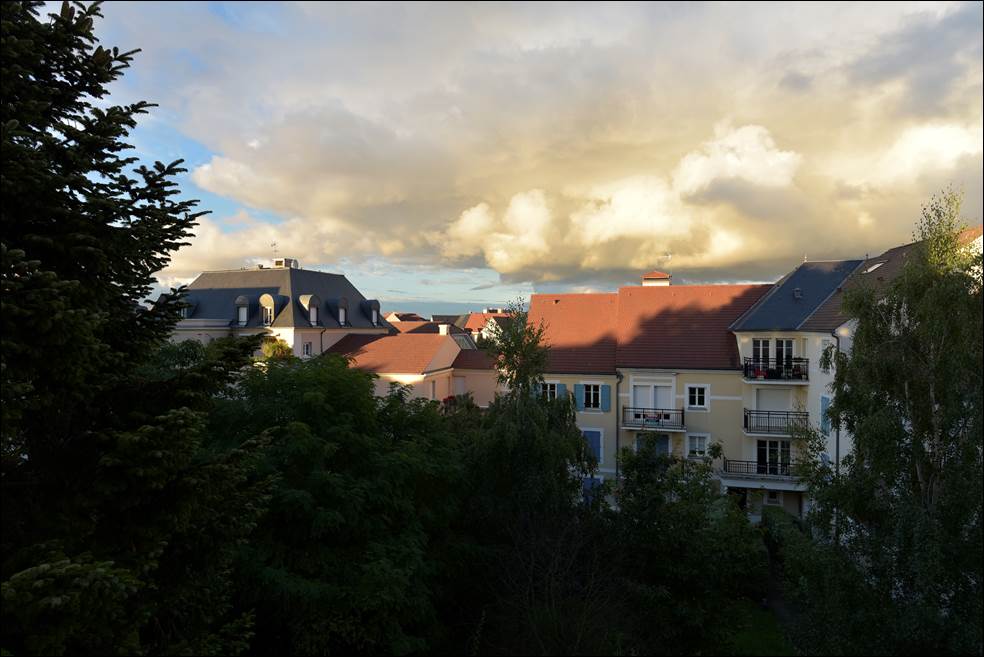
Une photographie de Cyril Semenoff-Tian-Chansky
Une magnifique vue (dans l’esprit de Vermeer) sur un coin du Plessis Robinson par le photographe Cyril Semenoff-Tian-Chansky, début août 2017
-
Les années 1939- 1950 à Mouscardès et Bordeaux (suite)
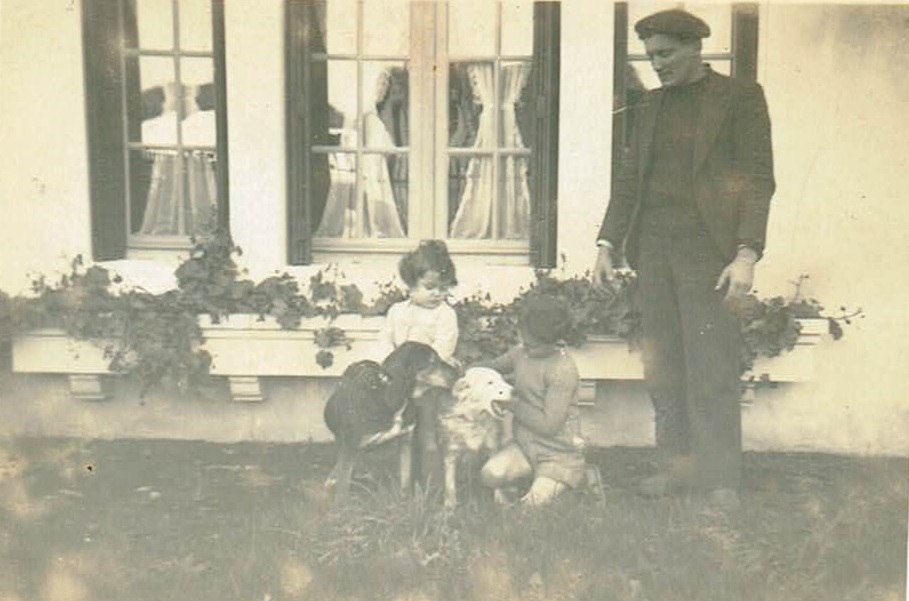
Jean-Claude, Franck et leur père René Marcadé devant Jean-Beylet (début 1939) 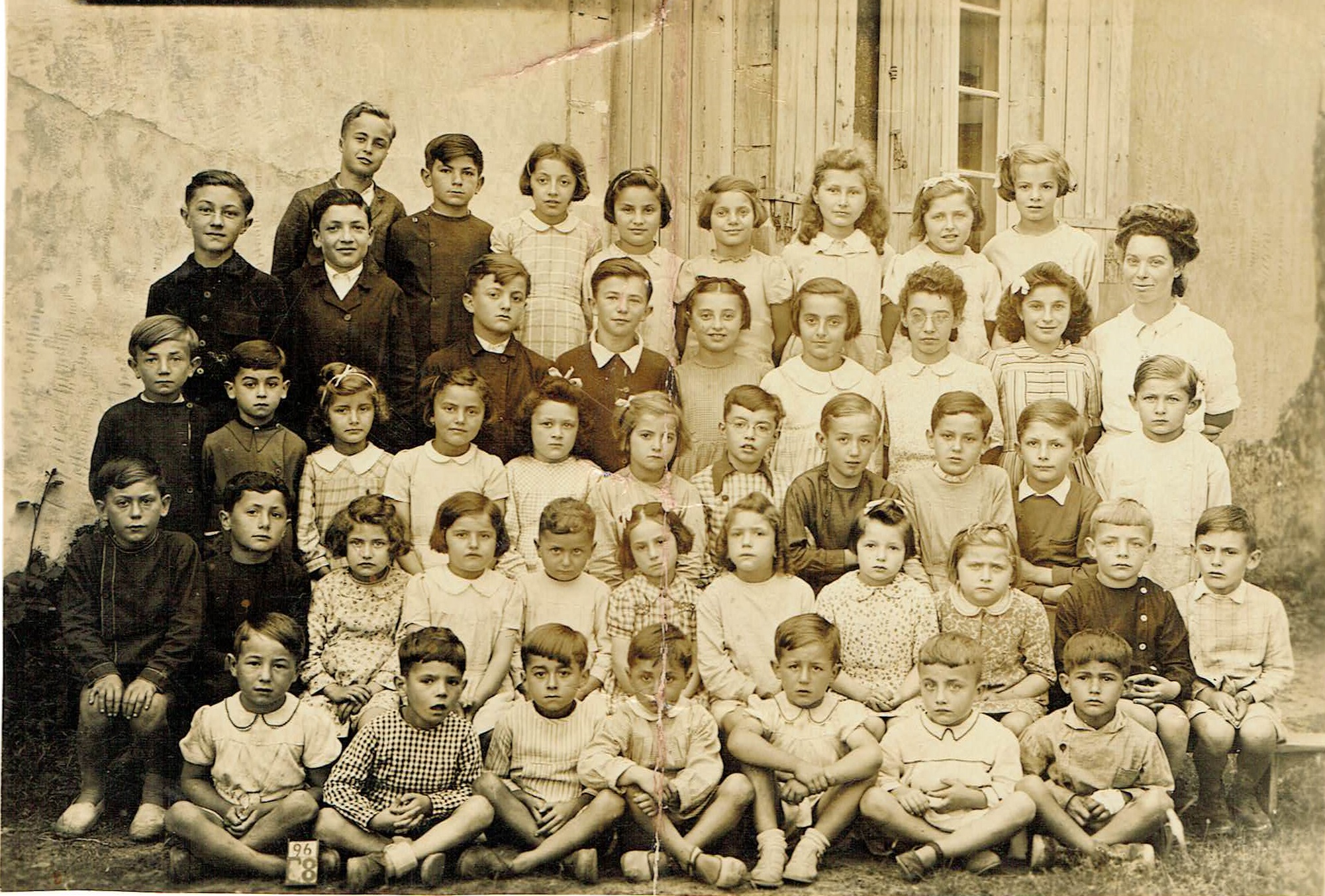
L’école de Mouscardès vers 1942 (Jean-claude est au troisième rang le 3ème à partir de la droite) 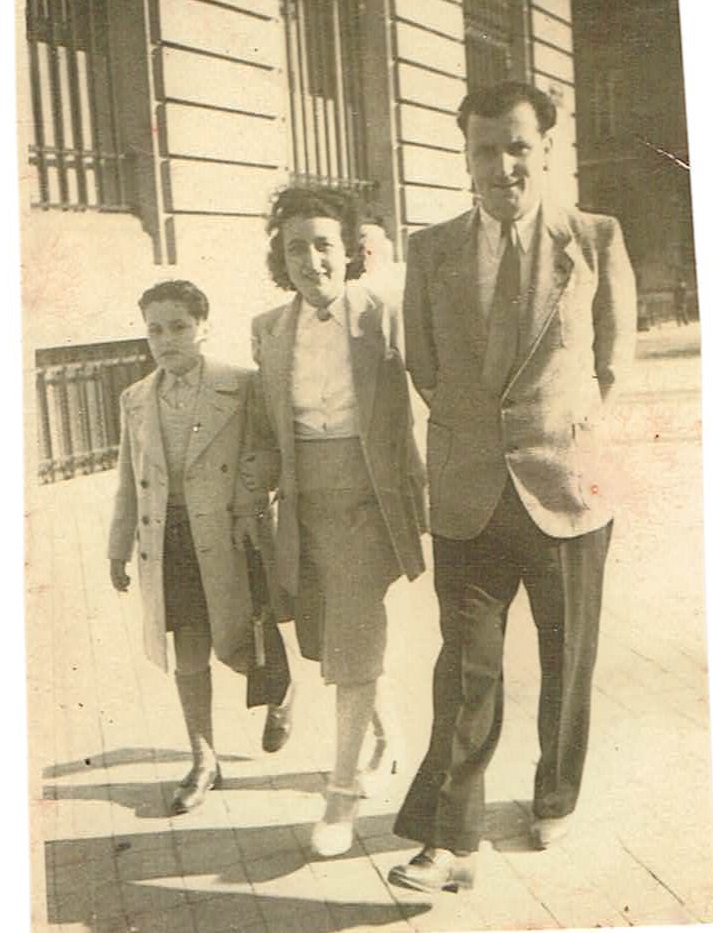
Jean-Claude, sa mère Andrea et son père René Marcadé à Bordeaux (fin des années 1940) 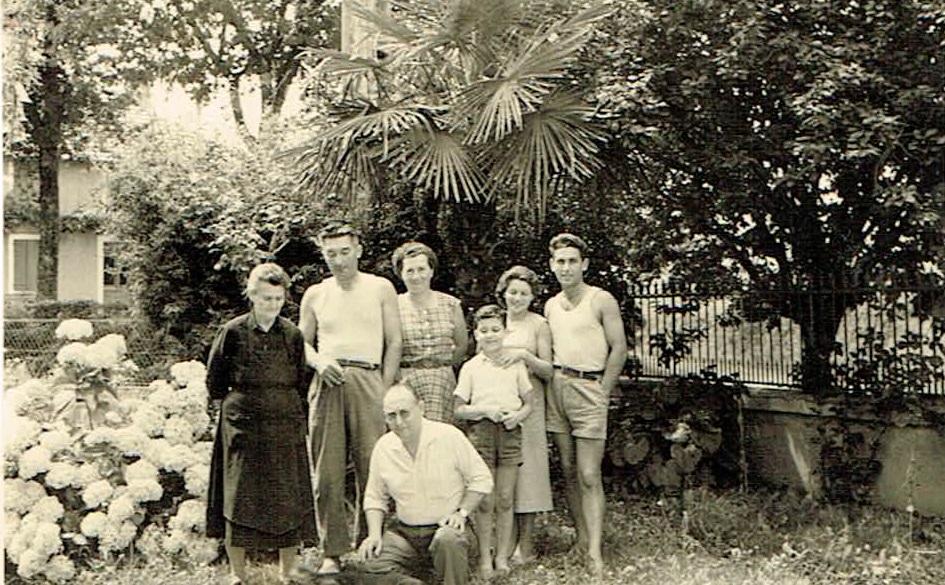
Noémie (La Dauna), Daniel et Hélène Marcadé, Bernard, Odette et Franck Marcadé, un cousin, devant Jean-Beylet ( début années 1950) 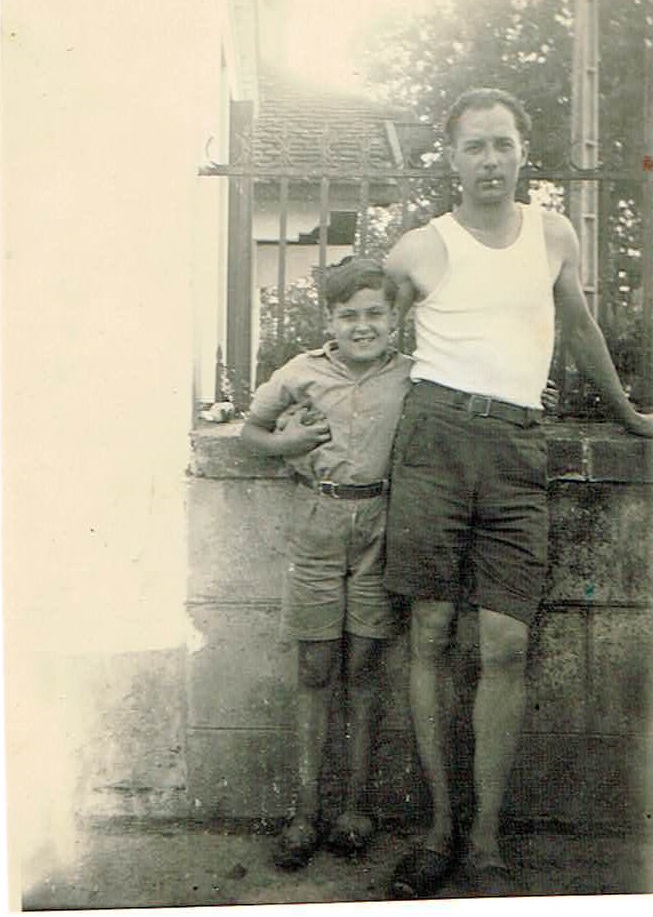
Jean-Claude et Robert, le copain de l’oncle Daniel, évadé avec lui de Regensburg pendant la guerre ( devant Jean-Beylet vers 1950)