Vania Marcadé

  • A propos
  • Billets d’humeur
  • De l’art russe
  • De l’Ukraine
  • Malévitch
  • De la Russie
  • Des arts en général

Catégorie : De la Russie

  • KATIA ZOUBTCHENKO (1937-2025)

    KATIA ZOUBTCHEKO NOUS A QUITTÉS LE JOUR DE LA NATIVITÉ DU CHRIST ORTHODOXE SLAVE LE 7 JANVIER 2025


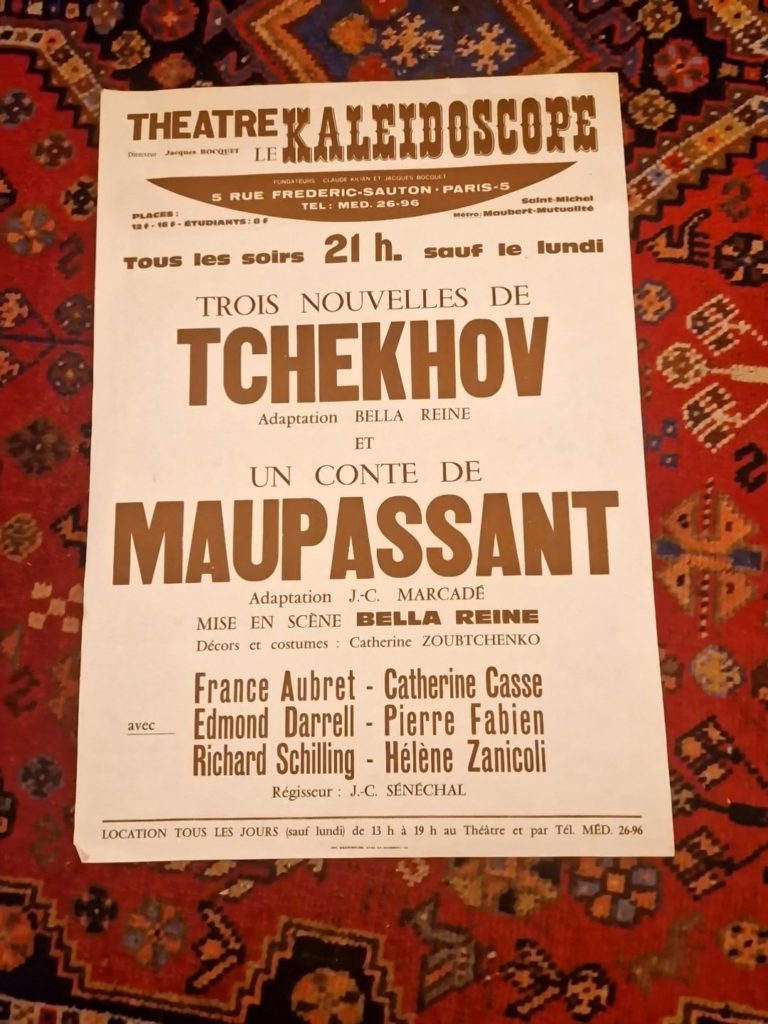
    ZOUBTCHENKO Catherine. Peintre d’origine russe, née à Léningrad en 1937. Elle a été déportée avec ses parents à Berlin en 1941 par l’Allemagne nazie. Elle s’installe à Paris en 1954 où elle commence sa vie d’artiste. Études dans les académies de la Grande Chaumière et Julian. À partir de 1958, elle est élève de Lanskoy dont elle restera la collaboratrice jusqu’à la mort de ce dernier en 1976. À partir de 1961, prend part aux Salons parisiens – de Mai, des Indépendants, d’Automne, « Jeunes et Grands d’aujourd’hui », « Réalités nouvelles » et autres. Plusieurs expositions personnelles dans des galeries de Paris, de Lyon, en Hollande, Italie, Luxembourg, en Suisse. A collaboré avec Lanskoy à la réalisation de tout un programme de mosaïques à Ravenne en 1973-1976. A elle-même exécuté des projets de mosaiques à Ravenne dans l’atelier de Carlo Signorini

    Voir l’article de Jean-Claude Marcadé : « La création de Catherine Zoubtchenko ou l’ordonnance du chaos », in catalogue Catherine Zoubtchenko (née en 1937) Peindre avant tout…Un demi-siècle de peinture, Genève, Galerie ART XXI, 2012, p. 4-10

    page1image57190560

    Collection Valentine et Jean Claude Marcadé. 1/3

    Zoubtchenko Catherine, (1937- ), Russe

    page2image57471584

    Collection Valentine et Jean Claude Marcadé. 2/3

    Zoubtchenko Catherine, (1937- ), Russe

    page3image57515120

    Collection Valentine et Jean Claude Marcadé. 3/3


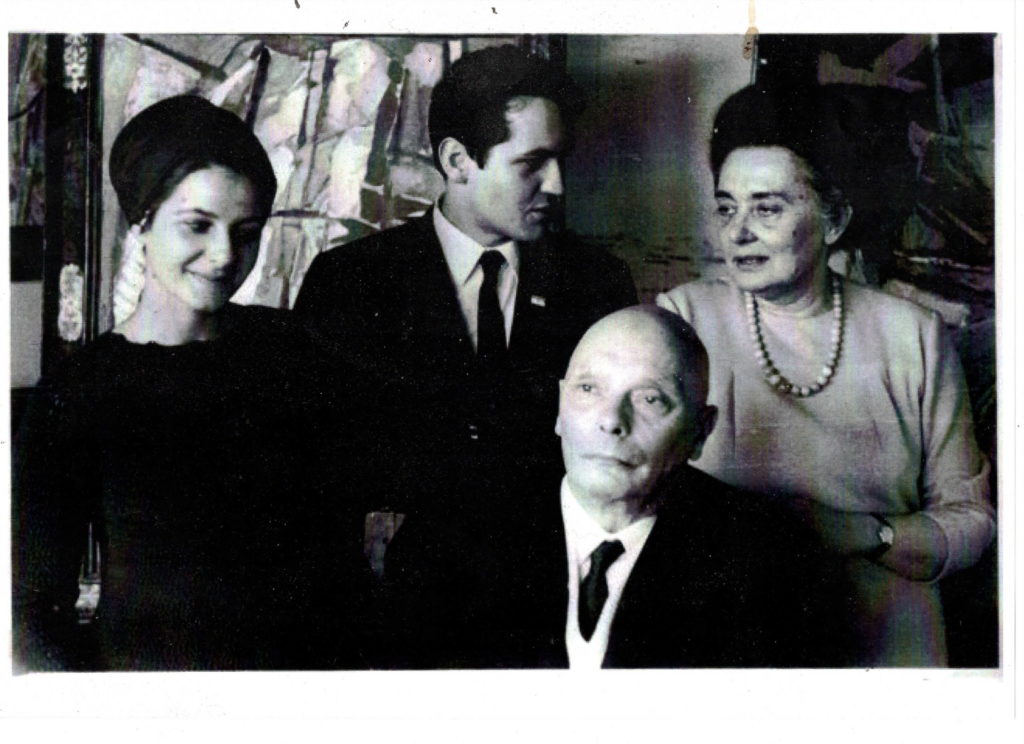
    CATHERINE ZOUBTCHENKO, JEAN-CLAUDE MARCADÉ, ANDRÉ LANSKOY, VALENTINE MARCADÉ, 1966

    KATIA ZOUBTCHENKO, JEAN-CLAUDE MARCADÉ, LANSKOY, VALENTINE MARCADÉ, 1966


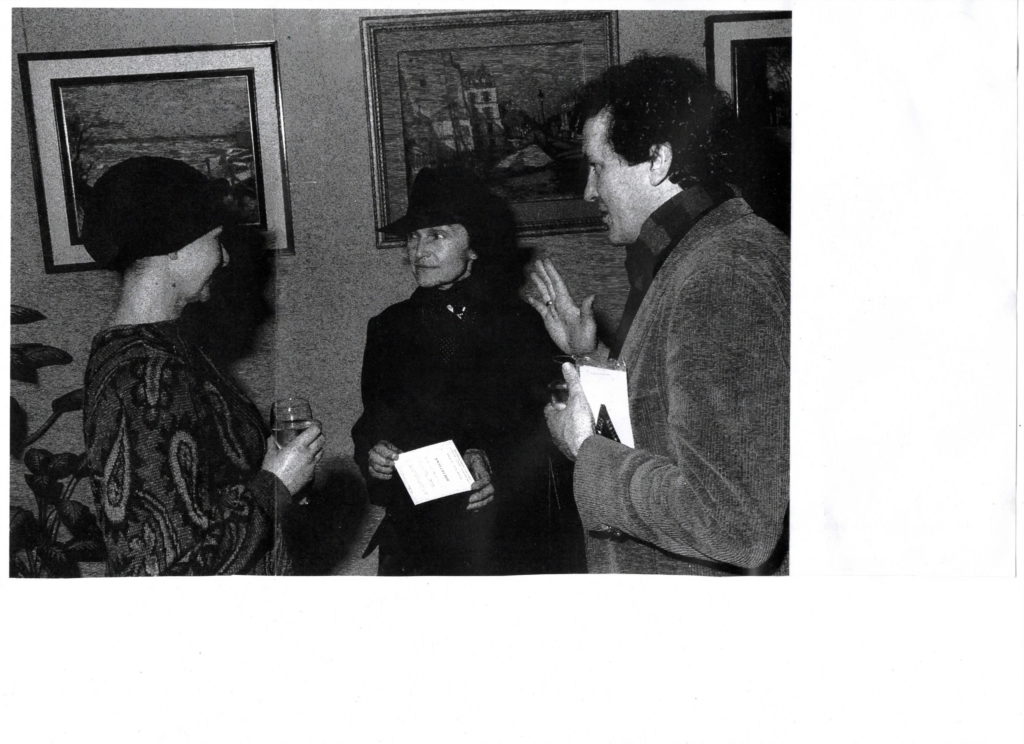
    CATRHERINE ZOUBTCHENKO, MONIQUE VIVIER-BRANTHOMME (DESCENDANTE DU PEINTRE RUSSE CONSTANTIN KOUZNETSOFF, JEAN-CLAUDE MARCADÉ, 1985


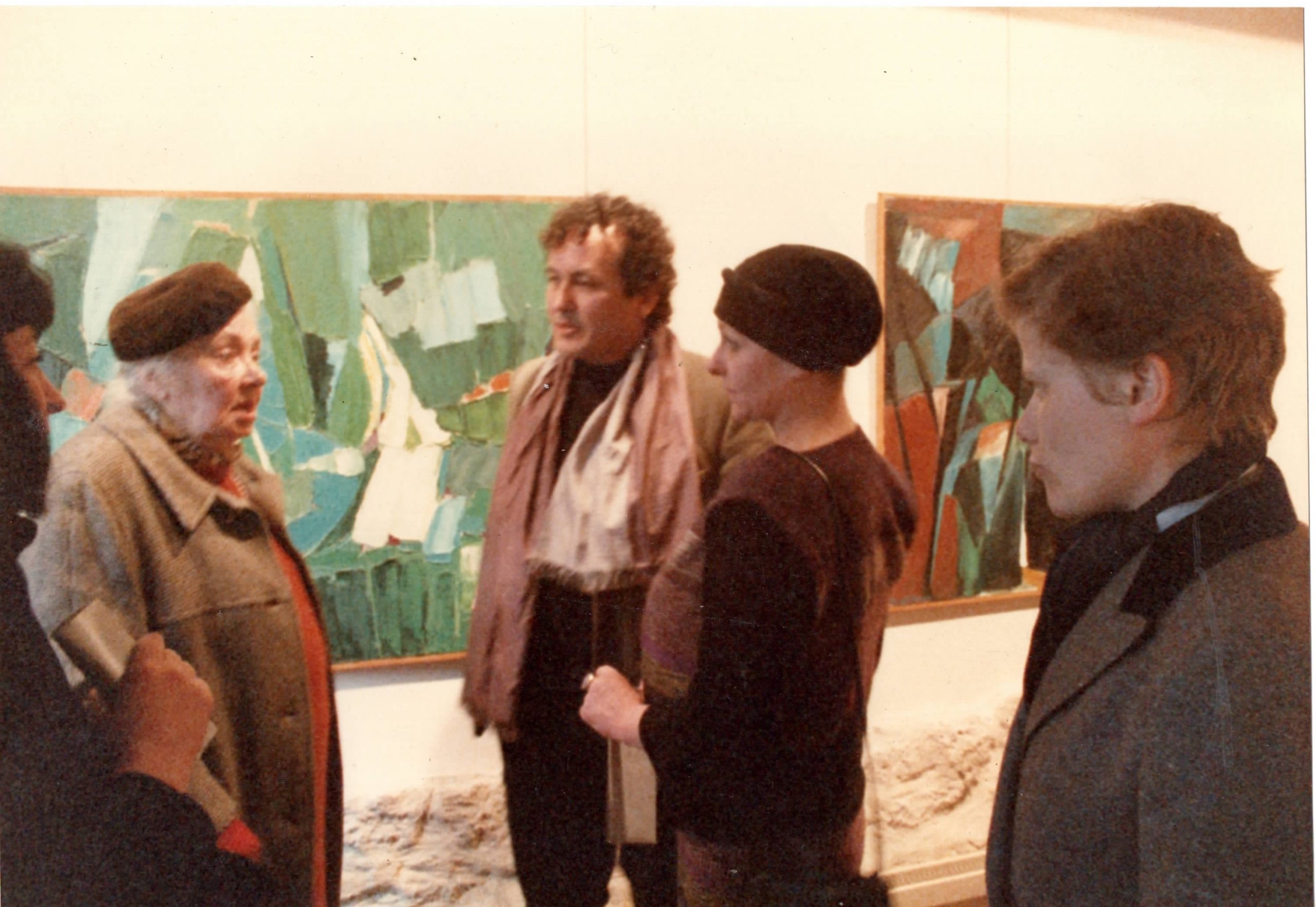
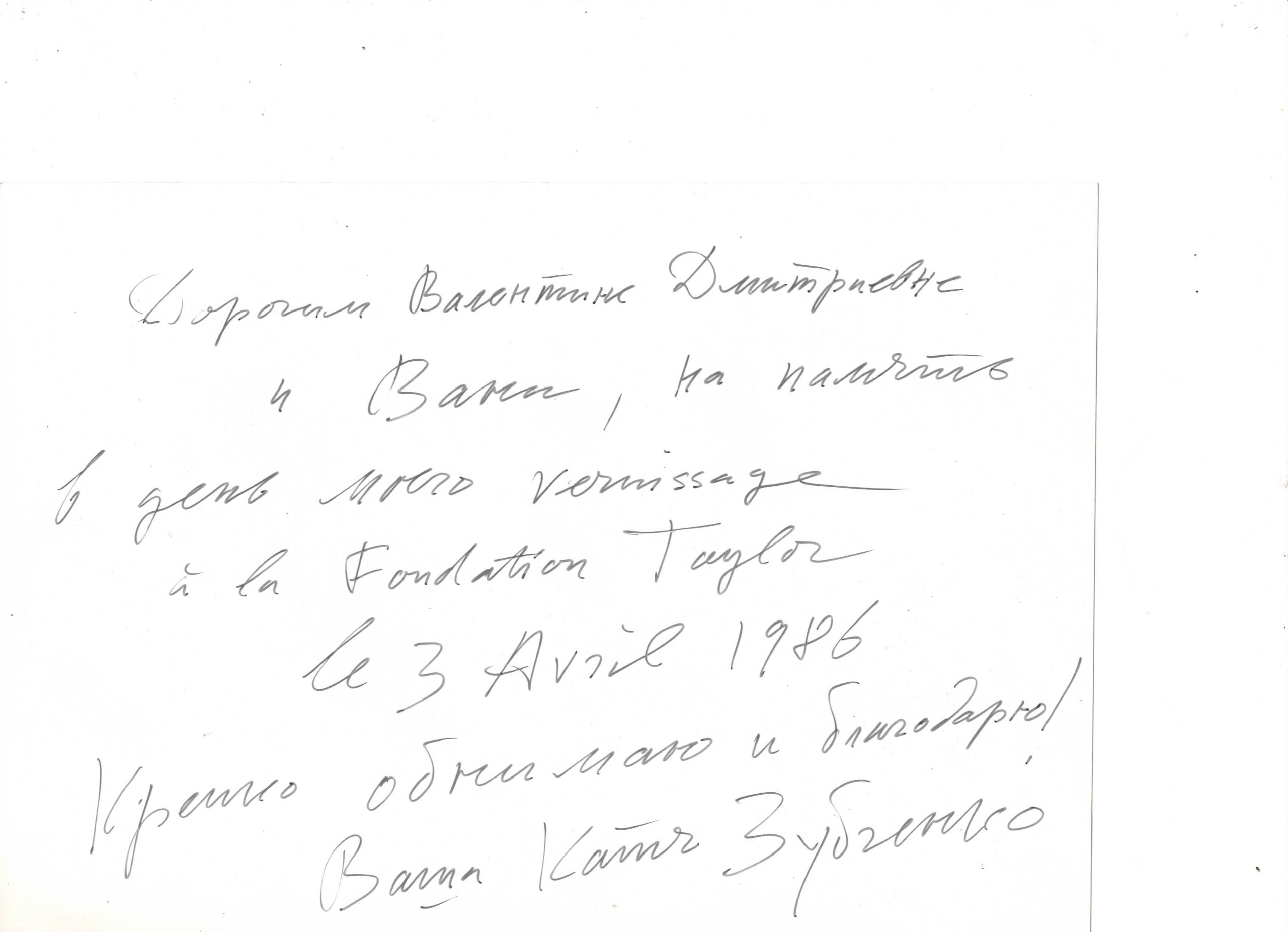
    LIALIA, VANIA, KATIA ZOUBTCHENKO, 1986


    KATIA ZOUBTCHENKO


    KATIA ZOUBTCHENKO ET UN VISITEUR DE SA RÉTROSPECTIVE À LA GALERIE GENEVOISE « ARTXXI » EN MAI 2012


    K

    KATIA ZOUBTCHENKO ET JEAN-CLAUDE MARCADÉ LORS DE SA RÉTROSPECTIVE À LA GALERIE GENEVOISE « ART XXI » EN MAI 2012


    22 janvier 2025
  • En hommage à Igor MARKEVITCH « Le Compositeur et l’Homme »

    En hommage à Igor MARKEVITCH

    « Le Compositeur et l’Homme »

    par Jean-Claude MARCADÉ

    Préfacier et organisateur d’un livre posthume du Maître

    LE TESTAMENT D’ICARE

    Conférence donnée en 1985 à la Chapelle romane de

    SAINT-CÉZAIRE sur SIAGNE

    Voilà maintenant deux ans qu’Igor Markevitch nous a quittés, laissant derrière lui cinquante années au service de la musique. Remarqué par Alfred Cortot en 1925 alors qu’il n’avait que 13 ans, devenu son élève et celui de Nadia Boulanger à 14 ans, le voilà catapulté à 16 ans dans le sillage de Diaghilev qui lui commande en 1928 un concerto pour piano qui sera créé à Londres avec Igor Markevitch lui-même au piano le 15 juillet 1929.

    Pendant toutes les années trente, Igor Markevitch crée une série d’œuvres qui ont une audience mondiale et généralement saluées comme des étapes importantes de la musique, le compositeur étant crédité de génie.

    De ces œuvres créées entre 1929 et 1941, de 17 à 29 ans : le ballet « Cantate » sur un texte de Jean Cocteau, en 1930, suivi d’un « Concerto grosso », puis, en 1931, d’une « Partita pour clavier et orchestre » et d’un ballet « Rébus » pour Léonide Miassine. En 1932, encore un ballet, cette fois pour Serge Lifar, « L’Envol d’Icare » ; en 1933 le « Psaume » pour soprano et orchestre ; en 1935, l’oratorio « Le Paradis perdu » ; en 1937, le « Nouvel Âge » ; et en 1940 la sinfonia concertante « Lorenzo il magnifico » sur des poèmes de Laurent de Médicis. Enfin, en 1941, les « Variations », « Fugue et envoi sur un thème de Haendel », la seule œuvre d’Igor Markevitch que l’on puisse trouver dans le commerce puisqu’elle a été enregistrée par le pianiste Fujii en 1982 et sur l’autre face « Stefan le poète » impressions d’enfance pour piano (1939) enregistré également par le pianiste Fujii.

    Ces « Variations » pour piano sont la dernière grande composition d’Igor Markevitch, qui cessa ainsi de composer à 29 ans.

    Après 1945, il se consacre à la direction d’orchestre, ce qui lui assurera une renommée mondiale, le mettant au nombre des grands interprètes de ce siècle. Cet aspect, je veux dire « Igor Markevitch, chef d’orchestre » est la pointe la plus connue, je dirai la plus évidente, de l’iceberg Markevitch. Il était le « Prince Igor », comme on aimait l’appeler se référant à la souveraine aisance de sa gestique où la sobriété et la précision le disputaient à une sensibilité d’une rare intensité. Entre mille, pensons à la restitution de la « Création » de Haydn, de « Daphnis et Chloé », du « Sacre du Printemps », voire de « La Vie pour le Tsar » de Glinka.

    Mais la gloire du chef d’orchestre a éclipsé l’œuvre du compositeur qui pourtant eut son heure de gloire et fut célébré comme un génie.

    Des musicologues comme Henri Prunières, Pierre Souvtchinsky ou Boris de Schloezer, des chefs d’orchestre comme Scherchen, Koussevitzky ou Karel Ancerl, des compositeurs comme Bela Bartok, Francis Poulenc, Florent Schmitt, Henri Sauguet, Darius Milhaud, Jacques Ibert, Dallapicola saluent l’apparition des œuvres du jeune Markevitch.

    Après l’audition d’ « Icare », Bela Bartok âgé alors de 52 ans écrit à Markevitch qui en a 22 :

    « Cher Monsieur, permettez à un collègue qui n’a pas l’honneur de vous être connu, de vous remercier pour votre merveilleux « Icare ». J’ai nécessité du temps pour comprendre et apprécier toute la beauté de votre partition et je pense qu’il faudra beaucoup d’années pour qu’on l’apprécie. Je veux vous dire ma conviction qu’un jour on rendra justice avec sérieux à tout ce que vous apportez. Vous êtes la personnalité la plus frappante de la musique contemporaine et je me réjouis, Monsieur, de profiter de votre influence. Avec ma respectueuse admiration. Bela Bartok. »

    Henri Prunières, le fondateur en 1919 de la « Revue musicale », écrit en 1933, après la première audition de « L’Envol d’Icare » :

    « Ce qui m’a le plus frappé…, c’est moins son évidente originalité de forme que le dynamisme qui l’anime et la poésie dont il déborde. Pas de sentimentalité, aucune sensualité. Une musique nue, pure comme le diamant, qui reflète une sensibilité pudique mais interne. On est loin des jeux, des petits amusements, des déclamations. »

    Lors d’une exécution du « Psaume » à Florence, Dallapicola dira :

    « Le ‘Psaume’ fait partie de ces œuvres qu’on croit marginales jusqu’à ce qu’on s’aperçoive qu’elles se plaçaient au centre de leur temps. »

    Il est bien entendu trop tôt pour faire des bilans, des comparaisons d’influences. La musique de Markevitch doit faire pour cela partie de notre univers sonore, ce qui n’est pas encore le cas. Vous dire que je suis persuadé qu’Igor Markevitch avec une vingtaine de ses opus est un des grands compositeurs de notre siècle – n’est encore rien dire, car je puis être soupçonné de piété filiale et d’être ainsi aveuglé par mes sentiments affectifs. C’est pour cette raison que je m’effacerai le plus possible pour laisser parler les faits, les musicologues avertis et bien entendu, dans la mesure du temps imparti, la musique d’Igor Markevitch.[1]

    Le « Nouvel Âge », créé le 21 janvier 1938 à Varsovie, me semble annoncer d’une certaine manière le climat du « Concerto pour orchestre » de Bartok qui est de 1943. Un même champ problématique sonore et rythmique frappe encore ma sensibilité musicale.

    Le « Nouvel Âge » joué à Paris en 1938, sous la direction d’Hermann Scherchen, provoqua des articles indignés dont le plus outré revient à la plume de Lucien Rebatet dans l’Action française du 25 novembre 1938 où cette œuvre était traitée d’ « ignoble crachat », d’ « attaques épileptiques » :

    « Derrière ce vacarme obscène ou ce flasque étirement, il n’y a pas une idée perceptible ; rien qu’une impuissance qui serait presque pitoyable si elle était moins répugnante. J’ignore tout des origines de M. Markevitch, sauf qu’il vient de quelque Russie. Mais, pour le coup, en voilà un qui par le seul aspect de sa musique réunit toutes les probabilités du judaïsme. Quel sens attribuer à cette infâme bouillie, cette impudente frénésie sinon celui du sabbat juif, grimaçant et grinçant ? »

    Je voudrais maintenant vous parler de trois autres œuvres d’Igor Markevitch : le « Psaume », l’oratorio « Le Paradis perdu », enfin « Icare ».

    Nous verrons comment Markevitch le compositeur et Markevitch l’homme sont étroitement imbriqués, non pas du point de vue du déroulement anecdotique de la vie mais de cette confrontation entre les orientations essentielles de la musique et les vecteurs forts de la vie se dessine un premier portrait du créateur-Markevitch.

    Ce n’est pas une chose aisée de tracer un tel portrait, tant de facettes y chatoient : compositeur, chef d’orchestre, théoricien et pédagogue de la direction d’orchestre, écrivain et philosophe (ses mémoires Être et avoir été), musicologue[2], penseur[3]. Où est le vrai Igor Markevitch ?

    Lui-même s’étonnait que les autres lui donnassent plusieurs visages-personnalités, alors que lui se voyait intérieurement toujours le même.

    Or ce qui frappait les autres, c’était souvent le hiatus, parfois même l’abîme qui pouvait exister entre les « différents Igor Markevitch ».

    Dimension schizoïde d’un grand artiste. Cela explique qu’il ait pu passer sans transition du sublime à des colères disproportionnées avec leur objet ou à des actes frisant la mesquinerie. Cela explique aussi l’état de perpétuelle inquiétude dans lequel se trouvait ce novateur, novateur dans la création musicale et l’art de diriger.

    Le « Psaume » pour soprano et petit orchestre a été créé le 30 novembre 1933 avec l’Orchestre du Concertgebouw conduit par le jeune compositeur de 21 ans et chanté par Vera Janacopoulos, la musique écrite sur un texte français établi par Igor Markevitch à partie des psaumes 8, 9, 59, 102, 148 et 150.

    La beauté complexe de cette œuvre a été commentée diversement.

    Gabriel Marcel, après s’être plaint de la cacophonie fatigante du « Psaume », cette façon de rendre la musique paroxystique dans la ligne du « Sacre du Printemps », conclut :

    « Il n’y a pas, semble-t-il, de musique à laquelle le sens de la grâce ait été plus radicalement refusé. »

    A l’opposé, Florent Schmitt note la volonté du jeune compositeur de se débarrasser de toute couleur et brillance orchestrales.

    Et Henri Prunières de déclarer dans Le Temps du 15 mai 1934 qu’il ne s’agit pas de musique religieuse dans le sens traditionnel.

    Igor Markevitch fait dans Être et avoir été les remarques suivantes à ce propos :

    « Il y a lieu de dire ici mon étonnement de ce que le « Psaume » parût tourmenté, sans doute à cause de la nouveauté du langage. Aujourd’hui, le temps aidant, y prédominent l’exaltation peut-être, mais aussi la sérénité. Avec le recul, je vois cette œuvre m’ouvrir la voie, laquelle après de longs cheminements me conduirait un jour à un agnosticisme libérateur. C’est elle qui m’attacha à la signification du Paradis Perdu, avec l’apparition en l’homme de l’homme, sa mort relative symbolisée par la perte de son innocence, suivie de sa naissance réelle. J’ajoute que dans l’évolution que cette expérience ouvrit, je ne renierais jamais la métaphysique, cette plus haute des institutions humaines, sans laquelle l’énergie vitale n’aurait plus aucun sens. »[4]

    Le fait même d’avoir écrit le texte en français et non dans une des langues sacrées liturgiques, le fait de le donner dans la langue du pays où l’œuvre est jouée, indique à lui seul et souligne de façon exotérique ce que nous apercevons encore de la personnalité de Markevitch à travers le « Psaume » : sa dimension cosmopolite[5] – dimension cosmopolite qui rejoint le cosmopolitisme évident d’Igor Markevitch.

    Déjà sa généalogie comporte des Serbes, des Ukrainiens, des Russes, des Suédois.

    Russe et Ukrainien par la naissance, puis par une prise de conscience de plus en plus aigüe au fur et à mesure qu’il avançait dans la vie, Suisse d’adoption depuis l’âge de deux ans. Ce pays « fut un des lieux privilégiés de la formation intellectuelle, des amitiés fécondes avec Alfred Cortot, Elie Gagnebin, Charles Faller, Ramuz, le lieu des randonnées, de la vie quotidienne, des séjours bénéfiques après les fatigues des voyages à l’étranger. C’est en Suisse, à Corsier en particulier, qu’ont été écrites la plupart de ses œuvres principales . Voir « Igor Markevitch et la taille de l’homme » programme du concert de Corsier 16 octobre 1982.

    Italien aussi. Se retrouvant au moment de la guerre en Italie, profitant de l’amitié de l’historien de la Renaissance Bernard Berenson et concevant en 1940 une sinfonia concertante pour soprano et orchestre « Lorenzo il magnifico » sur des poèmes de Laurent de Médicis, participant à la résistance contre les fascistes et écrivant en 1943 en italien un « Hymne de la libération nationale », cette période se reflète bien dans son premier livre de mémoires « Made in Italy », Genève 1946

    Français d’élection enfin.

    Je me souviens encore du visage illuminé d’Igor pendant l’été 1982, quelques mois avant sa mort : il avait été reçu par le Président de la République François Mitterrand et avait obtenu, sans les formalités habituelles, la citoyenneté française.

    Je l’ai vu juste après cette réception, heureux comme un enfant qui a reçu un cadeau longtemps désiré. Toute sa personne était détendue et dans un état de grâce, ce qui était rare chez lui à cause de la multiplicité de ses occupations, préoccupations et soucis.

    Igor Markevitch a eu la capacité d’assimiler les diverses cultures européennes. En cela même, il est profondément russe, si l’on en croit Dostoïevski qui a développé à plusieurs reprises, dans son roman « L’Adolescent » et dans son célèbre discours de 1880 sur Pouchkine, l’idée selon laquelle le Russe était en Europe celui qui pouvait le mieux s’identifier aux différentes cultures européennes, tout en restant par là-même profondément russe. Être russe, selon Dostoïevski, c’est être pan-humain.

    Mais le statut particulier du Russe Igor Markevitch, par rapport, par exemple, à Igor Stravinsky, c’est qu’il est, comme l’a bien noté dès 1930 Darius Milhaud, à propos du « Concerto grosso », un Russe sans lien immédiat avec son pays. Il avait deux ans lorsque ses parents partirent de Russie et il n’y revint que dans les années 60.

    Cela pourrait expliquer, selon Milhaud, la sublime violence, l’explosion ininterrompue, l’émotionnalité ébouriffante de tel passage de sa musique. Alors que le trait distinctif du génie de Stravinsky jusqu’à l’opéra « Mavra », c’est-à-dire pendant toute l’époque diaghilevienne, aura été le rapport étroit au folklore russe.

    Avec Igor Markevitch, et je rapporte ici encore les propos de Darius Milhaud dans L’Europe du 13 février 1930, il s’agit d’une grande musique intemporelle, sans superficie, pittoresque, où l’instrumentation est d’une richesse incroyable.

    Je prendrai l’exemple de la collaboration de Ramuz avec Stravinsky et avec Markevitch : avec le premier – « L’Histoire du soldat », avec le second « La Taille de l’Homme ». Pour Stravinsky, Ramuz a puisé dans le trésor des contes populaires russiens et a écrit son texte de « L’Histoire du soldat ». Pour Markevitch, il compose un poème dont l’inspiration dépasse les sources folkloriques, dans une vision globale de la place de l’Homme dans l’Univers.

    C’est là le problème de toute l’œuvre d’Igor Markevitch et de la difficulté de sa réception. C’est là si l’on veut le côté négatif de son cosmopolitisme, car forte est la propension de la critique et du public à ranger dans des cadres connus.

    La musique d’Igor Markevitch n’appartient pas directement à l’Histoire de la Musique russe, même si elle n’aurait pas pu naître sans « Le Sacre du Printemps », même si elle assimile l’héritage de Scriabine. Elle n’appartient pas non plus de façon évidente à la musique française. On doit donc la recevoir telle qu’elle est, dans son intemporalité qu’il faut comprendre non comme un avatar de « l’art pour l’art », mais plutôt comme la création, à travers les structures offertes par l’époque contemporaine, d’un tissu musical

    « ivre du mystère, trouant les nuages de l’esprit et de la musique »,

    selon l’expression d’Hermann Scherchen.

    Le critique Léon Kochnitzky a été certainement injuste lorsqu’il écrivit dans Marianne le 27 juillet 1938 que la musique de Markevitch était un contrepoint de thèmes que la jeunesse de notre époque a établis, sans différence de race, de nation et de classe.

    « La Paradis perdu » est un oratorio en deux parties pour soprano, mezzo-soprano, ténor, chœur mixte et orchestre, créé à Londres en 1935 par l’Orchestre et le Chœur de la BBC sous la direction du compositeur.

    Le texte avait été écrit par Igor Markevitch d’après Milton. Il s’agit d’une œuvre capitale extraordinairement belle et stricte, inexorable et parfois inhumaine, selon Darius Milhaud dans Le Jour du 26 décembre 1935 qui parle d’un climat proche des gamelans, les orchestres de Bali et de Java et des psalmodies extrême-orientales.

    La musique extrême-orientale avait intéressé Debussy lors de l’Exposition Universelle de 1889 où il avait visité le Théâtre annamite.

    Paris eut son Exposition coloniale internationale en 1931 où des « spectacles exotiques » faisaient connaître le Théâtre annamite, les musiques et les danses du Cambodge, de Thaïlande et de Bali et elle semble aussi avoir eu un écho dans la musique d’Igor Markevitch dès « L’Envol d’Icare ».

    « Le Paradis Perdu » nous révèle tout un pan de l’Homme Markevitch, son écartèlement entre la culture chrétienne dont les fruits magnifiques lui paraissent empoisonnés et l’annonce d’une genèse de l’homme, d’un nouvel humanisme qui, pour autant qu’il nie la spiritualité chrétienne, ne se détourne nullement des Forces métaphysiques qui agissent sur l’Univers.

    Se défendant de tout mysticisme de type chrétien, Igor Markevitch n’a cessé, à la suite de Schopenhauer, de voir dans la musique « une métaphysique sensible ».

    Dans son « Introduction au Paradis Perdu »[6], il formule cela ainsi :

    « Se développant lui-même dans le temps qui passe, l’art de la musique est capable de nous livrer au grand jour, avec son connu divin, un morceau de cet éternel présent que j’ai appelé une seconde dimension du temps, d’être en d’autres termes, « une vérité faite de sons ». « Métaphysique sensible », autrement dit « vérité faite sons », était-ce là une impasse expliquant l’arrêt de la création musicale, comme on l’a avancé ?[7] Peut-être.

    Igor Markevitch avait nettement le sentiment que mille ans de musique venaient à leur fin et que ce qui venait à la suite et s’appelait « musique » était autre chose que cette « métaphysique sensible ».

    On peut se demander si Igor Markevitch a vu juste et en débattre un jour.

    En tout cas, nous devons constater qu’aucune nécessité intérieure ne l’a poussé à créer.

    « Icare », sans doute la plus célèbre œuvre d’Igor Markevitch, a été d’abord conçue comme un ballet destiné à Serge Lifar et portant le titre « L’Envol d’Icare ». Cette version fut créée le 26 juin 1933 à la Salle Gaveau par l’Orchestre symphonique de Paris sous la direction de Roger Desormière. Puis, en 1943, Markevitch recomposa cette œuvre et lui donnera son aspect définitif. Il s’est non seulement identifié au mythe d’Icare tel que la Grèce nous l’a transmis, mais il en a fait son propre mythe au point de vouloir appeler le dernier livre qu’il ait livré à la postérité et que nous avons fabriqué ensemble Le Testament d’Icare .

    Comme la musique de Markevitch, ce livre ne peut s’assimiler qu’avec le temps. Il est comme un contrepoint de l’œuvre musicale, voire son filigrane.

    Markevitch-Icare, c’est à la fois l’envol, l’enthousiasme, l’arrachement à la terre, la plongée dans le mystère du monde, c’est aussi l’audace de celui qui vainc toutes les pesanteurs terrestres, donc un transgresseur de l’humanité moyenne. Mais corollairement au « couronnement de l’expérience » que représente l’aventure d’Icare, il y a la mort, mais, dans la volonté consciente de Markevitch, cette mort n’est pas un moment négatif, une défaite ; chez lui il n’y a pas chute comme dans la tradition grecque. L’exemple le plus frappant de cette tradition dans la pensée européenne est « La Chute d’Icare » de Breughel où Icare est même ridiculisé.

    Markevitch écrit :

    « Dans ‘Icare’ on retrouve quelque part ses ailes, comme les restes d’un serpent qui a fait peau neuve. Ce sont les signes de renouveau. »[8].

    Icare est comme « le papillon amoureux de la lumière » qui « vient se consumer sans la flamme de la chandelle ». Markevitch cite encore la Goethe de « La Nostalgie bienheureuse » :

    « Tant que tu n’auras pas compris ce ‘Meurs et Deviens’, tu ne seras qu’un hôte obscur sur la terre ténébreuse ».

    Dans « Faust », « la victoire naît d’une défaite où l’orgueil abdique devant notre faculté productrice, symbolisée par l’Êternel Féminin. Alors nous pouvons dominer notre existence en contribuant au travail du monde sur nous, c’est-à-dire nous intégrer à un Tout qui nous enrichit par sa grandeur ».

    « Icare », c’est donc, d’une certaine façon, selon la volonté créatrice de son auteur, une autre façon de dire « Mort et Transfiguration ». Mais comme dans toute grande œuvre, il y a ce qui échappe à la conscience même de son auteur, ce qui apparaît comme y étant celé et scellé, ne se découvrant que peu à peu et jamais de toute façon entièrement. Dans ce sens « Icare » dissimule peut-être la clef d’un secret markevitchien. Le Maître a-t-il cessé de composer parce qu’il avait brûlé trop vite ?

    Icare, c’est aussi le mythe de la brûlure. Et le vocabulaire courant nous offre bien des images de cette consumation.

    Dès 1936, le sentiment de la critique, à la fois étonnée et agacée, est qu’Igor Markevitch a déjà écrit ses chefs-d’œuvre et a découvert dès les premières œuvres un nouveau monde sonore. Il serait vain, à mon avis, de spéculer sur l’arrêt de la création chez Markevitch : qu’il s’agisse d’un tarissement parce que l’essentiel à dire avait été dit, qu’il s’agisse d’un refus de subir jusqu’au bout la condition d’artiste, à la merci d’un mécénat en voie de disparition ou d’une nouvelle orientation de la musique non acceptée, peu importe. Nous devons prendre tel quel le fait que le compositeur Markevitch ait voulu dire à un moment donné, autrement que par l’écriture musicale, la musique. Il faut lever les obstacles qui empêchent encore que cette œuvre musicale totalement originale soit jouée et enregistrée.

    Malheureusement Markevitch a su se créer dans le milieu musical de nombreuses inimitiés. Autant sa vie est jalonnée de grandes amitiés, autant elle est parsemée de litiges, de contentieux, d’ « affaires ». Igor Markevitch a lui-même écrit, lorsqu’il relate la façon grossière dont il avait traité le compositeur Vittorio Rieti :

    « Quelques mufleries de ce genre entachent malheureusement une vie ».

    Les meilleures formations, les meilleurs solistes et les meilleurs chefs devront comprendre l’importance de la musique de Markevitch :

    « On n’a pas toujours Birgit Nilsson comme soliste ».[9]

    Igor Markevitch aussi a relativement peu travaillé à mettre en valeur son œuvre : orgueil non dissimulé, tout pénétré de vieille tradition noble selon laquelle l’homme sait ce qu’il se doit … et ce qu’on lui doit :

    « On s’étonna dans mon entourage du peu de hâte que je montrais pour faire jouer ma musique. Je me disais pour « Icare » ce que je me suis dit plus tard pour l’ensemble de mon œuvre : si elle a de la valeur, elle peut attendre, et si elle ne peut attendre, il est inutile qu’on la joue. »[10]

    La précocité non plus d’Igor Markevitch n’a pas joué en sa faveur. Si, en effet, beaucoup de contemporains, parmi les meilleurs esprits et les meilleurs connaisseurs ont crié au génie, il y a eu parallèlement tout un courant qui a été agacé par cette trop impudente précocité et l’ont trouvée suspecte. Stravinsky n’a-t-il pas dit du jeune compositeur qu’il « n’était pas un Wunderkind, mais un Altklug ». Ce dernier mot étant péjoratif en allemand et équivalent à peu près à « malin comme un singe ».[11] Un critique trouve que

    « cette bizarre maturité est périlleuse. Où est la fraîcheur juvénile, l’eau de source agreste qui permet de tenter un long voyage, de s’abreuver, de se renouveler ? »

    Cela tient de ce que j’appelle la mythologie de la création qui pense qu’il y a des modèles… Pourrait-on arriver à débarrasser notre réception des œuvres de toutes les considérations adjacentes, en particulier des spéculations sur la « précocité suspecte » ou sur l’arrêt de la production. Sommes-nous capables de juger une œuvre telle quelle ? C’est à ce défi que nous appelle l’œuvre musicale de Markevitch.

    Enfin, dans le passage uniquement orchestral de « Laurent le Magnifique », Contemplation de la Beauté, plus qu’ailleurs on sent combien la fonction de la musique n’est pas d’imiter la réalité :

    « Il ne s’agit aucunement pour la musique d’imiter la réalité ».[12]

    Ce passage dit, plus que toute parole, le site, la hauteur visitée un jour par Igor Markevitch.

    Dans ce site où, du temps de Laurent de Médicis, a séjourné le néo-platonisme de Marsile Ficin, le rythme se fait harmonie céleste et nous permet d’entendre le silence.

    Jean-Claude Marcadé

    1985 – Saint-Cézaire – Bordeaux

    [1] « Bien entendu » ici dans ce n°, nous avons pensé devoir ne pas reproduire les passages de la conférence où Jean-Claude Marcadé annonçait et commentait les extraits des œuvres des œuvres du Maître enregistrées qu’il nous a donnés à entendre.

    [2] Edition encyclopédique des symphonies de Beethoven

    [3] Le livre de pensées et aphorismes que nous avons fait ensemble Le Testament d’Icare , mais aussi dans le flux du quotidien : amant, époux, père, ami, maître de maison, seigneur ou despote

    [4] P. 301

    [5] Et je ne dis pas, intentionnellement, « universaliste », ce serait une redondance car toute œuvre d’art authentique est bien « universaliste

    [6] Musica Viva, avril 1938

    [7] Claude Tannery in Libération 1/IV 1983

    [8] « Être et avoir été » p. 236

    [9] Citations de « Être et avoir été », p.292, p.300

    [10] O.C. p.250

    [11] Vera Stravinsky, Robert Craft, « Stravinsky in pictures and Documents « , London 1979, p.166

    [12] O.C. p.301

    9 janvier 2025
  • BONNE ANNÉE MMXXV! С Рождеством Христовым!>

     BONA ANNADA MMXXV!

    BONNE ANNÉE MMXXV!

    FROHES NEUES JAHR 2025!

    ΕΥΤΥΧΙΣΜΕΝΟ ΤΟ ΝΕΟ ΕΤΟΣ!

    С НОВЫМ  2025 ГОДОМ!

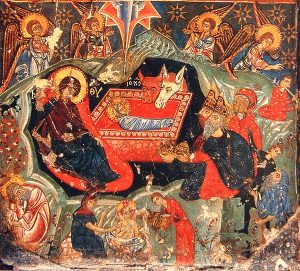
    1225nativity14

    С Рождеством Христовым


    Afanassi Fet 

    Ночь тиха. По тверди зыбкой
    Звезды южные дрожат.
    Очи Матери с улыбкой
    В ясли тихие глядят.
    Ни ушей, ни взоров лишних, –
    Вот пропели петухи – С Рождества
    И за ангелами в вышних
    Славят Бога пастухи.

    Ясли тихо светят взору,
    Озарен Марии лик.
    Звездный хор к иному хору
    Слухом трепетным приник, –

    И над Ним горит высоко
    Та звезда далеких стран:
    С ней несут цари Востока
    Злато, смирну и ладан.

    Conversations avec Edmond Husserl (1931-1938)

    EXTRAITS DES CONVERSATIONS AVEC EDMOND HUSSERL (1931-1936)

    Adelgundis Jaegerschmid, O. S. B.

    En septembre 1938, cinq mois après le décès de Husserl, sa veuve Malvine m’adressa le père franciscain belge H. L. van Breda (le fondateur des Archives Husserl à Louvain), qui était à la recherche d’informations sur la personne de Husserl pour sa thèse de doctorat. Au vu de ce qu’avait d’inquiétant le contexte politique mondial à l’époque, le père van Breda m’a incitée catégoriquement à taper ces souvenirs le soir même. Ces souvenirs sont un document historique, une ressource modeste, dépourvue de tout vernis littéraire – et ne souhaitent pas non plus être autre chose.

    1931-1938

    Visite en soirée, durant presque deux heures. J’essaie très rapidement de faire en sorte que ce soit Husserl qui mène la conversation. J’émets parfois des objections et le force ainsi à clarifier certains problèmes difficiles.

    « La vie monastique, la vie religieuse chrétienne en général, se déroule toujours sur le fil du rasoir. Elle chute aisément, mais se relève toujours. Elle n’a qu’un but : voir le monde en Dieu, mais elle ne nie pas le monde. Le risque est alors, bien sûr, que l’âme s’enracine par trop dans le monde ou bien que la charité active ainsi que la piété deviennent de simples routines ».

    =========

    Il parle ensuite de la religion indienne. Il me recommande chaleureusement le livre de Romain Rolland sur Gandhi1, qu’il venait de lire.

    « Par opposition au christianisme, la religion indienne a le Nirvana ; elle nie le monde. Toute activité suscite de la passivité et court ainsi le risque de la stagnation. Mais toute passivité – le repos en Dieu conçu comme aboutissement – requiert de nouveau l’activité : la charité active ».

    – AJ : « C’est exactement ce que dit Thomas ».

    – Husserl :

    « Oui, tous les grands hommes de la Terre parlent ainsi. Toute résolution est déjà une activité de la volonté. Tout ce qui est acquis comme un résultat de l’activité produit de la passivité et, par conséquent, un risque. Ce qui signifie donc que tout ce qui a été acquis doit toujours être réactivé ».]

    ==========

    Nous parlons de la vie religieuse et de la vocation [Berufung] à une vie au sein d’un ordre. AJ :

    « Pour vivre la vie religieuse, il faut en avoir la vocation [berufen] ».

    – Husserl :

    « Mieux : il faut y avoir été appelé [gerufen]. Cela relève purement de la grâce. Je n’ai pas accès à cette sphère, bien que j’aie toujours été l’un des plus fervents chercheurs de Dieu depuis ma jeunesse. La science authentique est honnête et pure ; elle a l’avantage de la véritable humilité, et pourtant, elle a en même temps la capacité d’être critique et de faire des distinctions. De nos jours, le monde ne connaît plus la science véritable ; elle est tombée dans la spécialisation la plus étroite. C’était différent à notre époque. L’amphithéâtre était notre église et les professeurs étaient les prédicateurs ».

    ========

    Je lui racontai comment, durant notre jeunesse, nous avions cherché à l’université la science authentique au-delà des examens et de la question des moyens de subsistance, et comme nous l’avions servie dans un pur enthousiasme. Bien sûr, seuls quelques-uns, en très petit nombre, adoptaient un point de vue qui visait par-delà les examens. J’ai alors conclu en disant :

    « Il nous est arrivé, à nous aussi, de brûler pour la science. Mais comment pensez-vous que la science puisse sauver notre monde et l’élever davantage ? Car ce n’est toujours que pour quelques-uns qu’elle est disponible ».

    Husserl :

    « La science authentique rend désintéressé et bon. Aujourd’hui, même les savants intégralement matérialistes ou naturalistes (les savants dans les sciences naturelles) peuvent consacrer leur vie à leur science, même les mathématiciens chez qui on ne trouve pas une once de foi. Dans ces conditions, la science est bonne même si elle ne conduit pas à la religion. D’un autre côté, pourtant, il est impossible de prétendre qu’une science conduisant ultimement à la religion et à Dieu ne soit pas une science authentique. La pédagogie, sous toutes ses formes (pas seulement à l’école) doit porter plus loin les résultats de la science authentique et les mettre en pratique de sorte que le monde en soit renouvelé. C’est ce que vous devez faire, sœur Adelgundis ; la détresse de l’âme est grande. Ce qu’il y a de meilleur sera toujours l’amour – l’amour authentique et pratique de son prochain, qui est fondé dans l’amour de Dieu, lequel ne se trouve pas toujours au sein des confessions. Il arrive souvent que la religion soit discréditée parce que les personnes religieuses ne sont pas du tout intérieurement religieuses. Il s’agit si souvent d’une simple apparence, si souvent de convention et de superstition !

    « La science authentique doit être science universelle, embrassant la totalité des évidences sur le fondement de l’autonomie, totalité au sein de laquelle la religion est elle aussi incorporée. Le christianisme a sa place dans cette sphère. En partant de cette science universelle telle que la phénoménologie l’a élaborée, on parvient finalement à un développement théologique qui conduit ultimement à Dieu, à l’absolu ».

    ===============

    En réponse à ma question de savoir s’il croyait donc réellement en l’absolu (il l’avait dénié précédemment), il me dit :

    « Ce sont là des relativités, et nous devons avoir le courage de voir ces relativités en face. Elles peuvent elles aussi être des évidences ; par exemple : pour des peuples primitifs, la logique contient des évidences complètement différentes des nôtres. En dernier ressort, nous pouvons restreindre notre perspective et comprendre cet état de fait ; nous pouvons nous y plonger en pensée. C’est bien aussi de cette façon que je vis dans ma conscience la douleur d’autrui sans en faire l’expérience dans mon propre corps. La phénoménologie comme science est là pour ceux qui n’ont pas d’accès à la foi comme celui que vous avez. Que peuvent faire tous ceux qui ne rencontrent la religion que tard dans la vie ? Ils ne parviennent plus à entrer dans une relation personnelle avec elle ».

    page4image1127168

      1936

    « Ces derniers jours, j’ai reçu d’Amérique un journal dans lequel un Jésuite – donc l’un des vôtres, sœur Adelgundis – m’a présenté comme un philosophe chrétien. Je suis consterné par cette initiative précipitée et excessivement zélée, dont je ne savais rien. Comment peut-on faire une chose pareille sans me poser la question ?! Je ne suis pas un philosophe chrétien. S’il vous plaît, veillez à ce qu’après ma mort on ne me fasse pas passer pour tel. Je vous ai déjà souvent dit que ma philosophie, la phénoménologie, est censée n’être rien d’autre qu’un chemin, une méthode, destinée à montrer justement à ceux qui se sont éloignés du christianisme et des églises chrétiennes le chemin qui reconduit à Dieu ».

    page18image1322432

    26 décembre 2024
  • Russian Icons and the Russian Avant-garde, Two Major Facets of Universal Art

    Russian Icons and the Russian Avant-garde, Two Major Facets of Universal Art


    Jean-Claude Marcadé

    « The invisible world of divine glory is not the only one to have found its expression in Russian icons. Two planes of being, two worlds dwell there in a dynamic, living way. On one side, the eternal peace of the hereafter, and on the other side, a world that seeks God but has not yet found Him, a chaotic, sinful, suffering existence that nevertheless aspires to the peace of God. As a parallel to these two worlds, the icon reflects and opposes two Russias. One is already anchored in eternal peace, and resounds ineffably to the cherubim’s hymn, « Let us now lay down all the cares of this world’. The other presses against the temple, aspires to it and expects intercession and help. It is around the temple that this Russia builds its secular and ephemeral edifice. »

    Eugène Troubetzkoy, Trois études sur l’icône (1916)[1][i]

    « The art of icon painting made me understand the emotional nature of peasant art. I had loved it before, but had not elucidated its scope. My eyes were opened by the study of icons […]. Icon painters, with great technical skill, transmitted an entire content in an anti-anatomical truth, without any aerial and linear perspective. They used colour and background within a purely emotional perception of the theme. »

    Malévitch, Autobiographie (1933)[2]

    Russian plastic arts were long the poor relation of art history, owing to a deeply ingrained notion that Russia undoubtedly produced an impressive body of literature, and original music and ballet, but that it was not a country of painters. Despite a huge exhibition of Russian art organised by Diaghilev at the Autumn Salon in Paris, in 1906, despite the Slavic element in Diaghilev’s Ballets Russes which strongly influenced an entire period, despite Louis Réau’s book L’Art russe des origines à Pierre le Grand, published in 1921[3], this opinion was upheld by many people who saw no seat of learning other than European studios, believed that Western training was essential to become an artist, and occulted Russia’s history.[4] Until the day in the 1960s when art historians (Camilla Gray, Troels Andersen, Valentine Marcadé) revealed the extent of Russian pictorial art movement in the first quarter of the twentieth century, showing Russia to be an artistic centre that was just as original and universal as it was during the flowering of icon painting from the fifteenth to the seventeenth century.

    Icons played a key role in the liturgical, theological and intellectual life of Russia, in the same way as music did.[5] It is well known that Eastern Orthodoxy, in Rus’ before the fourteenth century, then in Muscovy and the Russian Empire, gave a special place to the liturgy, developing and amplifying it until it not only provided religious and mystic nourishment, but became the impetus for philosophical thought, and the wellspring of spiritual and aesthetic beauty. The sumptuousness of the Russian Orthodox liturgy leaves few of our contemporaries unmoved. Remember that Kandinsky, that quintessential twentieth-century modernist, said that he had experienced the synthesis of the arts, the phenomenon that in the late nineteenth century was known as Gesamtkunstwerk  or synaesthesia, in the izbas of the Volgda region and in the « churches of Moscow, particularly in the Assumption Cathedral and at St Basil the Blessed »:

    « In these extraordinary izbas, I discovered for the first time the miracle which I later included in my work. That is where I learned to walk right into the picture myself, not just give it a sidelong glance, but live in it. I clearly remember that I stopped on the threshold before this startling sight. The table, the benches, the enormous great stove, the cupboards, the dressers, everything was painted with rich, colourful decorations. On the wall there were lubki [popular Russian woodcuts]: a symbolic representation of a gallant knight, a battle or a song rendered in colour.

    The Beautiful Red Corner [where the icons are kept] was covered with painted and printed icons, and in front of them a night-light glowed red as if it knew something in its heart and had its own inner life, a proud and humble star, whispering mysteriously to itself. When at last I stepped into the room, the painting encircled me and I walked right into it. Ever since, that feeling has lived unconsciously within me, although I have had the same experience in Moscovite churches and particularly in the Assumption Cathedral and in St Basil the Blessed. »[6]

    The last two Moscovite churches were not a random choice, for they are both still lined with frescoes or murals, and the wall of the iconostasis is covered with icons, and therefore with paintings. The liturgy and various services were celebrated in these prestigious parts of the Kremlin. Anyone who attends the liturgy of St John Chrysostom in the Russian orthodox rite is inevitably struck by its resemblance to total theatre. The procession of priests, acolytes and deacons moves in obedience to a changeless symbolism from either side of the iconostasis, around the altar, passing at times through one of the side doors of the iconostasis, going from the church to the sanctuary and vice versa, spilling out into the area set aside for the congregation. These movements are accompanied by the marvellous, familiar music that has been played for centuries. Then there is ample use of incense, especially in front of the icons or the faithful who are, in a way, archetypal icons since

    « God made man in his image at the time of creation. »[7]

    Lastly, the congregation moves, too, since there are no seats in the centre of a traditional orthodox church: the faithful move towards the various icons, put candles before them, kiss them, cross themselves but not in unison, bend over to touch the ground with their right hands to seek forgiveness and as a sign of submission to God’s will, and prostrate themselves in some parts of the liturgy. Although the gestures made by the celebrants follow a changeless pattern, the movements of the faithful are more random. Thus, group and individual movements are reconciled.

    Christian Rus’ was plunged into Byzantine theological culture from the outset, and therefore was deeply involved in the intense iconographic culture which followed the « triumph of Orthodoxy », meaning the triumph of the veneration of icons over Iconoclasm, after the seventh ecumenical council, at Nicaea, in 787 (the Early Church’s last ecumenical council). The Rus’ first iconographic masters were Greek and their art had a profound influence on iconography in Rus’ from the eleventh to the thirteenth century. Gradually, specifically Slavic features began to appear in the conventional Byzantine models. The Tatar invasion and the capture of Kiev in 1240 hastened the city’s decline as a great artistic centre.[8] Henceforth, the Vladimir and Rostov schools developed in the East, whereas Novgorod,

    « after the sack of Kiev, became the representative of Byzantine art in Rus’; that is why the Novgorod school is venerated as the oldest Russian school. »[9]

    The Moscovite state witnessed a flowering of icon painting in the fourteenth and fifteenth centuries. The political climate was conducive to such a development, with the loosening of the Tatar yoke, the « reunification of the lands of Rus’ » and the extraordinary religious revival, under the influence of Hesychasm, led by Saint Sergius of Radonezh in the late fourteenth century.

    Saint Sergius of Radonezh was of incalculable importance for Russia. He set in motion

    « the moral, then political, renaissance of the Russian people. »[10]

    From this time on, the close link between the fervent life of the monasteries and civil society became a key fact in understanding Russian life and its political, intellectual and artistic manifestations up until the Bolshevik revolution of 1917. The spiritual thinking of Dostoyevsky, among others, stems from this. The great theologian, thinker, art theorist and scholar Father Pavel Florenskij said:

    « The notion of morality, the idea of the State, painting, architecture, literature, Russian education and science, all these great lines of thought converge on our saint [Sergius of Radonezh]. In his person, the Russian people became aware of itself, of its place in history and culture and of its cultural task. It is only then that it earned the right to independence. »[11]

    In the orthodox world, the fourteenth century was the time of the controversy between the Hesychasts, partisans of uninterrupted prayer (the Jesus prayer) which led to communion with the Holy Spirit and a vision of the uncreated light that once appeared on Mount Tabor, and the humanists, who upheld the rationalist principle.[12] The triumph of Heyschasm, from St Sergius of Radonezh onwards, had major repercussions for Russia, notably the fact that it did not experience a phenomenon similar to the Western Renaissance. The Heyschast thread is apparent throughout Russian icon painting, dominated by the quest for divine harmony, gentleness, tenderness, and the search for the essential stripped of all psychologism, anecdotal detail and the noise and bustle of time.

    The Trinity is another image which dominates Russian iconographic spirituality after St Sergius. The laura founded by the

    « first teacher of the Russian popular mind » (in the words of the historian Ključevskij)

    was dedicated to the Trinity and remained the heart of Russia for centuries. Similarly, the most famous icon, one of the highest achievements of all Russian art, is the Trinity of the Old Testament by St Andrei Rublev. Tradition holds that it was painted to the glory of the saintly founder of the monastery in the first half of the fifteenth century, some time after his dormition (1392). It stayed near his tomb for over five hundred years until it was taken to the Tretyakov Gallery in 1929, where it is still admired, and even venerated, by visitors.

    Mahmud Zibawi, one of the specialists in icons among the new generation, neatly defined the specific nature of Russian iconography:

    « Now the ‘Third Rome’,[13] Russia carries art towards the quietness of the heyschia. The abstract wins over the concrete. All dramatisation is swallowed up. Men are ‘earthly angels’. Light, tranquillity, joy, peace and love abound. ‘The new, non composite world’ replaces the fallen world. The image reveals « God’s dwelling place among men. » (Apoc. 21:3).[14]

    Unlike the Western religious painting, an icon is not an individual creation, even if each icon painter adds his personal touch, and makes his own choice in the treatment of the subjects and colours from among the canonical archetypal models. An icon can be created only with an ecclesiastical consensus, within the prophetic movement and spiritual experience of the church community.

    The apparent uniformity of icons is constantly belied by various traits in the work of icon painters who closely follow the canons in the composition of the subjects, and the handling of colour. Then, as Bruno Duborgel explains:

    « Depending on whether it is intended for a church or for private use, depending on the material and the style, depending on the religious practices associated with it, etc…, the ‘same’ image (thematically speaking) represents faces and lifestyles that are differentiated by myriad details. »[15]

    Although, at first glance, icons may seem repetitive and monotonous, close scrutiny soon dissipates this impression. Admittedly, it is unthinkable to invent new iconographic archetypes, based on the individual imagination of a particular artist rather than on the assent of the entire church community. Yet, what diversity we see in isolated figurative elements, apart from the attributes that are obligatory for recognising the icon, and in the subtle colour variations permitted by the symbolism! Often the painter adds a scene from everyday life, inserting it in the mystical world of the main subject. Or else, there is a pronounced taste for ornamentation, floral in particular. Although it started to spread in the seventeenth century, in the work of painters such as Simon Uchakov, the trend towards elaborate decoration and miniaturisation flourished with the Stroganov school.

    Russian scholars who have studied Russian icons have pointed out that it represents a cosmos in itself, an order that is inscribed within the cosmos of the temple, which is the earthly prefiguration of a transfigured cosmos. Here there is obviously no place for naturalistic, « living » gestures. The hieratic character and apparent immobility of the icon transports us into another dimension that has nothing to do with everyday life; it is a dimension midway between the human and the divine, between the hereunder and the transcendent. The best Russian icons have managed to bring out the divine nature of humanity, the fusion of the divine and the human, the crest between the invisible and the visible, the hidden and the apparent. The barrier that separates these two worlds inside the church is the iconostasis:

    « The iconostasis is the border between the visible world and the invisible world […] The iconostasis is the manifestation of saints and angels: firstly the Mother of God and Christ Incarnate – witnesses proclaiming the reality of the world beyond flesh, » writes Father Pavel Florenskij.[16]

    The specifically Russian use of the iconostasis developed and was consolidated between the fourteenth and fifteenth centuries. The double Royal Doors in the centre give the celebrant access to the altar; they are covered with icons representing the Annunciation, at the top, and the four Evangelists, while the door posts are covered with a procession of the local saintly bishops and deacons.

    The side doors of the iconostasis, one leading to the prothesis (the table on which the Eucharist is prepared) and the other where the liturgical vestments are kept, are traditionally decorated with icons of the archdeacons St Stephen and St Lawrence.

    The Eucharist is represented above the Royal Doors (two full-length figures of Christ, giving the bread and wine to the apostles).

    The rows of icons above the doors in a Russian iconostasis have been added over the centuries. From Byzantium, there remains the changeless first row with a Deisis in the centre, that is the Mother of God and St John the Precursor (the Baptist) imploring Christ, usually shown as Christ in Majesty; in the fourteenth century, icons of the archangels Michael and Gabriel and those of Peter and Paul were shown on either side of these three central figures.

    The row above the Deisis was added in the fourteenth century: the Twelve Great Feasts representing scenes in the life of Christ and Mary.

    At the end of the fifteenth century, another row was added above the feasts, the row of the Prophets, from Moses to Christ, arranged around the central icon of the Mother of God of the Sign [Znamenie] (Mary has her hands together in prayer and enfolds Christ Emmanuel in her breast).

    Lastly, in the sixteenth century, a row of Patriarchs completed the screen. It presents Old Testament figures from Adam to Moses and usually has a representation of the Trinity in the centre, in the form of the three angelic Travellers who appeared to Abraham. That is the overall pattern, but variations have been introduced at different times and in response to local traditions.

    Icon painting in general, and Russian icons in particular, follow the archetypal models set out in the painters’ manuals only in their essential conformity to ecclesiastical canons. A comparison of the works of three famous icon painters of the heyday of Russion icon painting – Theophanes the Greek (late fourteenth century), St Andrei Rublev (early fifteenth century) and Master Denis (Dionisij) (late fifteenth and early sixteenth centuries) show that their styles are as marked as styles in the history of Western painting. Egon Sendler analyses the differences between the various schools in the treatment of the background:

    « Green predominates at Pskov; in Novgorod, we find red backgrounds (St Elijah and St George). In Moscow, from the sixteenth century on, backgrounds become quite dark, even brown. In the work of the Stroganov school, there are often dark olive green tones. These colours correspond to the style of icon painting. »[17]

    The recognition of Russian icons, as distinct in spirit and style from all the Eastern and Byzantine branches, began in Russia itself in the second half of the nineteenth century and was fully accepted in the twentieth century. The writer Leskov did much to make icons known « as the beginning of Russian painting. »[18] His short story The Sealed Angel (1873) which Bernard Berenson ranked alongside Balzac’s Le Chef-d’œuvre inconnu as one of the few literary masterpieces to have treated art in a pertinent way, contains technical details on the art of icon painting and an aesthetic appreciation of icons, based on an analysis of their characteristics. This fostered a return to the roots of this liturgical art, that had been disfigured since the end of the seventeenth century by the « European manner », that is by Western painting with its search for mimetic sensuality and its overriding concern for « scientific » perspective. Leskov set his story in the milieu of the Old Believers, because they had maintained the purity of the ancient tradition of icon painting until the seventeenth century, when Italian influences coincided with its slow decline into decadence.

    The leader of the Old Believer schism (raskol), the archpriest Avvakum (1620-1682), who was opposed to the Moscovite patriarch Nikon and was burnt at the stake by the official church, raged:

    « God has allowed sinful icon painting to proliferate in Russia […] Emmanuel the Saviour is portrayed with a puffy face, scarlet mouth, curly hair, thick muscles and arms, and the overall look of a German except that they have not stuck a sword in his belt […] Good painters in olden times painted the saints differently: they fined down the face and hands and everything that has to do with the senses, and showed them emaciated by fasting and labour and countless afflictions. Whereas now, you have changed the face of the saints, you paint them as you are yourselves.[19]

    Avvakum could well have been thinking of his contemporary, Semen Ushakov, whose icons sometimes had a softer, more carnal and realistic look than earlier works. Ushakov’s icons are closer to Western easel paintings, even though he still used the conventional architectonic structure. He remains the great religious painter of the second half of the seventeenth century, without having all the virtues of a traditional icon painter.

    The severity that the vehement archpriest Avvakum demanded of holy images is only one of the aspects of icon painting. A very rich spectrum of iconic expression developed in Russia, ranging from the outward austerity of the monks, whose bodies bore witness to the struggle against evil impulses, to the finesse of the angels’ bodies in Rublev’s work, and included the portrayal of a « national Russian character », simultaneously physical and spiritual, in many icons of Christ. Andrei Tarkovskij shows this clearly in this film Andrei Rublev, a grandiose fresco which traces the very incarnate and highly spiritual itinerary of the Russian character in the fifteenth century. Contamination by profane painting robbed icon painting of its true meaning, which is theological and philosophical as much as aesthetic.

    In our century, the scholar Father Pavel Florenskij has strongly accentuated the opposition between icon painting, such as it is perpetrated in Orthodox countries, and the development of profane and religious painting in Catholic countries (dominated by oil painting) and Protestant countries (dominated by engraving). He sees in the techniques themselves an indication of their « ontological » divergence; on the one side, the panel of living wood, the surface of which was worked for days and months before outlines were drawn and colours applied, with egg yolk and water, then highlights of white lead, gold dust, etc.; and on the other side, oil paints, canvas or paper. Father Florenskij stated:

    « Iconography is the metaphysics of concrete existence. Although oil painting is better suited for reproducing the sensory data of the world and engraving captures its rational schema, icons bring out the metaphysical essence of what they represent. Although the pictorial and graphic techniques developed in response to cultural needs and appear to be a résumé of the period, the technique used for icons is a response to the need to express the metaphysics of the world. What is portrayed on the icon is in no way fortuitous, either empirically or metaphysically. »[20]

    In another short story by Leskov, At the Confines of the World (1875), one of the characters says that, contrary to Western religious art, there is an absence of sensuality in the Russian Orthodox representation of the face of Christ, which

    « has an expression but no passion […].His features are scarcely suggested but the impression we have is complete. Admittedly, he looks rather like a peasant, but despite that, veneration is due to him. » The bishop, who is defending icons before a group of educated but more or less sceptical listeners, adds, « How did our old masters achieve such charm in this representation? The secret died with them and their despised art. It is clearly impossible to want a simpler form of art; the features are scarcely shown but the impression is complete. He looks a little rough, I know, and you would not invite him into a winter garden to listen to the canaries, but there is no great harm in that. »

    Leskov and Dostoyevsky also refuted the new interpretations of Christ in the committed realistic painting of the « Ambulants ». The Ambulants’ religious painting (Repin, Nikolaj Gay, Victor Vasnecov…) has little to do with the tradition of Russion icon painting.

    On the other hand, all the innovative Russian artists of the first quarter of the twentieth century (Natalia Goncharova, Larionov, Malevich, Tatlin, Filonov) were influenced by icons. Icons played a primordial role in the aesthetic revolution led by the « Russian avant-garde » in the 1910 and 1920s. It made these painters realise what a formal treasure it represented. Moreover, it drew easel painting towards the icon, that is, towards an independent space with its own construction and rhythm.

    Natalya Goncharova caused a scandal at the « Donkey’s Tail » exhibition in Moscow in 1912 with a panel representing The Four Evangelists (Russian Museum, St Petersburg), resembling the icons in the apostolic row on the iconostasis. The censorship committee refused to accept that works on a sacred subject (there was also a work entitled God in the exhibition) could be shown in an exhibition with such a facetious and provocative name. But Natalya Goncharova’s works were not icons; they were paintings on a religious theme. The same applies to another painting by Goncharova, The Ancient of Days, or to her sets for the ballet Liturgy designed (but never made) for Diaghilev’s Ballets Russes in 1915. The artist also painted « real » icons, but it must be admitted that few painters in this field have achieved the spiritual perfection of ancient icon painting. In areas where there is no confusion between icon painting and easel painting, icons give decisive clues for understanding easel painting. Goncharova included figurative elements derived from the icon – almond-shaped eyes, a mystic squint, symbolic colours – in a series of paintings on work in the fields, and rustic activities. Larionov gave his Venus Katsape (Nijni-Novgorod Museum) the eyes of an icon. In the work of all the artists in all the currents of the Russian school in the twentieth century, the human face was influenced by iconic faces: portraits are frontal, eyes gaze on another reality, with mystical intensity (sdvig), traversing the visible world without focusing on it, and the overall impression is hieratic and meditative: for example, Self Portrait by Lentulov, Portrait of the Futurist Poet, Vasily Kamiensky by David Bourliuk (1917), Head of an Usbek Boy (1921) or Portrait of Anna Akhmatova (1922) by Petrov-Vodkine (all in the Russian Museum, St Petersburg). Jawlensky was deeply influenced by Russian Byzantine aesthetics in the representation of human faces. He gave them mystic nuances through the use of a sumptuous, refined palette, and achieved a balance between the strong emotional power of the colours and expressive ascesis, which bordered on abstraction in the last meditations of the 1930s.

    Jawlensky and Malevich, each with his own pictorial schema and iconological view, took the human face as a metonymic paradigm of the Face of the World throughout their work.

    The hieratic aspect of the work of Larionov, Natalya Goncharova, Tatlin and Malevic is derived from the icon as much as from lubok, archaic art, or from the Nabis. A single gesture sums up in the image the myriad gestures repeated over years, or even centuries, in our everyday life or work. Filonov, in his Promethean project of recreating the entire world on the surface of the painting, borrows formal and thematic procedures from icon painting. Thus in the Formula of the Proletariat from Petrograd (early 1920s) in the Russian Museum, he uses the combination of an unusual number of parts of the body (as in the icons of The Mother of God with Three Hands or The Holy Trinity in the shape of three eyes), hieratic poses, and the representation of two feet separately or faces only (as in icons with a metal overlay or riza).

    Tatlin was trained in the technique of icon painting and integrated this skill into his paintings from 1911 to 1913: an impression of eternity in faces and poses, coloured light emanating from within the forms, as in The Sailor in the Russian Museum, and the flesh tones of the Nudes painted in 1913. The levkas, a mixture of chalk and animal glue which forms the first luminescent white background on the icon panel, was used in Tatlin’s relief constructions in 1914-15. In the Nudes (State Tretyakov Gallery, Moscow, and the Russian Museum, St Petersburg), the contours, especially the curves, are treated with the straight line found in Picasso and Braque’s early cubist work, with the same aim of constructing the picture in an architectural way. In Tatlin’s work, an extra impetus comes from Michelangelo’s imposing Sibyls in the Sistine Chapel, with a leaning towards sculptural forms in the Nude in the Russian Museum. In these paintings, he seems to be already preparing for the synthesis of painting, sculpture and architecture that he achieved the following year, in 1914, by creating the genre of Painted Reliefs, Relief Constructions and Corner Reliefs.

    We should not lose sight of the fact that Tatlin started his career as an icon painter. Admittedly, the female nude is hardly a subject for ecclesiastical icons, one of the main principles of which is the elimination of all sensualism, and even sensuality. The nudes of the icons representing St Mary the Egyptian or mad devotees (jurodivye) (such as St Basil the Blessed) are completely asexual (we find the same asexual nudes in Filonov’s work). The sex of Tatlin’s Nudein the Russian Museum is show in a blatantly realistic manner (Gabo’s sculpture Torso later used the same procedure). Yet, these works could not be called erotic, in the way that some European works are, such as the female nudes of Cranach the Elder, Goya or even Manet in which the flesh trembles with the loving touch of the artist’s brush.

    Perhaps Father Pavel Florenskij was right to say that oil painting, by its consistency, solidity and carnal nature, its oily, gleaming strokes, is linked to the Catholic culture focused on « phenomenological sensibility »[21] that emerged from the Renaissance.

    « Although oil painting is better suited to reproducing the sensorial data of the world, and engraving, its rational schema, icons, by contrast, bring out the metaphysical essence of what they represent. »[22]

    Nikolaï Punin, in another context, remarked that icon painting

    « used colour as a pictorial material, as the result of colouring pigments […] Icon painters never understood colour as relationships in the chromatic range, as values. Hence the magnificent traditions of a powerful, healthy art, traditions which have been preserved until quite recently in icon painting schools and decorative workshops. »[23]

    The background of Tatlin’s two Nudes is utterly « iconic ». The coloured background on which the outline of the subject is drawn is called the sankir[24] in the technical language of Russian icon painting. Its composition varied according to the period and the school.

    « Modern sankir, » writes Pavel Florenskij, « is made from burnt Sienna, light ochre, a small amount of Dutch soot, etc. »[25]

    This layer, which is applied once the wood has been prepared with glue and chalk (levkas), brings out all the beauty of the model through the contour line (opis’) which is coloured to remove all trace of drawing. The artist thus obtains a fusion of the model and the « ontological background » which led Punin to say, with slight exaggeration, that

    « the influence of the Russian icon on Tatlin is undoubtedly greater than the influence of Cézanne or Picasso. »[26]

    In Tatlin’s Nudes, the flesh is carried into a dimension that is other than that of the senses, a purely pictural dimension. The dominant reddish ochre colour is a quintessence of all flesh colour, not an imitation of any one in particular. To quote Punin again:

    « For Tatlin, colouring means above all studying the pigment; colouring particularly means working the surface picturally. The colour is given objectively, it is a reality and it is an element; the relationship between the colours does not depend on the spatial relationships that exist in reality. Red is red, whatever the amount of light between it and the eye; the ochre on the plank of a palisade and the ochre on the tip of the brush do not differ qualitatively, any difference between them lies only in their chemical composition and the way they are laid down. »[27]

    Likewise, there is no face in Tatlin’s two Nudes. There is, therefore, no personalisation, no reference to an ephemeral living state. Although we cannot help thinking of the « non-erotic » nudes painted by Picasso and Braque after the Demoiselles d’Avignon (1907-1909), we can also see the conceptual influence of Neo-Primitivism in which nudes (those of Larionov, for instance), even if sexual, have a function other than erotic and are, in any case, beyond eroticism.

    The distinctive feature of Tatlin’s iconographic system, which runs throughout his work, is what David Bourliouk, in 1912, called « Roundism. »[28] Roundism opposes rounded surfaces to units formed by straight lines. It is a trait found in Leger, and even in Malevich in 1911-1912. But in Tatlin’s work it is dominant and conditions all the artist’s output up to and including the Monument to the Third International in 1920 and his Letalin in the early 1930s.

    This procedure, which consists in putting a full length figure across the entire canvas, dominating, by its stature, all the other figurative elements which are represented in a smaller size, obviously comes from the structure of the « biographical » icons which show a saint surrounded by compartments (klejma) that recount episodes in this life (see, for example, in diametrically opposed styles: Boris Koustodiev’s famous Portrait of Chaliapine and many of Malevich’s post-Suprematist paintings).

    The « inverted perspective » taught by icon painting was of capital importance for innovative Russian artists in the twentieth century in their refusal to be bounded only by the « scientific perspective » inherited from the Renaissance.

    At the end of the 1920s, Malevich drew on the archetypes of « Christ Acheiropoietus » (Christ the Saviour) and « Christ Pantocrator » (Christ in Majesty) to create his own icon-paintings. He did not imitate any particular icon. He constructed an image from the elements of icon painting, elements that he thought out afresh and made his own for the needs of his painting. Several of Malevich’s post-Suprematist faces suggest icons, and yet they have no precise model in icon painting as a whole.

    The link between icons and the Russian avant-garde was revealed in a stunning, even « exoteric » way during the « Last Futurist Exhibition of Paintings 0 to 10 » in Petrograd, at the very end of 1915. Malevich installed his « Suprematism of Painting » like the « beautiful red corner » of Russian orthodox houses, with The Quadrangle (later commonly known as « Black Square on a White Field ») as the central icon, which he called « the icon of our time ». This did not mean that it was an orthodox icon that is an object of liturgical worship, as understood by the seventh ecumenical council at Nicaea (Nicaea II), a tradition kept intact in the Eastern Church, because an ecclesiastical icon has no meaning without the fusion of the human and the divine in the incarnation of Christ. From this orthodox point of view, Malevich’s icon, which shows only the deus absconditus, is incomplete and smacks of monophysitism[29]

    For Malevich, the Suprematist icon had to create a new pictural relationship, going beyond the orthodox icon and easel painting, by developing a new site. It was the expression of an essential image, rid of all figurative clutter, which could be opposed to the imago, the effigy. Its uniqueness was thus restored. Malevich was not only influenced by the formal aspect of icons; he had a brilliant intuition of the philosophical and theological principle of the icon, namely that the real presence is not in the symbolic image represented, but in the relationship between this image and the absent model:

    « The invisibility of the image is the source of the visibility of the icon. »[30]

    The Quadrangle oscillates between iconoclasm and iconicity, between the effacement of carnal reality and the manifestation of the only authentic world, the non-objective world (bespredmetnost’). We see a « Hesychast » leaning here, for example, in the Suprematism of Malevich whose great work is called The Non-objective World or Eternal Repose [Mir kak bespredmetnost’ ili večnyj pokoj], which brings to his canvases the silence, minimalist ascesis and harmony of the absence of object.

    Through the holy image, the icon painter accomplishes an act which enters into the liturgical life of the Church. The easel painter makes visible the invisible being of the world. A similar aim but a different approach.

    Note the extent to which Russian avant-garde art, reputed to be materialistic, was obsessed by the Judeo-Christian tradition. Two events are worth mentioning: in 1912, a discussion in St Petersburg and the publication in German of Kandinsky’s book Concerning the Spiritual in Art,[31]; and in 1922 – the publication in Vitebsk of Malevich’s treatise God is not Dethroned. Art. The Church. The Factory. [Bog ne skinut. Iskusstvo. Cerkov’. Fabrika].

    Kandinsky-Malevich: two figureheads of universal art, two pillars of the avant-garde, two founders of Abstraction, who inaugurated and concluded, to put it succinctly, the adventure of the most radical modernity, a modernity which, let us not forget, put a definitive end to over four centuries of ever-recurring codes. Kandinsky and Malevich, who inaugurated and concluded this period by a demonstration of the « spiritual in art, and in painting in particular » and by the statement that « God is not dethroned. »

    Although Kandinsky was the first to formulate, in German and Russian, the principle of the independence of artistic creation and the shaping of artistic material, like all Russian artists in the avant-garde, he categorically refused the temptation of art for art’s sake. Art for its own sake appears only in periods when the « soul has been abandoned and stifled by materialistic ideas and unbelief. »[32] In a note added during the revolution to his autobiography Stages [Stupeni], Kandinsky similarly said that such an attitude, that is attached only to the exterior of things, is « atheistic » (bezbožnoe).[33]

    In 1910, in his article « Form and Content » published in the catalogue of the « Second Salon » of Izdebski in Odessa, Kandinsky proclaimed the advent of the « Era of High Spirituality » (Epoxa Velikoj Duxovnosti) founded on the « Principle of Inner Necessity » (Princip Vnutrennej Neobxodimosti).[34] Art « serves the spiritual »,[35] that is, « serves the divine ».[36] The creative act is a « total mystery »;[37]  the artist is not a frivolous creator, « his work is difficult and often becomes a cross to bear. »[38]

    In the 1918 edition of his memoirs, published in German in 1913, by Rückblicke, he adds anti formalist and anti materialist remarks such as:

    « Now I know that ‘perfection’ is only apparent and ephemeral, and that there cannot be perfect form without perfect content: the mind determines matter, not the contrary […] The great Broom of History which will sweep the inner mind clean of the rubbish of outward appearance will appear, here too, as the impartial final judge. »[39]

    It is precisely the relationship between an inner and an outer sphere which was part of the core of Marxist-Leninism, vulgarised through all the media that were possible at the time. Alongside repetitive slogans such as « Workers of the world unite! » and, less often, « Religion is the opium of the people », we find the famous Marxist truism: « Das gesellschaftliche Sein bestimmt das Bewusstsein » [The social being determines the conscious being] which sounded like a proverb in the Russian translation: « Bytie opredeljaet soznanie » [Being determines consciousness]. What Kandinsky says is exactly the opposite: he makes an absolute claim for the primacy of the mind.

    In 1922, in his treatise God is not Dethroned, Malevich took a similar stance in relation to the Marxist axiom; certainly the concept of being, (bytie) is more complex in the thinking of the founder of Suprematism, since what is, is nothing, that is, from another point of view, the lack of object, bespredmetnost’. But he concludes that « this ‘nothing’, as being, does not determine my consciousness. »[40] So Malevich, too, took the opposite stance from the Marxist formula. He repeated this position in his article « The Tumbler », in 1923[41] The tumbler, (in Russian: van’ka-vstan’ka) is a pot-bellied figurine from the far east, sitting cross-legged on a weighted half-sphere which brings it back to an upright position whenever it is pushed. The tumbler is God – constantly rejected, regularly dethroned, and yet always rocking back to an upright position, and never dethroned. The article « The Tumbler » is a highly ironic response to the attacks of the orthodox Marxist Issakov who had rather heavy-handedly denounced any religious deviation in avant-garde art, and had included in that category « the cock-and-bull story of God is not Dethroned« .

    This diatribe was later followed by a commentary by the Marxist theorist of Constructivist-Productivist art, Boris Arvatov, who, among other compliments, called Malevich a « degenerate »!

    In any case, Malevich retorted in his article « The Tumbler » by presenting the problem of the image in a very acute way. At its negative pole, the image feeds on false representations, those of God or anthropomorphic gods:

    « All you Socialist revolutionaries are, without exception, in love with antique styles, just as women are in love with the hams of young Apollos. Look at the monuments to the proletariat: no sign of any proletarian, just Apollo wearing Minerva’s helmet. »

    Taking up the Marxist formula that Issakov had thrown at him, Malevich remarked ironically:

    « Does consciousness determine existence or existence, consciousness? Which came first, the chicken or the egg? Does existence exist outside consciousness or consciousness outside existence? what you think, Comrade Issakov? »

    So, at this stage, Malevich claimed, despite what Issakov and those who fought against « God in art » might think, that « God » is not dethroned, because he takes the shape of the idols and is everywhere to be seen in the form of the revolutionary substitutes on which art feeds – so many fake icons.

    But nor is God dethroned in his apophatic site which is that of « eternal repose. »[42] It is from this impregnable site that every real image springs, that is to say, the true icon.

    ++++++++++++++++++++++++++++++++++++

    The discussion that has arisen in post-Soviet Russia focuses on the way to present and look at icons today. Starting from the obvious fact that an icon is not a work of art like any other, that it takes on its full meaning only in the ecclesiastical symphony-cum-polyphony, a number of Orthodox believers would like to see the most venerated images restored to the churches from which they were forcibly removed. Today, the remarkable Vladimir Mother of God icon [Vladimirskaja Boâ’ja Mater’] is located in the church alongside the Tretyakov Gallery in Moscow, and people go into the museum to pray before the Trinity of the Old Testament by Andrei Rublev. The Monk Gregory, an icon painter who died in France in 1969, stated that the presence of icons in the profane world has a sense:

    « In that way, the icons that are prayed to (molennye), whose purpose is to serve prayer, accomplish their saving action in the world, and can leave the church and dwell in a museum or in an art collection or join in exhibitions. Such conditions, apparently incongruous, are not fortuitous or absurd. »[43]

    In fact, throughout the twentieth century, Russian icons have been a catalyst for the utopian and prophetic movement towards the metamorphosis and transfiguration of painting, and of life itself, into what Bruno Duborgel calls

    « the iconophile obsession with approaching an experience of the non-figurable, »[44]

    in reaction to « iconoclasm by an excess of naturalistic images. » In a handsome recent work, Bruno Duborgel sets up a dialogue between icons and Malevich’s art, and more broadly with easel painting in general, seeking to show a

    « homology which at once preserves the distance between them, guarantees their differences and reveals that they nevertheless regard one another, and even interact at this elevated level, »[45]

    proving their full contemporaneity.

    ==========

    [1] Eugène Troubetzkoy, Trois études sur l’icône, Paris, Ymca-Press, 1986, p. 57-58

    [2] K. Malévitch, « Autobiographie », in: Actes du Colloque International tenu au Centre Georges Pompidou, Lausanne, L’Âge d’Homme, 1979, p. 164

    [3] Louis Réau wrote: « Russian art is interesting much less for what it borrowed than for what it adapted or created. It must not be viewed from the outside, but studied in itself as an independent organism, subjected to the laws of evolution, constantly modified by the action of its social and historical milieu and finally modelling itself on that milieu. »  L’Art russe des origines à Pierre le Grand, Paris, Henri Laurens, 1921, p. 5

    [4] The Russian artists who worked in Paris have helped maintain this idea of a lack of original painting in their native country. In the second half of the twentieth century, it was said that Russian icons were just a branch of the Byzantine tree, with only slight differences. I remember a paper given by the famous Soviet art historian Mikhaïl Alpatov, during a seminar run by Pierre Francastel at the Ecole des Hautes Etudes, in which, referring to the problem of Byzantine art and Russian art in icon painting, he stated that anyone who did not see in them two modes of expression that were identical yet dissimilar made him think of someone who did not distinguish Bach from Mozart…

    As late as 1956, André Salmon wrote: « It must be said that Russia has never had other plastic artists other than the craftsmen who painted icons, assiduously following the Byzantine tradition, and the marvellous painters of store signs, the baker with his golden loaves, the caterer with his dishes of cacha, his bottle of vodka and his napkin folded into an archimandrite’s hat, in a place where there was no napkin at all; and the printers of popular images inspired by national folklore, instinctive little masterpieces. And the only one who ever managed to use them for major art, all at once or turn about, was the innocent and crafty Chagal [sic], who was a Jew.

    At twenty, in St Petersburg, when an early exile left me in ignorance of almost all French painting since Courbet, I did not need to be an expert to be astonished by the Russians’ total lack of pictural brilliance » André Salmon, Souvenirs sans fin. Deuxième époque (1908-1920), Paris, Gallimard, 1956, p. 228

    [5]  See Maxime Kovalevsky, « Chant liturgique – icône sonore », in: F. Boespflug, N. Lossky, Nicée II 787-1987. Douze siècles d’images religieuses, Paris, Cerf, 1987, p. 393-396

    [6] V.V. Kandinsky, Stupeni [Stages], Moscow, 1918, p.27 (republished by Boris Sokolov, in: V.V. Kandinsky, Izdannye trudy po teorii iskusstva [Selected Writings on the Theory of Art], Moscow, « Gileja », 2001, p. 279

    [7] Moine Grégoire (G.I. Krug), Carnets d’un peintre d’icônes, Lausanne, L’Âge d’Homme, 1994, p. 37

    [8] Cf. Valentine Marcadé, Art d’Ukraine, Lausanne, L’Âge d’Homme, 1990, p. 25-36

    [9] Fedor Buslaev, O russkoj ikone [On Russian Icons] [1866], Moscow, 1997, p. 5

    [10] V.O. Kljuĉevskij, « Blagodetel’nyj vospitatel’ russkogo narodnogo duxa » [The gracious teacher of the Russian popular mind] [1892], in: Prepodobnyj Sergij Radonežskij , Berlin, 1922, p. 40

    [11] Father Paul Florensky, La perspective inversée, suivi de l’Iconostase, Lausanne, L’Âge d’Homme, 1992, p. 33

    [12] In Greek, hesychia means « repose ». About 1340, there was a clash between St Gregory Palamas, who developed a theory of divine light, which cannot be perceived in its essence, but only through the uncreated energy which is an emanation of it (the divine light on Mount Tabor), and Barlaam the Calabrian, who particularly condemned the practice of mystical prayer, (the Jesus prayer) among the monks of Mount Athos and fought for a more rational concept of the faith. See Jean Meyendorff, Saint Grégoire Palamas et la mystique orthodoxe, Paris, 1976

    [13] Under the grand prince of Moscow Vasily III, about 1515, Philotheus, a monk from Pskov, developed the thesis of « Moscow – Third Rome« , since the « Second Rome« , that is, Constantinople, no longer existed as such after its capture by the Turks in 1453.

    [14] Mahmud Zibawi, L’icône. Sens et histoire, Paris, Desclée de Brouwer, 1993, p. 15

    [15]  Bruno Duborgel, L’icône, art et pensée de l’invisible, Saint-Étienne, 1991, p. 37

    [16]  Father Paul Florensky, op.cit., p. 140

    [17] Egon Sendler S.J., L’icône, image de l’invisible, Paris, Desclée de Brouwer, 1981, p. 204

    [18] N. Leskov « Blagorazumnyj razbojnik (ikonografičeskaja fantazija) » [The Good Thief – An Iconographic Fantasy], Xudožestvennyj Žurnal, March 1883

    [19] Cited by Eugène Troubetzkoy, op.cit., p. 24-25. For more about Avvakum and his period, see Pierre Pascal’s classic work, Avvakoum et les débuts du raskol, Paris-La Haye, Mouton et C°, 1963

    [20] Father Paul Florensky, op.cit., p. 175

    [21] Father Paul Florensky, op.cit., p. 167 ff.

    [22] Ibidem, p. 175

    [23]  N. Punin, Tatlin (Protiv kubizma) [Tatlin-Against Cubism], St Petersburg, 1921

    [24] See Father Paul Florensky, op.cit., p. 193sq.

    [25]  Ibidem, p. 194

    [26] N. Punin, « Obzor tečenij v iskusstve Peterburga » [Panorama of Artistic Trends in St Petersburg], Russkoe iskusstvo, 1923, N°1; see, too: N. Khardjiev, « Appunti », Paragone(Arte), May 1965, vol. 16, N° 183

    [27] N. Punin, op.cit., ibidem

    [28] D. Burljuk, « Kubizm » [Cubisme], in Poščečina obščestvennomu vkusu [A Smack in the Face for Public Taste], Moscow, 1913

    [29]  On ecclesiastical icons, see: Leonid Ouspensky, Vladimir Lossky, Der Sinn der Ikonen, Berne, 1952 [published in English as The Meaning of Icons, Olton 1952, then in Boston,1969, and lastly in a version revised by Léonide Ouspensky, in New York, 1982, 1983 and 1989]; L. Ouspensky, La Théologie de l’icône dans l’Église Orthodoxe, Paris, 1982 [Russian edition, Moscow,1989]; F.Boespflug, N. Lossky, Nicée II (787-1987). Douze siècles d’images religieuses, Paris, 1987; Nicéphore, Discours contre les iconoclastes, Paris, 1989 (translation and presentation by Marie-José Mondzain-Baudinet); Ephrem Yon, Philippe Sers, Les Saintes Icônes. Une nouvelle interprétation, Paris, 1990; Mahmoud Zibawi, L’icône. Sens et histoire, Paris, Desclée de Brouwer, 1993; Mahmoud Zibawi, Orients chrétiens, Paris, Desclée de Brouwer, 1995; Maria Antonietta Crippa, Mahmoud Zibawi, L’art paléochrétien, Paris, Desclée de Brouwer, 1998

    [30] Marie José Mondzain-Baudinet, Preface to Nicéphore, Discours contre les iconoclastes, op.cit., p. 25; See too: Marie José Mondzain, L’image naturelle, Paris, Le Nouveau Commerce, 1995, and Image, icône, économie. Les sources byzantines de l’imaginaire contemporain, Paris, Seuil, 1996

    [31] The basic version of Kandinsky’s founding text was written in German in 1909 under the title of Über das Geistige in der Kunst;Kandinsky wrote a Russian version in 1910  O duxovnom v iskusstve (not published until 1914 in Petrograd); the following versions, in German (1912) and Russia (1913, unpublished), contain additions.

    [32] V.V. Kandinskij, « O duxovnom v iskusstve (Živopis’) », in: Trudy vserossijskogo  s“ezda xudožnnikov v Petrograde, Petrograd, 1914, p. 71; this text has just been republished for the first time, by N. Podzemskaya, in: V.V. Kandinskij, Izbrannye trudy po teorii iskusstva, t.I, Moscow, « Gileja », 2001

    [33] V.V. Kandinskij, Stupeni, Moscow, 1918, p. 36; this text has just been republished in Moscow, by B. Sokolov, in volume I of the publication mentioned in the note above.

    [34] V.V. Kandinskij, « Soderžanie i forma », in: 1910-1911. Salon 2. Meždunarodnaja xudožestvennaja vystavka, Odessa, 1910, p. 16; this text has also been republished in Moscow in volume I mentioned above.

    [35] V.V. Kandinskij, « O duxovnom v iskusstve », op.cit., p. 48

    [36]  Ibidem, p. 49

    [37]  Ibidem, p. 70

    [38]  Ibidem, p. 48, 72

    [39] V.V. Kandinskij, Stupeni, op.cit., p. 36

    [40]  See the pertinent comment on this sentence by Emmanuel Martineau, in the preface to K. Malévitch, Écrits II. Le Miroir suprématiste, Lausanne, L’Âge d’Homme, 1993, p. 13-15

    [41] K. Malévitch, « Van’ka-Vstan ‘ka », Žizn’ iskusstva, 1923, N° 14

    [42] See: Jiri Padrta, « Le monde en tant que sans-objet ou le repos éternel. Essai sur la précarité d’un projet humaniste », in: Malévitch. Cahier I, L’Âge d’Homme, Lausanne, 1983, p. 133 ff., and Emmanuel Martineau, op.cit., p. 10-11

    [43] Moine Grégoire (G.I. Krug), Carnets d’un peintre d’icônes, Lausanne, L’Âge d’Homme, 1994, p. 44; in Russian: Inok Grigorij Krug, Mysli ob ikone, Paris, Ymca-Press, 1978, p. 22

    [44] Bruno Duborgel, Malévitch. La question de l’icône, Université de Saint-Étienne, 1997, p. 35

    [45] Ibidem, p. 9

    43 Moine Grégoire (G.I. Krug), Carnets d’un peintre d’icônes, Lausanne , L’Âge d’Homme, 1994, p. 44 ; en russe : Inok Grigorij Krug, Mysli ob ikone, Paris, Ymca-Press, 1978, p. 22

    44 Bruno Duborgel, Malévitch. La question de l’icône, Université de Saint-Étienne, 1997, p. 35

    17 décembre 2024
  • UNOVIS in the History of the Russian Avant-Garde

    UNOVIS in the History of the Russian Avant-Garde

    Jean-Claude Marcadé

    A New Approach to Art

    Like the Bauhaus, formed a few months earlier in 1919, and the INKhUK (Institute of Artistic Culture), formed in Moscow in May 1920, Kazimir Malevich’s UNOVIS (late 1919–22) overthrew the age-old methods of artistic education in favor of what would henceforth be based on the study of five pictorial cultures, which, according to Malevich, formed the basis for the new art: Impressionism (Monet), Post-Impressionism (Cézanne, Gauguin, van Gogh, Pointillism), Cubism, Futurism, and Suprematism.

                Art was to be studied on an objective basis: with the phenomenon of art considered as a whole, as an ensemble—as a body—without distinguishing major arts from minor arts, artist from artisan, technique from creation, etc. Art was to be inserted into a multi- and interdisciplinary complex. Pictorial culture was to be understood as a particular case of artistic culture in this definition. At the very moment that the first “museums of modern art” in the world—the Museums of Pictorial Culture—were being established in Russia, Malevich showed himself to be the most radical of all regarding the relations between innovation and nostalgia for the past.

                One of the virtues of this “leftist art” in Russia, Belarus, and Ukraine has been to disentangle the study of art from the magma of impressions, emotions, aesthetic subjectivism, psychologism, and the anecdotal.

    “The influence of economic, political, religious, and utilitarian phenomena on art is the disease of art,” Malevich declared.[1]

                Modern art begins with Cézanne: this was the cornerstone of Malevich’s teaching that he dispensed at the UNOVIS collective in Vitebsk, then at the INKhUK of Petrograd / Leningrad (1922–26), and at the Art Institute of Kiev (1928–30),[2] which consisted of studying the five main “pictorial cultures” of the “new art” and underscoring their essential elements. Impressionism, Cézannism (a general term covering Post-Impressionism), Futurism, Cubism, and Suprematism were analyzed according to the

    “sensation of contrasting interactions, tonalities, colorful elements in each painting,”[3]

    but also according to

    “the dynamic, the static, the mystical, and other sensations.”[4]

    The word sensation (oshchushchenie; Empfindung; aesthesis) occurs repeatedly in Malevich’s writing:

    “the union of Universe and man is not in form but in the process of sensation.”[5]

                The fact that his reflections start from the analysis of Cézanne’s paintings in the first place attests to the convergence between his thinking and the thoughts of the master of Aix, who considered that painting defined itself as the

    “means of expression of sensation.”[6]

    Along the same lines, Cézanne wrote to Émile Bernard that he wanted to bring together nature and art, adding:

    “Art is a personal apperception, which I embody in sensations and which I ask the understanding to organize into a painting.”[7]

                In affirming that color is “the place where our brain and the universe meet,”[8] Cézanne can be seen as a precursor of Malevich. Indeed, in his pedagogy of the 1920s, the founder of Suprematism would analyze a work in terms of both form and color, without neglecting an analysis of sensation. A photomontage created under his leadership contained six columns in alignment and labeled Naturalism, Impressionism, Cézannism, Cubism, Futurism, and Suprematism—in other words, according to Malevich, the basic stages of the art of the left since its break with naturalism. Each column contained reproductions of paintings in contrast to photographs of real environments. Malevich titled this graphic presentation

    Photomontage Showing the Pictorial Sensations and Environment of Naturalism, Impressionism, Cézannism, Cubism, Futurism, and Suprematism.[9]

                The paintings in the Naturalism column are barely distinguishable from the photographs they are identified with, which are of landscapes, rivers, skiffs, peasant houses, scenes from daily life. In the Impressionism column, Auguste Renoir’s La Grenouillère (formerly part of the Morozov collection, now in The Pushkin Museum of Fine Arts, Moscow) is shown with a photograph of an open-air dance hall. The Cézannism column shows an image of Gardanne (Barnes Foundation, Philadelphia) and Mont Sainte-Victoire seen from Les Lauves (formerly in the Shchukin collection, now in The Pushkin Museum of Fine Arts, Moscow), on one side, with photographs of villages in Provence on the other. Cubism displays works by Picasso and Braque with a montage of collages made from geometrical fragments, newspapers, views of industrial exhibitions, a violin, and pieces of material—all of them placed so as not to conform to the representational logic of the visible. Futurism shows a painting by Gino Severini titled The Pan Pan Dance at the Monico (Centre Pompidou, Paris) and a drawing by Umberto Boccioni after The States of Mind: The Farewells (first version: Museo del Novecento, Milan; second version: The Museum of Modern Art, New York), with photographs of crowds in a limited space, along with machines, obstacle courses, trains, and factories. As to the column devoted to Suprematism, it contains two lithographs by Malevich placed opposite aerial views of fields and clusters of buildings.

                In the example of Suprematism, one can see clearly that the environment that parallels the works of art does not condition them, contrary to the way this question is addressed in Hippolyte Taine, for example, or in Karl Marx. Malevich’s considerations are antipositivist and anti-Marxian. Suprematism does not “paint space.” It is space itself, a “liberated nothingness” that paints itself on the surface of the painting, and this is made possible precisely through sensation. One can say that a Suprematist painting is equal to the universe, that it is nature, and that the cosmic excitation that passes through it also passes

    “inside man, without goal, without meaning, without logic.”[10]

    Pure Form, Freed of Content and Function

    Malevich always insisted that art was independent of any utilitarianism. Starting with his writings from 1915–16, he contrasted utilitarian reason and intuitive reason, with the first in the service of the latter. In 1919, he engaged in polemics with his former followers, who were preparing to found Constructivism (especially with Aleksandr Rodchenko and Liubov Popova) and wrote that

    “All colorations with utilitarian intent are insignificant.”[11]

                Selim Khan-Magomedov has clearly described the process that led to Malevich’s objectless poetics.

    “The deep space of white background (of unlimited depth, almost cosmic)—this is Malevich’s innovation (or discovery). All the early Suprematist work consists of colored geometric ornamentation, without reference, on a white background. From his earliest years, Malevich had observed the white of the walls and woodburning stoves of the Ukrainian khatas on which the peasant women made their colored drawings.”[12] Describing “the assortment of geometric figures freely dispersed on the white background,” the Soviet art historian adds, “It was as if he were sending the flat kites of children aloft.”[13]

                In his books from Vitebsk, the Ukrainian-Russian artist rejected any utilitarianism that resorts to figurative forms and colors. He proclaimed a new Suprematist utilitarianism that did not copy but that would instead create other constructions of objects, based on an economic principle that aimed at the complete rejection of the outward forms of the past, that would bring forth a new formal dynamic and a true spiritual energy.

                The example of Ukrainian peasant women from Verbivka [Verbovka], who transposed Suprematist and abstract themes into embroidery in 1915, constituted a first step.[14] UNOVIS would further radicalize these first attempts through new forms, with objectless elements inscribed on them. There is no question that El Lissitzky played a crucial role in the broad participation of the Affirmers of the New Art in every domain known as the “applied arts.” But as early as January 1919, Malevich claimed that

    “every art exhibition must be an exhibition of projects to transform the picture of the world.”[15]

                It was no coincidence that Malevich declared in 1920, before the future Moscow Constructivists, that

    “painting has long since outlived its time.”[16]

    But the pictorial (zhivopisnoe), as a way of organizing a space, continued its centuries-old existence.

                Khan-Magomedov has noted that the

    “supergraphic [supergrafica] created in Vitebsk in 1919–20 by Malevich and Lissitzky (with their students) was an astonishing phenomenon at the scale of the Russian artistic avant-garde . . . Involvement in the supergraphic enabled Suprematism to feel out its points of contact with social practice.”[17]

                Thus a number of domains were explored by Malevich, Lissitzky, Vera Ermolaeva, Nina Kogan, and their students (Ilya Chashnik, Nikolai Suetin, Lazar Khidekel, Ivan Chervinka, and Boris Tseitlin, among others). Their experiments concentrated at the outset on the facades of several buildings in the Belarusian town, on the interiors of public space (theaters, cafeterias), tribunes for orators, vehicles of urban transport, posters, or even on the staging of revolutionary festivals. In the fields of book design and scenography, UNOVIS members followed the prime Suprematist principle according to which the visual elements were to be autonomous in relation to the content.

                Work in ceramics was one of the high points of avant-garde design in Russia, comparable mutatis mutandis to the publication of Futurist books in the 1910s. One can claim, as does Khan-Magomedov, that the projects for tableware, as well as for fabrics, are part of the general evolution of Suprematist painting.[18] The Suprematist pictorial existed outside easel painting, which Malevich downplayed in Vitebsk, preferring to concentrate on the publication of his texts and on pedagogy.

                Another step forward was taken by UNOVIS: the conquest of the cosmos, or at the very least, the will to pursue the Suprematist adventure into architecture. This was thanks to Lissitzky, himself an architect by profession, who conducted architecture studios in Vitebsk that were attended by Malevich’s students. The extraordinary group of Prouns (Projects for the Affirmation of the New), the first of which were created in Vitebsk, showed that Lissitzky was the first to have extended in his canvases and drawings, architectural volumes with Suprematist plans, creating

    “stations on the way to constructing a new form.”

    Quoting Khan-Magomedov once more,

    “One can even say that in the general evolution of Suprematism, from painting to volume, the Prouns were the clearest manifestation . . . It is true that the Prouns were not architecture . . . but paintings pregnant with architecture.”[19]

    In that sense, Lissitzky anticipated not only Chashnik’s pictorial reliefs, but also Malevich’s Arkhitektons, which would take form after 1922, in Petrograd / Leningrad, within the framework of what would become the INKhUK.

                Nor can we pass over the work of David Yakerson, who directed a sculpture studio in Marc Chagall’s People’s Art School and joined UNOVIS. Aleksandra Shatskikh has written numerous articles about this Belarusian sculptor. In Yakerson’s monuments erected in Vitebsk in 1920 to the memory of Karl Marx and Karl Liebknecht (cat. pp. 58–59), she recognizes the seeds of the Arkhitektons that Malevich would begin to produce in Petrograd in 1923.[20] Nonetheless, like the stone sculptures of Georges Vantongerloo titled Constructions of Volume Relations (1919), each a sort of pile of solid blocks (that Yakerson was perhaps acquainted with), these were all far from the complexity of Malevich’s own assemblages of Suprematist plans. It would no doubt be more judicious to consider as precursors the extraordinary Dynamic Cities by the Latvian-Russian Gustav Klucis [Klutsis], a student of Malevich and subsequently of Natan Pevzner (alias Antoine Pevsner) at the Moscow SVOMAS (Free State Art Studios) between 1919 and 1920.

    Malevich and the Other Avant-Gardists

    An artist who had been close to the Constructivists, Elizaveta Galperina-Zeldovich, would say in a later interview:

    “The objectless. The objectless painting, that is to say the painting which is made up purely from composition, color, and craftsmanship, but without content. . . . Strictly speaking, in Malevich there is a content—a geometrical one. His work contained a regulated square, combinations of squares and triangles—and that was all. There were no, shall we say, finishing touches—none of these gradations such as we see in Kandinsky. There was nothing like that. There was an exact geometric construction of the surface of the painting, a solid relationship from one piece to another, such that nothing would break down.”[21]

                The path that Malevich chose was completely different, not only from Vasili Kandinsky’s, but also from those of Mikhail Larionov, Vladimir Tatlin, Pavel Filonov, Mikhail Matiushin, and Aleksandr Rodchenko, to mention only a few of the luminaries of the Russian and Ukrainian avant-garde who founded schools of painting. The founder of Suprematist objectlessness kept his distance from artists who recklessly claimed to be proponents of nonfigurative bespredmetnost’.

                This is why, in the June 20, 1918, edition of the Moscow journal Anarkhiia (Anarchy), for which he had prepared a comparative analysis of the first exhibition of artists of the Left Federation after the Revolution, he expressed his ferocious criticism of certain artists who referred to objectlessness:

    “At this point, after I had set out the basis of the Suprematist movement, whose influence has formed a whole number of individual artists, I wanted to separate out those who would adhere to the principles of Suprematism from the flood of those who claim objectlessness, to clarify the muddle that characterizes criticism, which considers objectlessness as Suprematist. / But here we encounter a difficulty, because the features of the flat surface emerge from objectlessness, which can introduce some confusion in the mind of the spectator, as was the case in the exhibition of the Union of Artist-Painters: Left Federation, where the treatment of various planar surfaces and the very facet of the planar surface coincide with what is Suprematist. But in their essence, they have nothing in common.”

                After listing what he considered to be the principles of Suprematism (freedom in the interactions between form and color; surface tranquility; balance in the planes; energetic craftsmanship; immateriality), he concluded that “the entire structure of Suprematism represents a flat surface in tension . . . where on each planar surface we see a semantic ambulation [smyslovoi khod], a great ease and conservation of the sign. And what is displayed in the exhibition under the name of objectlessness, which is noted in the reviews as Suprematist, does not correspond to the truth [pravda], except [for the works of] Rozanova.”[22]

                He then launched into a critique of abstract works that were labeled “objectless, but which could not be called Suprematist in the strict sense of the word. These included the work of Aleksandr Vesnin, of Liubov Popova (as lacking in unity between the different planes, and between form and color), and of Nadezhda Udaltsova (for piling on combinations without sufficient concern for equilibrium). This makes it clear why the Tenth State Exhibition in 1919 in Moscow was titled Objectless Creation and Suprematism. It appears that Malevich sought to distinguish his work from the group forming around Rodchenko (Stepanova, Vesnin, Popova) and which was breaking off from him, and would subsequently be joined by Ivan Kliun, who was moving away from Suprematism. Malevich would find new disciples through the Vitebsk UNOVIS and its different branches in the Soviet Federation. One can also understand why he was opposed to the artists who constituted the first Constructivist nucleus within the INKhUK in 1921.

                The distinguishing feature of the Constructivist experiment is that it identifies with the sociopolitical demands of revolutionary Russia, at first under the banner of anarchy and proletarian culture, and subsequently under the banner of Bolshevik Marxism-Leninism. The objective was to shape life in the new society through an ensemble of artistic experiments.

                In Suprematism, the experience is first of all the conceptual experience of living in an objectless world. Experimentation consists in deciphering, within the existing (the artist, the artwork, social organization), the truth of being of the objectless, which traverses this existing. The entire aim of Malevich’s Suprematism is to reorient the workings of the world toward “eternal rest.” He saw Suprematism as a new religion that would replace the old ones—the religion of the “pure white act”—and wanted to found a new figure of God, an objectless god. This began in the Vitebsk UNOVIS, where Malevich’s philosophical treatise God Is Not Cast Down: Art, Church, Factory was published in 1922.

    Translated from French by Christian Hubert

    [1] Kazimir Malevich, “Zhivopis i problema arkhitektury” (Painting and the Problem of Architecture), Nova Generatsiia 3, no. 2 (1928).

    [2] On Malevich’s activity in his native Ukraine, at the Kiev Art Institute, see the new documents published in Tetyana Filevska, ed., Kazimir Malevich: Kyiv Period, 1928–1930 (Kiev: RODOVID, 2017).

    [3] Kazimir Malevich, “Esteticheskii test dlia opredeleniia khudozhestvennoi i neartistskoi storony rabot” (Aesthetic Test to Determine the Artistic and Nonartistic Side of Works) (1928), in Kazimir Malévitch, Écrits, trans. Jean-Claude Marcadé (Paris: Allia, 2015), vol. 1, p. 548.

    [4] Ibid.

    [5] Ibid., p. 585.

    [6] Letter from Paul Cézanne to Émile Zola, dated November 20, 1878, in Paul Cézanne, Correspondance, ed. John Rewald (Paris: Grasset, 1978), p. 177.

    [7] Letter from Paul Cézanne to Émile Bernard, quoted in Maurice Merleau-Ponty, “Cézanne’s Doubt,” Sense and Non-Sense (Evanston, Ill.: Northwestern University Press, 1992), p. 13.

    [8] Quoted in Maurice Merleau-Ponty, “Eye and Mind,” in The Merleau-Ponty Aesthetics Reader, ed. Galen A. Johnson (Evanston, Ill.: Northwestern University Press, 1993), p. 141.

    [9] See Troels Andersen, Malevich, Stedelijk Museum Amsterdam, 1970, p. 116-132; in french : Jean-Claude Marcadé, Malévitch (Paris: Casterman, 1990), pp. 202–11.

    [10] Kazimir Malevich, Bog ne skinut: Iskusstvo, tserkov’, fabrika (God Is Not Cast Down: Art, Church, Factory) (Vitebsk: UNOVIS, 1922), in Écrits, vol. 1, p. 312.

    [11] Kazimir Malevich, in Écrits, vol. 2, p. 193.

    [12] Selim O. Khan-Magomedov, Suprematizm i arkhitektura: Problemy formoobrazovaniia (Suprematism and Architecture: The Problem of the Constitution of Forms) (Moscow: Arkhitektura-S, 2007), p. 113.

    [13] Ibid., pp. 113–14.

    [14] See Charlotte Douglas, “Suprematist Embroidered Ornament,” Art Journal 54, no. 1 (1995), pp. 42–45.

    [15] Kazimir Malevich, “Novatoram vsego mira” (To Innovators Around the World), January 1919, in Kazimir Malevich, Sobranie sochinenii v piati tomakh (Collected Works in Five Volumes), ed. Aleksandra Shatskikh (Moscow: Gileia, 2004), vol. 4, p. 141.

    [16] Kazimir Malevich, Écrits, vol. 1, p. 263.

    [17] Khan-Magomedov, Suprematizm i arkhitektura (Suprematism and Architecture), p. 218.

    [18] Ibid., p. 245.

    [19] Ibid., p. 294.

    [20] See especially Aleksandra Shatskikh, Vitebsk: The Life of Art, 1917–1922 (New Haven: Yale University Press, 2007), pp. 169–75.

    [21] Elizaveta Galperina-Zeldovich, interview with Viktor Duvakin, in Kazimir Malevich: Letters, Documents, Memoirs, Criticism, ed. Irina A. Vakar and Tatiana N. Mikhienko (London: Tate Publishing, 2015), vol. 2, p. 213.

    [22] Kazimir Malevich, “Vystavka professional’nogo soiuza khudozhnikov-zhivopistsev: Levaia Federatsiia–Molodaia Fraktsiia” (The Exhibition of the Union of Artist-Painters: Left Federation–Youth Faction), Anarchie, no. 89 (June 20, 1918), in Écrits, vol. 1, pp. 156–57.

    12 décembre 2024
  • L’ACTIVITÉ UNIVERSITAIRE DE KANDINSKY (1885-1895)

    L’ACTIVITÉ UNIVERSITAIRE DE KANDINSKY (1885-1895)

    La période, peu connue, de la vie de Kandinsky consacrée à l’économie politique à la Faculté de Droit de Moscou, est mieux éclairée grâce à la publication de matériaux jusqu’ici inédits. Il s’agit de dix années d’activité du futur peintre, entre sa vingtième et sa trentième années, donc à un moment crucial de toute existence humaine, le moment, pourrait-on dire, de la jeunesse.

    Dès 1981, S.V. Šumixin avait publié partiellement et commenté la correspondance de Kandinsky avec son Doktorvater, le célèbre professeur A.I. Čuprov (1842-1908)[1].

    A.I. Čuprov et l’historien V.O. Ključevskij furent parmi les professeurs les plus populaires de l’Université de Moscou dans les années 1880-1890. Le rayonnement scientifique et humain de Čuprov est souligné par de nombreux témoignages[2]. La pensée économique de Čuprov était celle d’un libéralisme modéré, qui lui valut à la fois la désapprobation du ministre de l’éducation d’alors et la critique violente de Lénine.

    Kandinsky ne fut pas seulement l’élève de Čuprov, il fut aussi son ami comme le montre la correspondance entre les deux hommes après la décision définitive de Kandinsky en 1895 d’abandonner sa carrière scientifique et universitaire.

    Les documents nous apprennent que Kandinsky s’est inscrit à l’Université de Moscou en août 1885 et qu’il a obtenu son diplôme de fin d’études en 1893, qui prenait en compte huit semestres effectués. Il faut dire que Kandinsky s’était mis en congé d’université entre 1889 et 1892, pour raisons de santé (ou raisons de convenance ? Ou les deux à la fois ?), ce qui lui permit d’avoir un visa d’un mois au début 1892 pour aller se soigner en France[3]. Cela explique la longueur inhabituelle de huit années d’études pour obtenir l’équivalent de notre licence.

    Pour avoir la possibilité de poursuivre son cursus universitaire, Kandinsky écrit en 1893 un « referat« , c’est-à-dire un rapport consacré à la conférence du vice-président de la Société d’économie politique de Bruxelles, Mgr. Sebastiano Nicotra. Cette conférence s’était tenue lors du Premier Congrès catholique des sciences politiques à Gênes en 1892. L’exposé de Mgr. Nicotra portait le titre « Le minimum de salaire et l’encyclique Rerum Novarum« . Le professeur Čuprov approuva le travail de Kandinsky[4]; c’est à ce moment-là que Kandinsky écrivit son « Exposé des théories du fonds ouvrier et de ce que l’on appelle la loi de fer », en vue d’une thèse qui devait porter sur « la question de la légitimité du salaire des ouvriers ».  Le professeur Čuprov écrivit le 22 mai 1893 une recommandation pour que Kandinsky soit maintenu auprès de la Faculté de droit, étant donné la qualité de ses recherches scientifiques et « sa connaissance approfondie de trois langues modernes » (sans doute, l’allemand, le français et l’anglais, comme en témoignent ses lectures pour son « Exposé des théories du fonds ouvrier et de ce que l’on appelle la loi de fer » dont Čuprov souligne la bonne tenue)[5]). Cette attestation est jointe au document du 24 mai 1893 du Conseil de l’Université qui porte « sur le maintien sans bourse de Vasilij Kandinskij, qui a passé les épreuves devant la Commission des examens de droit de Moscou avec le diplôme de premier rang, afin qu’il se prépare à la fonction professorale, pour la chaire d’économie politique et de statistique, dans un délai de deux ans »[6]. Le document note que Kandinsky a toujours eu « une conduite excellente et que rien de répréhensible n’a été noté dans les murs de l’université. »[7] Le futur peintre n’a jamais été trop intéressé par la politique, il n’a jamais participé à des manifestations et même si, de toute évidence, il n’ a pas approuvé au cours de son existence les coercitions d’ordre politique d’où qu’elles viennent, il ne s’est jamais battu pour changer extérieurement le monde, il s’est battu, en revanche, passionnément pour changer l’homme intérieur, et ce au moyen de ses écrits et, par-dessus tout, au moyen de son art. En politique, le bourgeois Kandinsky restera toute sa vie, à ce qu’il appert de tous ses comportements, un « démocrate chrétien » alors que, dans le même temps, il opère une révolution en créant conceptuellement et par son œuvre picturale une nouvelle forme artistique totalement inédite depuis que l’art existe.

    Dans sa lettre au professeur Čuprov du 7 novembre 1895, Kandinsky annonce sa décision irrévocable d’abandonner la recherche scientifique. Il en donne les raisons : 1) Il se dit incapable d’assurer un travail permanent assidu (et sa biographie confirme sa soif de voyages et de découvertes); 2) il n’a pas d’amour irrépressible pour la science; 3) il ne croit pas à la science; 4) il veut revenir à sa passion de toujours – la peinture[8].

    Quel bilan tirer de ces dix années d’activité universitaire dont l’axe principal l’économie politique et le droit ? Le peintre a lui-même donné les éléments qui permettent de comprendre l’importance qu’ont eue sur sa poétique les disciplines scientifiques qu’il a pratiquées. Dans la version russe des Rückblicke, les Stupeni de 1918, il insiste plus clairement que dans la version allemande sur le fait que ces travaux lui ont donné la possibilité « d’exercer la capacité d’approfondir la sphère finement matérielle qui s’appelle la sphère de ‘l’abstrait’  » [9] : l’auteur emploie l’adjectif substantivé « otvlečënnoe » qui est le mot philosophique russe, calqué du latin « abstractum« ; c’est le même adjectif qu’il emploie plus loin lorsqu’il résume la place qu’ont eue pour sa formation intellectuelle ses études scientifiques :

    « Dans l’économie politique que j’avais choisie, ce que j’aimais, outre la question ouvrière, c’est la pensée purement abstraite. »[10].

    De même, il affirme que l’étude du droit romain l’a attiré « par sa ‘construction’ [ici, l’auteur utilise le mot européen « konstrukcija« ] » mais n’a pas « satisfait son âme slave à cause de sa logique rigide, schématiquement froide et trop rationnelle » [11] . Il se dit avoir été séduit, en revanche, par le droit ordinaire russe

    « qui provoquait en moi des sentiments d’émerveillement et d’amour en tant qu’opposition au droit romain, en tant que solution libre et heureuse de l’essence de l’ application de la loi »[12].

    Et ici, Kandinsky fait une note où il manifeste son enthousiasme pour le principe (d’une « totale humanité ») du droit populaire russe, selon lequel on juge les actes criminels « en considérant l’homme ». Et le peintre de conclure – et ce sera notre conclusion :

    « Ce principe met à la base du verdict, non pas l’évidence extérieure de l’acte, mais la qualité de sa source intérieure – l’âme du prévenu. Comme cela est proche des bases de l’art! ».[13]


    JEAN-CLAUDE MARCADÉ

    MAI 2004

    [1] S.V. Šumixin, « Pis’ma Kandinskogo k A.I. Čuprovu [Lettres de V.V. Kandinsky à A.I. Čuprov », in : Pamjatniki kul’tury. Novye otkrytija, Moscou-Léningrad, 1981, p. 337-344

    [2]  Le témoignage de Tchekhov est cité par S.V. Šumixin, op.cit., p. 337; le témoignage de Sergej Bulgakov, le futur grand théologien de la Sophia à Paris, qui s’était spécialisé autour de 1900 dans l’économie politique (« Sur les marchés dans la production capitaliste », 1897; « Le capitalisme et l’agriculture », 1900, cf. Serge Boulgakov. Bibliographie, Paris,Institut d’Etudes Slaves), est rapporté par Valerij Turčin, « V.V. Kandinskij v Moskovskom universitete » [Kandinsky à l’Université de Moscou], Voprosy iskusstvoznanija, 1993, N° 2-3, p. 206

    [3] Cf. S.V. Šumixin,  op.cit., p. 338, 340

    [4] Ibidem, p. 339

    [5] CIAM, fonds 418, inventaire 62, dossier 247

    [6] Ibidem

    [7] Ibidem

    [8] Lettre de Kandinsky à A.I. Čuprov du 7 novembre 1895, in : S.V. « Šumixin,  op.cit., p. 341

    [9] V.V. Kandinskij, Stupeni, Moscou, 1918, p. 16

    [10] Ibidem, p. 18

    [11] Ibidem, p. 17

    [12] Ibidem

    [13] Ibidem

    9 décembre 2024
  • Rivera et les montparnos russes des années 1910

    Rivera et les montparnos russes des années 1910


    Il est connu de la biographie parisienne de Diego Rivera qu’il a fait partie entre 1910 et 1920 de la bohème internationale montparno dont un des points de ralliement principaux était le café La Rotonde. Et, plus particulièrement, Rivera a fréquenté de façon intense la communauté russe, puisqu’il avait épousé à Dieppe en 1911 la peintre et graveure Anghélina Bélova (Angeline Beloff, 1879-1960) originaire de Saint-Pétersbourg (ils divorcèrent en 1921, c’est-à-dire juste après la période parisienne du Mexicain). L’œuvre d’Angeline Beloff reste totalement méconnue en France[1]. Elle est présente, ainsi que Diego Rivera, au Salon d’Automne de 1913 ; le catalogue indique pour les deux artistes la même adresse : 26 rue du Départ. Angeline montre Porteuse d’eau (peinture à la détrempe) et trois eaux-fortes (Les femmes à la fontaine, La procession, Intérieur) ; Diego, lui, expose Composition (peinture à la détrempe), La jeune fille aux artichauts, p., La jeune fille à l’éventail, p.)[2]. Ilya Ehrenbourg décrit ainsi l’épouse de Rivera :

    « [C’était] une Pétersbourgeoise aux yeux bleus, aux cheveux clairs, réservée à la manière des gens du Nord […] Elle avait une forte volonté et un bon caractère, cela lui permettait de supporter avec une patience véritablement angélique les accès de colère et de gaîté du bouillant Diego ; il disait : ‘On lui a donné un prénom comme il faut’… »[3].

    Si Angeline Beloff est oubliée en France, en revanche elle a travaillé et exposé au Mexique où elle a vécu du début des années 1930 jusqu’à sa mort. Elle eut des expositions personnelles à Mexico en 1950, 1967, 1988, et le musée Dolores Olmedo Patiño possède une collection de ses œuvres du début.[4] On connaît le beau portrait que Rivera fit d’Angeline Beloff en 1909 (colección del Estado de Veracruz, Xalapa, México). Le style de cette huile sur toile est légèrement impressionniste avec des nuances de pastel. Quant à Maternidad. Angelina y el niño Diego (Museo de Arte Alvar y Carmen T. de Camillo Gil, MCG-INBA, México DF, Mexico), il est un des chefs-d’œuvre de Rivera cubiste non seulement par la clarté de la construction picturale, mais également par la polychromie éclatante. On sait que le petit Diego ne vécut pas plus d’un an et la doxographie nous dit que le père aurait été jaloux de l’attention amoureuse portée par Angeline à leur enfant, au détriment de l’amour exclusif qu’il attendait d’elle et qu’il se serait alors tourné vers la peintre bohème Marevna (Maria Vorobiova-Stébelskaïa, 1892-1984) qui devint, en effet, sa maîtresse en 1917 et lui donna en 1919 une fille, Marika, qui, elle, survécut.

    « Leur caractère était semblable – se rappelle Ehrenbourg[5]– : emporté, puéril, émotif. »Marevna est relativement bien connue à cause de ses mémoires (voir en français : Mémoires d’une nomade, P., Encre, 1979) et de sa série tardive de portraits des artistes montparnos, exécutée dans les années 1950-1970[6].

    La vie personnelle de Rivera, son appétit d’ogre pour toutes les jouissances de la vie et, de façon privilégiée, pour les femmes, son épicurisme, en ont fait un personnage idéal de roman. Le roman épistolaire d’Elena Poniatowska, traduit en français sous le titre Cher Diégo, Quiela t’embrasse (Actes Sud, 1984) raconte l’abandon d’Angeline Beloff (Quiela) par le peintre mexicain. Récemment encore, une histoire romancée de la vie commune de Diego et d’Angeline a paru sous la plume de Sharon Up, House on the Bridge : Ten Turbulent Years with Diego Rivera (Trafford Publishing Paperback, 2008).

    La mythologisation de la vie de l’artiste mexicain à Paris dans les années 1910 a commencé, de son vivant, avec le roman picaresque d’un de ses plus proches amis d’alors, le poète et écrivain Ilya Ehrenbourg, Les aventures extraordinaires de Julio Jurenito et de ses disciples (1922)[7]. Julio Jurenito, c’est Rivera en qui, d’après le cercle théosophique qu’il fréquentait, s’était réincarné Bouddha ![8]. A travers Julio Jurenito, Ehrenbourg présente le personnage de Rivera comme un être extraordinaire, un aventurier, partisan de Zapata, s’initiant à toutes sortes de sciences exactes, polyglotte et, bien entendu, « s’occupant d’art »[9]. Ehrenbourg avait fait connaissance de Rivera au début de 1913, au moment où le Mexicain sortait de l’influence des españoladas de Zuolaga[10]. Il raconte la première « apparition » qu’il eut (le roman est une Ich-Erzählung) de Julio Jurenito-Diego Rivera à La Rotonde :

    « Un quidam, vêtu d’un imperméable gris, coiffé d’un chapeau melon, entra.

    La Rotonde était exclusivement fréquentée par des étrangers, des peintres ou simplement des vagabonds – tous d’un aspect peu ordinaire. Ni l’Indien aux plumes de coq, ni mon copain le tambour de music-hall en haut-de-forme beige, ni le petit modèle, mulâtresse nue, n’attiraient l’attention.

    Mais le monsieur coiffé d’un chapeau melon semblait si singulier que tous les habitants de la Rotonde frissonnèrent. Un silence pesa sur la salle, précédant des murmures d’inquiétude et d’étonnement.

    Moi seul, je compris tout. En effet, il suffisait d’un regard attentif pour dégager la signification de l’énigmatique melon et de l’imperméable gris. Il était évident que le chapeau aveit la mission de dissimuler deux petites cornes qui se dressaient au-dessus des tempes et que l’imperméable avait celle de rabattre une queue pointue. »[11]

    Voilà donc Rivera devenu le Diable en personne ! Mais ce Diable se révèle être buveur de bière et fumeur de pipe, développant une philosophie de la vie fondée sur le « carpe diem » : la seule Réalité est celle de l’instant présent :

    « Tout meurt, tout ressuscite, voilà ! »[12]

    Grâce à Ehrenbourg, tout un aspect de la personnalité de Rivera à Paris est mis en lumière, non seulement à travers Julio Jurenito, mais également à travers ses mémoires tardifs, et aussi à travers deux poèmes érotico-ésotérico-satiriques de 1916, « surréalistes » un peu dans la manière des Mamelles de Tirésias d’Apollinaire[13], A propos du gilet de Sémione Drozd [O jiliétié Sémiona Drozda] et surtout L’Histoire de la vie d’une certaine Nadienka et des signes prophétiques qui lui sont apparus [Poviest’ o jizni niékoï Nadienki i o viechtchikh znamiénakh, yavliennykh ieï], petit livre artisanal fabriqué par Rivera qui l’illustra de sept lithographies « cubofuturistes ».

    Dans ses mémoires des années 1960, Ilya Ehrenbourg décrit la faune de La Rotonde, la bigarrure des types, des langues, « une sorte de pavillon d’exposition internationale, voire le brouillon d’une répétition d’un congrès de la paix ».[14] Dans la longue liste des poètes, peintres ou sculpteurs français, italiens, russes (Chagall, Soutine, Larionov, Natalia Gontcharova, David Sterenberg, Krémègne, Feder, Fotinski, Marevna, Izdebski, Dilevski, Archipenko, Zadkine, Mestschaninof, Indenbaum, Chana Orlova), polonais (il inclut ici Lipchitz), japonais, norvégiens, danois, bulgares, Ehrenbourg cite deux peintres mexicains : Rivera et Sarraga. Voici comment il décrit Rivera :

    « Diego Rivera fascinait par sa canne mexicaine sculptée. Sa compagne, la peintre Marevna (Vorobiova-Stébelskaïa), aimait s’habiller de façon bigarrée, sa voix était tonitruante, stridente. »[15]

    Du physique de Rivera il dit :

    « Diego avait une peau jaune ; quelquefois il retroussait la manche de sa chemise et proposait à l’un de ses amis d’écrire ou de dessiner quelque chose avec la pointe d’une allumette. »[16]

    Ehrenbourg raconte une crise de somnambulisme de Rivera pendant laquelle ce dernier le voit sous la forme d’une araignée qu’il essaie d’écraser[17] :

    « Le somnambulisme, la peau jaune, les lettres en relief – tout cela était les conséquences d’une fièvre tropicale qu’il avait contractée au Mexique.»[18].

    Ehrenbourg souligne pour ses lecteurs soviétiques la nostalgie du pays natal chez le peintre mexicain :

    « Diego aimait parler du Mexique, de son enfance. Il a vécu à Paris dix ans, est devenu un des représentants de « l’École de Paris » ; il était l’ami de Picasso, de Modigliani, des Français ; mais il y avait toujours devant ses yeux les montagnes rousses, couvertes de cactus piquants, des paysans aux grands chapeaux de paille, les mines d’or de Guanajuato, les révolutions incessantes – Madero renverse Dias, Uesta renverse Madero, les partisans de Zapata et de Villi renversent Uerta […] Il était enthousiasmé par les adeptes de Zapata ; il était attiré par l’anarchisme puéril des bergers mexicains. »[19]

    L’écrivain russe rapporte de mémoire une discussion à bâtons rompus chez Modigliani « sur la guerre, l’avenir, l’art »[20]. Y participaient Léger, Volochine, Modigliani, le journaliste politique social-démocrate Lapinski, le terroriste social-révolutionnaire Savinkov, Ehrenbourg et Rivera. Retenons ce que ce dernier aurait déclaré :

    « L’art à Paris n’est utile à personne. Paris se meurt, l’art se meurt. Les paysans de Zapata n’ont vu aucune automobile, mais ils sont cent fois plus contemporains que Poincaré. Je suis persuadé que si on leur montrait notre peinture, ils comprendraient. Qui a construit les cathédrales gothiques ou les temples des Aztèques ? Tout le monde. Et pour tout le monde. Ilya, tu es pessimiste parce que tu es trop civilisé. Il faut que l’art avale une gorgée de barbarie. La sculpture nègre a sauvé Picasso. Bientôt vous irez tous au Congo ou au Pérou. On a besoin d’une école de sauvagerie. »[21]

    Tout semble conduire Ehrenbourg à constater que Rivera en est venu au cubisme en grande partie sous l’influence de Picasso qui faisait partie de son cercle rapproché :

    « Diego a pu dire :

    ‘Picasso peut non seulement faire d’un diable un juste, il peut forcer le Seigneur Dieu à se faire chauffeur de l’Enfer’.

    Jamais Picasso n’a prôné le cubisme ; il n’aimait pas les théories artistiques et se sent accablé quand on l’imite. Il n’a pas non plus essayé de convaincre Rivera ; il lui a simplement montré ses travaux. Picasso avait peint une nature-morte avec une bouteille d’une boisson anisée espagnole, et très vite je vis la même bouteille chez Diego… Bien entendu, Rivera ne comprenait pas qu’il imitait Picasso ; et plusieurs années plus tard, en en ayant pris conscience, il s’est mis à dénigrer la ‘Rotonde’ : il règlait ses comptes avec son passé. »[22]

    Rivera a exécuté pendant son séjour parisien de nombreux portraits cubistes de ses amis peintres, sculpteurs, poètes, écrivains. Les Russes occupent une grande place dans cette galerie impressionnante. Outre la magnifique représentation d’Angeline Beloff allaitant le petit Diego, mentionnée plus haut, il portraitura les poètes Volochine et Ehrenbourg, les sculpteurs Indenbaum et Miestchaninof, le peintre Alexandre Zinoviev. Ce dernier est complétement oublié aujourd’hui depuis la fin des années 1930[23]. Le sculpteur Léon Indenbaum n’est guère plus connu aujourd’hui[24]. En revanche Oscar Miestchaninof n’a jamais cessé d’être présent dans les expositions d’art russe[25].

    Malgré les affirmations d’Ehrenbourg, le cubisme de Rivera ne saurait se réduire à l’influence de Picasso. Les portraits de Miestchaninof et de Zinoviev sont plutôt proches de Gleizes et la toile La TourEiffel (coll. part.) de 1914 montre une convergence avec Feininger. Ces œuvres, qui sont dans les tonalités dominantes grises, bleutées, ocres du cubisme parisien de 1910-1911, alternent avec des toiles à la vive polychromie avec une certaine convergence avec Juan Gris.

    La collaboration de Rivera et d’Ehrenbourg se résume à un portrait à l’huile d’où fut tirée une lithographie et à l’illustration de deux petits livres :

    « J’ai posé pour Rivera – se souvient l’écrivain russe[26]. Il m’a dit de lire et d’écrire, mais m’a demandé de rester assis en chapeau. Le portrait cubiste est, malgré tout, d’une grande ressemblance […] En 1916, Diego a fait les illustrations de deux de mes petits livres : un a été imprimé par […] Rirakhovski[27], l’autre a été tiré selon le procédé lithographique – j’écrivais et Rivera dessinait. Diego était attiré par dessus tout par les natures-mortes.»

    Le premier livre mentionné est le poème satirique A propos du gilet de Sémione Drozd, qui comporte un frontispice de Rivera. Le second petit livre est celui de L’Histoire de la vie d’une certaine Nadienka et des signes prophétiques qui lui sont apparus. Un exemplaire de ce livre, ayant appartenu au graveur Jean Lébédeff (Ivan Konstantinovitch Lébédev), autre ami russe de Rivera, se trouve à la Bibliothèque Nationale François Mitterrand. Il comporte, sur la première page où est collée une xylographie de Rivera, une dédicace autographe en russe d’Ehrenbourg (« Au cher Ivan Lébédev – Ehrenbourg »).[28]

    Il faut dire que les illustrations lithographiées de Rivera n’ont qu’un rapport très lointain avec le poème d’Ehrenbourg. L’artiste mexicain a créé son propre poème dessiné à partir de données générales tournant autour de la présence féminine entre deux hommes (Rivera et Ehrenbourg – cette constellation se retrouve dans le frontispice lithographié d’A propos du gilet de Sémione Drozdov où la masse des formes cubistes camoufle une scène d’étreintes érotiques entre deux hommes et une femme), avec des éléments faisant allusion au judéo-christianisme d’Ehrenbourg et également au milieu théosophique-anthroposophique de la maison du poète Amari (pseudonyme de Mikhaïl Ossipovitch Tsetline). Cette maison était fréquentée, outre Rivera, par les Russes Volochine, Larionov, Natalia Gontcharova, Savinkov. Dans son poème A propos du gilet de Sémione Drozd, Ehrenbourg fait une description satirique d’une soirée chez les Tsetline :

    « Le soir […] il y avait comme invités :

    Un théosophe, un cubiste, tout simplement un farceur,

    Et la présidente de je ne sais quelle société,

    Il me semble ‘Aide aux guerriers aveuglés’ »

    Suit un dialogue débridé :

    « – Et Gauguin n’est pas mal, mais j’ai vu un petit

    Cézanne

    • Pardonnez-moi mon indiscrétion, combien il demande 

    • Dix, il le laissera pour huit…

    • Oh, le cubisme, la monumentalité !

    • Seulement, vous savez, on en a assez…

    • Mais moi, au contraire, j’aime quand à la place des yeux il y a de ces trucs…

    • Vous êtes familier de la signification du zodiaque ? Steiner me met en extase…

    • Je connaîtrai le Seigneur Dieu, j’irai à Bâle…

    • Si vous saviez combien notre Société est dans le besoin

    Nous allons faire un concert

    C’est affreux – devenir aveugle à jamais […]

    Les invités parlent encore beaucoup –

    De l’oreille de Van Gogh, de la quête de Dieu,

    Des soldats aveuglés,

    Des chiens sanitaires,

    Des danses mexicaines

    Et des assonances… »[29]

    La xylographie de Rivera est une composition de formes hétéroclites géométrisées sur un encadrement cosmique – le soleil , la lune, Saturne, les étoiles- avec des éléments venus sans doute de la théosophie – une forme cruciforme constituée de deux troncs d’arbre qui peuvent aussi être des fleuves. Sur cette forme cruciforme – un poisson primitiviste sur le flanc duquel se trouve une plaie d’où s’écoule trois grosses gouttes de sang (allégorie christique). Du soleil part une tête de taureau avec le signe de l’infini, un 8 renversé – donnant à l’ensemble une tonalité mexicaine. Une femme géométrisée en diagonale a sa tête qui disparaît sur celle du taureau.[30] On trouve cette même inspiration « cabalistique » dans les ex-libris pour Maximiliane Volochine.

    Page 14, la lithographie utilise des plans géométriques pour représenter une jeune fille russe avec une blouse décolletée à la manière d’un sarafane avec dentelles. Derrière, une forme noire monstrueuse tenant une fleur, sans doute celle de celui qui a défloré Nadienka au premier bal des officiers. Le mur est fait de plans tapissés avec une commode à tiroir. La géométrie de l’ensemble fait contraste avec la courbe de la fleur et, surtout, au bas des deux personnages est tracée une spirale cosmique- équivalent du tourbillon de la passion. Page 20 – deux personnages, l’homme en noir au chapeau haut-de-forme nimbé de poteaux électriques, c’est sans doute Rivera, sur le « sein » duquel est couché un Ehrenbourg tenant les Tables de la Loi, au visage stigmatisé par le triangle de Yahvé. Page 23 – sur les mêmes plans géométriques placés en diverses positions, se lit la forme d’un personnage en noir, Ehrenbourg, caractérisé comme un juif pieux à papillotes, qui « tient dans ses bras » la petite Nadienka comme une poupée. Page 26 – une lithographie assez énigmatique : l’homme et la jeune fille sont stylisés par une tête ronde noire pour lui, et une tête quasi christique pour elle ; les cheveux de cette dernière sont comme une couronne d’épines – clin d’œil à l’art religieux populaire mexicain. L’homme semble bien être Diego lui-même avec ce bâton noueux qui évoque sa fameuse canne sculptée (on pourrait aussi interpréter cette image comme celle de la jeune fille « sur les genoux » d’Ehrenbourg avec la canne comme équivalent phallique de la présence de Rivera…). Page 29 – une composition quasi suprématiste avec son jeu de carrés et de rectangles noirs ; on assiste à la fusion de l’homme noir et de la jeune fille dans une atmosphère mystique orthodoxe (les croix russes de l’encadrement). Enfin, page 33, on retrouve la constructions de plans à la symbolique mystico-théosophique : la jeune fille est une nonne géométrisée, soudée à l’homme noir, une Eve aux seins de laquelle vient s’allaiter un serpent, symbole phallique s’il en est. En haut – des signes cabalistiques avec « l’œil de Dieu ».

    Ehrenbourg, tardivement, opposera le Rivera des années 1910 à Modigliani et Soutine, donnant sa préférence à ces derniers et considérant le cubisme de Rivera comme « sec », ce qui est peut-être vrai des lithographies, mais pas de la peinture qui compte plusieurs chefs-d’œuvre de ce mouvement. Si le contact de Rivera avec la Russie fut très fort pendant sa période parisienne, il se poursuivra de façon intense après la Révolution d’Octobre 1917, étant donné ses sympathies communistes. Rivera donnera même des impulsions à plusieurs artistes. Eisenstein fut marqué par la forte personnalité artistique du Mexicain et ses « dessins mexicains », comme son cinéma, sont en partie imprégnés de l’art de Rivera qui « a concentré en lui, jusqu’à un certain point, la synthèse de toutes les variétés du primitivisme mexicain »[31]. Un autre dialogue s’est installé dans les années 1920 entre les monumentalistes ukrainiens sous l’égide de Mikhaïlo Boïtchouk et l’art de la fresque de Rivera. Un article de 1995 étudie ce parallèle[32]. On pourrait penser, ce n’est qu’une hypothèse, que Rivera a pu recevoir une première impulsion de cet intérêt pour l’art primitiviste archaïque servant à une thématique moderne, de l’exposition « néo-byzantine » du peintre ukrainien Mikhaïlo Boïtchouk et de ses disciples à Paris en 1910. Apollinaire les avait mis en avant, avec quelques restrictions : « Ils réussissent pleinement et leurs travaux bien achevés, bien dessinés sont d’un byzantinisme accompli. Ils ont également appliqué la simplicité, les fonds d’or, le fignolage de leur art à travers de petits tableaux plus modernes : La Gardeuse d’oie, L’Architecte, La Liseuse, Idylle etc. »[33] Et ceci, plus important :

    « [Le] néo-byzantin Boïtchouk, qui emplit l’an dernier les ‘Indépendants’ de ses peintures et de celle de ses élèves, non sans profit peut-être pour les Français à qui c’était une façon de rappeler que les peintres, aussi bien que les poètes, peuvent bien tricher avec les siècles. »[34]


    Jean-Claude Marcadé


    [1] Le catalogue L’École de Paris 1904-1929. la part de l’Autre, M.A.MV.P., Paris musées, 2000 mentionne Angeline Beloff dans l’article sur Diego Rivera en estropiant son nom en « Angelica Berof »…, p. 358

    [2] Salon d’Automne 1913, 11ème exposition. Catalogue, P., Kugelmann, 1913, p. 71, 222

    [3] Ilia Ehrenburg, Lioudi, gody, jizn’ [Gens, années, vie], [1961-1966], Moscou, Tekst, 2005 (édition corrigée préparée par B. Ya. Frézinski), t. I, p. 190

    [4] On peut trouver une biographie d’Anghelina Bélova dans le dictionnaire biographique russe : O.L. Leïkind, K.V. Makhrov, A. Ya. Sévérioukhine, Khoudojniki rousskovo zaroubiéja [Les artistes de l’étranger russe], Saint-Pétersbourg, « Notabene », 1999, p. 128-129

    [5] Ilia Ehrenburg, Lioudi, gody, jizn’ [Gens, années, vie], op.cit., p. 194

    [6] Voir la biographie de Marevna dans : O.L. Leïkind, K.V. Makhrov, A. Ya. Sévérioukhine, op.cit., p. 414-415 ; voir aussi le catalogue Paris Russe, Musée des Beaux-Arts de Bordeaux- Saint-Pétersbourg, Palace Editions, 2003, p. 250-255

    [7] Niéobytchnyié pokhojdiéniya Khoulio Khourénito i iévo outchénikov, Moscou-Berlin, 1922

    [8] Ilya Ehrenbourg, Les aventures extraordinaires de Julio Jurenito et de ses disciples [1922], traduction française de Mme A. Beloff et Draga Illitch, préface de Pierre Mac Orlan, P., La Renaissance, 1931, p. 20-21

    [9] Ibidem, p. 23

    [10] Ilia Ehrenburg, Lioudi, gody, jizn’ [Gens, années, vie], op.cit., p. 190. L’écrivain russe note aussi que sur les murs de l’habitation de Rivera, il y avait des reproductions du Gréco et de Cézanne.

    [11] Ilya Ehrenbourg, Les aventures extraordinaires de Julio Jurenito et de ses disciples, op.cit., p. 14-15

    [12] Ibidem, p. 18

    [13] A propos de l’auteur des Mamelles de Tirésias, Ehrenbourg rapporte l’anecdote suivante: « [Picasso] avait l’air d’un tout jeune homme ; il aimait faire des farces. Un jour, il est venu [à La Rotonde] avec Diego et raconta qu’ils avaient joué une sérénade sous les fenêtres de Guillaume Apollinaire : Mère de Guillaume Apollinaire » ! Ilia Ehrenburg, Lioudi, gody, jizn’ [Gens, années, vie], op.cit., p. 145

    [14] Ilia Ehrenburg, Lioudi, gody, jizn’ [Gens, années, vie], op.cit., p. 143

    [15] Ibidem, p. 144

    [16] Ibidem, p. 189

    [17] Ibidem, p. 188-189

    [18] Ibidem, p. 189

    [19] Ibidem, p. 189, 192

    [20] Ibidem, p. 192

    [21] Ibidem, p. 193-194

    [22] Ibidem, p. 191

    [23] Voir la biographie d’Alexandre Pétrovitch Zinoviev (1889-1977) dans : O.L. Leïkind, K.V. Makhrov, A. Ya. Sévérioukhine, op.cit., p. 292-293 ; notons qu’Apollinaire a relevé une œuvre d’Alexandre Zinoviev dans sa recension du Salon des Indépendants de 1913, son portrait du poète André Fontainas, « peinture un peu lourde, mais non pas ennuyeuse de Zinoview qui, dans un paysage semble très influencé de Friesz » (Apollinaire, Œuvres en prose complètes, P., Gallimard-La Pléiade, t. II, 1991, p. 530, et, dans un autre journal : « On y remarque un robuste portrait du poète André Fontainas, par Zinoview. » (Ibidem, p. 543)

    [24] Voir la biographie de Liev (Léon) Indenbaum (1890 ou 1892-1981) dans : O.L. Leïkind, K.V. Makhrov, A. Ya. Sévérioukhine, op.cit., p. 301-302 ; André Salmon a reproduit ses œuvres dans Art russe moderne, P., Laville, 1928, p. 50-51 ; il était représenté dans l’exposition L’École de Paris 1904-1929. la part de l’Autre, op.cit., p. 177, 343

    [25] Voir la biographie d’Oskar Samoïlovitch Mechtchaninov dans : O.L. Leïkind, K.V. Makhrov, A. Ya. Sévérioukhine, op.cit., p. 421-422 ; voir aussi : L’École de Paris 1904-1929. la part de l’Autre, op.cit., p. 351, et : Paris Russe, Musée des Beaux-Arts de Bordeaux, op.cit., p. 258-259

    [26] Ilia Ehrenburg, Lioudi, gody, jizn’ [Gens, années, vie], op.cit., p. 191

    [27] « La typographie de [Issaï Abramovitch] Rirakhovski, juif à la superbe barbe noire, s’était ouverte à Paris boulevard Saint-Jacques dans une petite boutique de rien du tout. », Ilia Ehrenburg, Lioudi, gody, jizn’ [Gens, années, vie], op.cit., p. 83

    [28] A la page 4 est indiqué qu’il s’agit de l’exemplaire N° 5 d’un tirage de cent exemplaires numérotés. A la dernière page 34 est mentionnée la date de la fabrication : 25-29 janvier 1916.

    [29] Ilia Ehrenburg, Lioudi, gody, jizn’ [Gens, années, vie], op.cit., p. 126-127

    [30] Cette xylographie a été utilisée par Ilya Ehrenbourg pour la couverture de son roman en vers V zviozdakh [Dans les étoiles], édité à Kiev en 1919

    [31] Sergueï Mikhaïlovitch Eisenstein, Mémouary [Mémoires], [1946], Moscou, 1997, t. II, p. 124 ; Eisenstein a consacré dans ces mémoires des pages très pénétrantes sur l’art monumental de Diego Rivera.

    [32] Je n’ai pas eu la possibilité de consulter l’article de Lioudmyla Sokoliouk sur « Diego Rivera et Mikhaïlo Boïtchouk » (1995)

    [33] Guillaume Apollinaire, Chroniques d’art (1902-1918), P., Gallimard, 1960, p. 79-80 (article du 19 mars 1910)

    [34] Ibidem, p. 167 (article du 22 avril 1911). Sur Mikhaïlo Boïtchouk, voir : Valentine Marcadé, Art d’Ukraine, Lausanne, L’Àge d’Homme, 1990, p. 205-207 et passim ; Vita Susak, Ukrainian Artists in Paris. 1900-1939, Kiev, Rodovid, 2010, p. 36-46 et passim

    4 novembre 2024
  • NICOLAÏ TARABOUKINE (1889-1956): « THE PHILOSOPHY OF THE ICON » (1916-1935)

    NICOLAÏ TARABOUKINE (1889-1956): « THE PHILOSOPHY OF THE ICON » (1916-1935)

    Arts & Sociétés

    # 24-1 | Icons | Jean-Claude Marcadé (5 mars 2009)

    Icon comes from the Greek word for religious images of all kinds, in all materials, and of every dimension. Objects of worship but also objets d’art, icons are linked to the Orthodox faith but also to the history of art. They are the tokens of a worldview that has inspired theologians as well as artists. In this regard, Jean-Claude Marcadé reminds us of the importance of Kandinsky’s discovery of painted and printed icons in those izbas of Northern Russia in which the painter says he learned “not to look at the picture sidelong, but to move within the picture, to live in the picture.” He offers us the keys to understanding the contemporary debate within post-Soviet Russia, where the dual status of icons remains of topical interest. Some Orthodox believers would like to see these venerated images returned to the churches, whereas they had previously been moved to museums where one sometimes see the faithful come to pray. Taking the writings of Nicolai Tarabukin (1889-1956) and Father Pavel Florensky (1882-1937) as their starting points, Marcadé, a great specialist of Russian art, as well as Igor Sokologorsky, a philosopher, study the interpretative aspect of these forms in traditional as well as modern art.

    Laurence Bertrand Dorléac
    Seminar of March 5th 2009

    NICOLAÏ TARABOUKINE (1889-1956):
    « THE PHILOSOPHY OF THE ICON » (1916-1935)

    JEAN-CLAUDE MARCADÉ

    Icons and Art in the Twentieth Century

    Icons have played a key role in the liturgical, theological, and intellectual life of Russia, and this is true in the field of Russian music, as well. Let us recall, among other things, that Kandinsky–that “modernist” par excellence of the twentieth century–said that he already had an existential familiarity with the synthesis of the arts (what at the end of the nineteenth century was called Gesamtkunstwerk or synesthesia) in the izbas of the Vologda Oblast and “in the Moscow churches, and especially in the cathedral of the Dormition and the church of St. Basil the Blessed.”

    “In these magical houses I experienced something I have never encountered again since. They taught me not to look at the picture sidelong, but to move within the picture, to live in the picture. . . . The “red” corner (red is the same as beautiful in old Russian) thickly, completely covered with painted and printed icons of the saints, burning in front of it the red flame of a small pendant lamp, glowing and blowing like a knowing, discreetly murmuring, modest, and triumphant star, existing in and for itself. When I finally entered the room, I felt surrounded on all sides by painting, into which I had thus penetrated. The same feeling had previously lain dormant within me, quite unconsciously, when I had been in the Moscow churches, and especially in the cathedral of the Dormition and the church of St. Basil the Blessed.”`


    The choice of these two Moscow churches is no accident. For, both of them are lined with frescos or wall paintings to which are added the wall of iconostases covered with icons.

    Malevich. Head of a Peasant (two versions, late 1920s).

    The link between icons and the Russian avant-garde manifested itself in a striking way, one could say exoterically, during the Last Futurist Exhibition of Paintings 0, 10 in Petrograd in late 1915, when Malevich installed his “Suprematism of Painting” as the “Red/Beautiful Corner” of Russian Orthodox houses with, as central icon, the Quadrangle (what later on people took to calling the “Black Square against White Background”), which he called “the icon of our times.” This gesture was not meant to signify that it was to be an Orthodox icon, with its liturgical-cultural function (in the sense of the Seventh Ecumenical Council of Nicaea II, a tradition that has remained intact in the Eastern Church). For, ecclesiastical icons make no sense without the conjunction of the human and the divine in the incarnation of Christ. From this Orthodox point of view, the Malevichian icon, which could be said to manifest only a deus absconditus, is incomplete and has an air of Monophysitism about it.

    The Art Historian Nicolai Tarabukin (1889-1956)

    Tarabukin is known as a great Soviet art historian who, beginning in 1917, devoted his studies to the innovative arts, and quite particularly to left-wing art (the avant-garde), teaching during the 1920s at Proletkult (Proletarian Culture), at Vkhutemas (Higher Art and Technical Studios), at GAKhN (the State Academy of Artistic Sciences), and at the Meyerhold Theater. In France, people are familiar with translations of his brochures from the very early 1920s: L’expérience de la théorie de la peinture (Towards a Theory of Painting)and Du chevalet à la machine (From the Easel to the Machine), which analyze Soviet Constructivism and Productivism. Most of Tarabukin’s books, like those on the Gothic-Renaissance-Baroque, and the remarkable essay on Vrubel did not appear during his lifetime. The same goes for The Philosophy of Icons, which remained in manuscript form until 1999.

    Transfiguration (16th century, Berat Church, Albania).

    This work may seem to be a surprising one to come from a theorist and historian of art known rather for his rigorous study of forms and styles who relegated the thematic aspect of works to the background. And this choice of subject matter is all the more surprising as, in contrast to Father Pavel Florensky, Tarabukin was a layman–a believer, certainly, but someone whose experience with prayer, he tells us, was “weak.” And yet here we have a man who declares, in the Second Letter of his Philosophy of Icons (entitled “The Meaning of Icons”):

    “When applied to religious creativity, aesthetic criteria become, quite suddenly, extraordinarily impoverished and narrow-minded; such criteria can shed light on but a tiny portion of its brilliant content. The aesthete or the philosopher who goes about analyzing religious creativity aesthetically appears a rather pitiful figure of a man, like one who tries to measure the volume of the sea with a dipper. One can, and one should even, speak of an icon aesthetics, but that is but one tiny feature of a very profound content, one problem in a larger whole. Moreover, that feature is conditioned by this whole; the former can be understood only by starting from the latter. And this whole is the religious meaning of the icon.”

    School of Rublev. Nativity(Moscow, c. 1410-1430).

     Philosophical and Theological Context

     The main part of The Philosophy of Icons is made up of fourteen Letters addressed to his “dear friend,” which is reminiscent of the epistolary format of Father Florensky’s theological dissertation, The Pillar and Ground of the Truth: An Essay in Orthodox Theodicy in Twelve Letters (1914). There is no doubt that the passages in that treatise on art and mathematics gave Tarabukin a decisive impetus to write The Philosophy of Icons, even though he himself was neither a philosopher nor a theologian. Another impulse was to be given to the young Tarabukin by the famous lectures of Prince Yevgeny Trubetzkoy, which appeared between 1915 and 1918 and which took their title from his first lecture, “Speculation in Colors, on Russian Icons and their Place in the Destiny of Russia.” Finally, when he completed his text–clearly sometime in the late 1920s or the early 1930s–Tarabukin undertook a dialogue with Florensky’s Imaginary Numbers in Geometry (1922) and Lev Lossiev’s Dialectic of Myth (1930), traces of which are to be found in The Philosophy of Icons. The head-on opposition to Western art, from the Gothic onward, which is to be found among all Russian authors writing about icons (and particularly in Florensky), becomes in Lossiev and in Tarabukin a violent rejection of Western religious art.

    Various Approaches to Icons


    The Prophet Elijah (School of Novgorod, 14th century).

    Simplifying things, it could be said that there are four types of approaches to icons–approaches that take into account the specificity of this pictorial art form whose status is totally different from the kind that developed in Western religious painting. It is no accident that Russian vocabulary distinguishes ikonopis (iconography, i.e., the painting-writing of images) and zhivopis (zoography, the painting-writing of life). The first type of approach is theological; icons are here considered to be a “theology in colors,” nay, purely religious. In this category, one could mention Theology of the Icon, a remarkable book by Leonid Ouspensky, the lay icon painter who lived and worked in Paris. The second type of approach is purely philosophical and deals with the issue of images as this issue was raised during the crisis of iconoclasm in the seventh and eighth centuries. Works by Marie-José Mondzain in the 1970s, 1980s, and 1990s can be mentioned from this standpoint. The third approach involves taking the onto-theological aspect of icons into account, but it does so while placing this aspect of icons in the service of their formal features, icons being the creation of something beautiful, a branch of painting in general. One finds this approach in Father Florensky, particularly in his Iconostasis or, in the West, in the classic book The Icon: Image of the Invisible; Elements of Theology, Aesthetics, and Technique by the German Jesuit scholar Egon Sendler. Finally, a fourth type of approach considers Russian icons as “the beginnings of Russian art,” to borrow a phrase from Nikolai Leskov, the author of The Sealed Angel (1873), a novel that contains a brief treatise on icons. This type of approach could also be linked to The Russian Icon, a book by the Russo-Ukranian painter Alexis Gritchenko that was published in Moscow in 1916, and quite particularly to the pioneering work done by the painter Lev Fedorovich Zhegin (1892-1969), The Language of the Pictorial Work (The Conventions of Ancien Art), which was published posthumously in 1970.


    Saint John Chrysostom and Saint Paul (Byzantium, 13th century).

     Specificities of Icon Art


    Tarabukin’s Philosophy of Icons belongs, in the main, to the first type of approach, the religious one. That is paradoxical, we said, for an art historian who is reputed to be “formalistic”!
    In the First Letter, entitled “Paintings and Icons,” Tarabukin declares:

    “Paintings, like all artworks, are individualistic; in the case of icons, they are prayers expressed in figurative terms. . . . Paintings can have a religious or worldly content. Icons are not only religious but also ecclesiastical.”

    In the Second Letter, entitled “The Meaning of Icons,” one can read the following:

    “Worldly paintings act in a contagious way. They carry the viewer away, take him by the throat. Icons are not an appeal; they are a path. They show the ascent toward the Archetype. One does not look at icons; one experiences them and prays to them.”

    In the Third Letter, “Miraculous Icons,” he states forcefully that

    “icons, like all rituals, are traditional, canonical, and sanctified by the Church, which, and this goes without saying, would not be the case with just any object.”

    In the other Letters, Tarabukin lays emphasis (as does Florensky) on the opposition between Catholic sacred art and the Orthodox painting of icons:

    “Catholic painting narrates; Orthodox iconography prays.”

    In the Ninth Letter,

    “The Outward Means of Expressing the Inner Meaning of Icons,”

    Tarabukin studies in detail the specific techniques of icon painting. The composition of icons stands out on account of its extraordinary self-enclosure. It is a microcosm that contains in itself the macrocosm. It renounces all that is worldly. To this end, it makes use of the composition’s tripartite division, the parallelism of planes, the repetitions, and the symmetry.

    Synaxis of Mary Mother of God(School of Pskov, 14th century).

    The composition of icons is indissolubly linked to rhythm. Rhythmic repetitions fulfill the role played by meter in versification and poetic rhyming. Iconography does not think in a Euclidean way. It rejects perspective as a form of expressing an endless space. The world of icon painting is finite. In place of a blue-sky background, icons have a golden background, which symbolizes that the events being contemplated in icons come from outside the delimited boundaries of earthly time and space and are represented, rather, sub specie aeternitatis.

    “In icon painting, the spatial moment is not separate from the temporal one. The world is understood, it could be said, in the manner of Hermann Minkowski, who says that neither space nor time exists separately, but that the world exists as a n-dimensional spatiotemporal unity. . . . Inverse perspective is the representation of space that is found beyond the terrestrial world, presented in another (i.e., inverted) aspect than the usual one here below. Inverse perspective is the visual representation of the concept of the other world. But as concepts (any concepts) are not representable on their own, but only thinkable, the visual expression of concepts is imaginary. In Imaginary Numbers in Geometry, Florensky says that in representation there are visual images and there are some images that seem to be visual.”

    Beheading of St. John the Baptist(Northern Russia, 15th century).

    What follows are some quotations from Florensky’s book, which allow Tarabukin to conclude:

    “The world of icons is, in its own way, real and concrete. In icon painting understood as meaning, subjectivism and psychologism are absent. . . . The icon painter has an entirely other relation to the flat surface than the one, for example, that Egyptian painting or Greek vase painting had. . . . The icon painter thinks in four dimensions and constructs a conception of spherical space, with the two-dimensional flat surface as his basis.”

    The place of icons in the transition of the 20th century
    in the 21st century

    The debate that began in post-Soviet Russia bears on the way in which icons are to be presented and considered today. Starting from the evident facts that icons are not works of art like other ones and that their full meaning resides only in an ecclesiastical polyphony-symphony, some Orthodox believers would like to see the most venerated images that had been removed by force be returned to the churches. Today, the Mother of God of Vladimir (12th century) is placed in a church adjacent to the Tretyakov National Gallery in Moscow, and one can see people come into this same museum to pray in silence before Andrei Rublev’s Old Testament Trinity (early 15th century).

    Andrei Rublev. Old Testament Trinity (Moscow, early 15th century).

    The monk Grégoire Krug, an iconographer who died in France in 1969, stated that the presence of icons in the secular world has a meaning:

    “It is in this way that icons that are prayed to, those whose purpose is to serve prayer, complete their salvational action in the world. They can leave the church, be found in a museum or in the homes of collectors, and be part of exhibitions. Such apparently incongruous conditions are neither fortuitous nor absurd.”

    In fact, throughout the twentieth century Russian icons have catalyzed the at-once utopian and prophetic movement of metamorphosis and transfiguration of painting in general, as well as of life as a whole, toward what Bruno Duborgel calls, in opposition to the

    “iconoclasm of a surfeit of naturalistic images and in rupture with it,” “the iconophilic obsession with approaching an experience of the Unfigurable.”


    Bibliographical Hints

    Boespflug, François, and Nicolas Lossky, Nicée II (787-1987). Douze siècles d’images religieuses. Paris: Cerf, 1987.

    Duborgel, Bruno. Malévitch. La question de l’icône. Saint-Étienne: Université de Saint-Étienne, 1997.

    Florensky, Pavel. La perspective inversée/L’iconostase et autres écrits sur l’art. Trans. Françoise Lhoest. Lausanne: L’Âge d’homme, 1992.

    Larchet, Jean-Claude. L’iconographe et l’artiste. Paris: Cerf, 2008.

    Nicéphore. Discours contre les iconoclastes, Trans. and intro. Marie-José Mondzain-Baudinet. Paris: Klincksieck, 1989.

    Ouspensky, Leonid. Theology of the Icon. Trans. Anthony Gythiel with selections translated by Elizabeth Meyendorff. Crestwood, N.Y.: St. Vladimir’s Seminary Press, 1992.
    _____, and Vladimir Lossky. The Meaning of Icons. Trans. G. E. H. Palmer and E. Kadloubovsky. 2nd ed. Crestwood, N.Y.: St. Vladimir’s Seminary Press, 1982.

    Sendler, Egon. The Icon, Image of the Invisible: Elements of Theology, Aesthetics, and Technique. Trans. Steven Bigham. Redondo Beach, CA: Oakwood Publications, 1988.

    Troubetzkoï, Eugène. Trois études sur l’icône. Paris: YMCA-Press/O.E.I.L., 1986.

    Yon, Ephrem, and Philippe Sers. Les Saintes Icônes. Une nouvelle interprétation. Paris: P. Sers, 1990.

    Zibawi, Mahmoud. Eastern Christian Worlds. Preface Olivier Clément. Trans. from French Madeleine Beaumont. English translation edited by Nancy McDarby. Collegeville, MN: Liturgical Press, 1995.
    _____. The Icon: Its Meaning and History. Pref. Oliver Clément. Collegeville, MN: Liturgical Press, 1993.


    Jean-Claude Marcadé PhD, is a director of research emeritus at the French National Center of Scientific Research (Institute for the Aesthetics of Arts and Technologies). Author of Malévitch (Paris: Casterman, 1990), L’avant-garde russe 1907-1927 (Paris: Flammarion, 1995; 2007), Calder (Paris: Flammarion, 1996), and Nicolas de Staël. Dessins et peintures (Paris: Hazan, 2008), he is the president of the “Friends of Antoine Pevsner” association.

    20 octobre 2024
←Page précédente
1 2 3 4 5 6 … 69
Page suivante→

Vania Marcadé

Gestion / Développé par Pentaa Studio