Auteur/autrice : Jean-Claude

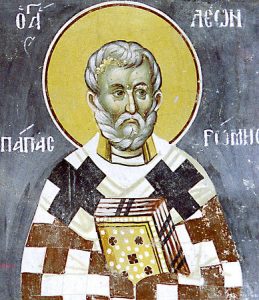
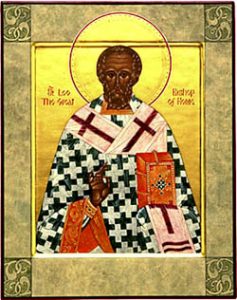
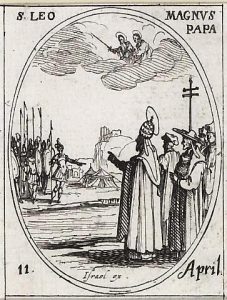
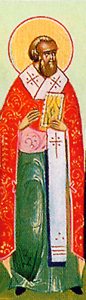
  • С ДНЁМ ПАМЯТИ СВЯТОГО ЛЬВА 1-ого, ПАПЫ РИМСКОГО!

    52011.p leo10
    0411leon 0218cleorome

    С ДНЁМ ПАМЯТИ СВЯТОГО ЛЬВА 1-ого, ПАПЫ РИМСКОГО!

    Concilium Chalcedonense
    451 AD
    Tomus ad Flavianum

    Quibus Eutyches, qui presbyterii nomine honorabilis videbatur, multum inprudens et nimis inperitus ostenditur, ut etiam de ipso dictum sit a propheta: noluit intellegere ut bene ageret; iniquitatem meditatus est in cubili suo. Quid autem iniquius quam impia sapere et sapientioribus doctoribus que non cedere? Sed in hanc insipientiam cadunt qui cum ad cognoscendam veritatem aliquo inpediuntur obscuro,
    non ad propheticas voces,
    non ad apostolicas litteras
    nec ad evangelicas auctoritates,
    sed ad semet ipsos recurrunt et ideo magistri erroris existunt, quia veritatis discipuli non fuerunt. Quam enim eruditionem de sacris novi et veteris testamenti paginis adquisivit qui ne ipsius quidem symboli initia conprehendit et quod per totum mundum omnium regenerandorum voce depromitur, istius adhuc senis corde non capitur? Nesciens igitur quid deberet de verbi dei incarnatione sentire, nec volens ad promerendum lumen intellegentiae in sanctarum scripturarum latitudine laborare illam saltem communem et indiscretam confessionem sollicito recepisset auditu, qua fidelium universitas profitetur credere se
    in deum patrem omnipotentem
    et in Iesum Christum filium eius unicum, dominum nostrum,
    qui natus est de spiritu sancto et Maria virgine,
    quibus tribus sententiis omnium fere haereticorum machinae destruuntur. Cum enim deus et omnipotens et pater creditur, consempiternus eidem filius demonstratur, in nullo a patre differens, quia de deo deus, de omnipotente omnipotens, de aeterno natus est coaeternus, non posterior tempore, non inferior potestate, non dissimilis gloria, non divisus essentia. Idem vero sempiterni genitoris unigenitus sempiternus natus est de spiritu sancto et Maria virgine, quae nativitas temporalis illi nativitati divinae et sempiternae nihil minuit, nihil contulit, sed totam se reparando homini, qui erat deceptus, inpendit, ut et mortem vinceret et diabolum, qui mortis habebat imperium, sua virtute destrueret. Non enim superare possemus peccati et mortis auctorem, nisi naturam nostram ille susciperet et suam faceret quem nec peccatum contaminare nec mors potuit detinere. Conceptus quippe est de spiritu sancto intra uterum virginis matris, quae illum ita salva virginitate edidit quemadmodum salva virginitate concepit. Sed si de hoc Christianae fidei fonte purissimo sincerum intellectum haurire non poterat, quia splendorem perspicuae veritatis obcaecatione sibi propria tenebrarat, doctrinae se evangelicae subdidisset et dicente Matthaeo liber generationis Iesu Christi filii David filii Habraham, apostolicae quoque praedicationis expetisset instructum et legens in epistula ad Romanos Paulus servus Christi Iesu, vocatus apostolus segregatus in evangelium dei quod ante promiserat per prophetas suos in scripturis sanctis de filio suo, qui factus est ei ex semine David secundum carnem ad propheticas paginas piam sollicitudinem contulisset et inveniens promissionem dei ad Habraham dicentis in semine tuo benedicentur omnes gentes, ne de huius seminis proprietate dubitaret, secutus fuisset apostolum dicentem Habrahae dictae sunt promissiones et semini eius. Non dicit: et seminibus, quasi in multis sed quasi in uno: et semini tuo, quod est Christus; Esaiae quoque praedicationem interiore adprehendisset auditu dicentis ecce virgo in utero accipiet et pariet filium et vocabunt nomen eius Emmanuhel, quod est interpretatum nobis cum deus eiusdem que prophetae fideliter verba legisset puer natus est nobis, filius datus est nobis, cuius potestas super humeros eius, et vocabunt nomen eius magni consilii angelus, deus fortis, princeps pacis, pater futuri saeculi, nec frustratorie loquens ita verbum diceret carnem factum, ut editus utero virginis Christus haberet formam hominis et non haberet materni corporis veritatem. An forte ideo putavit dominum Iesum Christum non nostrae esse naturae, quia missus ad beatam Mariam angelus ait: spiritus sanctus superveniet in te et virtus altissimi obumbrabit tibi ideo que quod nascetur ex te sanctum, vocabitur filius dei, ut quia conceptus virginis divini fuit operis, non de natura concipientis fuerit caro concepti? sed non ita intellegenda est illa generatio singulariter mirabilis et mirabiliter singularis, ut per novitatem creationis proprietas remota sit generis. Fecunditatem virginis spiritus sanctus dedit, veritas autem corporis sumpta de corpore est, et aedificante sibi sapientia domum verbum caro factum est et habitavit in nobis, hoc est in ea carne quam sumpsit ex homine et quam spiritu vitae rationalis animavit. Salva igitur proprietate utriusque naturae et in unam coeunte personam suscepta est a maiestate humilitas, a virtute infirmitas, ab aeternitate mortalitas, et ad resolvendum conditionis nostrae debitum natura inviolabilis naturae est unita passibili, ut quod nostris remediis congruebat, unus atque idem mediator dei et hominum homo Christus Iesus et mori posset ex uno et mori non posset ex altero. In integra ergo veri hominis perfecta que natura verus natus est deus, totus in suis, totus in nostris. Nostra autem dicimus quae in nobis ab initio creator condidit et quae reparanda suscepit; nam illa quae deceptor intulit et homo deceptus admisit, nullum habuerunt in salvatore vestigium. Nec quia communionem humanarum subiit infirmitatum, ideo nostrorum fuit particeps delictorum. Adsumpsit formam servi sine sorde peccati, humana augens, divina non minuens, quia exinanitio illa qua se invisibilis visibilem praebuit et creator ac dominus omnium rerum unus voluit esse mortalium, inclinatio fuit miserationis, non defectio potestatis. Proinde qui manens in forma dei fecit hominem, in forma servi factus est homo; tenet enim sine defectu proprietatem suam utraque natura et sicut formam servi dei forma non adimit, ita formam dei servi forma non minuit. Nam quia gloriabatur diabolus hominem sua fraude deceptum divinis caruisse muneribus et inmortalitatis dote nudatum duram mortis subisse sententiam se que in malis suis quoddam de praevaricatoris consortio invenisse solatium, deum quoque iustitiae exigente ratione erga hominem, quem tanto honore condiderat, propriam mutasse sententiam, opus fuit secreti dispensatione consilii, ut incommutabilis deus, cuius voluntas non potest sua benignitate privari, primam erga nos pietatis suae dispensationem sacramento occultiore conpleret et homo diabolicae iniquitatis versutia actus in culpam contra dei propositum non periret. Ingreditur ergo haec mundi infima filius dei de caelesti sede descendens et a paterna gloria non recedens novo ordine, nova nativitate generatus, novo ordine, quia invisibilis in suis visibilis est factus in nostris, inconprehensibilis voluit conprehendi, ante tempora manens esse coepit ex tempore, universitatis dominus servilem formam obumbrata maiestatis suae immensitate suscepit, inpassibilis deus non dedignatus est homo esse passibilis et inmortalis mortis legibus subiacere; nova autem nativitate generatus, quia inviolata virginitas concupiscentiam nescivit, carnis materiam ministravit. Adsumpta est de matre domini natura, non culpa, nec in domino Iesu Christo ex utero virginis genito, quia nativitas est mirabilis, ideo nostri est natura dissimilis. Qui enim verus est deus, idem verus est homo. Et nullum est in hac unitate mendacium, dum in invicem sunt et humilitas hominis et altitudo deitatis. Sicut enim deus non mutatur miseratione, ita homo non consumitur dignitate. Agit enim utraque forma cum alterius communione quod proprium est, verbo scilicet operante quod verbi est, et carne exequente quod carnis est. Unum horum coruscat miraculis, aliud subcumbit iniuriis. Et sicut verbum ab aequalitate paternae gloriae non recedit, ita caro naturam nostri generis non relinquit; unus enim idem que est, quod saepe dicendum est, vere dei filius et vere hominis filius, deus per id quod in principio erat verbum et verbum erat apud deum et deus erat verbum, homo per id quod verbum caro factum est et habitavit in nobis; deus per id quod omnia per ipsum facta sunt et sine ipso factum est nihil, homo per id quod factus est ex muliere, factus sub lege. Nativitas carnis manifestatio est humanae naturae, partus virginis divinae est virtutis indicium; infantia parvuli ostenditur humilitate cunarum, magnitudo altissimi declaratur vocibus angelorum. Similis est rudimentis hominum quem Herodes impie molitur occidere, sed dominus est omnium quem magi gaudent suppliciter adorare. Iam cum ad praecursoris sui Iohannis baptismum venit, ne lateret quod carnis velamine divinitas tegeretur, vox patris de caelo intonans dixit: hic est filius meus dilectus, in quo mihi bene conplacui. Quem itaque sicut hominem diabolica temptat astutia, eidem sicut deo angelica famulantur officia. Esurire sitire lassescere atque dormire evidenter humanum est, sed quinque panibus quinque milia hominum satiare et largiri Samaritanae aquam vivam, cuius haustus bibenti praestet ne ultra iam sitiat, supra dorsum maris plantis non desidentibus ambulare et elationes fluctuum increpata tempestate consternere sine ambiguitate divinum est. Sicut ergo, ut multa praeteream, non eiusdem naturae est flere miserationis affectu amicum mortuum et eundem remoto quadriduanae aggere sepulturae ad vocis imperium excitare redivivum aut ligno pendere et in noctem luce conversa omnia elementa tremefacere aut clavis transfixum esse et paradisi portas fidei latronis aperire, ita non eiusdem naturae est dicere ego et pater unum sumus et dicere pater maior me est. Quamvis enim in domino Iesu Christo dei et hominis una persona sit, aliud tamen est unde in utroque communis est contumelia, aliud unde communis est gloria. De nostro enim illi est minor patre humanitas, de patre illi est aequalis cum patre divinitas. Propter hanc ergo unitatem personae in utraque natura intellegendam et filius hominis legitur descendisse de caelo, cum filius dei carnem de ea virgine de qua est natus, adsumpserit, et rursum filius dei crucifixus dicitur ac sepultus, cum haec non in divinitate ipsa qua unigenitus consempiternus et consubstantialis est patri, sed in naturae humanae sit infirmitate perpessus. Unde unigenitum filium dei crucifixum et sepultum omnes etiam in symbolo confitemur secundum illud apostoli si enim cognovissent, numquam dominum maiestatis crucifixissent. Cum autem ipse dominus noster atque salvator fidem discipulorum suis interrogationibus erudiret: quem me, inquit, dicunt homines esse filium hominis? cum que illi diversas aliorum opiniones retexuissent, vos, ait, quem me dicitis esse? me utique, qui sum filius hominis et quem in forma servi atque in veritate carnis aspicitis, quem esse me dicitis? ubi beatus Petrus divinitus inspiratus et confessione sua omnibus gentibus profuturus: tu es, inquit, Christus filius dei vivi, nec inmerito beatus est pronuntiatus a domino et a principali petra soliditatem et virtutis traxit et nominis qui per revelationem patris eundem et dei filium est confessus et Christum, quia unum horum sine alio receptum non proderat ad salutem et aequalis erat periculi dominum Iesum Christum aut deum tantummodo sine homine aut sine deo solum hominem credidisse. Post resurrectionem vero domini, quae utique veri corporis fuit, quia non alter est resuscitatus quam qui fuerat crucifixus et mortuus, quid aliud quadraginta dierum mora gestum est quam ut fidei nostrae integritas ab omni caligine mundaretur? Conloquens enim cum discipulis suis et cohabitans atque convescens et pertractari se diligenti curioso que contactu ab eis quos dubietas perstringebat, admittens ideo et clausis ad discipulos ianuis introibat et flatu suo dabat spiritum sanctum et donato intellegentiae lumine sanctarum scripturarum occulta pandebat et rursus idem vulnus lateris, fixuras clavorum et omnia recentissimae passionis signa monstrabat dicens: videte manus meas et pedes quia ego sum; palpate et videte quia spiritus carnem et ossa non habet sicut me videtis habere, ut agnosceretur in eo proprietas divinae humanae que naturae individua permanere et ita sciremus verbum non hoc esse quod carnem, ut unum dei filium et verbum confiteremur et carnem. Quo fidei sacramento Eutyches iste nimium aestimandus est vacuus, qui naturam nostram in unigenito dei nec per humilitatem mortalitatis nec per gloriam resurrectionis agnovit nec sententiam beati apostoli et evangelistae Iohannis expavit dicentis omnis spiritus qui confitetur Iesum Christum in carne venisse, ex deo est et omnis spiritus qui solvit Iesum, ex deo non est, et hic est antichristus. Quid autem est solvere Iesum nisi humanam ab eo separare naturam et sacramentum per quod unum salvati sumus, inpudentissimis vacuare figmentis? Caligans vero circa naturam corporis Christi, necesse est ut etiam in passione eius eadem obcaecatione desipiat. Nam si crucem domini non putat falsam et susceptum pro mundi salute supplicium verum fuisse non dubitat, cuius credit mortem, agnoscat et carnem. Nec diffiteatur nostri corporis hominem quem cognoscit fuisse passibilem, quoniam negatio verae carnis negatio est etiam corporeae passionis. Si ergo Christianam suscipit fidem et a praedicatione evangelii suum non avertit auditum, videat quae natura transfixa clavis pependerit in crucis ligno et aperto per militis lanceam latere crucifixi intellegat unde sanguis et aqua fluxerit, ut ecclesia dei et lavacro rigaretur et poculo. Audiat beatum Petrum apostolum praedicantem quod sanctificatio spiritus per aspersionem fiat sanguinis Christi, nec transitorie legat eiusdem apostoli verba dicentis; scientes quod non corruptibilibus argento et auro redempti estis de vana vestra conversatione paternae traditionis, sed pretioso sanguine quasi agni incontaminati et immaculati Iesu Christi. Beati quoque Iohannis apostoli testimonio non resistat dicentis: et sanguis Iesu filii dei emundat nos ab omni peccato et iterum: haec est victoria quae vincit mundum, fides nostra. Quis est qui vincit mundum nisi qui credit quoniam Iesus est filius dei? Hic est qui venit per aquam et sanguinem Iesus Christus, non in aqua solum, sed in aqua et sanguine, et spiritus est qui testificatur, quoniam spiritus est veritas, quia tres sunt qui testimonium dant, spiritus et aqua et sanguis, et tres unum sunt, spiritus utique sanctificationis et sanguis redemptionis et aqua baptismatis, quae tria unum sunt et individua manent nihil que eorum a sui connexione seiungitur, quia catholica ecclesia hac fide vivit, hac proficit, ut nec sine vera divinitate humanitas nec sine vera credatur humanitate divinitas. Cum autem ad interlocutionem examinis vestri Eutyches responderit dicens: confiteor ex duabus naturis fuisse dominum nostrum ante adunationem, post vero adunationem unam naturam confiteor, miror tam absurdam tam que perversam professionem nulla iudicantium increpatione reprehensam et sermonem nimis insipientem ita omissum quasi nihil quod offenderet esset auditum, cum tam impie duarum naturarum ante incarnationem unigenitus dei filius fuisse dicatur quam nefarie postquam verbum caro factum est, natura in eo singularis asseritur. Quod ne Eutyches ideo vel recte vel tolerabiliter aestimet dictum, quia nulla vestra est sententia confutatum, dilectionis tuae diligentiam commonemus, frater karissime, ut si per inspirationem misericordiae dei ad satisfactionem causa perducitur, inprudentia hominis inperiti etiam ab hac sensus sui peste purgetur. Qui quidem, sicut gestorum ordo patefecit, bene coeperat a sua persuasione discedere, cum vestra sententia coartatus profiteretur se dicere quod ante non dixerat, et ei fidei adquiescere cuius prius fuisset alienus; sed cum anathematizando impio dogmati noluisset praebere consensum, intellexit eum fraternitas vestra in sua manere perfidia dignum que esse qui iudicium condemnationis exciperet. De quo si fideliter atque utiliter dolet et quam recte mota sit episcopalis auctoritas, vel sero cognoscit vel si ad satisfactionis plenitudinem omnia quae ab eo male sunt sensa, viva voce et praesenti subscriptione damnaverit, non erit reprehensibilis erga correctum quantacumque miseratio, quia dominus noster verus et bonus pastor qui animam suam posuit pro ovibus suis et qui venit animas hominum salvare, non perdere, imitatores nos suae vult esse pietatis, ut peccantes quidem iustitia coerceat, conversos autem misericordia non repellat. Tunc enim demum fructuosissime fides vera defenditur, quando etiam a sectatoribus suis opinio falsa damnatur. Ad omnem vero causam pie ac fideliter exequendam fratres nostros Iulium episcopum et Renatum presbyterum tituli sancti Clementis, sed et filium meum Hilarum diaconum vice nostra direximus, quibus Dulcitium notarium nostrum, cuius nobis fides est probata, sociavimus, confidentes affuturum divinitatis auxilium ut is qui erraverat, damnata sensus sui pravitate salvetur. Deus te incolumen custodiat, frater karissime.
     

  • WHAT IS SUPREMATISM?


    WHAT IS SUPREMATISM?

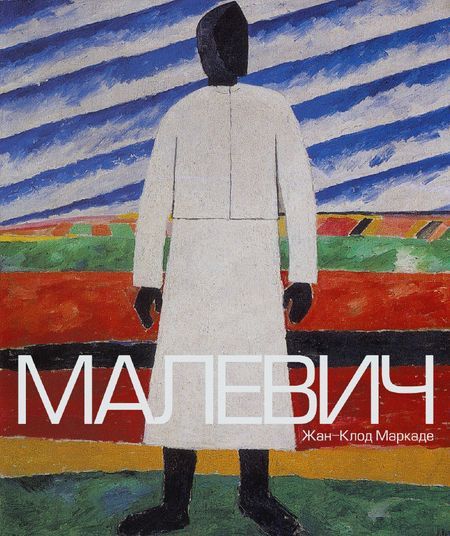
    Jean-Claude Marcadé

    These few notes are only intended to deal with certain problems which have arisen in the field of art criticism from the observation that one cannot speak of 20th Century art without mentioning the Suprematist revolution. A Malevich fashion is currently to be seen which, just as much as the Kandinsky fashion in its time, provokes much emotional discourse carrying with it a mixture of snobbery and sensationalism to the detriment of rigour. In fact, many people are nowadays convinced that ‘wishful thinking’ is more interesting than rigour.

    We are still a long way from having all the information needed to form definite conclusions about the meaning of Suprematism. Many events from the story of Russian art in the tens’ and twenties’ remain hidden in shadow. The greater part of the writings of Malevich are not published in Russian and the inevitable inaccuracies of translation give rise to ambiguities. Lastly, important works (canvasses, architectones, drawings) remain inaccessible, stored away in Soviet museum reserves or kept in private collections. Mistakes and omissions are the natural outcome of such a lack of information. It would be pointless to blame western researchers for these faults. It should not be forgotten that it is thanks to these same western researchers who have at a great price assembled the diverse elements of a story doomed to mental oblivion, that Russian art from the first quarter of the 20th Century in general, and Malevich in particular has escaped the amnesia of humanity’s collective memory. For it has now won back in Russia itself a following, which though still feeble, holds out much promise for the future.

    One can understand the errors and omissions arising from such unfavorable conditions. However, it is altogether different when it comes to the distortions and tendentious interpretations made from areas of concrete knowledge. It is here that rigour must intervene and calm the ardours of a wayward imagination. By enquiring: ‘What is Suprematism?’ we are led to ask questions about ideas often invoked in a vague and confused way concerning this enigmatic ‘ism’ among the ‘Kunstismen’ of the 20th Century.

    1. Suprematism is anti-constructivist.

    Only too often we find Constructivism and Suprematism lumped together. Upon seeing some geometric form, the unwise critic immediately cries Constructivism. Despite superficial similarities between Constructivism and Suprematism, the two movements are nevertheless antagonists and it is very important to distinguish between them. The confusion arises from the fact that several artists, either formerly part of the Suprematist movement like El Lissitzky, or who had once worked under its influence like Liubov Popova and Rodchenko, soon became exponents of the culture of materials. They celebrated this latter in their creations, deliberately opting for the way opened, from 1914, by Tatlin’s reliefs. Constructivism aims to employ the material as foundation, it involves the cult of the object. For Constructivism, ‘the object is work of art and the work of art is object’. It is firmly based on a materialistic and utilitarian philosophy. Its aim is the functional organisation of life under all its aspects. The easel-painter must give way to the artist-engineer, to the productivist, the painting to the ‘shaping’ (oformlenie) of life. The principles of Constructivism, though already accepted in practice, were not formulated until 1922 (‘Constructivism’ by A. Gan, Tver; ‘And yet it moves’ by I. Ehrenburg, Berlin; two numbers of the Berlin review ‘Veshch/Gegenstand/Objet’ by El Lissitzky and I. Ehrenburg…).

    By contrast, Suprematism, whose first writings date from the end of 1915, was born of an awareness of the insignificance of the object. For Malevich, the object as such does not exist, it dissolves in the energy stimulus (rozbuzhdenie) of non-objective beingness. Suprematism is therefore an active negation of the world of objects. It endeavors to exhibit a world without objects and without objectives, die gegenstandslose Welt, the only one to have a real existence. When Malevich speaks of Suprematist ‘utilitarianism’ or ‘economy’, he means neither functionalism nor rational schematisation. Suprematist economy and utilitarianism seek to transform ‘this green world of flesh and bones’, the world of ‘nutrition’, into a world of desert, of absence, aimed towards the unveiling of essential beingness. Although Suprematism is both painting in ontological action and meditation on being, it does not, however, neglect the technical problems of construction. The skill (umenie) is very important for Malevich (we should remember his vast pedagogic work in Unovis in Vitebsk and at Inkhuk in Petrograd), but it is neither the major factor nor the aim of creation. Artistic mastery should yield to the demands of the flux of being in the world and should not exhibit the material in its skeleton-like nudity as Constructivism does. It ought to show the non-existence of form and colour. This is why the squares, circles and crosses of Suprematism are quite unrelated to the squares, circles and crosses occuring in nature – they are the irruption of non-existence, and constitute FORMING and not INFORMING elements.

    2. Is Suprematism mystical?

    The word ‘mystical’ has been misused so often in the field of Russian art that one hesitates to apply it to the thought and works of Malevich. In this particular case, there is no question of vague and imprecise religious agendas nor theological states of the soul. But if one accepts that mystical vision bypasses the intermediaries and transforms the ordinary perceptions of the five senses into a contemplation of the world in its total being, then it can be asserted that Malevichian Suprematism is mystical. This does not, however, attribute special status to Malevich since true art has always and will always be linked to this direct penetration of the total beingness of the world. The mysticism of Malevich stands out all the more because of its fundamental antagonism to the dominant postrevolutionary thought of Constructivism and materialism. There are, however, similarities in approach and in thought not only to certain aspects of Buddhism (undoubtedly through the books and articles of P.D. Uspensky) but also with the apophatic theology of the Greek Fathers and with Hesychasm. Though not wishing to overestimate these elements among so many others in Suprematism, one cannot ignore them.

    3. Suprematism as absolute Non-objectivity.

    There are many ambiguities in the names applied to the different manifestations of the plastic arts which in the 20th Century no longer represent the elements of reality as we see them around us. The most usual term to designate this art which refuses all reference to any known thing in the perceptible world is that of ABSTRACTION. Though this term with its nuances may be appropriate for Kandinsky or even Mondrian, it will not do for Suprematism which is not the triumph of ‘abstraction’ but of ‘bespredmetnos’ (non-objectivity).

    In abstraction, there is always a RAPPORT WITH THE OBJECT, there is always an interpretation of the world by rapport to a REPRESENTATION (in the sense of the ‘Deutung’ discussed by Erich Auerbach in his celebrated book on mimesis). But Malevich is clear on this subject: Man CAN NOTHING REPRESENT. The artist must only favour the epiphanic appearance of beings as manifestations of being in the world. Whereas abstraction wants to know the object in its essence such as we intuitively know it and not according to our normal eyesight, Suprematist non-objectivity refuses all reference to the world of objects and only recognises ONE WORLD, that of the abyss of being. Where Kandinsky’s abstraction is still dualist-symbolist, where Mondrian’s abstraction is a system of pictorial and semiological equivalences, Malevichian non-objectivity is the radical destruction of the bridge by which metaphysics and traditional art spanned this ‘great abyss’ separating a world accessible to reason or intuition from a world which is not. For Malevich there is but one sole world – absolute non-objectivity. It is the SENSATION of this world which consumes all vestige of form at the two poles of Suprematism – the Black Square and the White Square.

    Though Malevich, with pedagogic intentions, wanted to explain in his Bauhaus book in 1927 what conditioned artistic vision in different epochs in terms of the environment, this is not to say that Suprematism is the pictorial reproduction of that environment (an aerial view of the earth). It means that the environment has made possible the Suprematist consciousness. Aerial vision has not given rise to new geometrical forms, abstractly conceived by viewing forms from above. It explains the Suprematist liberation from the terrestial gravity of objects, their annihilation in the ‘liberated nothingness’. Malevich calls Suprematism a ‘new realism’ in so far as it embraces the only true reality of the non-objective world.

    4. Suprematism as an All-embracing Philosophy.

    The pictorial is for Malevich the privileged site for Suprematist revelation, but the latter is not limited to what is traditionally called the plastic arts. Suprematism reaches out to all branches of human activity. It wants to transform life in its entirety (economical, political, cultural, religious). If the perspective inherited from the Renaissance, or the inverted perspective of iconic art has been radically suppressed, this is because man’s place in the universal movement is not totally new. Suprematism is not humanist. It is not the triumph of man as the centre of the universe, the centre of converging or diverging vision, but the triumph of ‘liberated nothingness’. Man in general and the artist in particular, is the emitter and transmitter of the energies of the world which pass through him. He himself is this world. He is not the enterpreter but the prophet in the etymological sense of the word. It is by light of this new perspective that the new world must be erected. It will be built out of pain, for the figurative resists, and whenever there is resistance, there is war. Wars and revolutions are inevitable phenomena in the world march towards the liberation from the burden of the figurative, reinforced through the centuries by humanity’s anthromorphism and its need of comfort and convenience.

    It would be hazardous to identify the ideas of Malevich with any kind of idealism, subjectivism, psychologism or pantheism. Rather they are phenomenological, in Heiddeger’s sense – and a few years before him – in so far as they constitute a ‘deciphering of being in its beings’.

    (1978)

    Catalogue, Suprématisme, Galerie Jean Chauvelin, Paris, 1978


  • Jean Claude Marcadé on cultural and historical annexation of Ukraine

    Jean Claude Marcadé on cultural and historical annexation

    of Ukraine

    Nelia VAVERCHAK

    11 June, 2013 – 10:28

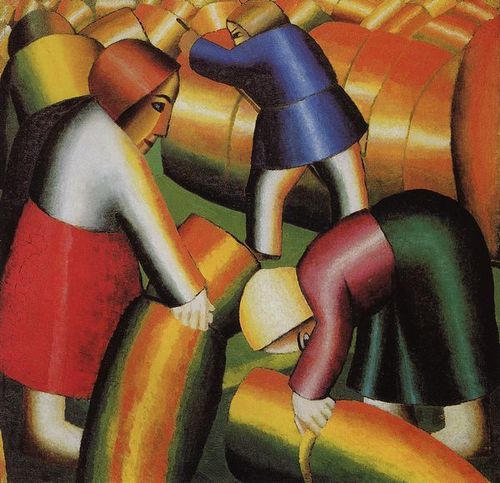
    KAZIMIR MALEVICH, TAKING IN THE RYE / Photo from the website 20CENTURY-ART.RU
    Jean Claude Marcadé

    You opened the phenomenon of Ukrainian avant-garde,

    particularly Malevich, for the world and for many years

    methodically explored the artistic legacy of the artist.

    Could you please tell why you got so interested in him?

    “I saw that Malevich is one of the most

    important artists of all times not only in

    Ukraine and Russia,

    but also of the entire world. This is a unique

    phenomenon when, after centuries of

    academism there appeared a mythological

    form of the Black Quadrilateral (this was

    the name used at the exhibition ‘Zero-Ten’

    in Petrograd). Not so muchthe painting itself,

    but the form. The conceptual energy

    that emerged from this form, raised

    the art to zero. It all started again. Art

    became more rapid and, according

    to Chernyshevsky, it became a textbook of

    life. “Still, there is a very popular belief

    among common people that Malevich had

    very little paintings, they often

    say that their kids can draw just as well.

    This is rather the issue of bringing up. Today,

    the art returned to things against which

    Malevich and all the left art

    revolted. Avant-garde is the name the

    movement received later on. After the

    revolution, ‘the left’ and ‘the right’ became

    political notions, but before they

    meant innovators and those in rear guard.

    “Once, at some international congress

    one of the art critics said that Claude Monet,

    for example, has more artistic material than

    Kazimir Malevich. I then said to that man:

    ‘In Chinese art a stroke on white paper

    can mean a whole world.’ Malevich did not

    just do such things when he worked on

    cubo-futurism and primitivism – he showed

    that he was a master of complex spatial solutions.

    And during re-Ukrainization of Malevich,

    as Dmitro Gorbachev used to say, he again

    proved his artistic strength.” Given these facts,

    you can’t but notice that Ukrainian art is

    often defined as a part of “Great Russian” art.

    In your opinion, why does it happen?

    “This question should be addressed to the

    supporters of the Great Russia. Historically

    the empire before the Soviet Union was ruled

    by tsar. Then in the history of art there were

    chapters on Ukrainian Baroque and its impact

    on Moscow art. Art historians still wrote

    about it at the time of the early Soviet Union.

    But by now it all disappeared – there was a

    regress to certain extent. This is a political

    problem, of course, and there was no Ukrainian

    state in the empire, even though there were

    the beginnings of some, such as

    Galicia in the Middle Ages.”

    In fact, I would argue with that.

    “Well, you know, Ukraine to the Western people

    is as if in some Great Russian mirage. There were

    phenomena, but in reality there was nothing

    like we have right now, thank God. Sich was a

    rudiment of a state. Of course, not of a scale as it

    was in the days of Danylo or Yaroslav.

    But a state with its own internal problems, which

    would play its role in the international arena –

    this notion is still new for Ukraine, while for

    Russia it’s not. Ever since the days of Peter I,

    and later German Ekaterina, Ukraine was on the

    outskirts. Despite the recognition of the country,

    for example, after its description was published

    as a part of Guillaume Le Vasseur de Beauplan

    recount of his travels. Or, for example, Bohdan

    Khmelnytsky thought that he had been deceived

    by Muscovites and thought that an alliance

    with Poland against Muslims was possible, but

    in reality, the Muscovites did not treat his actions

    with respect and, therefore, the disaster struck.

    “Things are still not easy. You have to fight.

    Of course, the supporters of the Great Russia

    still don’t give in their ground. They consider

    everything to be Russian. I saw the scandalous,

    as to my mind, exhibition at the Louvre –

    ‘Holy Rus’.’ Even though the topic was Rus’,

    French people, given the translation,

    viewed it as ‘Holy Russia.’ The exhibition was

    wonderful and was a great success

    and that’s why it was even worse, because

    there were very nice exhibits, which are rarely

    put on display. It was a Year of Russia in France.

    And even though everyone used the word ‘Rus’

    rather than ‘Russia’ but the adjective was still

    ‘Russian.’”

    Our newspaper published books every year.

    We already  presented an entire series

    The Day’s Library. One of  these books is 

    called The Power of the Soft Sign. The  

    authors of this book, professional

    historians, explain the appropriation

    of the Ukrainian past, which is taking

    place even now… Please, tell us whether

    there are  “white spots” in Malevich’s legacy

    in  perception of mass consciousness? For

    example, Ivonna Malevich, great-niece of

    the artist, in 2010  at the ceremony of

    awarding Malevich Prize in Kyiv said that

    Kazimir Malevich responded to the

    Holodomor not only with a series of

    paintings, but he also wrote civil lyrics.

    Do you know anything about these facts?

    I must admit I knew nothing about this

    award and the lyrics too. The archives have

    many unpublished materials. But, of course,

    in his works he conveyed his attitude to the

    Ukrainian tragedy. He saw it. The

    black face of a peasant woman in his painting

    is a coffin. He embodied the Ukrainian tragedy

    in such image of the tragedy of the entire

    mankind. That’s what makes Malevich so

    different from others – he cried through

    his silent art.”

    Could you tell us what is the attitude of French

    people to Ukrainian art these days?

    “I’d have to disappoint you, they have no

    distinct attitude, unfortunately. There is,

    of course, a small group of people who are

    interested in it. But in general,

    even the same exhibition at the Louvre was

    covered by journalists as the ‘Holy Russia.’

    Even though it was rather a historical exhibition

    than artistic – it featured all the stages of the

    Kyivan Rus’ development until the time of

    Peter I. It’s goal was to show the formation of

    Russia. And it all was presented

    in such a way that all the nice and interesting

    exhibits were viewed as Russian. I, of course,

    wrote a big article regarding this. But if we

    would take, for example, the reaction to the

    exhibition of Pinzel’s art in Paris – it didn’t

    cause much interest among the audience.

    The exposition was done not on a large scale,

    but as if imitating the scale of the

    Holy Rus’ exhibition. Ukrainians were delighted,

    in particular the Minister of Culture. I love

    Ukrainian art a lot and that’s why I think that the

    exhibition was held not on an adequate level –

    the exhibits were displayed in the space where

    they did not ‘breathe.’ It would be better if it had

    been presented in the Louvre, in the chapel with

    access through the maze and the stairs. Exhibitions

    are important events, but they end at some point.

    It’s good that a catalogue was published after

    this one. So far, unfortunately, the Ukrainian art

    has not been recognized separately.

    Even though I wrote a large book about the

    Russian avant-garde, I singled out the Ukrainian

    school there as a separate formation.”

    What distinguishing features does it have?

    “It’s an entire complex. In short, first, it’s the

    color. Solar illumination. And this is a striking

    feature of those who lived in Ukraine. It

    manifests itself in a range of colors in nature,

    in people’s clothing. For example, Sonia

    Delaunay, who left Ukraine

    at the age of seven, had very warm memories

    of her homeland due to the fact that at that

    time it was more beneficial to be called

    Russian. The color of wheat, sunflowers,

    watermelons, tomatoes, which she

    remembered as a child, embodied in her

    work and in this way she affected her

    husband. Another example is

    Mykhailo Larionov, who lived in Bessarabia

    and his mother was Ukrainian. His yellow

    is sunny and cheerful. And his life-long friend

    (they got married in their latter days, but

    everyone considered them to be a husband

    and wife anyway) Natalia Honcharova used

    a somewhat different color –reddish yellow,

    rather iconic, but not natural – she is Russian

    by origin. Another artist who used

    amazing colors was Oleksandr Archipenko.

    “Second, it’s the space. This element of art is

    especially important. The feeling of space gives

    the feeling freedom. The fact that in the

    consciousness of the Ukrainian people there

    were Cossacks, free people, who never knew

    the Tatar yoke, like the Northern people.

    The Great Russians lived in forest areas. If we

    would compare the Suprematism of Kazimir

    Malevich and Liubov Popova, his forms

    are floating in infinite space, while hers are

    attached to other objects.

    “Another distinguishing feature of the Ukrainian

    school of art is the Baroque. This element played

    its role also in avant-garde. For example, baroque

    trend is noticeable in art work of Oleksandra

    Ekster, Volodymyr Baranov-Rossine, and even

    Oleksandr

    Bohomazov.

    “And, finally, it’s humor. Larionov painted

    Katsapska Venera (Russian Venus). He had a

    series of such Venuses with, let’s say, easy morals.

    The name itself suggests humorous attitude,

    even though he was not an ethnic Ukrainian,

    but the Ukrainian part in his work, just like in

    Vladimir Tatlin’s work, was extremely important.

    That’s why even Malevich has some humor

    in his brilliant white background with red

    and black squares, called

    Pictoral Realism. A Boy with His Schoolbag,

    exhibited in New York. It’s a great sample of art,

    it is the quintessence of the iconographic range!

    But he gave it such name. And in this I see the

    serious Ukrainian humor. Pictorial Realism of a

    Peasant Woman in Two Dimensions and

    Pictorial Realism. A Boy with His Schoolbag

    contain the energy of colors and in general

    the whole Slavic mainland.”

    By Nelia VAVERCHAK, The Day

  • Eurovision mieux présentée par la France

    On ne saurait que se réjouir de voir Marianne James évincée de la présentation de l’Eurovision. Ses remarques généralisatrices  triviales ne respectaient pas la neutralité politique nécessaire.

  • САМУИЛ АККЕРМАН: ЖИВОПИСНЫЙ ДИАЛОГ С САКРАЛЬНЫМ И ПОЭТИЧЕСКИМ

    САМУИЛ АККЕРМАН: ЖИВОПИСНЫЙ ДИАЛОГ С САКРАЛЬНЫМ И ПОЭТИЧЕСКИМ


    «La poésie ne s’impose pas, elle s’expose.»

    Пауль Целан (26.3.69)[1]

     Первые связи Самуила Аккермана со священной землей Израиля завязались через насыщение литургией, писаниями, раздумьями над иудейской традицией на его родной Украине, в этой карпатской местности на стыке славянского, венгерского и цыганского миров. Здесь в 1970-ых годах художник разработал целую «флоральную» эстетику, повествующую о мире в беспредметных притчах, красота которых идет от искусства, настоенного на узоре, от формального вдохновения, источником которого послужили частично гуцульское народное искусство, частично Врубель киевского периода.[2] Физический контакт с землей Израиля, начиная с 1980-ых годов, позволил художнику расширить живописное видение и воплотить его в новом свете и новом пространстве. Он, вне сомнения, еще продолжает свои исследования цветения мира и размышления в символических линиях и цветах удивительной сложности – наследие Врубеля, и даже Филонова, – чередующихся с произведениями значительно более минимальной иконографии, наследием супрематизма Малевича, цитируемого неоднократно. Диалог с ним никогда не прекращался, и многочисленные вариации живописного словаря Малевича мы обнаруживаем, например, в Красной заповеди, в которую вовлекается «кривая мира» из Супремуса N° 58, находящегося в Государственном Русском музее; она повторяется в сочетании с черным крестом, в который вписана еще одна малевичевская метонимия вселенной, «слеза» из Супрематизма N° 55 Краснодарского музея, преображенная Самуилом Аккерманом в череп, и, таким образом, превращающая это произведение в синтез супрематизма и алогизма. Та же «кривая мира», которую Малевич именует в одном из набросков руссифицированным польским словом «тарча»,[3] появляется в Надсолнухе (типично хлебниковский неологизм, совсем во вкусе художника[4]). В Супрематической горе чаш, как и в Чаше-лике, Радуге всекрасного или Супрематических чашах, супрематические элементы выходят из чаши, любимой художником формы, которую он использовал в многочисленных вариациях. Эту чашу, со всеми подтекстами, которыми она наделена в иудейско-христианском образном представлении о мире, Самуил Аккерман заимствовал из иконы, символизирующей все русское искусство, Троицы Ветхозаветной преподобного Андрея Рублева, находящейся в Государственной Третьяковской галерее.

    В 1980 году эта икона стала предметом диалога карпаторусского художника в форме акции на земле Израиля. Сюжет иудео-христианский в полном смысле этого слова, поскольку он символически изображает «гостеприимство Авраама», как оно поведано в Книге Бытия (18:1-16): три мужа явились патриарху у дубравы Мамре – это «явился Господь», говорится в библейском тексте, и Авраам поклонился им до земли и назвал их Владыка (Адонай). Христианская Традиция увидела в этом явлении трех «странников» образ Бога в трех ипостасях, Элохим (под этим именем во множественном числе Господь говорит с Авраамом в первой книге Ветхого Завета).

    Таким образом, этот фрагмент Библии делят между собой иудейская и христианская Традиции. Глубоко иудейский во всех аспектах своей жизни и искусства художник, Марк Шагал дал очень личную интерпретацию этого эпизода в многочисленных ему посвященных произведениях: в серии гуашей-иллюстраций к Библии 1931 года (Авраам, поклоняющийся трем ангелам; Авраам, принимающий трех ангелов, Ницца, Национальный музей Библейского послания Марка Шагала, или холсты Aвраам и три ангела, вариант 1940 года, частное собрание, и вариант 1960-1966 годов, Ницца, Национальный музей Библейского послания Марка Шагала). Шагал обращается в своем примитивистском стиле, близком русскому лубку, к христианской иконографической интерпретации, а именно: равенству трех ангелов по своей форме и сущности.

    Поэтика Самуила Аккермана отталкивается от противоположного, поскольку его искусство отрицает миметическую фигуративность существ и мира, даже если то здесь, то там он населяет свои картины персонажами (сам художник, его жена, дочери), это скорее едва намеченные пиктограммы, чем истинные «портреты», – то, что Марсель Коэн назвал «знаками-пиктограммами», «говорящими рисунками», которые «несут значение сами в себе».[5] Единственный элемент, связывающий выбор иудео-христианских тем у Шагала (вспомним десятки его картин с распятием[6]) и у Самуила Аккермана, – это стремление иудаизировать или ре-иудаизировать ветхозаветные темы, столь полно проиллюстрированные христианским искусством, в то время как иудейское искусство, из-за моисеева запрета, под страхом идолопоклонничества, не дало систематической их разработки в пластических изображениях вплоть до второй половины XIX-го века.[7]

    И однако, еще со времен ковчега, по обоим концам которого золотые херувимы простирали вверх свои крылья, покрывая его (Исх. 25:18-20), а в христианскую эру – фресок Дура-Еуропос (245 н.э.), иллюстраций из многочисленных средневековых иудейских рукописей, возможность пластических изображений, и не только орнаментальных, не прекращала напоминать о себе. XX-ый век стал свидетелем расцвета иудейских художников и скульпторов, принявших участие в самых разнообразных эстетических движениях. В начале 1920-ых годов были даже предприняты попытки создания национального иудейского искусства, будь то под эгидой Культурлиги Киева, Москвы, или Берлина.[8]

    Но вернемся к Самуилу Аккерману и его иерусалимской акции, отталкивающейся от иконы Троицы Ветхозаветной Рублева. Эта акция определенным образом вписывается в историю сближения христианских ветхозаветных сюжетов с иудейским мировоззрением. Этот же процесс обнаруживается и у поэта из Черновиц, Пауля Целана, с которым Самуил Аккерман ведет напряженный диалог. Вспомним стихотворение «Du sei wie du» [Tы, будь как ты][9], в котором стих Исайи (Ис. 60:1) в старонемецком варианте Мейстера Экхарта перемежается с современным немецким языком и заканчивается ивритом, транскрибированным латиницей: «kumi ori» [Восстань, воссияй]. Как пишет Джон Фелстинер, «Стихотворение Целана отталкивается от немецкого мистика, проведующего Исайю, обращается к иудейскому поэту, возобновляющему свою связь с традицией, и заканчивается образом самого слова, держащего мрак[10]

    Само собой разумеется, что ни в чем не отрываясь от мира, от своей традиции, от своей веры, Самуил Аккерман нисколько не пытается скрыть или подорвать идею иконы, к которой, нaоборот, он проявляет самое глубокое уважение как человек, и как художник – самое глубокое восхищение. Самуил Аккерман принадлежит своему времени, будучи при этом вскормлен на живописных, религиозных, мистических, поэтических опытах прошлого. Между ним и сакральным произведением Рублева устанавливается диалог. Выбор Иерусалима преднамеренный: речь идет о том, чтобы вернуть Троицу в символическое место, место встречи странника. Для иудейского художника Иерусалим представляет собой именно встречу Другого. Акция, как свидетельствуют созданные на ее основе произведения и снимки, заключалась в развертывании свитка, на котором вырезаны одноцветные гуашевые плоскости. Этот свиток лежит на охряной земле пустыни, в своей обнаженности готовой предаться ласкам духовного дуновения; художник стоя совершает священнический обряд. В начале свиток свернут. Первая часть – это золотое поле, иерусалимский свет; вторая часть сворачивается, оставляя на виду золото; третья линия разрезается на три гуаши; в четвертой появляются четырехугольник (Храм) земли Иерусалимской, рисунок треугольника на свитке, престол и чаша – элементы иконы Рублева, к которым Самуил Аккерман возвращается в многочисленных вариациях, на протяжении всего своего творчества; и наконец, в последней части свиток заново свернут с двух концов, указывающих на перекресток дорог, ведущих в Вирсавию и Вифлеем. Вирсавия – место союза Авраама, отца верующих, где он «призвал имя Господа, Бога вечного» (Быт. 21:33); Вифлеем – для иудеев – место гроба Рахили, а для христиан – земля Иудейская, из которой вышел Добрый пастырь.

    xxxxxxxxxxxxxxxxxxxxxx

     В Париже Самуил Аккерман с 1984 года. Здесь он живет и работает сегодня, непрестанно при этом возвращась в Израиль. Его интеллектуальное пространство, постоянно обогащаемое библейскими текстами с их иудейской герменевтикой, столкнулось с художественной жизнью французской столицы, сконцентрировавшей в себе все импульсы, пришедшие со всех четырех концов света, с жизнью бурлящей, противоречивой, обостренной, подверженной различным модам. Здесь он преследует свое собственное видение мира, продолжая при этом постоянный диалог с близкими ему по духу художниками, писателями и поэтами, в особенности с Малевичем, Йозефом Бойсом, Вальтером Беньямином и, главным образом, Паулем Целаном.

    Коллекционер Беньямин напоминает о поездке немецкого художественного критика в Москву, где «он приобретает множество сделанных вручную деревянных детских игрушек со всех краев Советского Союза, игрушек, которые он скупает на рынках и в лавках»[11]. Ясно, что именно здесь Самуил Аккерман черпает материал для своей иконографии, которая зачастую заимствует у мира детства полный арсенал живописных знаков: с особой настойчивостью повторяется мотив детской коляски, или скворечника и веера. Его раскладная книга Осеменение раскрывает иероглифический словарь Аккермана: детская коляска, веер, одуванчик, несомый дыханием ветра-возбуждения и веером рассеивающий свое семя, которое растет и становится книгой. Отметим совпадение с Паулем Целаном в ассоциировании бессознательного с детством. В стихотворении из сборника Fadensonnen [Нити солнц] говорится:

     Die Wahrheit, angeseilt an

    die entäußerten Traumrelikte

    kommt als ein Kind

    über den Grat[12]

     Более чем в двухстах гуашах и маслах Самуил Аккерман ведет глубоко оригинальный живописный диалог с поэзией Целана. И делает он это принципиально иначе, чем современный немецкий художник Ансельм Кифер в том же диалоге, воплощенном в большой части его работ. Свои произведения гигантских форматов Ансельм Кифер обычно усыпает граффити с цитатами, написанными от руки и идущими, исторически, от византийского иконоборчества до Велимира Хлебникова. Связь между этими надписями и собственно живописным произведением достаточно ослаблена и зачастую произвольна. Ее единственной мотивировкой является интеллектуальный интерес Кифера к поэзии, философии, богословию, даже социологии. Арийский немец католической культуры, он смело вступил в диалог с поэтической мыслью, укоренившейся одновременно в немецкой и иудейской традициях. Само собой разумеется, что Ансельм Кифер не мог взять за образец все герменевтические аспекты автора Die Niemandsrose [Роза – Никому] или Sprachgitter [Решетка языка]. Иногда он удовлетворяется чистыми граффити, заимствованными из Lichtzwang[13] или Mohn und Gedächtnis [Мак и память]. Он выделяет величественную Фугу смерти, которая позволяет ему отразить семантические и лексические элементы привычным арсеналом материалов, почерпанных непосредственно из природы или человеческой физиологии: уголь, пепел, земля, песок, ветви, хворост, метал, гуммилак, солома, человеческие волосы. Тонкостям и эллиптической полисемии Пауля Целана Кифер дает немецкую интерпретацию в стиле великих германских мифологий. Это кажется очевидным, когда констатируешь, что он использует один и тот же живописный подход к циклу, созданному на основе Фуги смерти, и циклу, выросшему из вагнеровских Майстерзингеров.[14] Становится ясно, что этой навязчивой серией Ансельм Кифер стремится показать не только ужасы холокоста, но и вину немцев. И действительно, как писал Даниэль Арасс, «Кифер становится преемником Целана ради самого себя».[15]

    Это, безусловно, касается и Самуила Аккермана, который ничуть не иллюстрирует поэзию Пауля Целана, но вступает в диалог с близким ему по духу поэтом, происхождением из той же земли и того же иудейского религиозного комплекса, что и он сам. В то время как Ансельм Кифер работает в направлении беспредметного нефигукативного натуралистического гигантизма, Самуил Аккерман скорее близок пиктурологии Пауля Клее (его трактовке самой поверхности при помощи живописных средств): он создает на относительно небольших плоскостях (соответствующих минималистическому поэтическому пространству Целана) целые миры, которые каждый раз самодостаточны и насыщены множественностью не тольно формальной, но и символической. Достаточно привести один пример, чтобы понять специфику искусства Аккермана. В поэтике Пауля Целана значительное место занимает растительность. Ансельм Кифер использует то семечки подсолнуха, солому, то бронзу и свинец (Pour Paul CelanUkraine [Паулю Целану – Украина]); а Самуил Аккерман превращает отдельные растения в пиктограммы, которые являются каллиграфическими следами и приобретают различные символические формы: развеивающийся на ветру одуванчик, подсолнух, который может стать посохом библейских пастырей или сегодняшних паломников,[16] или травинка, стебель которой заканчивается звездой Маген Давид, щитом Давида, без одной ветви, той, которая будет восстановлена с приходом Мессии. Самуил Аккерман переводит в воздушные знаки все, что содержит часто повторяющееся у Целана слово «Halm» [соломинка] – хрупкий, нежный, слабый стебель, утрачивающий силу.

    Самуил Аккерман не нуждается в «само-иудаизации», как Кифер: с Паулем Целаном его связывает физическая связь с Торой. Можно сказать, как Петер Майер в его статье «Alle Dichter sind Juden», повторяя известный эпиграф, «Все поэты жиды», который Пауль Целан поставил в начале своего стихотворения Und mit dem Buch aus Tarussa [С книгой из Тарусы вместе] из сборника Die Niemandsrose [Роза – Никому] и который является вариацией известного стиха Марины Цветаевой из ее стихотворения Поэма конца[17]]: «Иудей строит параллели, он все видит в согласовании […] Поэт уподобляет себя ученому раввину, упоминающему для каждого фрагмента Торы все 49 значений»[18].

    То же можно сказать и о картинах Самуила Аккермана, в которых сплетены совпадения и связи с иудейской Традицией, зачастую сопряженные с явными или скрытыми намеками на творчество других художников, в особенности Малевича или Бойса. У Аккермана есть нечто раввинское: каждое его произведение сложное, порою с затемненным смыслом, требующее комментария или расшифровки (lEntzifferung у Якоба Беме), каждое его произведение – микрокосм. Все его творчество – и эта черта служит оправданием всей его работе с поэтической мыслью Пауля Целана – диалогично и интертекстуально[19].

    Непосредственные ссылки Самуила Аккермана на Пауля Целана переводят на язык живописи поэтические образы автора Todesfuge [Фуги смерти], Fadensonnen [Нитей солнц], Atemwende [Поворота дыхания], Sprachgitter [Решетки языка]. Стихотворение Schibboleth [Шибболет] особым образом отразилось в иконографии Самуила Аккермана: во фрагменте из Книги Судей Израилевых (Суд. 12:5-6) слово «шибболет» – колос – деформировано в «сибболет» и становится причиной смерти. Слово является истинным местом жизни и трудности ее подлинности. Стихотворение начинается так:

    Mitsamt meinen Steinen,

    den großgeweinten

    hinter den Gittern

     schleiften sie mich[20]

    Сюжет решетки превращается у Аккермана в изгородь, чаще всего деревянную (как в России и на Украине). Это ограда, (тюремная) решетка, колючая проволока. Один французский комментатор заметил: «В стихотворении Schibboleth [Шибболет] решетка обозначает первоначальное разделение; мы отрезаны от ‘договора’, перенесены в порядок слов, камней, в тональности и ритме, скандируемых делением.»[21] Дерево становится лейтмотивом многих гуашей из целановской серии: Нерест солнца, Притча оград, У прорастающей тени, Равновесие сплетенного. Дерево сравнивается с камнем, например в Каменной вести, Тени исцелания, Поспешной тени.

    В Gespräch im Gebirg [Разговор в горах], этом стихотворении в прозе, в котором в диалог вступают Я и Ты, как и в других стихотворениях, таких как Sprachgitter [Решетка языка], Engführung [Стретта] или Schibboleth [Шибболет], Пауль Целан с настойчивостью возвращается к мотиву каменных плит и камня, которые «метонимически отсылают к первоначальному месту бесчеловечности»[22].

     Процитируем еще:

     Gras auseinandergeschrieben. Die Steine weiß,

    mit den Schatten der Halme[23]

    Или еще:

    Die Fliesen. Darauf,

    dicht beieinander, die beiden

    herzgrauen Lachen[24]

     Или еще:

     «Auf dem Stein bin ich gelegen, damals, du weißt, auf den Steinfliesen; und neben mir, da sind sie gelegen, die andern, die wie ich waren, die andern, die anders waren als ich und genauso, die Geschwisterkinder.»[25]

     Эта всеобщая общность людей, вне пределов каких бы то ни было этнических, религиозных или философских особенностей, переданная мотивом камня, которым вымощены дороги жизни и смерти, возникает как лейтмотив и в целановском цикле Самуила Аккермана. Напомним также об иудейском обычае класть камни на могилу.

    С каменной плитой ассоциируется образ тени:

    Und die Steine, die du häuftest,

    die du häufst:

    wohin werfen sie die Schatten,

    und wie weit?

    Und der Wind, der drüber hinstreicht,

    und der Wind:

    rafft er dieser Schatten einen,

    mißt er ihn dir zu?[26]

     В Беременных тенях, тень – это тень Господа (Яхве), покрывающая первого художника Веселеила (Исх. 31); в Поспешной тени, выделяется тень каменной плиты, указывающая на Скрижали закона («schwebende SteinIkone» [парящая камень-икона][27]). Так же и Нерест тени может быть прочитан в свете стихотворения Пауля Целана из сборника Atemwende [Поворот дыхания]:

     In den Flüssen nördlich der Zukunft

    werf ich das Netz aus, das du

    zögernd beschwerst

    mit von Steinen geschriebenen

    Schatten[28]

     Зеленый цвет, который использует Самуил Аккерман, наделен той же амбивалентностью, что и у Пауля Целана, который говорит в Espenbaum [Осина, ты листвой во тьме белеешь…]:

     Löwenzahn, so grün ist die Ukraine.

    Meine blonde Mutter kam nicht heim.[29]

    Разнообразные ассамбляжи из камня находят особенно сильное выражение в Видящей ладони, в которой собраны воедино камень, тень, каменная плита, растительные элементы, Париж и Нотр-Дам, букинисты с набережной Сены и – лишь эскизно намеченный – автопортрет художника. Как отмечалось выше, художник не отказался от изображения персонажей, но это скорее следы, чем истинные портреты. То же можно сказать и об автопортретах во многих произведениях Самуила Аккермана. Так, в Цыганском, в котором отразилось стихотворение Пауля Целана Flimmerbaum [Дерево в огоньках] из сборника стихов Die Niemandsrose [Роза – Никому]:

     […]

    es war

    eine Freiheit

    Wir schwammen […]

    Ich schwamm für uns beide. Ich schwamm nicht.

    Der Flimmerbaum schwamm […]

     Weißt du noch, daß ich sang?

    Diese –

    o dieseDrift. […][30]

     В большинстве своем образы Самуила Аккермана скрытые. И в этом тоже видится своего рода молчаливый сговор с уже цитировавшимся Sprachgitter [Решетка языка] Пауля Целана:

     Schräg, in der eisernen Tülle,

    der blakende Span.

    Am Lichtsinn

    Errätst du die Seele […]

     Die Fliesen. Darauf,

    dicht beieinander, die beiden

    herzgrauen Lachen : zwei

    Mundvoll Schweigen[31]

     Каждое произведение Самуила Аккермана это многозначное стихотворение, чей словарь расширился от прикосновения к поэзии Целана. Зачастую, это луг, расцвеченный цветами и листьями. В многочисленных вариациях встречаются усеченные щиты Маген Давида и библейские посохи; изгибы мифических рек, в которых сходятся украинский Буг, где все началось для Пауля Целана (В тени Пауля Целана), и Сена, в которую он бросился; подсолнухи, иногда разрезанные, парижские места и Вифлеем…

    Во многих своих полотнах он использует буквы ивритского алфавита. Вскормленный на герменевтической литературе и на Гершоме Шолеме, он знает, что именно алфавит иврита «Господь использовал для сотворения мира: ‘Это двадцать две буквы-элемента: Бог их начертил, выточил, взвесил, сложил вместе и поменял местами, и из них Он сотворил душу всего творения и всего, что было создано с тех пор’».[32] Об этом говорится в стихотворении Пауля Целана Hüttenfenster [Окно хижины], в котором объята вся вселенная, не только иудейская, от Витебска до «гетто и Эдема», но и не-иудейская (альфа ассоциируется с алефом):

     schreitet

    die Buchstaben ab und der Buchstaben sterblich-

    unsterbliche Seele,

    geht zu Aleph und Jud und geht weiter,

     baut ihn, den Davidschild, läßt ihn

    aufflammen, einmal,

     läßt ihn erlöschen – da steht er,

    unsichtbar, steht

    bei Alpha und Aleph, bei Jud,

    bei den andern, bei

    allen : in

    dir,

     Beth, – das ist

    das Haus, wo der Tisch steht mit

    dem Licht und dem Licht. [33]

     Алеф – первая буква ивритского алфавита и иуд – первая буква непроизносимого имени (тетраграмматона) Яхве. Самуил Аккерман отмечает, что иуд фонетически присутствует в русском слове люд и его разнообразных производных. Буква бет – начальная буква Библии (Берешит) и означает «дом»[34], что раскрывается в картине Самуила Аккермана Начало со столом в обратной перспективе. Художник также использует и другие буквы иврита: цади (например, в Колеснице цвета-света, в которой он играет с русской буквой «ц», пришедшей из иврита), шин, от которой произошло русское «ш» и которая, изначально, была египетской буквой, стилизованной при помощи трех стеблей папируса.                                                              

    XXXXXXXXXXXXXXXXXXXXXXXXXXXXXX

    Произведения Самуила Аккермана прекрасны и вне их сложных символических значений. Его раскладные книги – настоящие жемчужины, поэмы-объекты в традиции русского авангарда первой четверти XX-ого века, радость глазу и духу. В них художник разворачивает свое экстатическое видение мира, это его личная агада, населенная его излюбленными иероглифами-пиктограммами. Так, отдельные страницы раскладной книги Осанна. Желтый улов пронизаны шиповником и вводят образы, заимствованные из сборника стихов Целана Die Niemandsrose [Роза – Никому], посвященного «памяти Осипа Мандельштама»: Нотр Дам, Сен-Жульен ле Повр, соседствуют с буквами иврита.

    Самуил Аккерман чествует Творение и призывает к эстетическому созерцанию. Его произведения наделены красотой иллюстрированных рукописей и дышат глубокой верой в человека, вопреки ужасам истории.

     Жан-Клод Маркадэ

    Le Pam, июнь 2008 г.

     [1] “Поэзия больше не наставляет, она себя представляет.” Пауль Целан 26.3.69. (Пер. Т. Баскаковой). Paul Celan, Gesammelte Werke in nf nden, Frankfurt am Main, Suhrkam, 1983, tome III, p. 181.

    [2] Позволю себе сослаться на свою статью «Samuel Ackerman or the Blossoming of the World» (по-английски и по-французски) в каталоге Samuel Ackerman. Habits de la terre. Garments of the Earth. Munkacs, Jérusalem, Paris, Paris, Galerie Le Minotaure, 2007.

    [3] На рисунке Супремус N° 58 из бывшей коллекции Харджиева, ныне в коллекции Амстердамского музея Стеделик, рукой Малевича отмечено: «Цветoвая тарча в движении, основанном на оси черной контрцветовой плоскости» [см. каталог Kazimir Malevich. Drawings from the collection of the Khardzhiev-Chaga Art Foundation, Amsterdam, SMA Cahiers 9, 1997, p. 39].

    [4] О неологизмах Хлебникова и их переводе на немецкий язык Паулем Целаном см. Христина Иванович, «Языковые утопии Велимира Хлебникова» в сб. Пауль Целан. Материалы, исследования, воспоминания (составитель и редактор Лариса Найдич), том 1, Москва-Иерусалим, Мосты культуры/Гешарим, 2004, с. 220 – 247.

    [5] Marcel Cohen, L’Écriture, Paris, Éditions sociales, 1953, p. 16.

    [6] Отметим, что у Пауля Целана «сцены, отсылающие к распятию, являются также прообразом судьбы иудеев [как и у Шагала – Ж.-Кл.М.]», John E. Jackson, в Paul Celan, Poèmes, Paris, José Corti, 2004, p. 211.

    [7] Одним из первых иудейских художников, изобразивших иудейские и христианские сюжеты, был русский скульптор Марк Антокольский, который тоже в определенной степени иудаизировал фигуру Христа. Художественный критик Владимир Стасов приветствовал Антокольского как «первого из всех иудеев», посмевшего помериться силами «с другими смертными», В.В. Стасов, «Двадцать пять лет русского искусства» [1882-1883], в Избранные сочинения в трех томах, М., Искусство, 1952, т. 2, с. 488. В посвященной Антокольскому монографии, опубликованной в 1906 году, Стасов на примере русского скульптора призывает к национальному иудейскому искусству.

    [8] См. Jüdische Künstler in der gegenwärtigen russischen Kunst, Berlin, 1922. См. также каталог Tradition and Revolution. The Jewish Renaissance in Russian Avant-garde Art 1912-1928 (ed. Ruth Apter-Gabriel), Jerusalem, The Israel Museum, 1988 (в котором дается обширная библиография).

    [9] Paul Celan, Gesammelte Werke in fünf Bänden, op.cit. tome II, p. 327.

    [10] John Felstiner, «Langue maternelle, langue éternelle. La présence de l’hébreu», в Contre-jour. Études sur Paul Celan. Colloque de Cerisy édité par Martine Broda, Paris, Cerf, 1986, p. 77; см. также комментарий Джона Е. Джексона к данному стихотворению: John E. Jackson «La main qui ouvrira ce livre…», в Paul Celan, Poèmes, Paris, José Corti, op.cit., p. 236-239.

    [11] Tilla Rudel, Walter Benjamin. L’Ange assassiné, Paris, Mengès, 2006, p. 115.

    [12] Русский перевод отсутствует. Paul Celan, Gesammelte Werke in fünf Bänden, op.cit. tome II, p. 138.

    [13] Русский перевод отсутствует.

    [14] На эту тему см. замечательную книгу Andréa Lauterwein, Anselm Kiefer et la poésie de Paul Celan, Paris, Regard, 2006.

    [15] Daniel Arasse, Anselm Kiefer, Paris, Regard, 2001, p. 140, цит. по Andréa Lauterwein, Anselm Kiefer et la poésie de Paul Celan, op.cit., p. 21.

    [16] У Пауля Целана происходят подобные превращения: например, в «Die Winzer» [Виноградари] костыль становится виноградной лозой. См. Paul Celan, Gesammelte Werke in fünf Bänden, op.cit. tome I, p. 140.

    [17] В Поэме конца (1924) Марина Цветаева заканчивает 12-ую часть стих такой строфой: «Гетто избранничеств! Вал и ров. / По— щады не жди! / В сем христианнейшем из миров / Поэты — жиды!». Об эпиграфе Пауля Целана, заимствованном у Марины Цветаевой, см.: Христина Иванович, «„Все поэты – жиды„. Целановские прочтения стихов Марины Цветаевой» в сб. Пауль Целан. Материалы, исследования, воспоминания (составитель и редактор Лариса Найдич), том 1, op.cit., с. 205-220.

    [18] Peter Mayer, «Alle Dichter sind Juden», в Germanisch-Romanische monatschrift, 1973, N° 28, p. 32-55, здесь цитируется по Петро Рихло, Поетіка діалогу. Творчість Пауля Целана як інтертекст, Чернівці, 2005, с. 19.

    [19] См. значительную книгу Петра Рихло, Поетіка діалогу. Творчість Пауля Целана як інтертекст, цит. выше.

    [20] “С камнями моими, / выплаканными / за решетками, // втащили они меня […]”(Шибболет) Пер. Л. Жданко-Френкель. Paul Celan, Gesammelte Werke in fünf Bänden, op.cit. tome I, p. 131.

    [21] Jean Bollack, «Paul Celan sur la langue. Le poème Sprachgitter et ses interprétations», в Contre-jour. Études sur Paul Celan. Colloque de Cerisy édité par Martine Broda, op.cit., p. 96.

    [22] Stéphane Mosès, «Quand le langage se fait voix. Paul Celan : Entretien dans la montagne», в Contre-jour. Études sur Paul Celan. Colloque de Cerisy édité par Martine Broda, op.cit., p. 129.

    [23] Трава, раздельными буквами. Камни, белые, / с тенями стеблей […]” (Стретта). Пер. О. Седаковой. «Engführung» в Paul Celan, Gesammelte Werke in fünf Bänden, op.cit. tome I, p. 197.

    [24] Каменные плиты, и на них / друг к другу близко эти оба / смешка, сереющие сердце […]” (Решетка языка). Пер. М. Белорусца. «Sprachgitter», в ibidem, p. 167.

    [25] Знаешь, на камне лежал я тогда, на каменных плитах; подле меня лежали они, те другие, что были, как и я, другие, что были другими, чем я, и точно такими же, сестрами, братьями […]” (Разговор в горах). Пер. М. Белорусца. «Gespräch im Gebirg», в Paul Celan, Gesammelte Werke in fünf Bänden, op.cit. tome III, p. 171-172.

    [26] “А камни, что ты грудил, / что ты грудишь: / они куда отбрасывают тени, / далеко ли? // А ветер, что по ним проходит, / а вот ветер: / выхватывает он из тех теней одну, / ее предназначает для тебя?” (А те волосы). Пер. М. Белорусца. «Und das schöne», в Paul Celan, Gesammelte Werke in fünf Bänden, op.cit. tome I, p. 115.

    [27] «Ungewaschen, unbemalt…» [Неумыты, неприкрашены …], в Paul Celan, Gesammelte Werke in fünf Bänden, op.cit. tome II, p. 333.

    [28] “В реках северней будущего / я забрасываю сети, а ты / медлишь их отяжеляя, / тенями / в записи камней.” (В реках северней будущего…) Пер. М. Белорусца. Paul Celan, Gesammelte Werke in fünf Bänden, op.cit. tome II, p. 14.

    [29] “Молочай, как Украина зеленеет. / Мама моя русая не пришла домой.” (Осина, ты листвой во тьме белеешь…) Пер М. Белорусца. «Espenbaum», в Paul Celan, Gesammelte Werke in fünf Bänden, op.cit. tome I, p. 19. Намек на гибель матери Пауля Целана в концентрационном лагере.

    [30] “Им была / та свобода. / Мы плыли. […] // Я плыл за обоих. Не плыл. / Дерево в огоньках плыло. […] // А ты знаешь о том, что я пел? // Этот – / о этот дрейф” (Дерево в огоньках). Перевод А. Глазовой. «Der Flimmerbaum», в Paul Celan, Gesammelte Werke in fünf Bänden, op.cit. tome I, p. 233-234.

    [31] “В железном светце, криво, / чадящая лучина. / ты по светлосути лишь / узнаешь душу[…] // Каменные плиты, и на них / друг к другу близко эти оба / смешка, сереющие сердце, / два выема- / рта полных молчанья” (Решетка языка). Пер. М. Белорусца. «Sprachgitter», в Paul Celan, Gesammelte Werke in fünf Bänden, op.cit. tome I, p. 167.

    [32] Sepher Yetsirah, в D. Maclagan, La Création et ses mythes, Paris, Seuil, p. 30.

    [33] “Проходит / буквы, смертно-бессмертную / душу их, / движется к алефу и йуду / и движется дальше, // строит его, Давидов щит, велит ему / вспыхнуть однажды, // велит ему погаснуть – он тут высится, / высится незрим / близ альфы и алефа, близ йуда, / близ других, / близ всех: / в тебе, // бет – это / Дом, где стоит стол, где // тот светоч и этот.” (Окно хижины) Пер. М. Белорусца. «Hüttenfenster» в Paul Celan, Gesammelte Werke in fünf Bänden, op.cit. tome I, p. 278.

    [34] См. комментарий Джона Фелстинера к стихотворению Пауля Целана: John Felstiner, «Langue maternelle, langue éternelle. La présence de l’hébreu», op.cit., p. 69-70.

  • SAMUEL ACKERMAN ET LE DIALOGUE PICTURAL AVEC LE SACRÉ ET LE POÉTIQUE

    SAMUEL ACKERMAN ET LE DIALOGUE PICTURAL AVEC LE SACRÉ ET LE POÉTIQUE


    « La poésie ne s’impose pas, elle s’expose »

    Paul Celan (26.3.69)[1]


     Les liens de Samuel Ackerman avec Israël, la Terre Sainte, se sont noués tout d’abord dans l’imprégnation, à travers la liturgie, les textes, la méditation, de la Tradition juive dans son Ukraine natale, dans cette région des Carpates aux limites des mondes slaves, hongrois et tsiganes. L’artiste y a développé au cours des années 1970 toute une esthétique florale disant le monde dans des paraboles non figuratives dont la beauté vient d’un art consommé du dessin, d’une inspiration formelle issue en partie de l’art populaire houtsoule et du Vroubel kiévien[2]Le contact charnel avec la terre d’Israël, dès les années 1980, permit au peintre d’élargir sa vision picturale et de l’incarner dans une nouvelle lumière et un nouvel espace. Il                           poursuit, certes encore, son exploration de la floraison du                 monde et ses méditations en lignes symboliques et couleurs d’une très grande complexité, héritage de Vroubel, voire de Filonov, alternant avec des œuvres à l’iconographie beaucoup plus minimale, héritage du suprématisme de Malévitch qui est cité à plusieurs reprises. Le dialogue avec ce dernier n’a jamais cessé et l’on trouve des variations multiples du vocabulaire malévitchien : Красная заповедь , par exemple, mêle la « courbe de l’Univers» de Supremus N° 58 du Musée national russe et la répète, l’associant à la croix noire sur laquelle s’inscrit une autre métonymie malévitchienne de l’Univers, la «larme» de Супрематизм N° 55 du Musée de Krasnodar, transformée par Samuel Ackerman en tête de mort, faisant de cette oeuvre une synthèse suprématiste-alogiste. Cette même «courbe de l’Univers» à laquelle Malévitch donne dans une esquisse le nom polonais russifié de «targe, bouclier» [тарча][3] se retrouve dans Надсолнух (néologisme typiquement khlebnikovien, comme les aime le peintre[4]). Dans Супрематическая гора чаш comme dans Чаша лик, Радуга всекрасного ou Супрематические чаши, les éléments suprématistes sortent d’un calice, forme que l’artiste a privilégiée et utilisée dans de nombreuses variations. Ce calice, avec toutes les implications qu’il contient dans l’imaginaire judéo-chrétien, a été emprunté par Samuel Ackerman au calice de l’icône emblématique de l’art russe, la Trinité de l’Ancien Testament de saint André Roubliov, aujourd’hui à la Galerie nationale Trétiakov.

    Cette icône a fait l’objet de la part de l’artiste carpatorusse d’un dialogue sous la forme d’une performance sur la terre d’Israël en 1980. Le sujet est judéo-chrétien par excellence, puisqu’il figure de manière symbolique «l’hospitalité d’Abraham», telle qu’elle est rapportée dans la Genèse (XVIII, 1-16) : trois hommes se présentent au Patriarche aux chênes de Manré – c’est «Yahvé [qui] se fait voir», dit le texte biblique, et Abraham se prosterne devant eux en leur donnant le nom d’Adonaï. La Tradition chrétienne a vu dans cette apparition des trois «voyageurs» l’image de Dieu en trois personnes, Elohim (c’est sous ce nom au pluriel que Dieu parle à Abraham dans le premier livre de l’Ancien Testament).

    Ce passage de la Bible est donc partagé par la Tradition juive et la Tradition chrétienne. Un artiste, aussi profondément juif par tous les aspects de sa vie et de son art, que Marc Chagall a fait une interprétation personnelle de cet épisode dans plusieurs oeuvres sur ce sujet : les huiles gouachées sur papier pour l’illustration de la Bible en 1931 (Abraham prosterné devant les trois Anges, Abraham recevant les trois Anges, Nice, Musée National Message Biblique Chagall, ou les toiles Abraham et les trois Anges, version de 1940, coll.part., et celle de 1960-1966, Nice, Musée National Message Biblique Chagall). Chagall reprend dans son style primitiviste, celui du loubok russien, l’interprétation de l’iconographie chrétienne, à savoir l’égalité en forme et en dignité des trois anges.

    Pour Samuel Ackerman, dont la poétique est à l’opposé, puisque son art refuse la figuration mimétique des êtres et du monde, même si çà et là il parsème ses surfaces picturales de personnages (lui-même, sa femme, ses filles), plutôt des pictogrammes en filigrane que de véritables «portraits». Ce sont ce que Marcel Cohen a appelé des «pictogrammes-signes», des «dessins qui sont parlants», qui «portent en eux-mêmes leurs significations.»[5] Le seul élément qui relie l’appropriation des thèmes judéo-chrétiens chez Chagall (souvenons-nous des dizaines de ses tableaux avec la Crucifixion[6]) et chez Samuel Ackerman, c’est la volonté de judaïser ou de rejudaïser des thèmes vétérotestamentaires que l’art chrétien a abondamment illustrés, alors que l’art juif, à cause de l’interdiction mosaïque, par peur d’idolâtrie, n’a pas développé systématiquement avant la seconde moitié du XIXe siècle de représentations plastiques.[7]

    Et pourtant, depuis l’arche d’alliance aux extrêmités de laquelle des chérubins en or déployaient leurs ailes et l’ombraient (Nb, XXV, 18-20), depuis, à l’ère chrétienne, les fresques de Doura-Europos (245 après J.C.), les enluminures de plusieurs manuscrits hébraïques au Moyen Âge, la possibilité de représentations plastiques, autres qu’ornementales, n’avait cessé de se manifester. Le XXe siècle a vu l’épanouissement des peintres et des sculpteurs juifs qui ont participé aux mouvements esthétiques les plus divers. Il y eut même, au début des années 1920, des tentatives de faire apparaître un art national juif, que ce soit dans la Kulturlige à Kiev et à Moscou, ou encore à Berlin.[8]

    Pour en revenir à Samuel Ackerman et à sa performance à Jérusalem à partir de l’icône de la Trinité de l’Ancien Testament de Roubliov, cette performance s’inscrit, d’une certaine façon, dans cette histoire de l’appariement des sujets chrétiens vétérostestamentaires à une vision juive. On trouve une démarche identique chez le poète de Czernowitz, Paul Celan, avec lequel Samuel Ackerman mène un dialogue intense. Souvenons-nous de la poésie «Du sei wie du» [Toi, sois comme toi][9] qui mêle un verset d’Isaïe (LX, 1) dans la version en vieil allemand de Maître Eckhart à l’allemand moderne et termine par l’hébreu transcrit en lettres latines «kumi ori» [Lève-toi, illumine-toi]. Comme l’écrit John Felstiner : «Le poème de Celan part d’un mystique allemand qui prêche Isaïe, passe par un poète juif renouant son lien, et finit sur une image de la parole elle-même, étayant les ténèbres.»[10]

    Il va sans dire que , sans se détacher le moins du monde, en quoi que ce soit, de sa tradition et de sa foi, Samuel Ackerman ne cherche aucunement à occulter ou à subvertir le message iconique pour lequel, au contraire, il manifeste, en tant qu’homme, le plus grand respect et, en tant que peintre, la plus grande admiration. Samuel Ackerman est un homme de son temps, tout en étant nourri des expériences picturales, religieuses, mystiques, poétiques du passé. C’est donc un dialogue qui s’est instauré entre lui et l’oeuvre sacrée de Roubliov. Le choix de Jérusalem est délibéré : il s’agissait de faire revenir la Trinité sur un lieu symbolique, celui de l’accueil de l’étranger. Pour l’artiste juif, Jérusalem représente précisément l’accueil de l’Autre. La performance, comme le montrent les oeuvres qui en ont découlé et les photographies, voyait le déploiement d’un rouleau sur lequel sont découpés des plans monochromes gouachés. Ces rouleaux sont sur la terre désertique, ocre, prête toujours, dans sa nudité, à être caressée par les souffles spirituels; l’artiste est debout, exerçant une cérémonie sacerdotale. Au début le rouleau est fermé. La première partie est un champ d’or – la lumière hiérosolomytaine; la deuxième partie s’enroule en laissant voir l’or; la troisième ligne se découpe en trois gouaches; la quatrième fait apparaître le quadrilatère (le Temple) de la terre de Jérusalem; le dessin du triangle sur le rouleau, l’autel et la coupe sont des éléments de l’icône de Roubliov que Samuel Ackerman reprend de façon récurrente, dans de multiples variations, tout au long de sa création; enfin, dans la dernière partie, le rouleau s’est réenroulé à partir des deux extrêmités, indiquant le carrefour des routes menant à Beer Sheba et à Bethléem. Beer Sheba est le lieu du pacte d’Abraham, le père des croyants, «là où il crie le nom de Yahvé, El’Olim, l’Él de pérennité» (Genèse, XXI, 33); Betthléem – c’est, pour les juifs, le lieu de la sépulture de Rachel, et c’est, pour les chrétiens, la terre de Judée d’où est sorti le Bon Pasteur.

    xxxxxxxxxxxxxxxxxxxxxx

    À partir de 1984, Samuel Ackerman est à Paris où il vit et travaille aujourd’hui, sans cesser de retourner régulièrement en Israël. Son espace intellectuel, toujours nourri des textes bibliques et de leur herméneutique juive, s’est confronté à la vie artistique mouvementée, contradictoire, exacerbée, sujette à des modes, de la capitale française où sont concentrées toutes les impulsions venues des quatre coins du monde. Il poursuit ici sa propre vision du monde, tout en maintenant un dialogue permanent avec des artistes, des écrivains ou des poètes, avec lesquels il se sent des affinités, en particulier avec Malévitch, Beuys, Benjamin et surtout Paul Celan.

    Коллекционер Беньямин rappelle le séjour du critique allemand à Moscou où «il acquiert de nombreux jouets pour enfants, de spécimens en bois faits à la main, provenant de tous les pays de l’Union soviétique et qu’il chine sur les marchés et dans les échoppes»[11]. Il est clair que Samuel Ackerman trouve là matière pour son iconographie qui aime emprunter au mode de l’enfance toute une panoplie de signes picturaux, en particulier le motif du landau revient avec insistance, ou bien celui du nichoir à étourneau, de l’éventail. Le livre-dépliant Осеменение déploie tout le vocabulaire hiéroglyphique ackermanien : le landau, l’éventail, la dent-de-lion qui, en éventail, dissémine, sous le souffle du vent-excitation, sa semence, laquelle croît et finit en livre. Notons la convergence avec l’association par Paul Celan de l’inconscient à l’enfance : un poème du recueil Fadensonnen [Soleils de fil] ne dit-il pas:

     Die Wahrheit, angeseilt an

    die entäußerten Traumrelikte

    kommt als ein Kind

    über den Grat

     [La vérité, encordée aux

    reliquats oniriques désextériorisés

    vient tel une enfant

    sur la ligne de crête][12]

    Dans plus de deux cents gouaches et huiles Samuel Ackerman a mené ce dialogue pictural d’une très forte originalité avec la poésie célanienne. Et cela de façon tout à fait autre que ce même dialogue qui est incarné dans toute une partie de la création du peintre allemand contemporain Anselm Kiefer. Anselm Kiefer a l’habitude de parsemer des oeuvres aux formats gigantesques de graffitis avec des citation écrites en cursive, allant de l’iconoclasme byzantin historique à Vélimir Khlebnikov. Les liens entre ces inscriptions et l’oeuvre peinte sont assez lâches et souvent arbitraires. Leur seule motivation est l’intérêt intellectuel de Kiefer pour la poésie, la philosophie, la théologie, voire la sociologie. Lui, l’Allemand aryen de culture catholique, s’est hardiment confronté à une pensée poétique ancrée à la fois dans la tradition allemande et la tradition juive. Il va de soi qu’Anselm Kiefer n’a pas pu se mouler dans tous les aspects herméneutiques de l’auteur de Die Niemandsrose [La rose de personne] ou de Sprachgitter [Grille de parole]. Parfois, il se contente de purs graffitis tirés de Lichtzwang [Contrainte de lumière] ou de Mohn und Gedächtnis [Le pavot et la mémoire]. Il privilégie la sublime Todesfuge qui lui permet d’en transcrire les éléments sémantiques et lexicaux avec son arsenal habituel de médiums puisés directement dans la nature ou dans la physiologie humaine : charbon, cendre, terre, sable, branches, fagots, métal, gomme-laque, paille, cheveux humains. Il s’agit d’une interprétation allemande, dans le style des grandes mythologies germaniques, des subtilités et de la polysémie elliptique de Paul Celan. Cela paraît évident quand on constate qu’il traite picturalement de la même façon le cycle issu de la Todesfuge et celui des Maîtres chanteurs wagnériens[13]. On comprend qu’avec cette série obsessionnelle, Anselm Kiefer veut démontrer non seulement l’horreur de la Shoah, mais aussi la culpabilité allemande. Et, en fait, comme l’a écrit Daniel Arasse, «Kiefer continue Celan pour son propre compte.»[14]

    Ce qui est, certes, le cas aussi de Samuel Ackerman qui n’illustre aucunement les poésie de Paul Celan, mais dialogue de façon congéniale avec un créateur qui vient de la même terre et du même complexe religieux juif que lui. Alors qu’Anselm Kiefer fait dans le gigantisme naturaliste non-figuratif, Samuel Ackerman est plutôt du côté de la picturologie d’un Paul Klee, créant sur des surfaces relativement restreintes (ce qui correspond aux espaces poétiques minimalistes de Celan) des univers chaque fois se suffisant à eux-mêmes et lourds de la multiplicité non seulement formelle mais également symbolique. Un exemple suffira à comprendre la spécificité de l’art ackermanien. La place de la végétation est très importante chez Paul Celan. Anselm Kiefer utilise ou bien des graines de tournesol ou bien de la paille ou bien du bronze et du plomb (Pour Paul Celan – Ukraine); Samuel Ackerman fait de certaines plantes des pictogrammes qui sont des traces calligraphiques et qui se transforment en différentes formes symboliques : la fleur de pissenlit (la dent-de-lion) qui s’éparpille au vent, le tournesol qui peut se faire bâton-bourdon des pasteurs bibliques ou des pèlerins d’aujourd’hui[15], ou telle herbe dont la tige se termine en étoile, le Maguen David, le Bouclier de David, auquel manque une branche, celle qui sera restaurée à la venue du Messie. Samuel Ackerman transcrit en signes aériens tout ce que comporte le mot récurrent chez Celan de «Halm» – tige frêle, délicate, fragile, promise à la caducité.

    Samuel Ackerman n’a pas besoin de «se judaïser» comme Kiefer : ce qui le relie à Paul Celan, c’est le lien charnel avec la Tora. On pourrait dire comme Peter Mayer dans son article «Alle Dichter sind Juden», reprenant l’épigraphe que Paul Celan a mis en russe comme épigraphe de sa poésie Und mit dem Buch aus Tarussa [Et avec le livre venu de Taroussa] du recueil Die Niemandsrose la célèbre phrase de Marina Tsvétaïéva «Все поэты жиды», à partir d’un vers de Marina Tsvétaïéva[16] : «Le juif construit des parallèles, il voit tout dans des concordances […] Le poète s’assimile à un savant rabbin qui mentionne pour chaque passage de la Tora toutes les 49 significations»[17].

    On pourrait dire la même chose pour les tableaux de Samuel Ackerman où s’entremêlent concordances et corrélations avec la Tradition juive, se conjuguant souvent à des allusions transparentes ou cryptées à la création d’autres artistes, surtout Malévitch ou Beuys. Il y a dans Samuel Ackerman du rabbi : chaque oeuvre est complexe, parfois obscure, appelant au commentaire et au déchiffrement ( l’ Entzifferung de Jakob Boehme), chaque oeuvre est un microcosme. Toute la création ackermanienne, et cela est un trait qui justifie tout son travail à partir de la pensée poétique de Paul Celan, est dialogique et intertextuelle[18].

    Les références explicites de Samuel Ackerman à Paul Celan transposent en langage pictural les images poétiques de l’auteur de la Todesfuge, de Fadensonnen [Нити солнца], de Atemwende [Поворот дыхания], de Sprachgitter. La poésie Schiboleth a trouvé, de façon privilégiée, un écho dans l’iconographie de Samuel Ackerman : l’épisode du livre des Juges (XII, 5-6) où le mot «shibolèt» -épi, est déformé en «sibolèt» et provoque la mort. La parole est le lieu par excellence de l’existence et de la difficulté de son authenticité. Le poème commence ainsi :

     Mitsamt meinen Steinen,

    den großgeweinten

    hinter den Gittern

    schleiften sie mich

    [Au milieu de mes pierres,

    grandement pleurées

    derrière les grilles

    ils m’ont traîné][19]

    Le sujet de la grille se transforme chez Ackerman en barrière, le plus souvent de bois (comme en Russie et en Ukraine). C’est la clôture, les barreaux, les barbelés. Un commentateur français a noté : «La grille matérialise la séparation originelle dans le poème Schiboleth; on est coupé du ‘marché’, transporté dans l’ordre des mots, les ‘pierres’, dans une tonalité et suivant un rythme scandés par la division.[20]» Le bois revient comme leitmotiv dans plusieurs gouaches de la série célanienne : Нерест солнца, Притча оград, У прорастающей тени, Равновесие сплетенного. Le bois est associé à la pierre, par exemple dans Каменная весть, Тень исцелания, Поспешная тень.

    Dans Gespräch im Gebirg [Entretien dans la montagne], ce poème en prose faisant dialoguer le Je et le Tu, comme dans d’autres poésies comme Sprachgitter, Engführung [Strette] ou Schiboleth, Paul Celan revient avec insistance sur le motif des dalles et de la pierre qui «renvoient, par métonymie, au lieu originel de l’inhumanité»[21].

    Citons encore :

     Gras auseinandergeschrieben. Die Steine weiß,

    mit den Schatten der Halme

    [Herbe épelée. Les pierres blanches,

    avec les ombres des tiges][22]

     Ou encore :                    

    Die Fliesen. Darauf,

    dicht beieinander, die beiden

    herzgrauen Lachen

     [Les dalles. Là-dessus

    pressées l’une contre l’autre, les deux

    flaques gris-coeur][23]

    Ou encore :

     «Auf dem Stein bin ich gelegen, damals, du weißt, auf den Steinfliesen; und neben mir, da sind sie gelegen, die andern, die wie ich waren, die andern, die anders waren als ich und genauso, die Geschwisterkinder.»

    [J’étais couché sur la pierre, en ce temps-là, tu le sais, sur des dalles de pierre; et à mes côtés, là, ils sont couchés, les autres, qui étaient comme moi, les autres qui étaient autrement que moi et exactement pareils, les fils de mes frères et soeurs.][24]

     Cette communion universelle des êtres humains, au-delà de toutes les spécificités ethniques, religieuses ou philosophiques, traduite par le motif de la pierre dont sont faits les chemins de la vie et de la mort, revient également comme leitmotiv dans le cycle célanien de Samuel Ackerman. Rappelons aussi la coutume juive de déposer des pierres sur les tombes.

    A la dalle de pierre est associée l’image de l’ ombre :

     Und die Sterne, die du häuftest,

    die du häufst :

    wohin werfen sie die Schatten,

    und wie weit?

     Und der Wind, der drüber hinstreicht,

    und der Wind :

    rafft er dieser Schatten einen,

    mißt er ihn dir zu?

      [Et les pierres que tu entassais,

    que tu entasses :

    où jettent-elles leurs ombres,

    et à quelle distance?

     Et le vent qui passe dessus,

    et le vent ,

    raffle-t-il de ces ombres une seule,

    la manque – pour toi?][25]

     Dans Беременные тени, l’ombre est celle de Yahvé qui couvre le premier artiste Bésalél (Exode, XXXI); dans Поспешная тень, l’ombre de la dalle est en avant et annonce les Tables de la loi (la «schwebende Stein-Ikone»[la pierre-icône en suspension][26]). De même Нерест тени peut être lu à la lumière de la poésie de Paul Celan, tirée du recueil Atemwende :

     In den Flüssen nördlich der Zukunft

    werf ich das Netz aus, das du

    zögernd beswerst

    mit von Steinen geschriebenen

    Schatten

     [Dans le cours d’eau au nord de l’avenir

    je jette le filet que toi

    hésitant tu alourdis

    d’ ombres

    de pierres écrites][27]

     La couleur verte utilisée par Samuel Ackerman a la même ambivalence que chez Paul Celan qui dit dans Espenbaum [Le tremble]:

     Löwenzahn, so grün ist die Ukraine.

    Meine blonde Mutter kam nicht heim.

    [Dent-de-lion, si verte est l’Ukraine.

    Ma blonde mère n’y est pas revenue.][28]

     Les assemblages variés de pierre trouvent une expression particulièrement forte dans Видящая ладонь où sont réunis pierre, ombre, dalle, éléments végétaux, Paris et Notre-Dame, les bouquinistes des bords de Seine, et – en filigrane – l’autoportrait du peintre. Comme nous l’avons noté plus haut, l’artiste n’a pas refusé la représentation de personnages, mais ce sont plutôt des empreintes que de véritables portraits. Il en est ainsi des autoportraits dans beaucoup d’oeuvres de Samuel Ackerman. Ainsi, dans Цыганское qui est comme un écho de la poésie de Paul Celan Flimmerbaum [Arbre de scintillement] du recueil Die Niemandsrose :

    […]

    es war

    eine Freiheit

    Wir schwammen […]

    Ich schwamm für uns beide. Ich schwamm nicht.

    Der Flimmerbaum schwamm […]

     Weißt du noch, daß ich sang?

    Diese –

    o dieseDrift. […]

     [C’était

    une liberté

    nous nagions […]

     je nageais pour nous deux. Je ne nageais pas

    L’arbre de scintillement nageait […]

     Sais-tu encore que je chantais?

    Cette –

     ô cette dérive.][29]

     La plupart des représentations de Samuel Ackerman sont obliques. J’y vois, là encore, une connivence avec le Paul Celan de Sprachgitter, déjà cité :

    Schräg, in der eisernen Tülle,

    der blakende Span.

    Am Lichtsinn

    Errätst du die Seele […]

     Die Fliesen. Darauf,

    dicht beieinander, die beiden

    herzgrauen Lachen : zwei

    Mundvoll Schweigen

     [Oblique, dans le bec de fer,

    le copeau fumant.

    Au sens de la lumière

    Tu devines l’âme […]

     Les dalles. Là-dessus,

    pressées l’une contre l’autre, les deux

    flaques gris-coeur :

    Deux

    Bouche Pleine Silence.][30]

     Chaque oeuvre de Samuel Ackerman est un poème polysémique dont le vocabulaire s’est élargi au contact de la poésie célanienne. C’est souvent une prairie diaprée de fleurs et de frondaisons. Dans de multiples variations, on rencontre les boucliers tronqués du Maguen David et des bâtons bibliques; le zigzag de fleuves mythisés, faisant rejoindre le Boug ukrainien où tout a commencé pour Paul Celan (В тени Пауля Целана) et la Seine où il est venu s’abîmer; les tournesols, parfois coupés, tels de la cendre; les sites parisiens et Bethléem…

    Dans beaucoup de tableaux il utilise les lettres de l’alphabet hébraïque. Nourri de la littérature herméneutique et de Gershom Scholem, il sait que l’alphabet hébraïque est «celui dont Dieu s’est servi pour la Création du monde : ‘Ce sont les vingt-deux lettres-éléments : Dieu les dessina, les tailla, les pesa, les combina et les échangea, et c’est d’elles qu’il créa l’âme de toute la création et de tout ce qui fut créé depuis lors’»[31] Cela est dit dans le poème de Paul Celan Hüttenfenster [Fenêtre de cabanes] où tout l’Univers est embrassé, non seulement juif, de Vitebsk au «ghetto et Eden», mais aussi non-juif (l’alpha est associé à l’aleph) :

     schreitet

    die Buchstaben ab und der Buchstaben sterblich-

    unsterbliche Seele,

    geht zu Aleph und Jud und geht weiter,

     baut ihn, den Davidschild, läßt ihn

    aufflammen, einmal,

     läßt ihn erlöschen – da steht er,

    unsichtbar, steht

    bei Alpha und Aleph, bei Jud,

    bei den andern, bei

    allen : in

    dir,

     Beth, – das ist

    das Haus, wo der Tisch steht mit

    dem Licht und dem Licht.

     [il passe en revue

    les lettres et des lettres mortelle-

    immortelle l’âme,

    va jusqu’à aleph et youd et continue

      il le bâtit, le bouclier de David, il le laisse

    flamboyer, parfois,

     il le laisse s’éteindre – il se tient là,

    invisible, il se tient

    auprès d’alpha, auprès de youd,

    auprès des autres,

    auprès de toutes-de tous : en

    toi,

    beth – c’est

    la maison où est dressée la table avec

     la lumière et la lumière.][32]

    Aleph est le première lettre de l’alphabet hébraïque et youd est la lettre initiale du nom imprononçable (le tétragramme) de Yahvé. Samuel Ackerman fait remarquer que le youd est présent phonétiquement dans le mot russe люд et ses diverses dérivations. La lettre beth est la lettre initiale de la Bible (Béréchit) et signifie «maison»[33], ce qu’ expose la toile de Samuel Ackerman Начало avec la perspective inversée de la table. Le peintre utilise également d’autres lettres hébraïques : le tsadik (par exemple, dans Колесница цвета-света, où il joue sur la lettre russe venue de l’hébreu «ц»), le chin qui a donné lieu au «ш» russe et qui, à l’origine, est une lettre égyptienne stylisée à partir de trois tiges de papyrus.

    XXXXXXXXXXXXXXXXXXXXXXXXXXXXXXXXXXX

    L’oeuvre de Samuel Ackerman est belle au-delà de la complexité de ses significations symboliques. Ses livres-dépliants sont de véritables joyaux, des poèmes-objets dans la tradition avangardiste russe du premier quart du XXe siècle, une joie pour l’oeil et pour l’esprit. L’artiste y déroule sa vision extatique du monde, c’est sa hagada personnelle, peuplée de ses pictogrammes-héroglyphes préférés. Ainsi, les différentes pages du dépliant Осанна. Желтый улов sont traversées par l’aubépine et reprennent des images tirées du recueil célannien Die Niemandsrose, dédié «au souvenir d’Ossip Mandelstam» : Notre-Dame, Saint-Julien le Pauvre, côtoient les lettres hébraïques.

    Samuel Ackerman célèbre la Création et appelle à la contemplation esthétique. Son oeuvre a la beauté des enluminures et respire une grande confiance dans la créature, malgré les horreurs de l’Histoire.


    Jean-Claude Marcadé

    Le Pam, juin 2008

    [1] Paul Celan, Gesammelte Werke in fünf Bänden, Frankfurt am Main, Suhrkam, 1983, tome III, p. 181

    [2] Je me permets de renvoyer à mon article «Samuel Ackerman or the Blossoming of the World» (en anglais et en français) dans le catalogue Samuel Ackerman. Habits de la terre. Garments of the Earth. Munkacs, Jérusalem, Paris, Paris, Galerie Le Minotaure, 2007

    [3] Sur le dessin de l’esquisse de Supremus N° 58, de l’ancienne collection Khardjiev,                                                               aujourd’hui au Stedelijk Museum d’Amsdterdam, on peut lire de la main de                 Malévitch : «Цветoвая тарча в движении, основанном на оси черной контрцветовой плоскости» [ cf. catalogue KazimirMalevich. Drawings from the collection of the Khardzhiev-Chaga Art Foundation, Amsterdam, SMA Cahiers 9, 1997, p. 39]

    [4] Sur les néologismes khlebnikoviens et leur traduction en allemand par Paul Celan, voir : Христина Иванович, « Языковые утопии Велимира Хлебникова» в сб. Пауль Целан. Материалы, исследования, воспоминания (составитель и редактор Лариса Найдич), том 1, Москва-Иерусалим, Мосты культуры/Гешарим, 2004, с. 220 – 247

     [5] Marcel Cohen, L’Écriture, Paris, Éditions sociales, 1953, p. 16

    [6] Notons que chez Paul Celan «les scènes évocatrices de la crucifixion sont autant de préfigurations du destin des Juifs [comme chez Chagall – JCM]», John E. Jackson, in Paul Celan, Poèmes, Paris, José Corti, 2004, p. 211

    [7] Un des premiers artistes juifs à avoir représenté des sujets juifs et chrétiens a été le sculpteur russe Mark Antokolski qui, lui aussi, a d’une certaine mesure judaïsé la figure du Christ. Antokolski a été salué par le critique Vladimir Stassov comme «первый из всех евреев» à avoir osé se mesurer «с другими смертными», В.В. Стасов, «Двадцать пять лет русского искусства» [1882-1883], in Избранные сочинения в трех томах, М., Искусство, 1952, т. 2, с. 488. Dans sa monographie sur Antokolski, parue en 1906, Stassov en appelle, sur l’exemple du sculpteur russe, à un art national juif.

    [8] Cf. Jüdische Künstler in der gegenwärtigen russischen Kunst, Berlin, 1922. Voir                                                                  aussi le catalogue Tradition and Revolution. The Jewish Renaissance in Russian Avant-garde Art 1912-1928 (éd. Ruth Apter-Gabriel), Jérusalem, The Israel Museum, 1988 (une abondante bibliographie est donnée)

    [9] Paul Celan, Gesammelte Werke in fünf Bänden, op.cit. tome II, p. 327

     [10] John Felstiner, «Langue maternelle, langue éternelle.La présence de l’hébreu», in Contre-jour. Études sur Paul Celan. Colloque de Cerisy édité par Martine Broda, Paris, cerf, 1986, p.77 ; voir aussi le commentaire de cette poésie par John E. Jackson «La main qui ouvrira ce livre…», in Paul Celan, Poèmes, Paris, José Corti, op.cit., p. 236-239                                                                                                                                                                                                                                                                                                                                                                                                                                                                                                                                                                                                                                                                                                                                                                                                                                                                                                                                                                                                                                                                                                                                                                                  

    [11] Tilla Rudel, Walter Benjamin. L’Ange assassiné, Paris, Mengès, 2006, p. 115

    [12] Paul Celan, Gesammelte Werke in fünf Bänden, op.cit. tome II, p. 138

    [13] Sur le sujet, voir le livre remarquable d’Andréa Lauterwein, Anselm Kiefer et la poésie de Paul Celan, Paris, Regard, 2006

    [14] Daniel Arasse, Anselm Kiefer, Paris, Regard, 2001, p. 140, cité ici d’après Andréa Lauterwein, Anselm Kiefer et la poésie de Paul Celan, op.cit., p. 21

    [15] Paul Celan opère de telles transformations, par exemple, la béquille se fait cep de vigne dans «Die Winzer» [Les vignerons], in Paul Celan, Gesammelte Werke in fünf Bänden, op.cit. tome I, p. 140

    [16] Dans le Poème de la fin [Поэма конца, 1924], Marina Tsvétaïéva termine le chant 12 par ce quatrain :

    Гетто избранничества! Вал и ров

    По – щади не жди!

    В сем христианнейшем из миров

    Поэты – жиды

    [Ghetto des élites! Au trou! Tiens!

    Pas de pitié! Que des gifles!

    En ce monde-ci hyperchrétien

    Les poètes sont des Juifs!], traduction française d’Eve Malleret dans : Marina Tsvétaïéva, Le Poème de la montagne. Le Poème de la fin. Поэма горы. Поэма конца, Lausanne, L’Âge d’Homme, 1984 (édition bilingue).

    Sur l’épigraphe de Paul Celan pris à ce vers de Marina Tsvétaïéva, voir : Христина Иванович, «„Все поэты – жиды„. Целановские прочтения стихов Марины Цветаевой» в сб. Пауль Целан. Материалы, исследования, воспоминания (составитель и редактор Лариса Найдич), том 1,op.cit., с. 205-220

    [17] Peter Mayer, «Alle Dichter sind Juden», in Germanisch-Romanische Monatschrift, 1973, N° 28, p. 32-55, cité ici d’après Петро Рихло, Поетіка діалогу. Творчість Пауля Целана як інтертекст, Чернівці, 2005, с. 19

    [18] Voir le livre essentiel de Петро Рихло, Поетіка діалогу. Творчість Пауля Целана як інтертекст, cité supra

    [19] Paul Celan, Gesammelte Werke in fünf Bänden, op.cit. tome I, p. 131

    [20] Jean Bollack, «Paul Celan sur la langue. Le poème Sprachgitter et ses interprétations», in Contre-jour. Études sur Paul Celan. Colloque de Cerisy édité par Martine Broda, op.cit., p. 96

    [21] Stéphane Mosès, «Quand le langage se fait voix. Paul Celan : Entretien dans la montagne», in Contre-jour. Études sur Paul Celan. Colloque de Cerisy édité par Martine Broda, op.cit., p. 129

    [22] «Engführung» in Paul Celan, Gesammelte Werke in fünf Bänden, op.cit. tome I, p. 197

    [23] «Sprachgitter», in ibidem, p. 167

    [24] «Gespräch im Gebirg», in Paul Celan, Gesammelte Werke in fünf Bänden, op.cit. tome III, p. 171-172

    [25] «Und das schöne» [Et la belle <chevelure>], in Paul Celan, Gesammelte Werke in fünf Bänden, op.cit. tome I, p. 115

    [26] «Ungewaschen, ungeschminkt» [Non lavé, non fardé], in Paul Celan, Gesammelte Werke in fünf Bänden, op.cit. tome II, p. 333

    [27] Paul Celan, Gesammelte Werke in fünf Bänden, op.cit. tome II, p. 14

    [28] «Espenbaum», in Paul Celan, Gesammelte Werke in fünf Bänden, op.cit. tome I, p. 19. Allusion à la disparition de la mère de Paul Celan dans un camp nazi.

    [29] «Der Flimmerbaum», in Paul Celan, Gesammelte Werke in fünf Bänden, op.cit. tome I, p. 233-234

    [30][30] «Sprachgitter», in Paul Celan, Gesammelte Werke in fünf Bänden, op.cit. tome I, p. 167

    [31] Sepher Yetsirah, dans D. Maclagan, La Création et ses mythes, Paris, Seuil, p. 30

    [32] «Hüttenfenster» in Paul Celan, Gesammelte Werke in fünf Bänden, op.cit. tome I, p. 278

    [33] Voir le commentaire du poème de Paul Celan par John Felstiner, «Langue maternelle, langue éternelle.La présence de l’hébreu», op.cit., p.69-70

  • С ДНЁМ ПАМЯТИ ТРЁХ СВЯТИТЕЛЕЙ!

    UnknownС ДНЁМ ПАМЯТИ ТРЁХ СВЯТИТЕЛЕЙ!

    ris_18_2 19151_big

  • Les parents Galinovski de la mère de Kazimir Malévitch, Ludvika

    image001


    Malevich’s mother Ludovika with her parents and siblings (Ludovika is standing between her parents holding a bag). Image courtesy www.artdependence.com. Photo by Tetyana Filevska

    image001

    KYIV.- Kazimir Malevich is one of the key figures in avant-garde art. His life and oeuvre has been researched in detail and dozens of books about him are published every year all over the globe. However, it seems that there are still lagoons to be filled and mysteries to be solved. Like the one of his birth house.

    Kazimir Malevich is often referred to as a hoaxer, in speaking about different information he has shared with different people. Often times, he created legends around his life on purpose. In other cases, he did not know the precise facts himself and said what he thought was correct. The latter is true for his birthdate. He always mentioned 1878 as the year he was born. But when researchers found a document about his birth – the metric book of St. Aleksandr Cathedral in Kyiv – they found out that the Malevich was born a year later, in 1879. The reason for this “mistake” can be explained by many facts. First, the family had eight kids, and four more who died as infants, and there was no tradition to celebrate birthdays before the beginning of the 20th century, only name-days were held so the exact year may have been lost in memory. The other reason may be that Malevich could have changed the date when he was called to serve the army to cut the service period shorter. We might only guess now as there are no practical ways to prove either theory.

    The other mystery is his birthplace. Malevich himself never mentioned any addresses but only the name of the city where he was born – Kyiv. This fact is proven by the metric book, but the house still remained unknown. In late 1970’s, Kyiv-based Ukrainian art historian and collector Ihor Dychenko found out that Malevich’s younger sister, Victoria Zaiceva was in the hospital in the city. He went to meet her and asked if she knew where her brother was born. She responded that it was in the house of their aunt Maria Orzhehovska. She was the older sister of their father Severin Antonovich Malevich, and also Kazimir’s godmother. Victoria told Ihor that she could recognize the house if she saw it. She remembered that the street was Bulyonska. Ihor Dychenko called his friend Oleksandr Pavlov, an artist and writer to take them in his car. Pavlov drove them to the area where Bulyonska Street used to be. In the early 20th century, the area was redesigned and Bulyonska was connected to another street and renamed after a famous Bolshevik commander, Vasyl Bozhenko. By the end of 1970’s, there were still many houses left from late 19th century. After a short overview of the area, Victoria stopped near a two-story brick house, typical housing of late 19th century Kyiv. In the yard of the house, Victoria also recognized a wall of yellow bricks from the former stable. Yellow brick was the most common building material for the time and the house was numbered 15.

    Shortly after the described event, it was announced at a Slavic congress that the house where Malevich was born was discovered and its address was 15 Bulyonska Street in Kyiv. Oleksandr Pavlov made several drawings and a painting of the house. He also took photographs of the home and of Victoria Zaiceva. Unfortunately, the film was lost and only one picture of the house remained. A few years later, the home was destroyed. The land belonged to the Institute of Dwelling and they built a large new building there. In the following years, the address spread from one book to another and no one ever questioned its origin or accuracy because no documents proved otherwise. In December 2017, research for a film documentary on Malevich found new archive materials. In trying to find proof for the birth house on Bulynska, the author of this article found documents about a home that belonged to Maria Orzhehovska at least between the years of 1871 and 1889. It was the only housing in her name and included a sizeable piece of land, measuring 10 x 31’5 “sazhen” (1 sazhen is equal to 2,1336 meters) with a wooden house, cellar, barn, shed and a well. In 1872, she redesigned the barn into a dwelling house and built another 4-room outhouse in the garden. Unless she had other unknown houses elsewhere, this house on Zhylyanska Street was her home in Kyiv for at least 18 years. Maria was married and had one son. Considering that no other homeowners with last name Malevich were found, we can assume that Severin Malevich stayed at his sister’s home at the end of 1870’s into the early 1880’s. And in one of the houses, Kazimir Malevich was born.

    Zhylyanska Street near Pankivska is at the edge of two areas of the city – a more respected one of wealthy citizens (a few of the homes are those of famous cultural and political figures of the time) and the less privileged. The street was built in the 1830’s and the rest of the area was connected with the building of the University of St. Vladimir. Zhylyanska is parallel to the railway and was the edge of the city until the end of 19th century. In 1870’s, the street was reconstructed and many of the old buildings were destroyed. All of the squares around former Orzhehovska’s mention have been totally redesigned. In approximately the same place where the home was, there are two multi-story buildings and a yard for communal service. Nothing about the place reminds us of its 150-year old history now. Thanks to the new discoveries however, the site may be brought to the attention of historians and art lovers.

    Why did Victoria Zaiceva point out the wrong house? This might be explained by the temporal distance between her childhood memories when she could have visited relatives in Kyiv and the fact that at least after 1899, Maria Orzhehovska no longer owned the home on Zhylyanska and moved to the house in Bulyonska, where number 58 later turned into number 64. This second house of Orzhehovska was ruined either during World War II or right after and was no longer there when she returned in late 1870’s so she would have been unable to see it. The other reason may be that within two blocks of house number 15 on Bulyonska, there was another aunt’s house, her mother Ludovika’s sister. Aunt Helya – Magnushevska Olena Oleksandrivna lived on Laboratorna 12 (the house was not preserved to present times). Ludovika Malevich visited her sister in the time period from 1910-1920’s, while we could not find any signs of Maria Orzhehovska or her family members in Kyiv after 1909. There is also very little known about her life and her family. We can say that after 1899, her husband Ivan Voicehovych Orzhehovsky owned different houses and they may have divorced. Since 1901, their son Oleksandr Ivanovych was the owner of his father’s house, so likely his father had died or moved from Kyiv. There is a family legend that Victoria told: her husband was a gambler and lost all of their property in cards. Afterwards, Maria became the mistress of a Polish military man who supported her and her son. However, this legend has no documents or proof.

    It is surprising that we can still discover basic information about one of the most influential artists in art history. This does not mean that the researchers failed to do their work, it only shows how many details can be hidden behind the general facts. The story of the house will soon be shown in a documentary: Malevich. Born in Ukraine, which is shot in the Ukraine. The film will discuss the Ukrainian-based facts of Malevich’s life and work. There is also a film being made by Hans Richter based on a Kazimir Malevich script. The film will be released in spring 2018.

    Tetyana Filevska is a free-lance art-manager and scholar based in Kyiv, Ukraine. Graduated from the Department of Philosophy at Taras Shevchenko National University of Kyiv. Has worked for the EIDOS Arts Development Foundation, CSM/The Center for Contemporary Art Foundation, and the IZOLYATSIA Platform for Cultural Initiatives, as well as at Mystetskyi Arsenal as part of the Education and Public Programming team for the First Kyiv Biennale of contemporary art, ARSENALE 2012. She was a co-curator of the course “Malevych’s Kyiv Lectures: A Reconstruction” (November–December 2015). She initiated and organized International conference “Kazymyr Malevych: the Kyiv Aspect” (6-9 October 2016). Her academic interest is modern art, Ukrainian avant-garde art and Kazimir Malevich.

    This article has been reproduced with permission from www.artdependence.com.