L’entarté qui ne sera pas publié dans la langue de Chestov, le philosophe qui a inauguré l’opposition d’Athènes et de Jérusalem avant, et bien mieux, l’activiste hystérique et irresponsable.
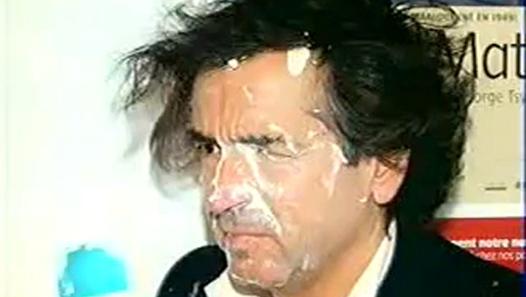
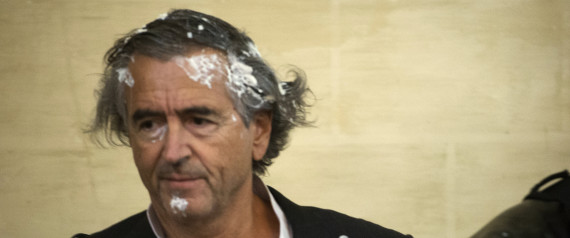
L’entarté qui ne sera pas publié dans la langue de Chestov, le philosophe qui a inauguré l’opposition d’Athènes et de Jérusalem avant, et bien mieux, l’activiste hystérique et irresponsable.
Dear participants,
We live in urgent times. The sum of the concurrent crises that have been engulfing everything from climate to energy, to politics and economy is creating a spiral of need for change. But climate change sticks out of this list as being an explicitly clear and present danger of existential proportions. Therefore I welcome your effort to review the linkages between climate change and world development and to examine broad lines of action to improve human wellbeing and security in the new conditions of the 21st Century. Unfortunately my health prevents me from joining you, which I regret, as the situation in the world makes this Symposium extremely timely and important.
xxxxx
In December 2015, world leaders will gather in Paris to negotiate a binding agreement to reduce global carbon emissions. It will be the twenty-first UN climate summit since 1992. Two decades of climate negotiations unfortunately have been accompanied by mounting emissions and rising temperatures. The World Meteorological Organization has pronounced 2014 as the warmest year on record for the planet. And the latest Intergovernmental Panel on Climate Change report warns that short of a “substantial and sustained” reduction in greenhouse gas emissions we will experience more frequent heat waves, droughts, storm surges, shocks to the world food supply and other extreme weather-related events.
Climate scientists say the window of opportunity for strong action on climate is rapidly closing, but that we can yet stabilize global atmospheric temperatures and put the world on a path to sustainable development. In fact Paris is the last chance to stay below 2 degrees Celsius beyond the pre-industrial temperature.
The world remains trapped on an agonizingly unsustainable development path. Economic growth, without concern for the capacities of the planet, continues to be top goal and priority. Because of that we are facing unprecedented and relentless environmental degradation, deterioration and over-exploitation of natural resources, with water, food and energy crises looming, while over a billion people are still living in extreme poverty and global inequality is clearly growing. Oxfam recently warned that the combined wealth of the richest one per cent would overtake that of the other 99 per cent of people next year, unless the current trend of rising inequality is checked.
Politics is lagging behind the transformation process. This is the main reason for the multiplying crises we face – climate, food, water, energy, and poverty. In fact we face the crisis of our developmental model.
However the international situation is becoming more complex and more worrisome. Increasing tensions on the world scene, escalating terrorism, ethnic and religious violence, reincarnation of nationalism, and the systematic violation of human rights have downgraded the sustainability agenda into almost an abstract discussion putting to a hard test not just the post-cold war order, but the future of international politics in general and pushing the world to the edge of a disaster.
There is too much at stake and the risks and threats are too great. If we fail to reverse the politics, which are driving us towards a new confrontation, all the agenda of sustainability may fall victim to this downward spiral in current politics.
The Ukrainian crisis is a symptom of the growing dysfunctionality of the existing world order. This was triggered by a failure to adjust it to new realities after the end of the Cold War. The world has been pregnant with the new order (we have discussed this with President Bush and other leaders of the West very seriously). However, these plans have been put aside by the West, which was carried away by the “victory euphoria” after the end of the Cold War. Pope John Paul II warned in 1992 that “the Western countries run the risk of seeing this collapse of Communism as a one-sided victory of their own economic system, and thereby failing to make necessary corrections in that system.”
Unfortunately after 25 wasted years, his prediction did come true as the global crisis of 2008-2009 triggered the transition to a different historical period. In essence, it clearly revealed that the gap between the world’s growing interconnectedness and its inadequate coordination capacity has created a vacuum, leaving different actors to see how far they could try and push.
The Ukrainian crisis, rooted in this asymmetry, has provoked a serious and dangerous breakdown of relations between Russia and the West.
However dramatic is the current political situation, the relations between Russia and the West should not be reduced to the Ukrainian crisis. We should take a long-term perspective; while seeking solutions to the conflict in Ukraine and ways to overcome the international fallout from the crisis triggered by the events there.
There is only one option to pursue – dialogue, search for consensus and urgent upgrading of the international governance system.
Globally the “rules of the game” must be changed to stop the dangerous drift towards confrontation and to make further escalation impossible. It’s important to reformulate the international agenda and political frameworks to encourage transformative leadership. Current governance and international institutions should be upgraded fast enough to harness and channel change, instead of being overwhelmed by it.
Within Europe, the crisis can be contained by working out a common goal of long-term co-development. It must be acknowledged that Europe today is no longer the centre of the world. Its problems are part of a complex global system, where all are affected by all. Perhaps, as once the United States and Canada were made part of the European process, it’s time to think about turning the European process into a Eurasian one.
Actions of external players throughout the Ukrainian crisis invite serious criticism. Ukraine is a tragic example of a short-sighted policy of “geopolitical engineering”.
But now it badly needs our help. EU member states, and above all Germany and France, seem to have learned some lessons and are now trying, alongside Russia and Ukraine, to find ways to de-escalate the conflict. This is a positive development. Still I reiterate that the revival of dialogue between Russia and the United States is essential to peace in Ukraine, in Europe, and the entire world. The two countries have a special role to play and a special responsibility.
They are permanent and most powerful members of the U.N. Security Council and they should realize their responsibilities and cast aside expediency-driven agendas, restoring the required level of understanding and trust. The recent meeting of President Putin and State Secretary Kerry in Sochi – the first direct Russia – US political level contact in the last two years – was a step in the right direction.
And most urgently, joint and concerted efforts are needed to take Ukraine away from the brink of social and state breakdown, and to turn it into a hub of cooperation rather than a prize drawn from Russia – West competition.
The new governance architecture should provide an integrated agenda for progress on security (including the coordinated efforts to address frozen conflicts), energy, economic cooperation as well as sustainability.
It is very important to take a sober and balanced look at the situation, to be conscious of the existence of global challenges and universal human values, as well as the numerous issues that cannot be resolved without cooperation between the world’s leading powers.
This means that we have to return to the basic tenets of the new thinking, which we proposed to the world when relations between the East and the West were severely strained.
The main challenge then was to avert a global nuclear conflict. We succeeded in warding off that threat; however, the threat of a new arms race has not disappeared.
Other threats are also looming large, above all the danger of climate change. In addition, there are other global issues such as the growing shortage of fresh water, food shortages, international terrorism, cyber security, pandemics, and so on.
What is needed today is a dialogue based on the awareness of our common destiny and common exposure to new threats rather than on grievances, mutual recriminations and frustrations. We must put aside prejudices inherited from the Cold War and work together to create a new global system of responsibility, vision and solidarity.
If we are to succeed the world will require true political leadership, prophetic vision and courage, rather than an adaptive strategy of small steps, as well as revitalized multilateral governance architecture adequate to meet the interconnected challenges of the 21st century.

Nunca me he planteado votar a Podemos. Me parecen una copia de Izquierda Unida, pero con la cúpula más endogámica y sin experiencia de gestión. Eso no quita que me guste que existan.
Como fenómeno mediático, han centrado la atención en la extrema corrupción de una parte de la clase política española. Antes de que llegase Pablo Iglesias era imposible pensar que un alto cargo acabase entre rejas.
El caso Errejón hizo que se hablase de la endogamia de la universidad española como nunca antes.

La insistencia de los medios en diseccionar las medidas propuestas por el nuevo partido ha derivado en que el español medio ponga un interés en la gestión de nuestro país quizá nunca visto desde la Transición. En unos meses, hemos pasado de cambiar el voto del PP al PSOE en función de quién nos cabrease menos a reconocer las caras y las ideas de los líderes de IU, UPyD, Ciudadanos, Ganemos e incluso EQUO.
Ahora hasta prestamos atención a la situación de Latinoamérica.

Sé que parte de la razón de todo lo anterior es el miedo de un sector importante a que España vaya a peor si Podemos gana, pero eso no me preocupa. Es imposible que un individuo que sale todas las semanas en La Sexta y todos los días en El País no acabe asqueando. En otro partido, el caso Monedero, la persistente ambigüedad ideológica o la evasión de responsabilidades en Europa y los municipios causaría una erosión más o menos lenta, pero en uno que depende de su constante exposición en los medios, detalles menores se vuelven mortales. Por eso, para mi, la pandilla de Pablo Iglesias forma más un Reality Show que otra cosa.

Como entretenimiento, el fenómeno Podemos es estupendo. Los protagonistas tienen todos personalidades muy marcadas: Errejón el empollón, Iglesias el megalómano, Monedero el excéntrico bolivariano que pone el puntito de comedia y Tania Sánchez, la mujer de carácter fuerte que enamora al « prota ». Gracias a la prensa, sus chascarrillos tienen más ángulos que « La insoportable levedad del ser ». Si alguna vez has disfrutado secretamente de un culebrón o una película de media tarde, esto es lo mismo, pero en El País y el ABC. Sin culpabilidad, porque ni siquiera lo ponen en la sección de Sociedad.

Personalmente, admito tomar el café de media mañana buscando el capítulo del día en la portada digital de El País. Nunca falla. Ayer por la noche me pasé un rato componiendo las imágenes anteriores. Me lo pasé estupendo, pero fue mejor aún cuando me di cuenta de que, gracias a Vanity Fair, la realidad había superado mis ficciones:
 |
| ¿Pero qué es esto? ¿¿Quién va a una cafetería con guantes de boxeo?? |