Catégorie : Malévitch

  • Sur l’Ukrainien Malévitch…

    Le « Carré noir » de Malévitch vu par le journaliste Philippe Dagen (Le Monde, 5 août 2017) Lettre à Angela Lampe du 5 août 2010

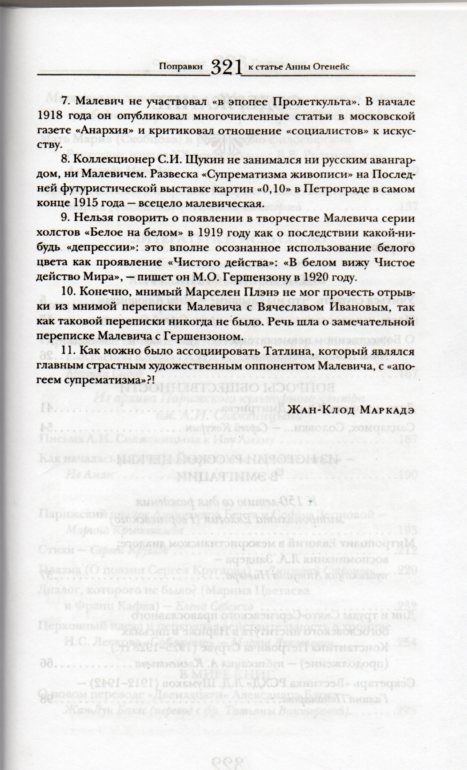
    Je viens de prendre connaissance de toute la page consacrée par Philippe Dagen au Quadrangle noir entouré de blanc. Je ne parlerai pas de toutes les erreurs factuelles ou les inexactitudes dont pullule ce texte qui cherche à tout prix à créer une atmosphère de roman policier et « people » qu’affecte depuis un bon temps Le Monde, surtout en ce qui concerne la Russie (une des méthodes consiste à mettre systématiquement des titres négatifs à des articles plus nuancés).

    Je ne relèverai que deux affirmations totalement erronées qu’il est grave qu’elles soient à nouveau popularisées dans le « journal de référence ». La famille du père polonais de Malewicz (Malévitch) n’a pas émigré en Ukraine en 1863, car elle était une famille de la noblesse héréditaire de Volhynie ( de Volodymyr/Vladimir, Ladomir chez Khlebnikov), province qui a appartenu successivement à la Rous’ de Kiev, à la Pologne-Lituanie, à l’Empire Russe, à l’Ukraine. Les Malewicz n’ont donc pas dû « émigrer », ils étaient chez eux en Ukraine et ce n’est pas pour rien que Malévitch, dans ses mémoires, se dit Ukrainien.

    J’espère que l’exposition qui se prépare à Beaubourg « L’avant-garde russe et Chagall à Vitebsk » pour mars 2018 corrigera tout ce qui est dit par Dagen sur les rapports Malévitch-Chagall

    Autre erreur, le conflit entre Malévitch et Tatline commence dès 1915, lors de la naissance du suprématisme à l’exposition « 0,10 »

    commentaire après l’exposition :

    Hélas! La place de Malévitch fut presque confidentielle dans la mise-en-scène spectaculaire qui fut réalisée. La théâtralisation prime souvent aujourd’hui sur l’authenticité…

  • Le 140ème anniversaire de la naissance de Malévitch à Kiev (21-24 février 2019)


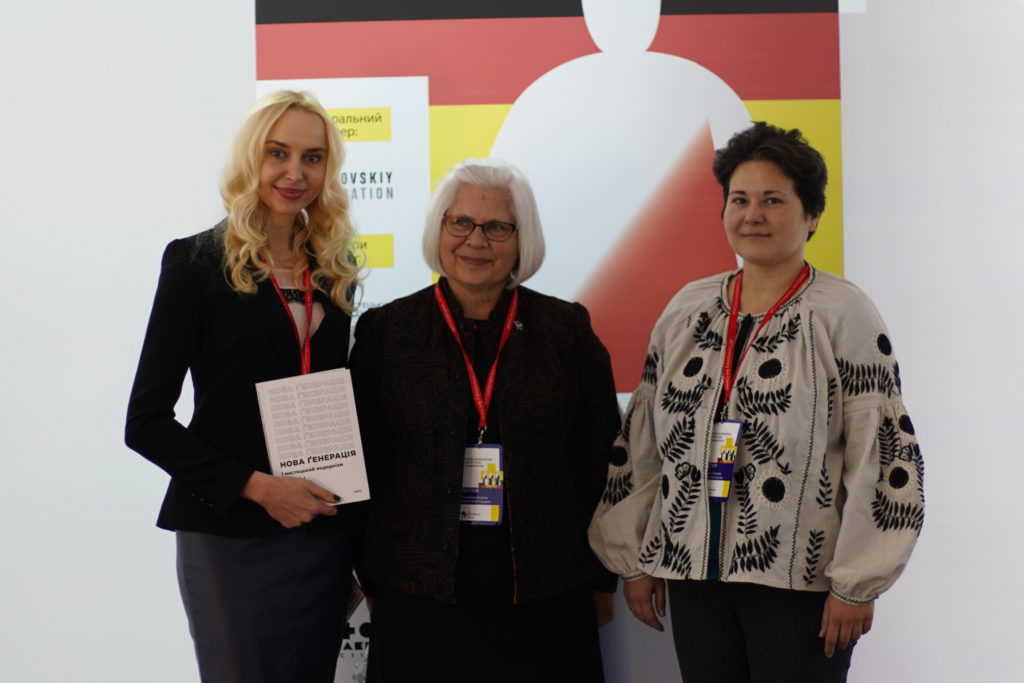
    Зліва направо: директорка М17 Наталія Шпитковська, авторка книги « Нова ґенерація » Мирослава Мудрак, кураторка Форуму Тетяна Філевська


    До 140-річчя Казимира Малевича на форум « Нова ґенерація: художник та його покоління » у Київ з’їхалися дослідники українського авангарду з усього світу.

    В рамках форуму пройшли лекції, присвячені українському авангарду, панельні дискусії і круглі столи за участю найвизначніших знавців та дослідників українського авангарду з усього світу. Також учасники могли відвідати перфоманс від Федора Возіанова за участю балету Артема Гордеєва, екскурсії виставкою « Авангард. У пошуках четвертого виміру », прем’єру фільму «Малевич» (FRESH production, Україна, 2017) та презентацію збірника матеріалів «Казимир Малевич: київський аспект». Прем’єрний показ фільму « Малевич » (FRESH production)
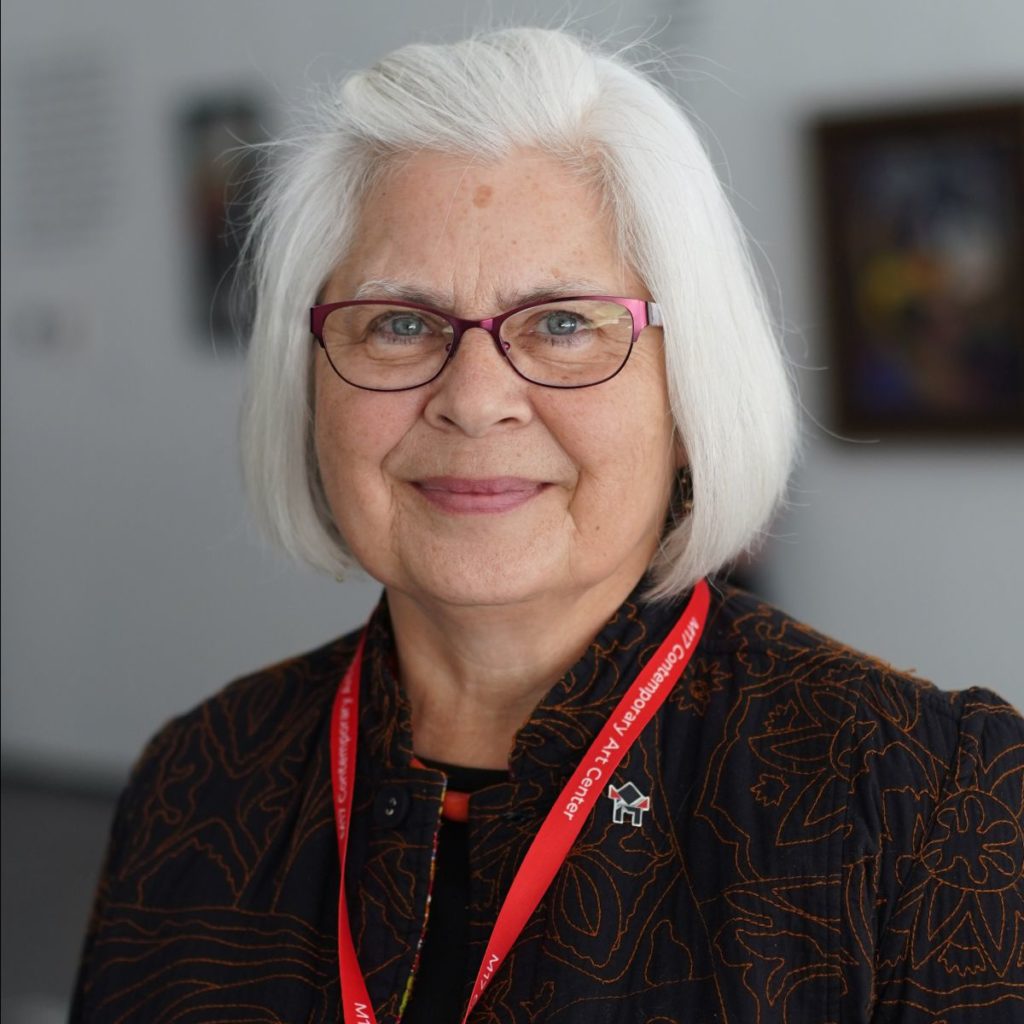


    Мирослава Мудрак, історикиня мистецтва, почесна професорка Університету штату Огайо, авторка книги «Нова ґенерація» і мистецький модернізм в Україні» (США), провела лекцію «Eкологія Модернiзму: збереження часу й простору в українському мистецтві раннього ХХ-го століття»
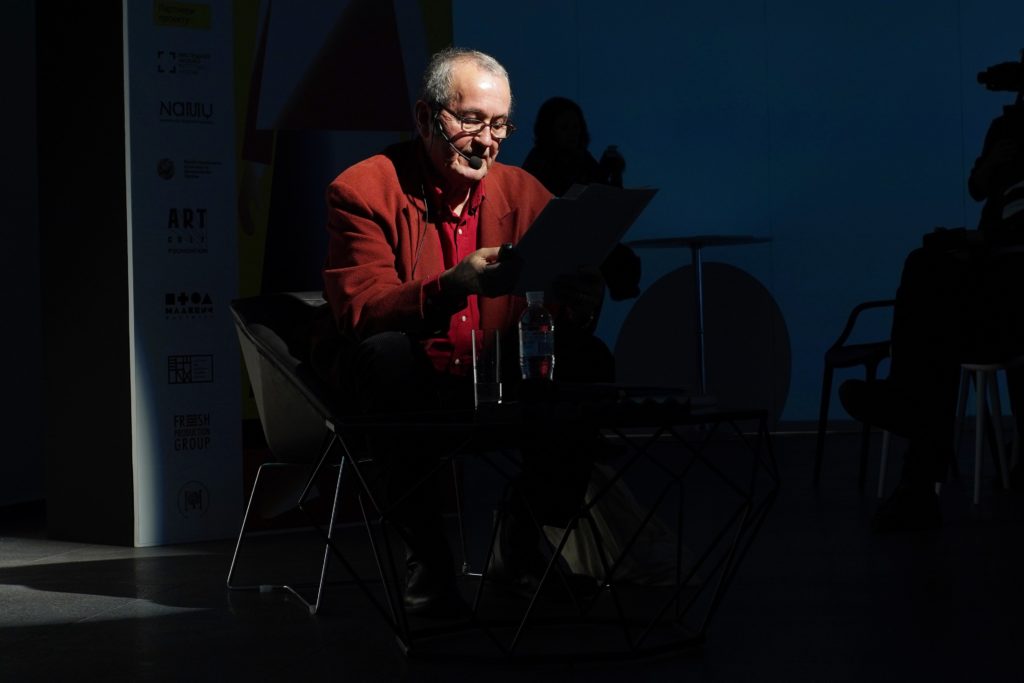


    Жан-Клод Маркаде, мистецтвознавець, історик мистецтва, куратор, заслужений директор Національного центру наукових досліджень (CNRS) (Франція) «Малевич і музика – між Матюшиним і Рославцем»
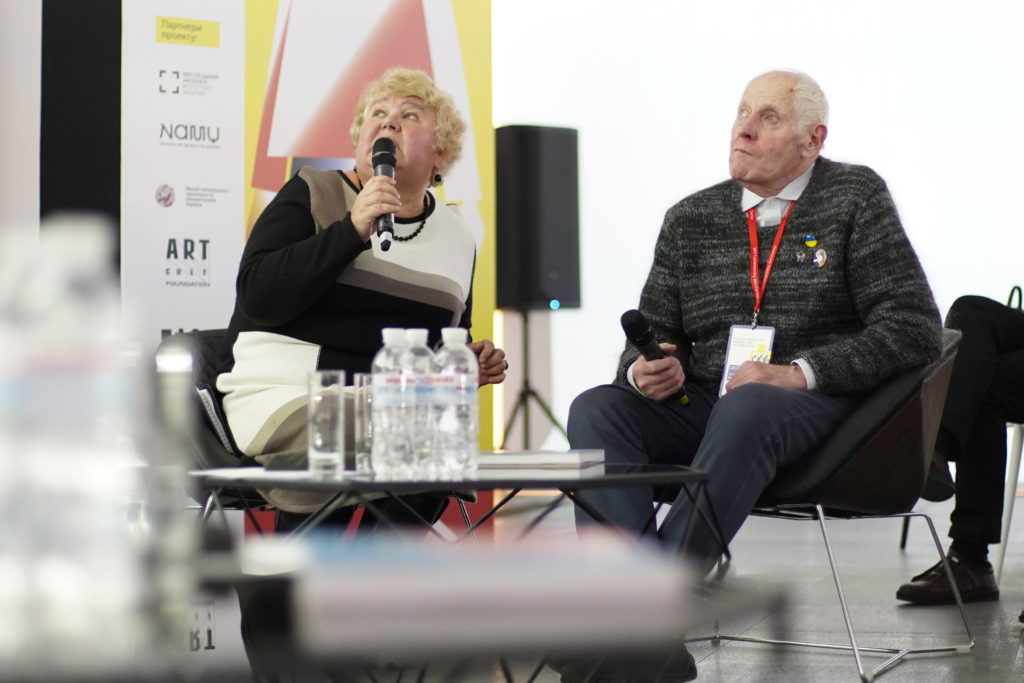


    Дмитро Горбачов, мистецтвознавець, дослідник та першовідкривач українського авангарду, влаштував перегляд відео-хроніки про мистецьке життя 1920-х разом з Іриною Мелешкіною
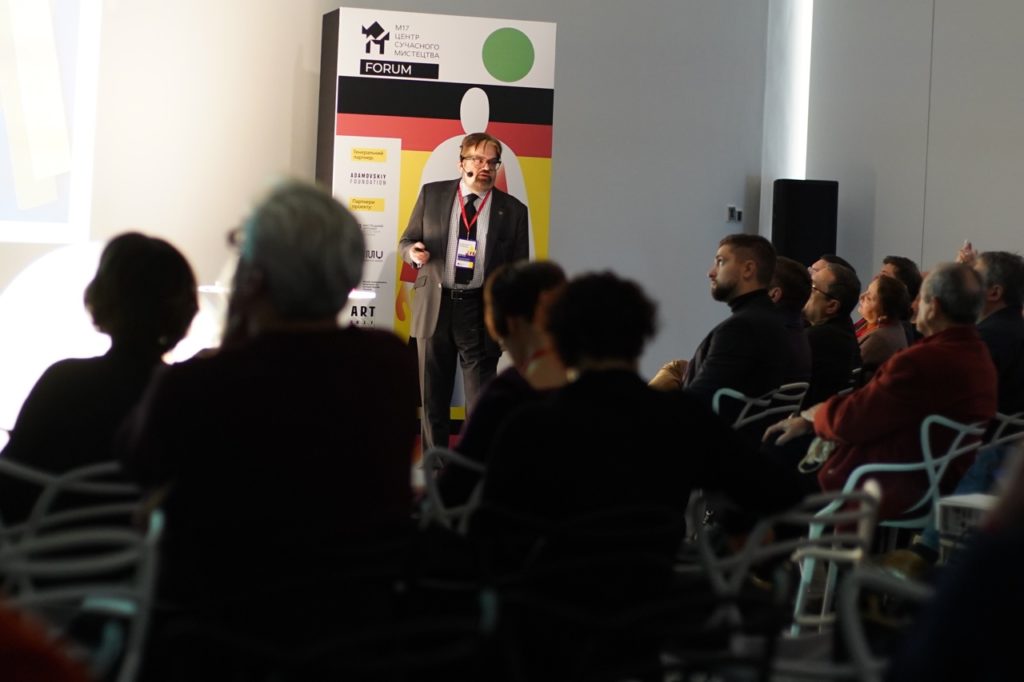


    Костянтин Акінша, історик мистецтва, журналіст, куратор (Угорщина), прочитав лекцію «Український модернізм – спокуса ринком»
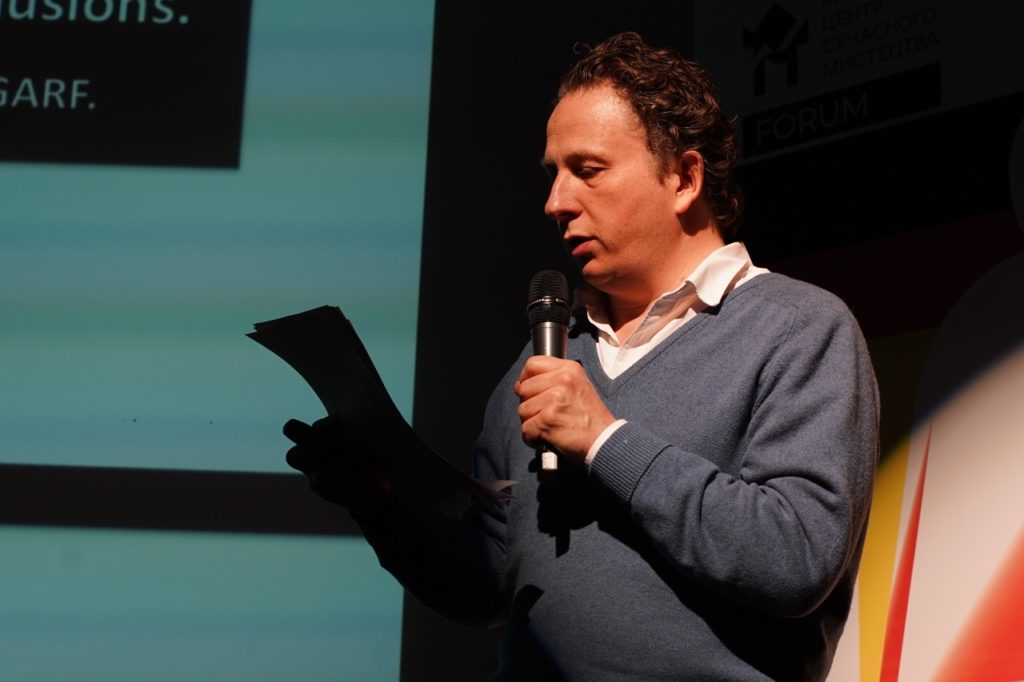


    Шенг Шейєн, спеціаліст з російського авангарду, Член Ради Фонду Харджиєва (Амстердам, Нідерланди) прочитав лекцію «Татлін і Малевич: виправдані обрáзи та креативні омани. Нові знахідки з архіву Харджиєва»
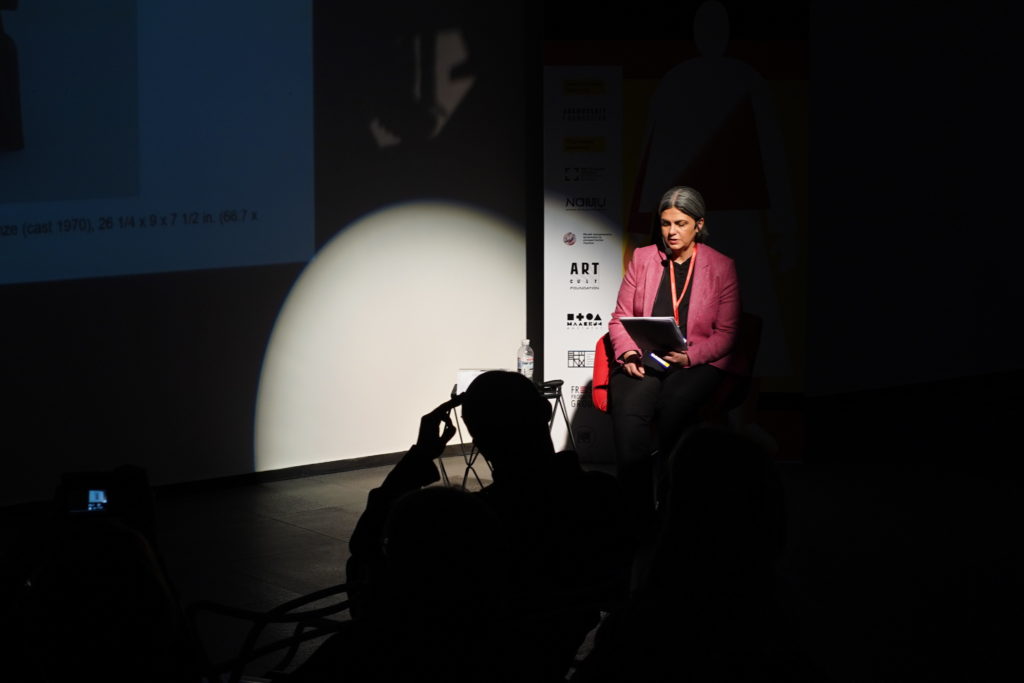


    Олександра Кайзер, кураторка досліджень фонду Олександра Архипенка, прочитала лекцію « Архипенко: Сучасний Спадок »


    Також серед учасників форуму були: Тетяна Філевська (засновниця і керівниця Інституту Малевича), Крістіна Лоддер (Президентка Фонду Малевича, Великобританія), Олег Ільницький (спеціаліст з українського футуризму, Канада), Мирослав Шкандрій (професор славістики при Манітобському університеті, Канада), Андрій Бояров (куратор і дослідник, Львів, Україна), Віта Сусак (членкиня Швейцарського академічного товариства з вивчення Східної Європи (SAGO), Україна-Швейцарія), Метью Стівенсон (Фонд Архипенко, Лондон), Софія Дяк (директорка Центру міської історїі Центрально-Східної Європи), Оксана Баршинова (куратор, лектор, Національний Художній Музей України), Олена Боримська (автор курсу лекцій про авангард, куратор, Національний Музей « Київська Картинна Галерея »), та Наталія Шпитковська (директорка Центру сучасного мистецтва М17)


    Також в рамках Форуму пройшов ряд круглих столів та дискусій, зокрема круглий стіл «Колекціонери авангарду. Історія та практика» за участю Едуарда Димшица, Андрія Адамовського, Олександра Брея, Костянтина Акінши, Дмитра Горбачова та Жан-Клода Маркаде за модерацією Наталії Шпитковської (на фото зліва направо).

    Закрився Форум під читання віршів Казимира Малевича у виконанні його двоюрідної внучки Івони Малевич, що завітала до Києва спеціально, щоб відвідати Форум, та музику Миколи Рославця від Антуанети Міщенко.
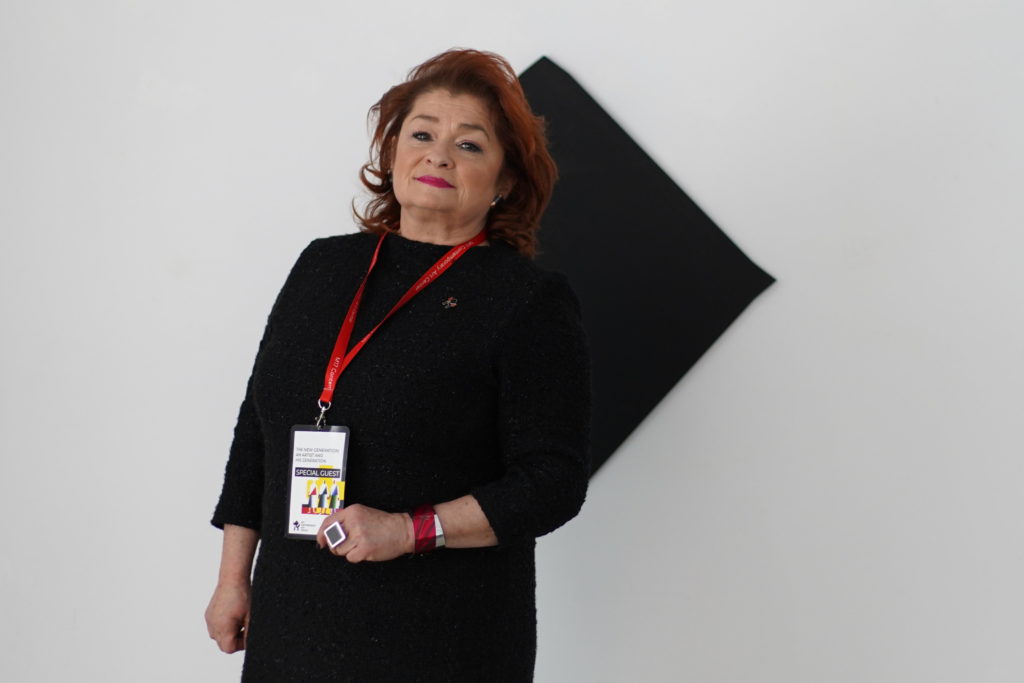


    Івона Малевич


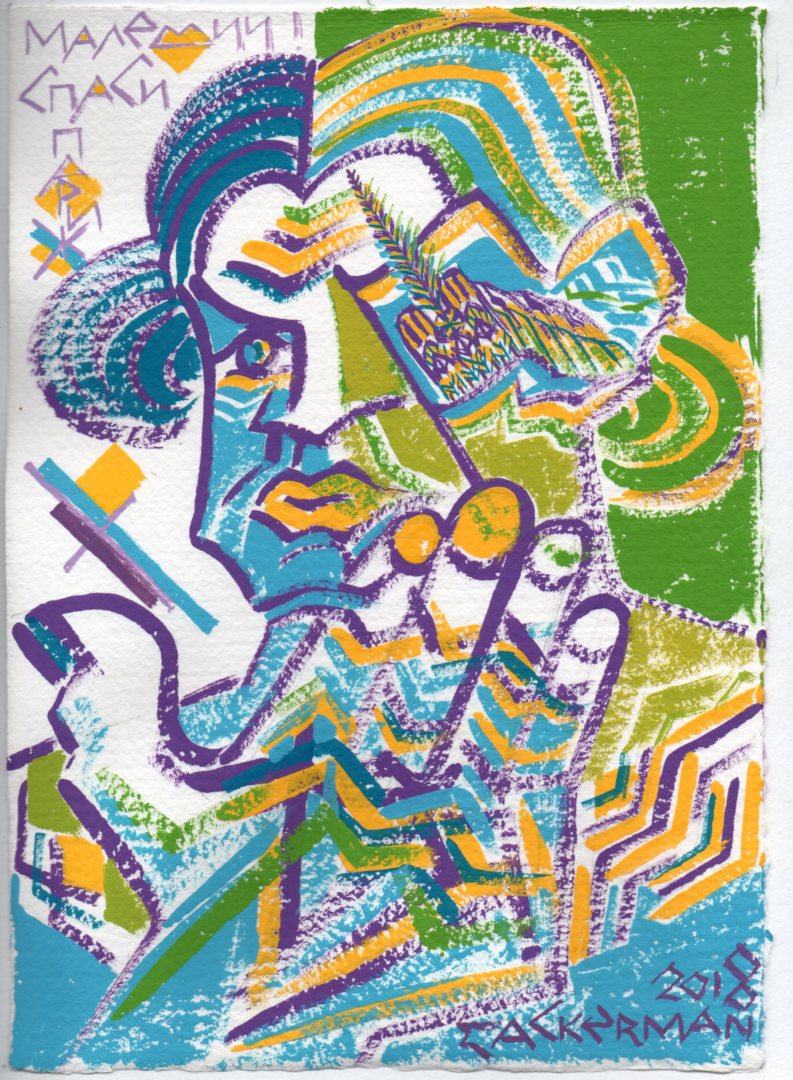
    Також в рамках Форуму показали автопортрет Казимира Малевича, який він намалював за 11 місяців до своєї смерті.
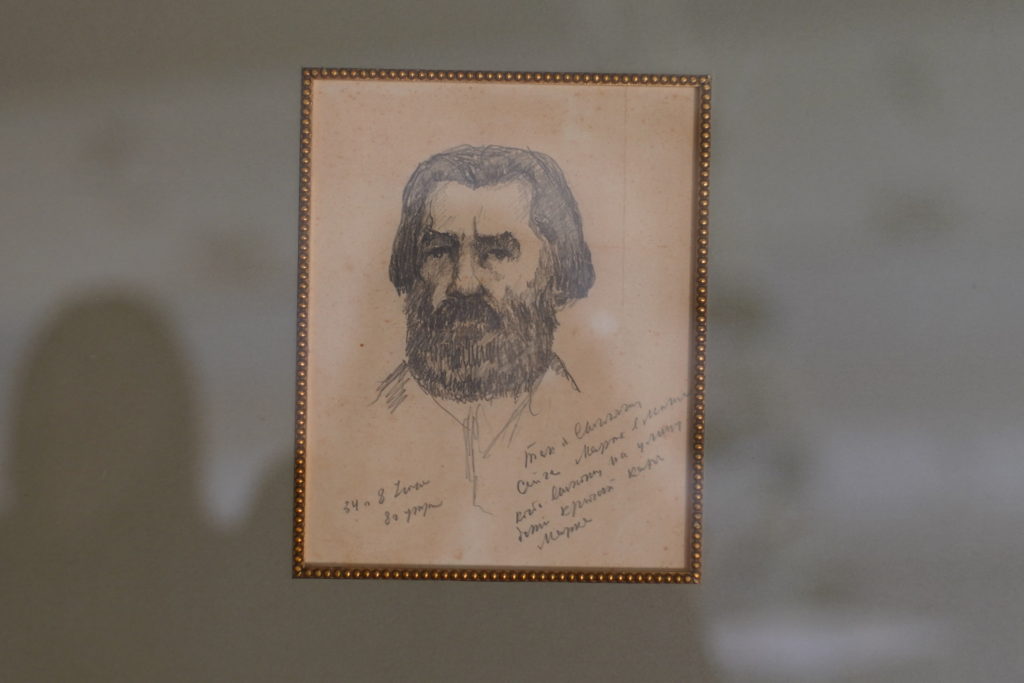


    « Выгляжу сейчас как Маркс в могиле. Когда выхожу на улицу дети кричат Карл Маркс » — підписує Казимир автопортрет у листі до Петнікова.

    Планується додаткове експонування автопортрету в рамках виставки « Авангард. У пошуках четвертого виміру ».
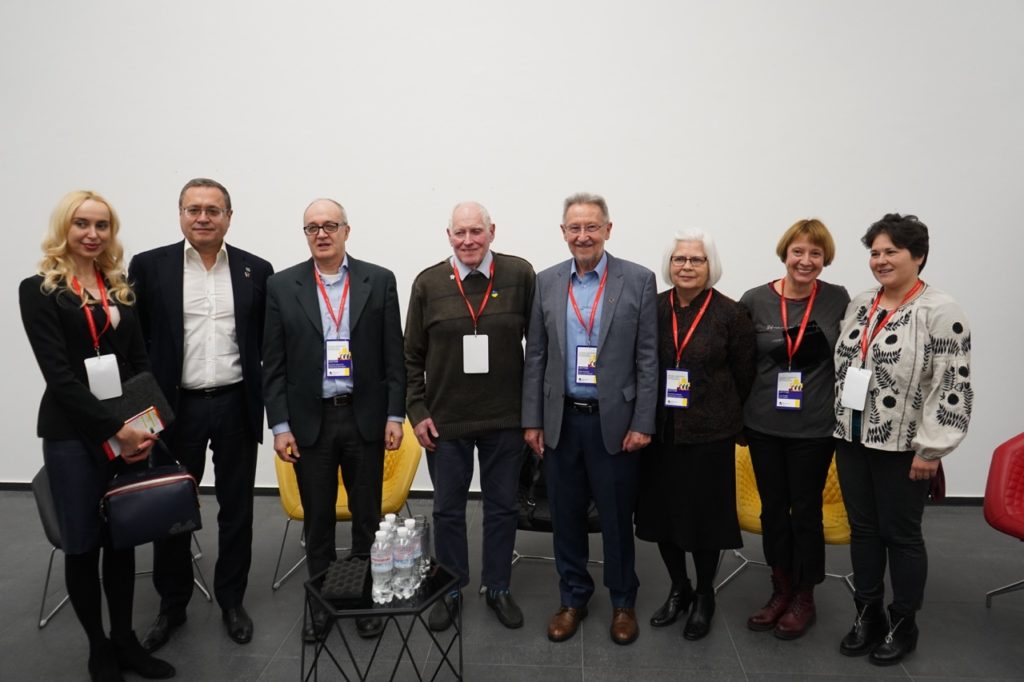


    БІЛЬШЕ ФОТО З ФОРУМУ


    Зараз команда М17 готує матеріали, що були зібрані на лекціях під час Форуму і незабаром розмістить всі матеріали у вільному доступі.

    А поки чекаємо на виставці « Авангард. У пошуках четвертого виміру », що триває до 6 квітня!

    Кураторка Форуму:

    Тетяна Філевська, співзасновниця та керівнивниця Інституту Малевича

    Директорка Центру сучасного мистецтва М17:

    Наталія Шпитковська

    Генеральний партнер:

    Adamovskiy Foundation

    Оранізаційні партнери:

    Інститут Малевича, Національний художній музей України, Національний культурно-мистецький та музейний комплекс «Мистецький арсенал», Музей театрального, музичного і кіномистецтва України, Національний центр ім. Олександра Довженка, Artcult Foundation, Український клуб колекціонерів сучасного мистецтва, Національний центр досліджень історії та культури східноєвропейського єврейства, Фонд культурної дипломатії UART.

    Спеціальні партнери:

    Міністерство закордонних справ України, Київська міська державна адміністрація, Міністерство інформаційної політики, Комітет Верховної Ради з питань культури і духовності, Національне бюро програми ЄС “Креативна Європа” в Україні, Український культурний фонд.

    Інформаційні партнери:
    UA: СУСПІЛЬНЕ МОВЛЕННЯ
    Birdinflight
    LB.ua
    Антиквар

    Додаткова інформація: Носко Ольга nosko.ov@gmail.com, +38(093)9811795

    This email was sent to jc.marcade@wanadoo.fr
    why did I get this? unsubscribe from this list update subscription preferences
    M17 Contemporary Art Center · 102-104 · Antonovycha Street · Kiev 03150 · Ukraine
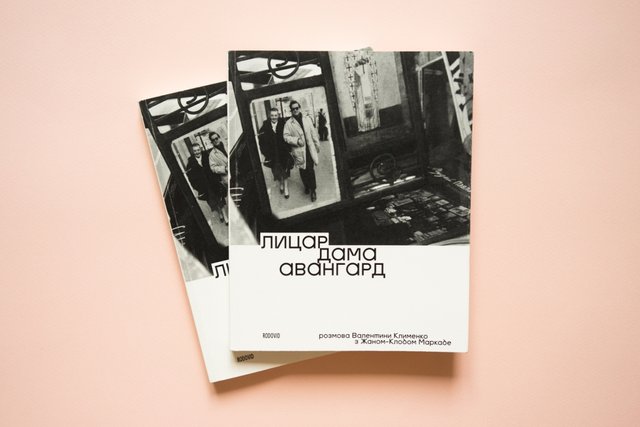
  • INTERVIEW SUR L’ART UKRAINIEN À KIEV EN 2013

    Nelia VAVERCHAK
    11 June, 2013 – 10:28


    Jean Claude Marcadé
    You opened the phenomenon of Ukrainian avant-garde, particularly Malevich, for the world and for many years methodically explored the artistic legacy of the artist. Could you please tell why you got so interested in him?

    “I saw that Malevich is one of the most important artists of all times not only in Ukraine and Russia, but also of the entire world. This is a unique phenomenon when, after centuries of academism there appeared a mythological form of the Black Quadrilateral (this was the name used at the exhibition ‘Zero-Ten’ in Petrograd). Not so much the painting itself, but the form. The conceptual energy that emerged from this form, raised the art to zero. It all started again. Art became more rapid and, according to Chernyshevsky, it became a textbook of life.

    “Still, there is a very popular belief among common people that Malevich had very little paintings, they often say that their kids can draw just as well. This is rather the issue of bringing up. Today, the art returned to things against which Malevich and all the left art revolted. Avant-garde is the name the movement received later on. After the revolution, ‘the left’ and ‘the right’ became political notions, but before they meant innovators and those in rear guard.

    “Once, at some international congress one of the art critics said that Claude Monet, for example, has more artistic material than Kazimir Malevich. I then said to that man: ‘In Chinese art a stroke on white paper can mean a whole world.’ Malevich did not just do such things when he worked on cubo-futurism and primitivism – he showed that he was a master of complex spatial solutions. And during re-Ukrainization of Malevich, as Dmytro Gorbachev used to say, he again proved his artistic strength.”

    Given these facts, you can’t but notice that Ukrainian art is often defined as a part of “Great Russian” art. In your opinion, why does it happen?

    “This question should be addressed to the supporters of the Great Russia. Historically the empire before the Soviet Union was ruled by tsar. Then in the history of art there were chapters on Ukrainian Baroque and its impact on Moscow art. Art historians still wrote about it at the time of the early Soviet Union. But by now it all disappeared – there was a regress to certain extent. This is a political problem, of course, and there was no Ukrainian state in the empire, even though there were the beginnings of some, such as Galicia in the Middle Ages.”

    In fact, I would argue with that.

    “Well, you know, Ukraine to the Western people is as if in some Great Russian mirage. There were phenomena, but in reality there was nothing like we have right now, thank God. Sich was a rudiment of a state. Of course, not of a scale as it was in the days of Danylo or Yaroslav. But a state with its own internal problems, which would play its role in the international arena – this notion is still new for Ukraine, while for Russia it’s not. Ever since the days of Peter I, and later German Ekaterina, Ukraine was on the outskirts. Despite the recognition of the country, for example, after its description was published as a part of Guillaume Le Vasseur de Beauplan recount of his travels. Or, for example, Bohdan Khmelnytsky thought that he had been deceived by Muscovites and thought that an alliance with Poland against Muslims was possible, but in reality, the Muscovites did not treat his actions with respect and, therefore, the disaster struck.

    “Things are still not easy. You have to fight. Of course, the supporters of the Great Russia still don’t give in their ground. They consider everything to be Russian. I saw the scandalous, as to my mind, exhibition at the Louvre – ‘Holy Rus’.’ Even though the topic was Rus’, French people, given the translation, viewed it as ‘Holy Russia.’ The exhibition was wonderful and was a great success and that’s why it was even worse, because there were very nice exhibits, which are rarely put on display. It was a Year of Russia in France. And even though everyone used the word ‘Rus’’ rather than ‘Russia’ but the adjective was still ‘Russian.’”

    Our newspaper published books every year. We already presented an entire series The Day’s Library. One of these books is called The Power of the Soft Sign. The authors of this book, professional historians, explain the appropriation of the Ukrainian past, which is taking place even now… Please, tell us whether there are “white spots” in Malevich’s legacy in perception of mass consciousness? For example, Ivonna Malevich, great-niece of the artist, in 2010 at the ceremony of awarding Malevich Prize in Kyiv said that Kazimir Malevich responded to the Holodomor not only with a series of paintings, but he also wrote civil lyrics. Do you know anything about these facts?

    “I must admit I knew nothing about this award and the lyrics too. The archives have many unpublished materials. But, of course, in his works he conveyed his attitude to the Ukrainian tragedy. He saw it. The black face of a peasant woman in his painting is a coffin. He embodied the Ukrainian tragedy in such image of the tragedy of the entire mankind. That’s what makes Malevich so different from others – he cried through his silent art.”

    Could you tell us what is the attitude of French people to Ukrainian art these days?

    “I’d have to disappoint you, they have no distinct attitude, unfortunately. There is, of course, a small group of people who are interested in it. But in general, even the same exhibition at the Louvre was covered by journalists as the ‘Holy Russia.’ Even though it was rather a historical exhibition than artistic – it featured all the stages of the Kyivan Rus’ development until the time of Peter I. It’s goal was to show the formation of Russia. And it all was presented in such a way that all the nice and interesting exhibits were viewed as Russian. I, of course, wrote a big article regarding this. But if we would take, for example, the reaction to the exhibition of Pinzel’s art in Paris – it didn’t cause much interest among the audience. The exposition was done not on a large scale, but as if imitating the scale of the Holy Rus’ exhibition. Ukrainians were delighted, in particular the Minister of Culture. I love Ukrainian art a lot and that’s why I think that the exhibition was held not on an adequate level – the exhibits were displayed in the space where they did not ‘breathe.’ It would be better if it had been presented in the Louvre, in the chapel with access through the maze and the stairs. Exhibitions are important events, but they end at some point. It’s good that a catalogue was published after this one. So far, unfortunately, the Ukrainian art has not been recognized separately. Even though I wrote a large book about the Russian avant-garde, I singled out the Ukrainian school there as a separate formation.”

    What distinguishing features does it have?

    “It’s an entire complex. In short, first, it’s the color. Solar illumination. And this is a striking feature of those who lived in Ukraine. It manifests itself in a range of colors in nature, in people’s clothing. For example, Sonia Delaunay, who left Ukraine at the age of seven, had very warm memories of her homeland due to the fact that at that time it was more beneficial to be called Russian. The color of wheat, sunflowers, watermelons, tomatoes, which she remembered as a child, embodied in her work and in this way she affected her husband. Another example is Mykhailo Larionov, who lived in Bessarabia and his mother was Ukrainian. His yellow is sunny and cheerful. And his life-long friend (they got married in their latter days, but everyone considered them to be a husband and wife anyway) Natalia Goncharova used a somewhat different color – reddish yellow, rather iconic, but not natural – she is Russian by origin. Another artist who used amazing colors was Oleksandr Archipenko.

    “Second, it’s the space. This element of art is especially important. The feeling of space gives the feeling of freedom. The fact that in the consciousness of the Ukrainian people there were Cossacks, free people, who never knew the Tatar yoke, like the Northern people. The Great Russians lived in forest areas. If we would compare the Suprematism of Kazimir Malevich and Liubov Popova, his forms are floating in infinite space, while hers are attached to other objects.

    “Another distinguishing feature of the Ukrainian school of art is the Baroque. This element played its role also in avant-garde. For example, baroque trend is noticeable in art work of Oleksandra Ekster, Volodymyr Baranov-Rossine, and even Oleksandr Bohomazov.

    “And, finally, it’s humor. Larionov painted Katsapska Venera (Russian Venus). He had a series of such Venuses with, let’s say, easy morals. The name itself suggests humorous attitude, even though he was not an ethnic Ukrainian, but the Ukrainian part in his work, just like in Vladimir Tatlin’s work, was extremely important. That’s why even Malevich has some humor in his brilliant white background with red and black squares, called Pictoral Realism. A Boy with His Schoolbag, exhibited in New York. It’s a great sample of art, it is the quintessence of the iconographic range! But he gave it such name. And in this I see the serious Ukrainian humor. Pictorial Realism of a Peasant Woman in Two Dimensions and Pictoral Realism. A Boy with His Schoolbag contain the energy of colors and in general the whole Slavic mainland.”

    By Nelia VAVERCHAK, The Day
    Rubric: Day After Day
    Issue: №37, (2013)

  • Colloque la politique de Malévitch Dijon 6-7 décembre 2018

    Colloque la politique de Malévitch Dijon 6-7 décembre 2018

    jeudi 6 décembre 2018
    Matinée (8h30) MSH de Dijon université de Bourgogne

    Allocution d’ouverture par les organisateurs

    K. Malévitch et les institutions artistiques et politiques soviétiques

    – The essay Suprematism by Malevich in Revolutionary Art – W. J. Renders, Van Abbemuseum, Eindhoven
    – Malevich’s museum politics – C. Post, Université de Wuppertal, Allemagne
    – Malevich, Professor at the Kyiv Bauhaus – T. Filevska, Institut Ukrainien, Kyev, Ukraine, co-fondatrice et directrice du NGO Malevich, Kyiv, Ukraine

    – L’espace du suprématisme au-delà du tableau – E. Dulguerova, Université Paris I-INHA, Paris

    Pause méridienne (13h)

    Après-midi (14h30) MSH de Dijon université de Bourgogne

    Les idées politico-artistiques de Malévitch

    – Esthétique et politique chez Malévitch – O. Camy, CGC, uB.
    – L’iconographie politique de Malévitch : du Saint au Paysan – I. Podoroga Fondation Humboldt, Université de Trèves, Allemagne
    – Malévitch est-il anarchiste ? – J.-C. Marcadé, DR. CNRS.
    – Malevich between anarchism and communism – A. A. Hansen Löve, Université de Münich, Allemagne

    vendredi 7 décembre 2018

    Matinée (8h30) Sciences Po – campus de Dijon Accueil des intervenants

    La dernière période de Malévitch

    – From New Painterly Realism to Supra-Naturalism: Malevich and the Politics of Non-Objectivity – M. Chlenova, Stedelijk Museum, Amsterdam, Hollande
    – In the Horizon of Hunger. Malevich’s Economy of Excess and Lack – S. Egenhofer, Université de Vienne, Autriche

    – Malevich and the pictorial culture of human face – T. Marao Villela, Université d’État de Caminas, Brésil
    – The Politics of Malevich’s Peasant Iconography – M. Gasper-Hulvat, Université du Kent, Angleterre

    Symposium Malevich’s vision of Politics Dijon 6-7 December 2018

    Thursday, December 6, 2018
    Morning (AM 8:30) MSH Dijon university of Burgundy

    Opening remarks by the organizers

    Malevich and the Soviet artistic and political institutions

    – The essay Suprematism by Malevich in Revolutionary Art – W. J. Renders, Van Abbemuseum, Eindhoven
    – Malevich’s museum politics – C. Post, Wuppertal University, Germany
    – Malevich, Professor at the Kyiv Bauhaus – T. Filevska, Ukrainian Institute, Kyev, Ukraine, co-founder and head, NGO Malevich Institute

    – The space of Suprematism beyond the painting – E. Dulguerova, Paris I University, INHA, Paris

    Meridian break (AM 13:00)

    Afternoon (PM 14:30) MSH Dijon university of Burgundy

    Political and artistic ideas of Malevich

    – Aesthetic and Political thought of Malevich – O. Camy, CGC, uB.
    – Malevich’s Political Iconography – I. Podoroga, Humboldt Fondation, Trier University, Germany
    – Malevich, an Anarchist ? – J.-C. Marcadé, DR. CNRS.
    – Malevich between anarchism and communism – A. Hansen Löve, University of Munich, Germany

    Friday, December 7, 2018

    Morning (AM 8:30) Sciences Po – Dijon campus Welcome reception of speakers

    The last period of Malevich

    – From New Painterly Realism to Supra-Naturalism: Malevich and the Politics of Non-Objectivity – M. Chlenova, Stedelijk Museum, Amsterdam, Holland
    – An economy of excess and lack – S. Egenhofer, University of Vienna, Austria
    – Malevich and the pictorial culture of human face – T. Marao Villela, State University of Campinas, Brazil

    – The Politics of Malevich’s Peasant Iconography – M. Gasper-Hulvat, Kent University, England

  • Suprématisme

    Suprématisme


    La figure de Malévitch et le suprématisme sont des vecteurs majeurs de l’avant-garde russe et de l’art universel du XXe siècle. On peut distinguer quatre « vagues » dans l’« école suprématiste » qui gravita autour de son inspirateur :

    1. en 1915-1916, se forma le groupe « Supremus », qui comprenait Jean Pougny, sa femme Xénia Bogouslavskaïa, Mikhaïl Mienkov, Ivan Klioune, Olga Rozanova, Lioubov Popova et Nadiejda Oudaltsova, qui participèrent au premier design suprématiste dans les villages de Verbivka (Verbovka) et de Skoptsy en Ukraine, dont les ateliers de paysannes avaient été organisés par les peintres Natalia Davydova, Nina Guenke-Meller, Alexandra Exter, Ievhéniya Prybylska. Malévitch a mené alors le combat pour libérer les objets de l’obligation de leur figuration mimétique et  demandé aux académies de renoncer à « l’inquisition de la nature » ;

    2. dans les « Ateliers libres » (Svomas) de Moscou entre 1917 et 1919, Malévitch eut pour élèves, entre autres, Gustav Klucis, Ivan Koudriachov, Zénon Kommissarenko ;

    3. puis ce fut l’École d’art de Vitebsk, avec ses « Affirmateurs-Fondateurs du Nouveau en Art » (Ounovis) : Nikolaï Souiétine, Ilia Tchachnik, Véra Iermolaïéva, Nina Kogan, El Lissitzky, Liev Youdine, les Polonais Władysław Strzemiński et Katarzyna Kobro… ;

    4. enfin, de 1922 à 1926 l’Ounovis de Vitebsk passe à Pétrograd-Léningrad et s’enrichit de nouveaux noms (Anna Léporskaya, Konstantine Rojdestvienski, Vladimir Sterligov…).

    Le suprématisme a autant marqué le style des années 1920 que le constructivisme avec lequel il était en total antagonisme bien qu’il l’ait en partie inspiré. En 1919, le critique Nikolaï Pounine écrit : « Le suprématisme s’est épanoui comme une fleur opulente à travers tout Moscou ». Et, de passage à Vitebsk en 1920, Sergueï Eisenstein note : « Dans les rues principales, la brique rouge est couverte de peinture blanche. Et le fond blanc est semé de ronds verts. De carrés oranges. De rectangles bleus. C’est Vitebsk en 1920. Le pinceau de Kazimir Malévitch est passé sur ses murs de briques. De ces murs résonne [le vers de Maïakovski] Les places publiques sont nos palettes. » Tous ont travaillé à la décoration suprématiste de l’espace extérieur. Car le «design» fut un des éléments essentiels de l’école. Mais, à la différence des constructivistes qui entendaient le plier aux conditions technologiques de la science, les suprématistes mirent la technologie au service d’une pensée entièrement tendue vers le « sans-objet ».

    Comment s’est formé la pensée, la théorie et la pratique du Suprématisme? Ce fut, tout d’abord, le travail de Malévitch pour l’opéra-performance de Matiouchine en décembre 1913 à Saint-Pétersbourg. C’est pour le peintre ukraino-russe, la première étape vers le suprématisme, avec la première apparition du « carré noir », en particulier dans l’esquisse pour le personnage du Fossoyeur dont le corps forme un carré. Cet « embryon de toutes les possibilités » aboutira en 1915 au « Suprématisme de la peinture ». Dans les toiles de 1913-1914, les surfaces quadrangulaires envahissent l’espace. Mais c’est l’’ alogisme » qui s’affirme par une suite de tableaux que l’on pourrait dire « programmatiques ». Avec l’apparition du Quadrangle noir entouré de blanc à la « Dernière exposition futuriste de tableaux 0, 10 » à Pétrograd à la toute fin de 1915, ce sera l’éclipse totale des objets. La façon dont le Quadrangle était accroché doit être soulignée : il était suspendu à l’angle supérieur du mur comme l’est l’icône centrale du « Beau coin rouge [krasny ougol] » dans toutes les maisons orthodoxes slaves. On ne saurait mieux, exotériquement, exprimer le caractère iconique du « Suprématisme de la peinture », selon le nom donné par Malévitch à son iconostase picturale de « 0, 10 ». Si l’on suit la progression des quadrilatères dans les œuvres de 1913-1914, on remarque que les tableaux sont tous sans exception saturés de formes. Au regard de ces dernières, les formes pures, nues du quadrilatère, du cercle et de la croix, qui vont désormais habiter les surfaces suprématistes, frappent par leur minimalisme.

    La pratique poétique « transmentale » de Vélimir Khlebnikov et la théorisation par Alexeï Kroutchonykh de la réduction du mot à la lettre-son ont joué un rôle certain dans le passage que fait faire Malévitch à sa peinture, vers la réduction minimale à la couleur seule, et tout d’abord au noir et au blanc, c’est-à-dire à l’absorption et à la diffusion de la gamme prismatique.

    L’itinéraire philosophique, quant à lui amènera le peintre à affirmer que l’art n’est pas une cuisine plus ou moins raffinée de mise en forme des matériaux, mais la percée de l’être non figuratif, sans-objet, dont l’exigence, quand il est reconnu, bouleverse la vie tout entière. Pour Malévitch, qui développera sa philosophie dans de nombreux écrits, le seul monde vivant est le monde sans-objet [mir kak bespredmietnost’]. Affirmant le primat de la cinquième dimension (l’économie), il définira le suprématisme dans ses différents stades, statique et dynamique, comme une manifestation purement (économiquement) picturale de la nature en tant que physis, site de l’être, de la vie, de ce Rien que le peintre libère sur la toile. Car l’acte créateur n’est pas mimétique, mais un « acte pur », qui saisit l’excitation universelle du monde, le Rythme, là où disparaissent  toutes les représentations figuratives de temps et d’espace  et ne subsistent que l’excitation, cette « flamme cosmique » « sans nombre, sans précision, sans temps, sans espace, sans état absolu et relatif » Du Quadrangle noir de 1915 au Blanc sur blanc (dont le « Carré blanc sur fond blanc » du MoMA) de 1917, c’est l’espace du monde qui émerge à travers «  le sémaphore de la couleur dans son abîme infini ». Ayant atteint le zéro avec le « Carré noir », c’est-à-dire le Rien comme « essence des diversités », le « monde sans-objet », Malévitch explore au-delà du zéro les espaces du Rien.

    L’abstraction suprématiste ne reconnaît donc qu’un seul monde, celui de l’abîme de l’être. Si la non-figuration abstraite de Kandinsky est encore dualiste-symboliste, si l’abstraction néo-plastique de Mondrian est un système d’équivalents picturaux sémiologiques, le sans-objet malévitchien suppose la destruction radicale du pont que jettent la métaphysique et l’art traditionnels par dessus le « grand abîme » (Kant) séparant le monde accessible à la raison d’un monde qui ne le serait pas. C’est la sensation [ochtchoutchénié] du seul monde réel, le monde sans –objet [bespredmietny mir] ,  qui brûle tous les vestiges de formes dans les deux pôles du suprématisme, le « Carré noir » et le « Carré blanc ». Entre ces deux pôles se situe un ensemble de tableaux suprématistes aux couleurs vives et contrastées. Les couleurs ne sont pas ici des équivalents psychologiques artificiellement (culturellement) établis ; Malévitch est opposé à toute symbolique des couleurs (celle de Kandinsky, par exemple). Les signes minimaux auxquels il recourt, et qui ne sont jamais exactement géométriques, doivent se fondre dans le « mouvement coloré », s’y dissoudre. La surface colorée est, en effet, la seule « forme vivante réelle » ,    mais comme la couleur « tue le sujet », ce qui compte finalement dans le tableau, c’est le mouvement des masses colorées.

    En octobre 1919, Malévitch est obligé de partir à Vitebsk où Chagall a fondé son École populaire d’art. Il y retrouve Véra Ermolaïéva et El Lissitzky. Au grand désespoir de Chagall, que ses propres étudiants finiront par quitter pour rejoindre les Affirmateurs-Fondateurs du Nouveau en Art (Ounovis) de Malévitch au début de 1920 . Un nouveau cercle d’élèves, d’amis, de collaborateurs entoure le peintre : outre El Lissitzky et Véra Ermolaïéva, les plus proches sont Nina Kogan, Ilia Tchachnik, Nikolaï Souiétine. Le peintre est au sommet de son activité pédagogique. Sa correspondance avec ses disciples tout au long des années 1920 montre qu’autour de lui gravite un cercle fervent de jeunes artistes : Ivan Koudriachov, qui installe une filiale d’Ounovis à Orenbourg, le Letton Gustav Klucis, Sergueï Sienkine, Liev Youdine, Konstantine Rojdestvienski, Zénon Komissarenko, Paviel Mansourov… Il se met en rapport avec les mouvements avant-gardistes en Allemagne, en Pologne, en Hollande, en France (via Larionov) et même aux États-Unis (via David Bourliouk). El Lissitzky est son porte-parole en Europe, fidèle en amitié, mais guère dans la compréhension du suprématisme malévitchien.

    Le texte de Malévitch Dieu n’est pas détrôné. L’Art. L’Église. La Fabrique, publié à Vitebsk en 1922, est la dernière brochure parue du vivant du fondateur du Suprématisme. C’est un des textes philosophiques les plus hauts du XXe siècle. Malévitch qui n’avait aucune formation scolaire, universitaire, intellectuelle suivie, a su par la seule pénétration de son génie développer, à partir de connaissances glanées çà et là une pensée complexe, orientée vers le questionnement de l’être, en quête d’une nouvelle figure de Dieu et d’une nouvelle spiritualité.

    Pour Malévitch, la mise à zéro des formes n’est qu’un tremplin pour aller au-delà du zéro, dans les régions du « Rien libéré ». Cet « au-delà » n’est pas une transcendance au sens traditionnel, mais est immergé dans le monde sans-objet, seule réalité. Il n’est pas facile de situer historialement cette pensée. Il est clair qu’elle est anti-hégélienne, car elle dénonce toute possibilité pour la raison de rendre compte du réel dans sa totalité. Elle est foncièrement antipositiviste, puisqu’elle récuse la capacité de la science de comprendre les mécanismes réels du monde. Ce n’est pas non plus un nouvel avatar du kantisme, qui nie la possibilité de connaître le noumène, la chose en soi. La ligne panthéiste semblerait pouvoir être justifiée dans beaucoup de passages malévitchiens. Mais à aucun moment, chez le peintre-penseur, la nature n’est associée à un Dieu personnel. De ce point de vue, il y a beaucoup de convergences avec les pensées extrême-orientales, hindoues, chinoises, japonaises, où le caractère illusoire du monde est une constante sous diverses formes ; cela est encore peu étudié et mérite d’être approfondi. Dans le cadre de notre pensée européenne, on pourrait penser avec le philosophe heideggérien Emmanuel Martineau qu’il s’agit d’une phénoménologie apophatique.

    Littérature :

    Emmanuel Martineau, Malévitch et la philosophie, Lausanne, L’Âge d’Homme, 1977

    Jean-Claude Marcadé (éd. et dir.), Actes du colloque international tenu au Musée national d’art moderne, Centre Georges Pompidou, Paris, 5 mai 1978, Lausanne, L’Âge d’Homme, 1979

    Rainer Crone, David Moos, Malevich. The Climax of Disclosure, Munich, Prestel, 1991

    Matthew Drutt (dir.), Malevich. Suprematism, New York, Solomon R. Guggenheim Museum, 2003

    Aleksandra Shatskikh, Black Square and the Origin of Suprematism, New Haven et Londres, Yale University Press, 2012

    Kazimir Malévitch, Écrits, t. I, Paris, Allia, 2015